
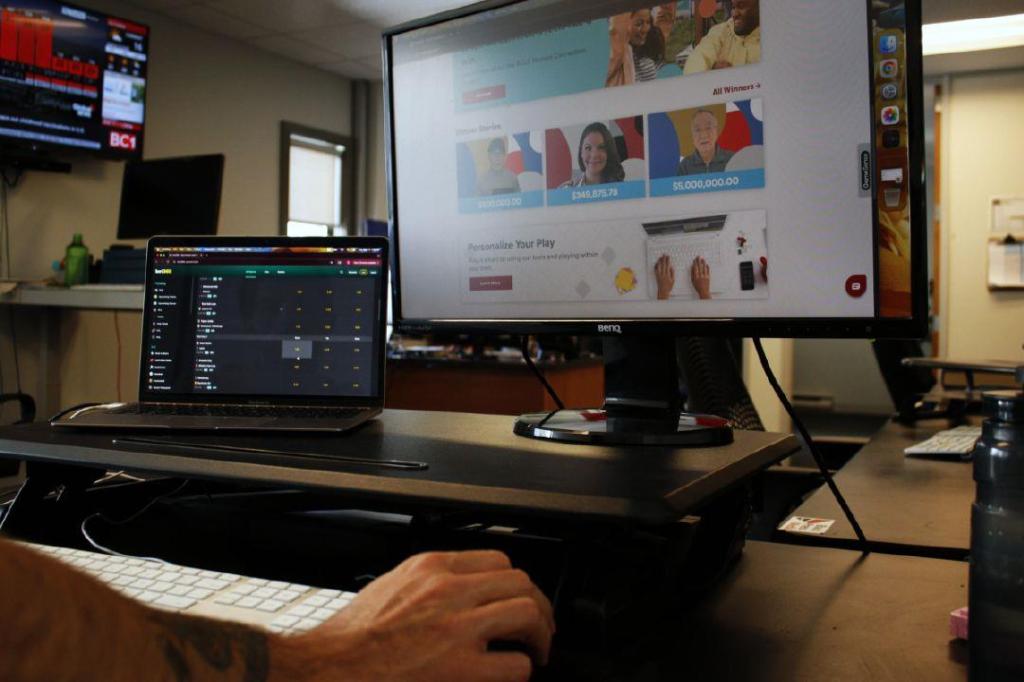
At a time when laying a bet has never been easier, one of the biggest private inpatient treatment centres in the West has opened a specialized inpatient gambling disorder program, one of the only ones of its kind in the country.
Since 2019, Homewood Health’s Ravensview centre in North Saanich has offered dozens of beds for those looking for mental health and addiction treatment, providing inpatient treatment programs – typically from six to nine weeks. In March, they launched the new specialized gambling disorder programming in response to what they say is a critical treatment gap.
Many people don’t gamble at all, and many have healthy relationships with betting or going to the casino from time to time, but “there’s other folks who are vulnerable to establishing an addictive pattern. And, some of the nuance can differ, but it can be some kind of emotional rush or euphoric excitement feeling that comes at first. It can be the anticipation and tension and relief, as well as basically a dissociative experience,” said Craig Extine, manager of clinical operations at Ravensview.
“It’s really a way to escape and go into almost a different dimension for some folks where the way that they’re thinking and they’re feeling in their body and their emotions and their focus is very different than when they’re not engaging in that,” he added.
A win at a casino or winning a sports bet provides an easy brain rush, similar to smoking a cigarette, but treatment for problem gambling becomes more complex when factoring in the inevitable financial problems and the underlying causes of the addiction, like mental health issues, trauma, and other addictions. Historically, gambling disorder has been the addiction disorder with the highest rates of suicide.
According to an Ontario study published in the Canadian Medical Association Journal in March, gambling-related outreach to Ontario’s mental health helpline from young men increased by more than 300 per cent after Ontario’s expansion of private online gambling, and active online gambling accounts per capita rose by 239 per cent in under three years.
It’s hard not to see why these numbers are rising, with gambling and betting websites persistently advertising across the internet and on TV. During the 2025 NHL playoff finals between Edmonton and Florida, University of Bristol researchers found that gambling logos and ads were shown on average 3.5 times per minute.
“In terms of TV commercials, we see a lot of ads now for online sportsbooks, but we also see a lot of ads for online casinos, and the online casinos are the more profitable arm of online gambling. At the same time, with online gambling, we’re seeing a lot more young people gambling and particularly young men,” said Luke Clark, director of the Centre for Gambling Research at UBC.
In April 2022, Ontario opened its online gambling market to private companies, as opposed to the rest of Canada, whose online gambling sites are government-owned, like B.C.’s PlayNow. Since Ontario’s market opened, due to Ontario’s hold over Canadian media, most of Canada is bombarded with ads regardless of provincial regulation.
Additionally, long gone are the days of finding a (often unreliable) bookie to place bets on your favourite team, or travelling across town to use slot machines at the casino, as now a full spectrum of casinos, sports betting, and newly emerging prediction markets are just a click away.
“The win-loss cycle is accelerated for folks where they can continue placing new bets and can take actions at any time of day, any place that has access to [Wi-Fi],” said Extine. They can end up in a situation in a short amount of time that has very drastic effects financially and on their lives. And then, what can come with that is again, that reaction to start to re-engage, to get the winning back or to, you know, to win back losses.”
In the 2013 release of the DSM-5, Gambling Disorder was recognized as a behavioural addiction, which was a big deal in the psychology space as the disorder was being taken seriously as a public health problem, said Clark. With the relatively new influx of advertising along with the ease of use, researchers are still working to catch up on determining the effects of the ever-developing world of gambling, and the federal government is exploring legislative options to better protect the public from the harms of problem gambling.
In terms of treatment, it’s complex, says Extine. With gambling disorder also comes the underlying factors – trauma, depression, anxiety – that can complement and exacerbate the addiction.
As a result, Extine says they have to take an individualized approach to treatment, like some drug rehabilitation programs, where people attend group and solo therapy sessions, they receive integrated clinical treatment, family-focused reintegration, and financial stabilization and recovery planning.
“Often, primarily, [gambling is] the issue that’s front and centre, that’s leading them to treatment. And then it’s common that once a person reaches out for one issue that appears most acute, it’s an opportunity through professional help, through working with a psychiatrist or physician or others to have a more in-depth assessment,” said Extine. “If you treat the depression, the gambling addiction won’t go away on its own. But if we’re going to really look at someone making strides in their life, if we’re going to make some gains with their gambling, we also are going to need to treat the depression.
Since the program launched, they’ve seen an influx of people. Though the new environment around gambling especially affects younger men, Extine says they’ve seen a diverse group of people making their way through the program.