

Listen to this article
Estimated 3 minutes
The audio version of this article is generated by AI-based technology. Mispronunciations can occur. We are working with our partners to continually review and improve the results.
Voting rates among Inuit communities in federal elections declined again in 2025, and that’s prompted some leaders to call for better engagement with local communities.
Elections Canada this week published a report on the estimated turnout in Indigenous communities in the 45th general election in April 2025.
Turnout in Inuit communities dropped over the last three federal votes, from 43.6 per cent in 2019 to 30.2 per cent in 2025. Across Canada, the voter turnout last year was 69.5 per cent.
The trend varied by region, however.
When compared to the last federal election in 2021, voting rates actually went up for Inuit in the Northwest Territories’ Inuvialuit region and Nunavut by 7.5 and 1.6 per cent respectively, with the turnout rate hovering around 35 per cent.
Similar figures were also seen among Inuit in the Nunatsiavut region of Newfoundland and Labrador, which saw a small 2.5 per cent decrease compared to 2021.
What skewed the data in 2025 was the turnout in Nunavik, which is part of the Abitibi–Baie-James–Nunavik–Eeyou riding in Quebec. Only 14.7 per cent of Inuit voters cast their ballots last year. That’s nearly half the turnout rate seen in 2021.
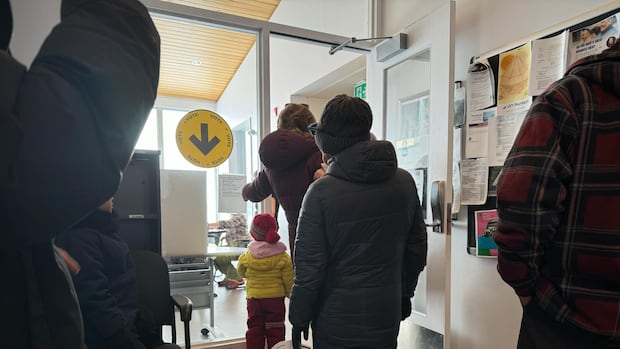
Elections Canada says that was in part due to polling booths closing early – or not opening at all – in most of the region’s 14 villages due to adverse weather conditions on voting day and a shortage of staff.
Elections Canada has also admitted prior outreach activities and meaningful engagement with all Nunavik communities – including those that had voting services – were deficient.
The agency declined CBC News’ request for an interview.
WATCH | ‘I lost my legal right to vote’: Booths closed early, or didn’t open at all in some Nunavik villages: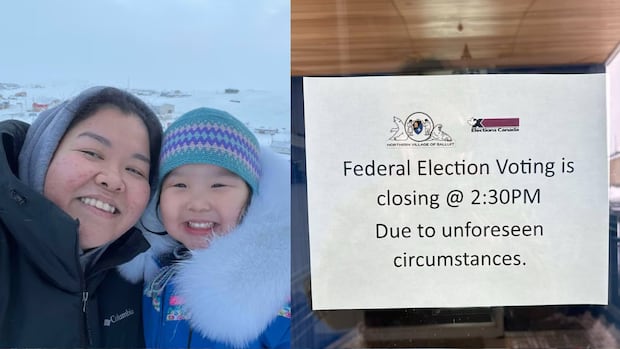
‘I lost my legal right to vote’: Booths closed early, or didn’t open at all in some Nunavik villages
Elections Canada cites weather and difficulty recruiting local teams as the source of the challenges. Residents in at least five villages said they experienced issues voting or were unable to do so entirely.
Pita Aatami, the president of Makivvik which represents Inuit in Nunavik, said election officials need to show up in communities and work with them.
“They can’t rely on Makivvik or other organizations for the voters to go vote in the federal election,” he said. “That’s their responsibility, that they have to do the proper job — and it was never an issue before.”
Aatami says he’s also concerned about voter apathy, and suggested that could be to make it mandatory to vote.
“If it was mandatory like they do for the census, then we’d have a lot more people turn out to vote,” he said.
Aatami believes online voting – like Makivvik has done with its own elections – could help make it easier for people.
Ultimately, though, he believes it’s about citizens taking personal responsibility.
“If people don’t go vote, they think it’s the leader’s responsibility to tell people to go vote, when it’s the individual’s responsibility to go vote.”