

Listen to this article
Estimated 4 minutes
The audio version of this article is generated by AI-based technology. Mispronunciations can occur. We are working with our partners to continually review and improve the results.
An artist-run centre in Ford City says it has removed a public art project from the outside of its building after what it characterizes as a dispute with its landlord.
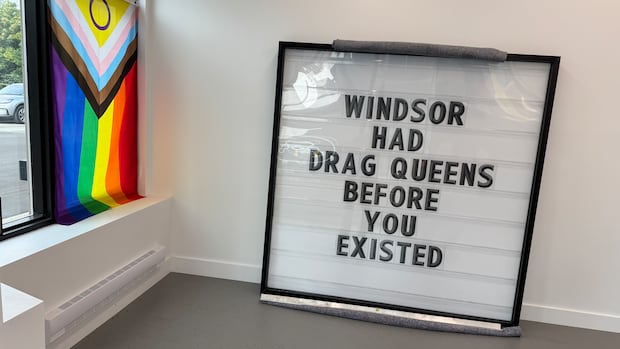
The installation read “Windsor had drag queens before you existed” on the text-based billboard. Artcite claims its landlord said the message violated the lease.
The non-profit said on its Facebook page Tuesday that it disagreed with that.
In a separate post, it said relocating the billboard was necessary to preserve the artistic independence and integrity of the Arts Council Windsor and Region’s New Voices Program.
“We are working toward finding a new home for the New Voices Billboard in Ford City where participating artists can continue to present their work as intended,” the organization said.
“In the meantime, the current exhibition, Windsor Had Drag Queens Before You Existed, will continue inside Artcite’s lobby until Aug. 18.”
‘A space for reflection, creativity, and conversation’
CBC has made multiple attempts to contact the building owner, Michael Difazio, in person and via phone and email, but he has not responded.
The New Voices Billboard is an arts council project that amplifies the work of local artists from underrepresented communities, according to a June 3 Facebook post from the Windsor-Essex Community Foundation.
It is a large white sign with interchangeable black letters on which artists post textual content.
It was originally launched in 2021 and relaunched in June for one year with a grant from the foundation, it said.
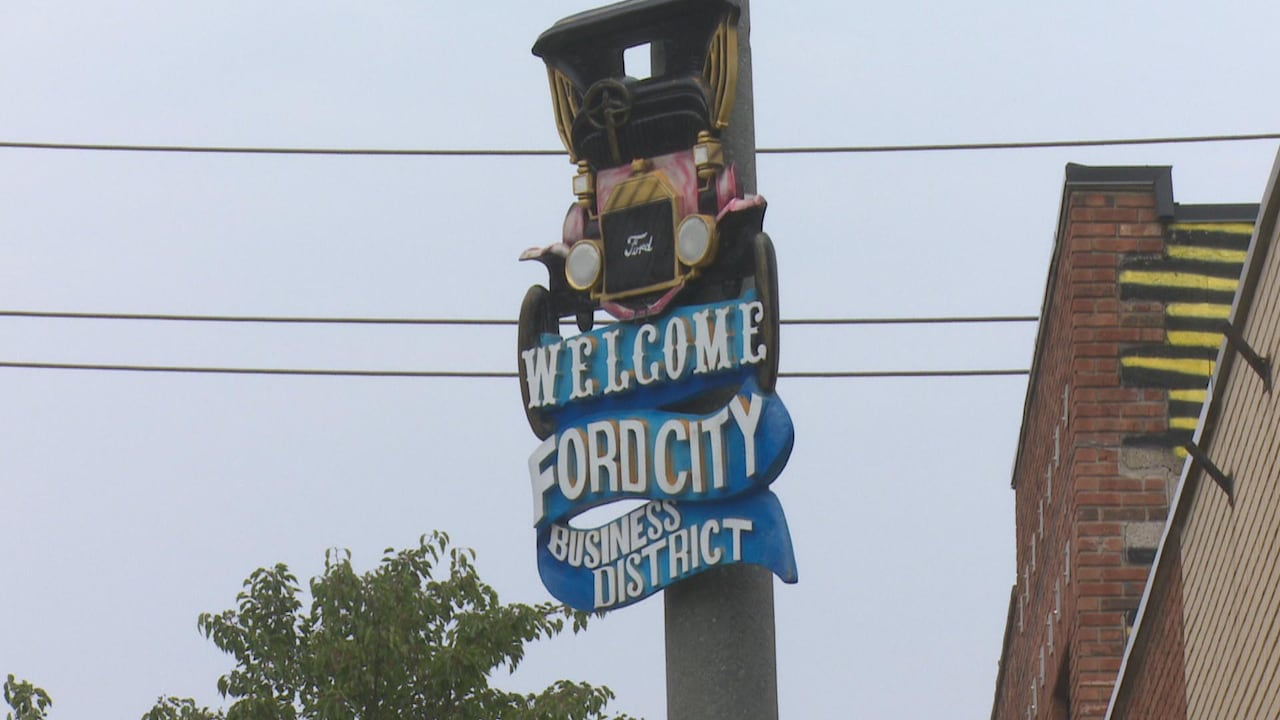 The Ford City BIA said it is actively looking for a new home for the project. (Jennifer La Grassa/CBC)
“This installation will transform the streetscape into a space for reflection, creativity, and conversation, inviting residents to engage with diverse perspectives through experimental poetry and storytelling,” the foundation said at the time.
Artcite said it had informed its landlord in April of the project’s purpose and format and provided a mock-up; according to Artcite, he gave written permission to “go ahead with this project.”
The organization claims the landlord did not object to a change in the sign’s wording midway through the first exhibit, which launched on June 24.
But following the launch of the current exhibit, Artcite says, the landlord demanded the text be removed and stated that future wording would require prior approval.
“He later alleged that Artcite had violated its lease by not obtaining approval for previous wording changes,” they added.
The non-profit’s lease does not state that individual artworks, exhibition texts or wording changes require landlord approval, it said.
Artist asks for privacy
That approval is only required for “the tenant’s identification signage.”
No separate agreement gave the landlord approval over artists, exhibitions or individual texts, it said.
Nonetheless, the organization removed the billboard on Tuesday so as not to risk financial and legal costs, according to the post.
The artist behind the billboard, Cole Fortier, also known as Epoxy the Drag Queen, declined an interview in the wake of the decision.
“The one thing I will say is that my project speaks for itself, and that the backlash around it is proof that the message behind the project is an important and much needed one,” Fortier said in an email to CBC.
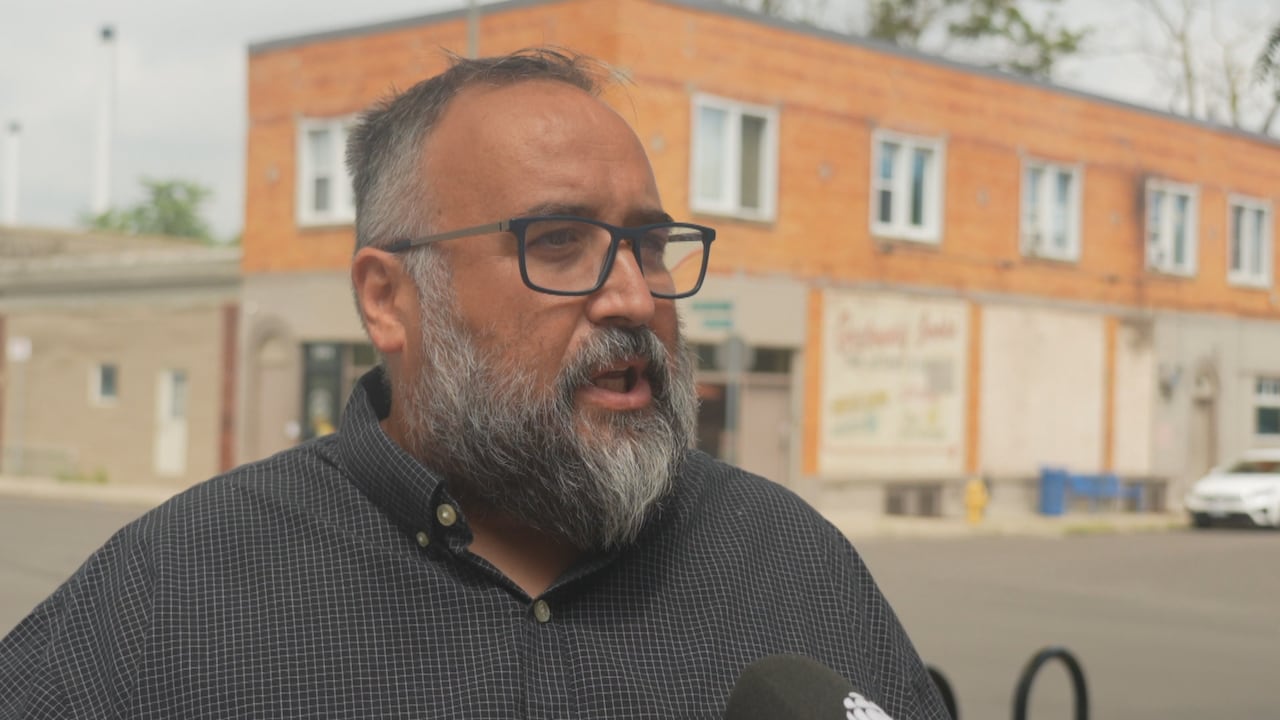 Ford City business owner Rino Bortolin said he believes the art project has been successful because it has started a conversation. (Ken Amlin/CBC)
The Ford City BIA has released a statement saying it is disappointed the installation was taken down, and is actively looking for a new home for the project.
“The FCBIA strives to foster a safe and inclusive neighbourhood where people feel represented and where different voices can be seen and heard,” it said.
“We hope that the New Voices Billboard can remain in our community. Projects like this bring creativity, conversation and diverse perspectives into our public spaces, and they contribute to the character and vibrancy of Ford City, which is full of great public artworks and murals.”
Ford City business owner Rino Bortolin says he doesn’t feel there’s anything offensive about the installation, and believes the dialogue should be allowed to play out.
“That conversation is actually what a lot of the outcomes of good art is,” he said.
Bortolin said he believes arts organizations should be free to do whatever they legally can on their premises.