
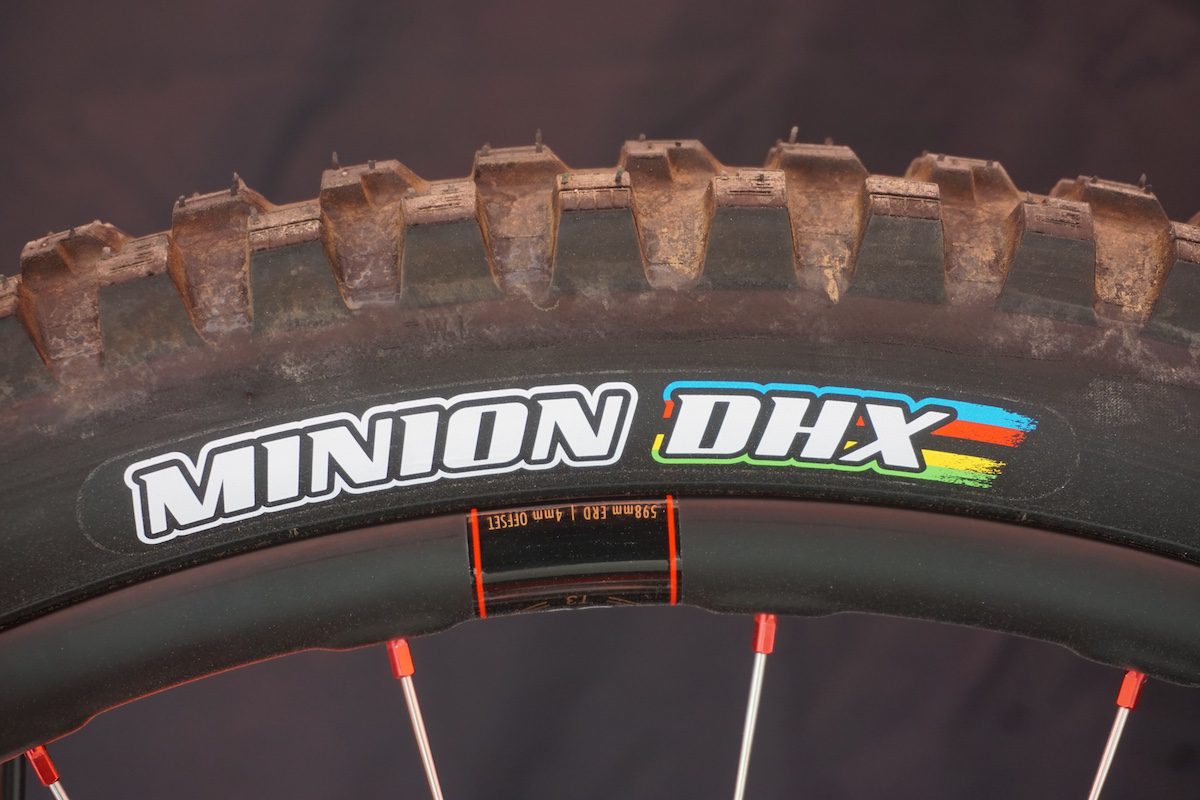
After spending years developing a replacement for its venerable Minion DHF/DHR tire combo, Maxxis decided to keep both. The tried-and-true Minion’s remain in the line. They’re joined by an entirely new tire, the DHX.
The bigger news is, arguably, what’s inside the DHX. Maxxis used the new tread as an opportunity to launch its updated DH Casing, replacing a casing that’s been its line for over a decade. This will be used across all DH tires moving forward, so it impacts way more than just the new DHX.
We talked to Maxxis Tire Design and Development Lead, Sean Day, to find out what the DHX’s place is in an ever-expanding range of Maxxis tire options, find out more about the development of the new DH casing and some thoughts on tire inserts and their place, or not, in tire systems.
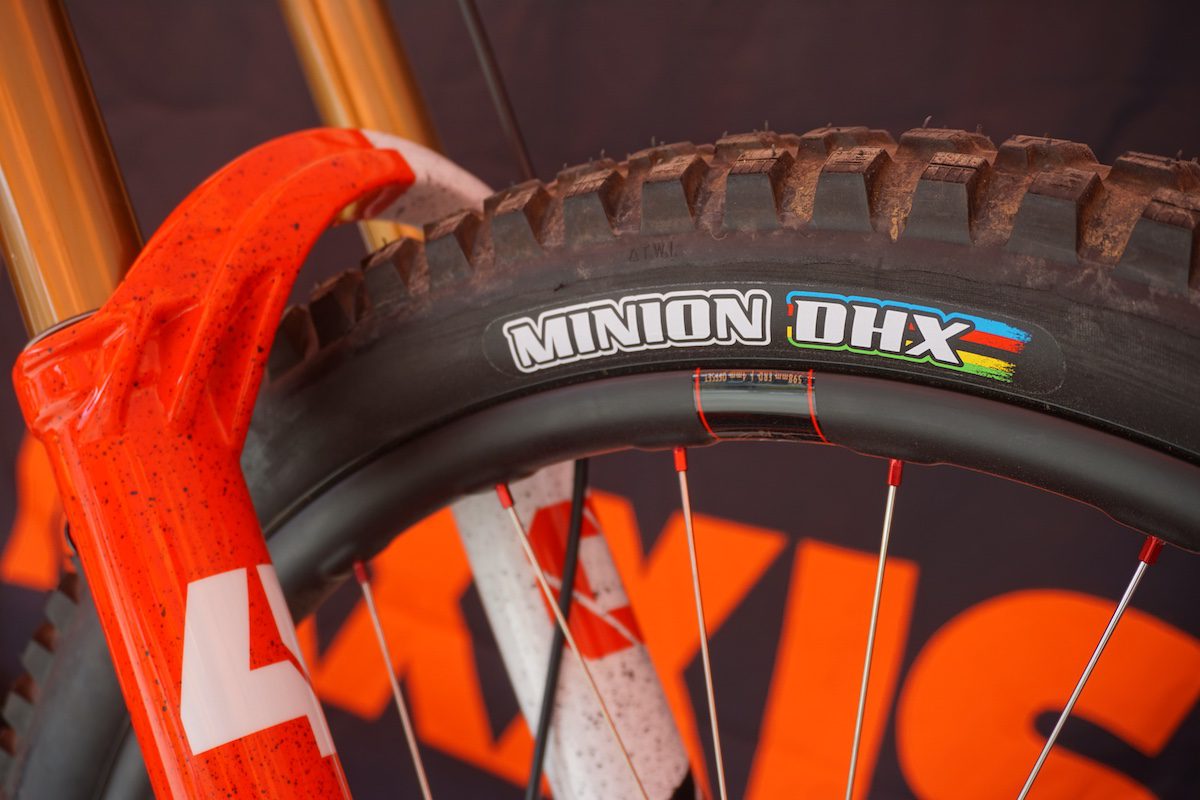
Maxxis responds to radial trend with … not radial tires
If you’ve been following tire trends and new releases, they mostly share two words in common, no matter what the brand: Radial casing. The new design is all the rage this year, led by Maxxis rival Schwalbe, but with several other brands now on the bandwagon. With rumours of an update to the Minion line floating around since Jackson Goldstone started winning World Cups last year on an unmarked Minion-ish-looking tire, many were expecting this year’s big release to be a radial casing. We asked day about that decision. [Words in italics are Sean Day]
Canadian MTB: These are not radial casing tires. I think a lot of people were expecting a radial tire from Maxxis. Why didn’t Maxxis want to go that way?
Sean Day: This is the casing spec that the pros have been using for the last two years. This is a development fully based around top-level World Cup racing. We just happened to decide to release it to the mass market.
Radials are a very linear casing. It requires a higher operating pressure. That higher operating pressure introduces some odd rebound and damping characteristics. In general, by the time you reach a pressure where you get adequate rim-out and sidewall support, that rebound and damping is unpredictable when pushed to a certain load or a certain speed.
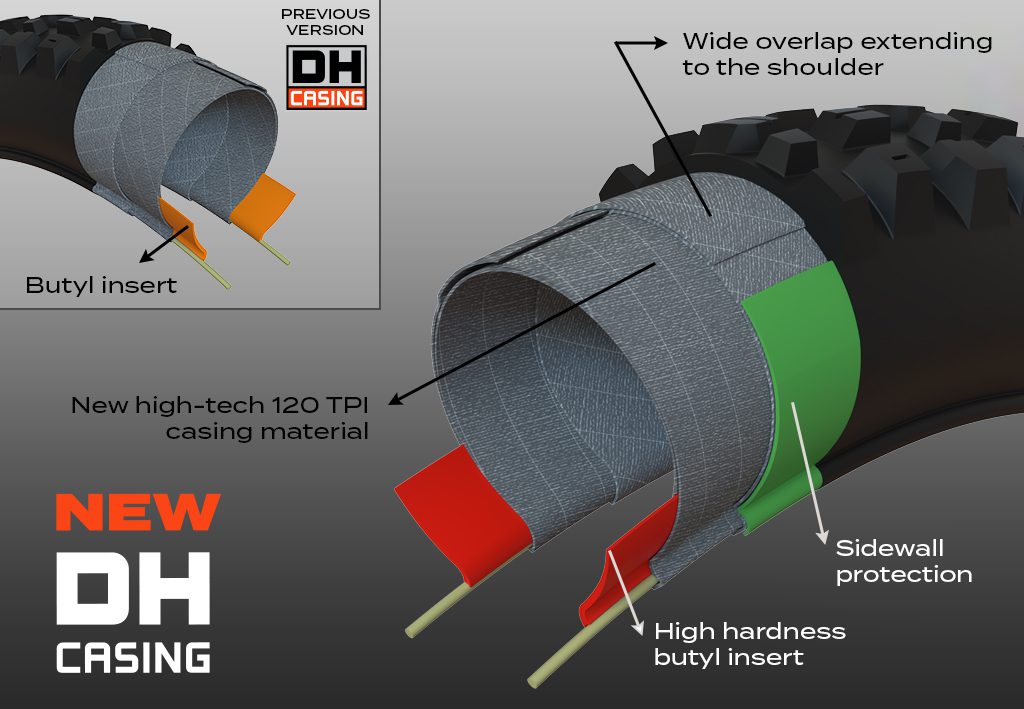
We work with a progressive stiffness casing. The Butyl later that sits in the lower third of the casing, that’s quite firm. Then we have EXO sidewall protection that goes from the bead all the way up to the edge of the shoulder knobs. That acts as you “mid-stroke support,” air quotes there for anyone listening, it also adds some slash protection in that area below the apex and above that thicker, under-tread rubber. Then we do some 120 TPI casing, which gives you a really soft contact patch. Essentially what we have is a progressive casing where you’re able to run a lower operating pressure. That helps gives you really slow rebound and better damping characteristics. A soft contact patch yet still extremely stable sidewalls . You end up having a similar large contact patch [to radials] but our tire has more stable sidewalls and more predictable characteristics when ridden to the highest levels of speed on World Cup tracks.
CMTB: With the change to the casing, is Maxxis recommending running lower pressures for the new DH casing?
SD: Yes. Relative to the old downhill casings, typically run it 2 to 4 psi casing. That’ll give you a good reference point. The new casing adds a considerable amount of support. Even handling the tire unmounted, you can really feel how much extra support is in the sidewalls.
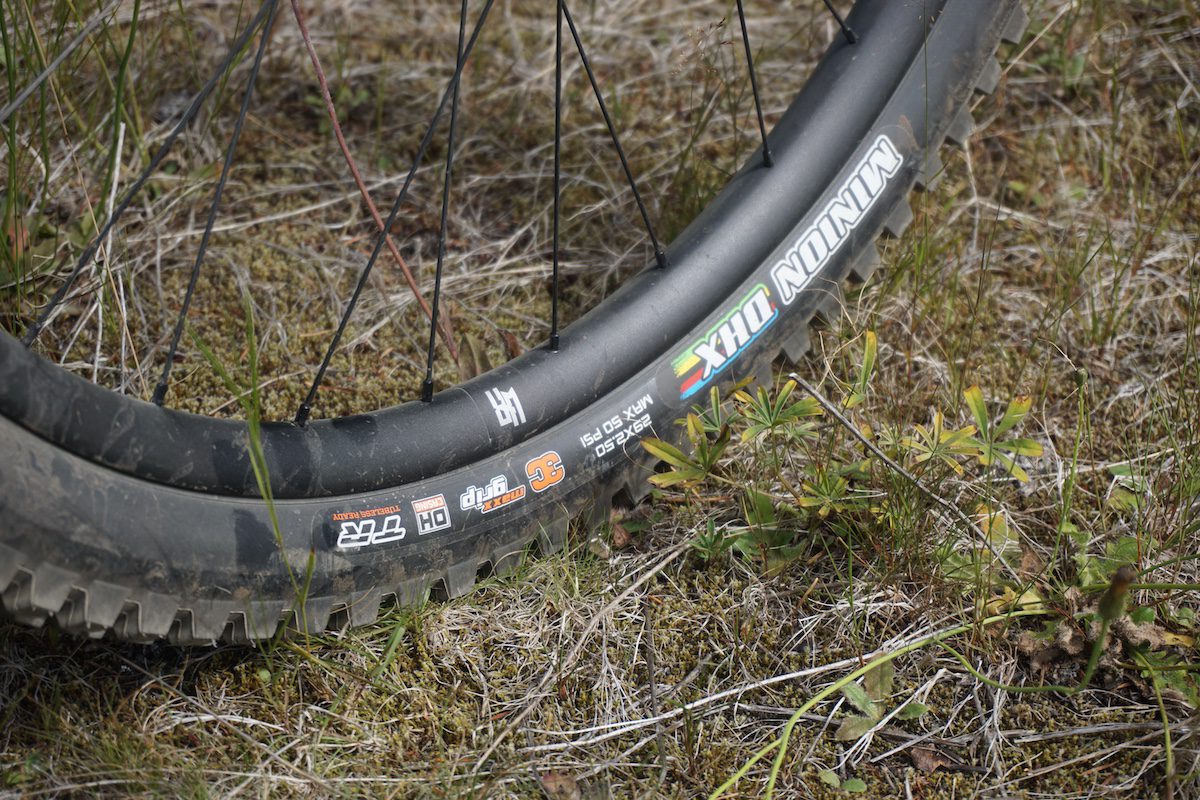 We put a few laps of the new Minion DHX while riding RMU’s Nighttrain DH bike during Crankworx
CMTB: We were here for the High Roller III launch last year. That tire already felt different. Is this something that’s a rolling introduction?
SD: Yes, The casing has had three main variations. The first is the production one that everyone knows. The second is the High Roller casing. The difference that casing and the original casing is just that harder butyl apex. But it’s still a dual ply 60 TPI. This is the next step in that evolution, building on that more progressive sidewall that the High Roller has. The teams had that High Roller casing for the 2024 season.
CMTB: So adding the 120 TPI casing to that then lets the top of the tire move around?
SD: Yeah, it’s almost akin to incorporating some of that feel that you’d get with an insert. But it’s a much lighter, integrated version and has better puncture protection. It has I believe 28 per cent better pinch flat protection, 24 per cent sidewall cut protection and I believe 28 per cent better under tread puncture protection. So. You get all these advantages of the overall handling of the tire, and all the extra protection. And it’s easier to remove.
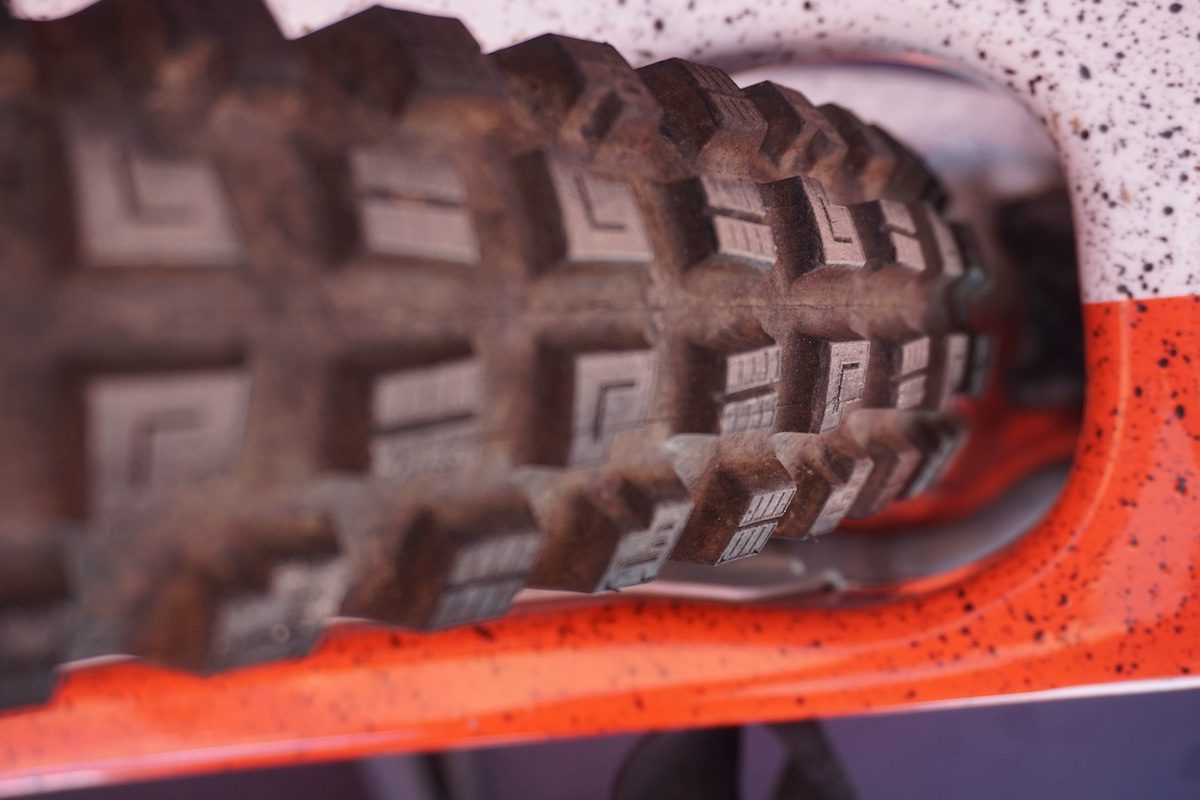 Meaty rubber for World Cup speed
Minion DHX explained: Adding another option to make choices simpler
I was able to get a few laps in on the new DHX during Crankworx, while riding RMU’s hyped up Nighttrain. That’s not enough to say anything too detailed, but it was enough time to notice that it takes the supportive feeling I appreciated in the High Roller III and adds to it. It certainly feels like Maxxis is taking aim at inserts, at least for DH casing. Inserts first emerged as a response to tire casings that weren’t holding up to how people were riding. It’ll be interesting to see if this new casing can start shifting momentum back away from shoving extra things in our tires (something I am, depending on the circumstances, still a fan of).
As for the tread itself, it certainly feels supportive. I’m not riding at anything approaching Jackson Goldstone pace, but the tire didn’t feel squidgy or like it was folding in any of Whistler’s hard-packed, fast corners. Day reminds me, though, that I’m really not the target for this tire. It was designed for World Cup teams, but it is now available for any of us in the general public that think they can ride just as hard.
Canadian MTB: This is the new DHX. DHF and DHR aren’t going anywhere. Why did you want to add another tire to an already comprehensive line?
SD: This idea for a DHF replacement had been floating around for quite some time. We didn’t want to just update the DHF and have it muddy the Assegai / DHR decision for our athletes. This DHX was deigned to be a next gen dry tire. Do everything that our current dry tires do well, the Assegai and the DHR, but open the bandwidth for higher load, higher speed support. It takes a high supported corner or a high speed rock garden, anywhere where you need more knob support, and it does better in those conditions.
Essentially, what I wanted to with this tire is simplify tire choice for our pro riders. If it’s fast, high speed, high load conditions, just regular dry conditions, they go for the DHX. If it is super dusty dry conditions, or wet or mixed, they go with the High Roller III. If it’s wet and muddy you go with the mud spike. So it’s introducing a new tread, but it was designed to simplify the choice for our pro riders.