
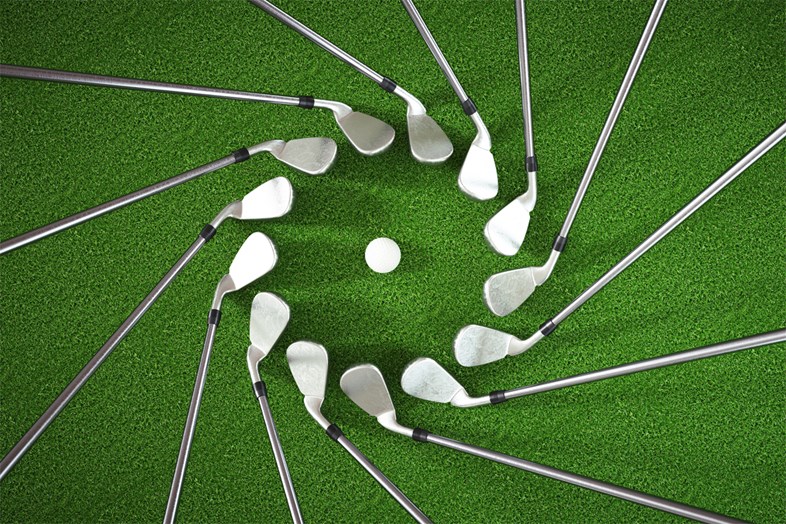
We tested 81 irons across four categories to find out how game improvement irons, players’ distance, players’ cavity, and muscleback blades compare for distance, consistency, launch, spin, and accuracy – helping you make the right choice for your game.
With so many models available, choosing the best golf irons for your game can feel overwhelming.
Working out which type of iron you need is a great place to start.
To help with that, we tested 81 irons across all categories. From compact muscleback blades to chunky game improvement irons, we wanted to see exactly how the four iron categories compared when it came to distance, consistency, launch, spin, accuracy, and more.
Every model was tested by TG test pro Neil Wain on a Foresight GCQuad launch monitor using Titleist Pro V1 golf balls and under identical testing conditions.
We then calculated the average result for every category using all the models within it.
Here’s what each type of iron delivered – and the type of golfer they will suit.
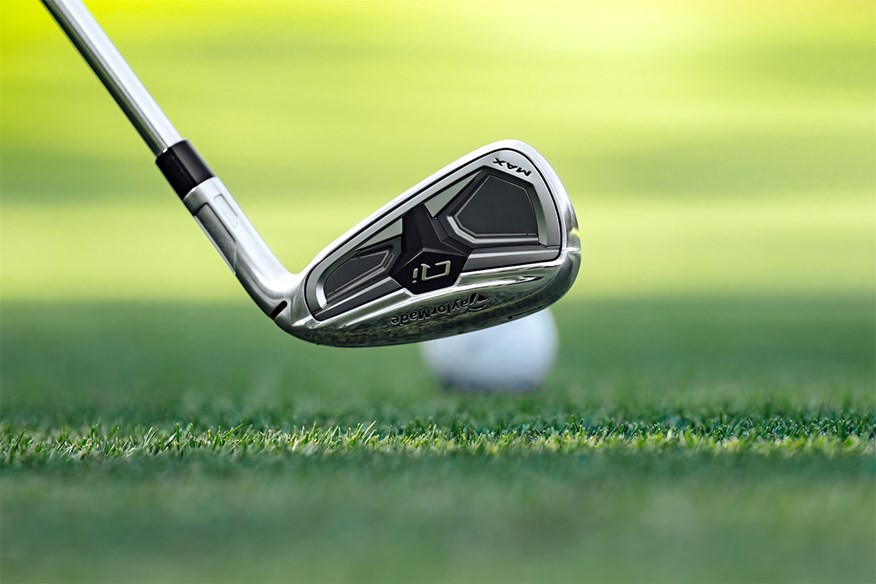 Game-improvement irons
If you’re looking for outright distance, the Game Improvement category delivered exactly what you’d expect.
Across the 24 Game Improvement irons in our test, the average carry was 185.6 yards, making it comfortably the longest category.
They were 5.3 yards longer than Players’ Distance irons, 12.8 yards longer than Players’ Cavity irons, and 13.9 yards longer than blades.
The difference was also obvious in ball speed. Game Improvement irons averaged 126.5mph, compared with 124.7mph for Players’ Distance, 121.2mph for Players’ Cavity, and 120.9mph for Musclebacks.
There is a trade-off, though.
Game Improvement irons average 5,173rpm of backspin, the lowest of all four categories. That’s 817rpm less than Blades, 699rpm less than Players’ Cavity irons, and 223rpm less than Players’ Distance irons.
They also launched lower, averaging 15.8°, compared with 16.7° for Players’ Distance, 17.0° for Players’ Cavity, and 16.9° for Musclebacks.
The combination of high ball speed, lower launch, and lower spin helps explain why Game Improvement irons were so much longer.
Our test pro, with a 7-iron clubhead speed around 90mph, was still able to generate 32.4 yards of peak height and a 45.8° descent angle, but slower swingers may struggle to match those numbers and therefore lose some stopping power.
Even at his speed, the descent angle was the shallowest of the four categories, but only 0.8° lower than the 46.6° average of the other three.
The most forgiving irons – but the least consistent?
Game Improvement irons are typically marketed as being the most forgiving, with their large heads offering more forgiveness on off-center hits.
But our test showed that they were actually the least consistent of the four categories.
Their ball speed standard deviation was 1.72mph, compared with 1.56mph for Players’ Distance, 1.51mph for Players’ Cavity, and 1.2mph for Blades.
The carry figures showed an even bigger difference.
Game Improvement irons averaged a 3.8-yard carry standard deviation, compared with 3.25 yards for Players’ Distance, 2.77 yards for Players’ Cavity, and just 2.04 yards for Blades.
The same trend appeared in left-to-right dispersion.
Game Improvers averaged 7.55 yards of L-R dispersion, the widest of the four categories.
Players’ Distance irons averaged 6.56 yards, Players’ Cavity 6.91 yards, and Blades just 5.69 yards.
It’s worth noting that shorter-hitting irons have an inherent advantage here, because the same percentage change will produce a smaller number when the distance is shorter.
But the broad trend remains: our test pro produced more repeatable carry numbers and more accurate shots with the more traditional iron shapes.
That shouldn’t be interpreted as Game Improvement irons being less forgiving or consistent for all golfers. In fact, a golfer who regularly misses the center of the face may get much better results from a larger, more stable Game Improvement iron than a blade.
It simply shows that, when our test pro was able to strike every club consistently, the more traditional iron categories produced more repeatable numbers.
Who should play Game Improvement irons?
Game Improvement irons are ideal if maximum distance and a larger, more confidence-inspiring head are your priorities. They’re particularly appealing if you need help generating speed or simply want to maximize how far your irons carry. Just remember that distance isn’t the same thing as predictable distance, and our test suggests there are more consistent options if that is your priority.
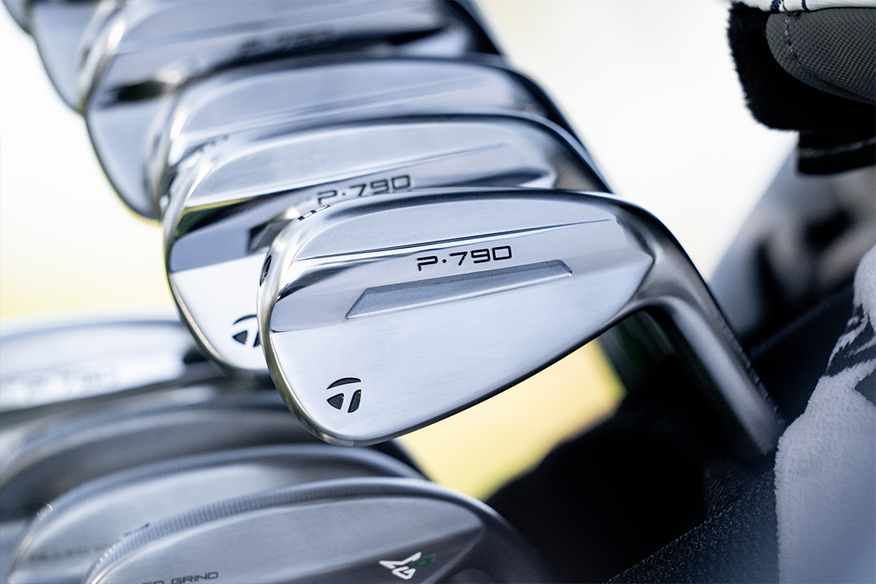 Players’ Distance irons
If Game Improvement irons represent the distance end of the spectrum and Blades represent the control end, Players’ Distance irons sit neatly between them.
We tested 21 Players’ Distance irons, and they averaged 181.3 yards of carry.
That’s 4.3 yards shorter than Game Improvement irons, but still 8.5 yards longer than Players’ Cavity irons and 9.6 yards longer than Blades.
So you’re getting much closer to the distance of a Game Improvement iron than anything else.
They were more consistent and accurate than GI irons, and even managed a tighter left-to-right dispersion than Players’ Cavity models.
That makes this category particularly interesting: you’re giving up only 4.3 yards of average carry compared with Game Improvement irons while gaining a meaningful improvement in carry consistency and accuracy.
Another benefit to Players’ Distance irons was the height they generated, with a peak height of 33.1 yards topping any other iron type.
They averaged 16.7° of launch, higher than Game Improvement irons but lower than both Players’ Cavity and Blades.
The spin rate was 222rpm higher than Game Improvement irons but considerably lower than Players’ Cavity models and Blades.
The result is an interesting combination of speed, distance, height, and accuracy.
Who should play Players’ Distance irons?
Players’ Distance irons are great if you want most of the distance benefits of Game Improvement models but prefer a more compact head and more consistent ball flights. The category gave up just 4.3 yards of carry to Game Improvement irons while improving carry consistency, ball-speed consistency, and L-R dispersion. That’s a very compelling compromise.
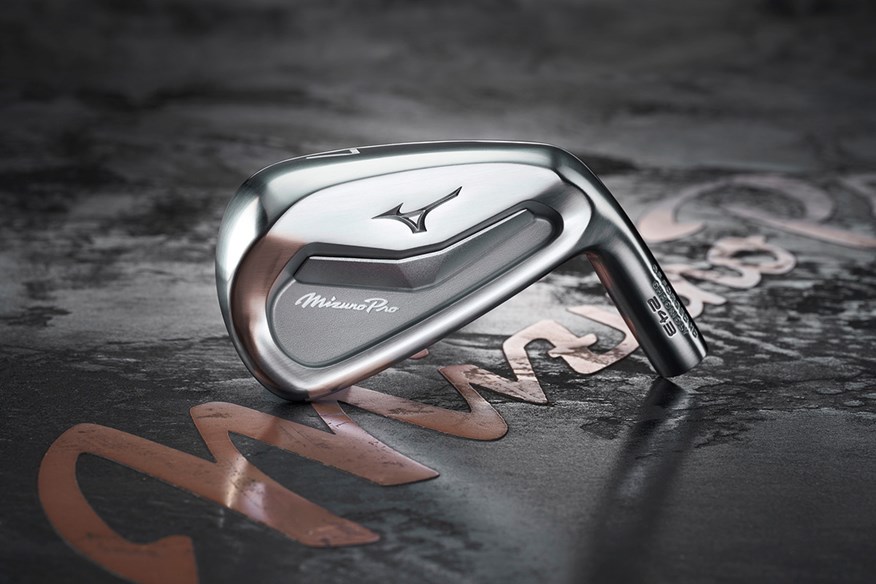 Players’ Cavity irons
The 22 Players’ Cavity irons in our test produced a very different set of numbers.
The average carry was 172.8 yards, considerably behind Game Improvement and Players’ Distance irons.
Instead, Players’ Cavity irons produced a more traditional combination of launch and spin.
They had the highest average launch angle of any category at 17.0°, narrowly ahead of blades at 16.9°.
They also generated 5,872rpm of spin, second only to blades, and 699rpm more than Game Improvement irons.
The combination produced an average 46.6° descent angle, tied with Players’ Distance and Blades.
The carry consistency numbers are where Players’ Cavity irons really separate themselves from Game Improvement models.
A 2.77-yard carry standard deviation is almost a full yard tighter than Game Improvement irons and only 0.73 yards worse than Blades.
Ball speed consistency followed the same pattern. The category averaged a 1.51mph ball speed standard deviation, second only to Blades.
There’s one metric where Players’ Cavity irons don’t quite fit the pattern.
Their average L-R dispersion was 6.91 yards, which was actually wider than Players’ Distance irons at 6.56 yards.
Both were comfortably better than Game Improvement irons at 7.55 yards, but neither came close to Blades at 5.69 yards.
Who should play Players’ Cavity irons?
Look at this category if you want a more traditional, controlled iron flight without moving all the way to a Blade. You give up a lot of the yardage offered by Game Improvement or Players’ Distance models, but the data shows substantially tighter carry consistency, more spin, and higher launch. It’s a particularly interesting option for golfers who value control but still want some help from the clubhead.
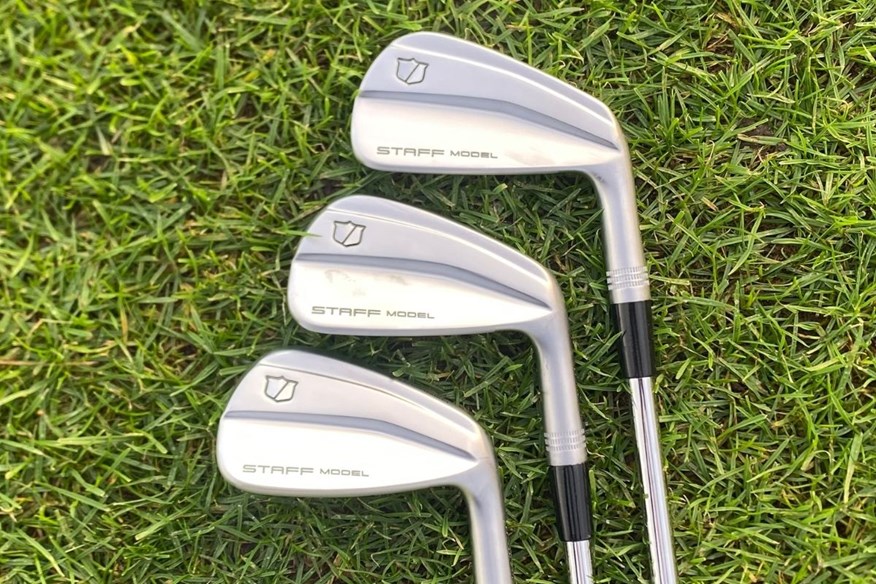 Blades
If Game Improvement irons were the stars of the distance numbers, Blades dominated almost everything else.
We tested 14 Muscleback Blades, and they averaged just 171.7 yards of carry – the shortest of all four categories, and by a significant margin compared to Players’ Distance (181.3 yards) and Game Improvement (185.6 yards) models.
They were also the slowest, averaging 120.9mph of ball speed. That was only slightly below Players’ Cavity models, but 5.6mph below GI models and 3.8mph slower than Players’ Distance irons.
But look beyond those numbers and the Muscleback results become much more impressive.
They offered the most consistent ball speed and distance.
They produced the most spin – almost 600rpm higher than Players’ Distance irons and more than 800rpm more than Game Improvement models.
They had the lowest peak height of all four categories but still produced the joint-steepest descent angle – a perfect recipe for golfers who like flighted shots they can stop on the green with spin, rather than ballooning ball flights.
And they were the most accurate. Their 5.69-yard average was 0.87 yards tighter than Players’ Distance irons, 1.22 yards tighter than Players’ Cavity, and 1.86 yards tighter than Game Improvement models.
But, before everyone rushes out to buy a set of ultra-thin Blades, there is an important caveat.
Our test pro is a highly accomplished player who can strike a Muscleback consistently. A golfer who regularly misses the center of the face could see a very different result.
What this test does show is how these four categories behaved when subjected to exactly the same testing conditions and the same golfer. And with those parameters, the Muscleback’s consistency numbers are impossible to ignore.
Who should play Muscleback irons?
Blades are great if you’re a highly consistent ball striker who prioritizes control, workability, and predictable distance over ball speed and carry distance. The numbers show a clear trade-off: Musclebacks were the shortest, but also the most consistent for ball speed and carry, the highest-spinning, and the most accurate. For the right golfer, that control can be worth far more than extra yards.
How the four iron categories comparedCategoryBall Speed (mph)Ball Speed SD (mph)Carry (yds)Carry SD (yds)Launch (°)Spin (rpm)Peak Height (yds)Descent (°)L-R Dispersion (yds)Game Improvement126.51.72185.63.8015.85,17332.445.87.55Players’ Distance124.71.56181.33.2516.75,39533.146.66.56Players’ Cavity121.21.51172.82.7717.05,87231.946.66.91Muscleback120.91.20171.72.0416.95,99031.646.65.69Which type of golf iron should you play?
After testing 81 irons, there isn’t one category that can claim to be the best for everyone.
Instead, the data reveals four very different performance profiles.
Game Improvement irons are the obvious choice if you want maximum distance. Just make sure you’re getting enough launch and descent angle to make shots playable and enable you to hold greens.
Players’ Distance irons are a great option for those who want strong yardage while gaining better consistency, accuracy, and height than Game Improvement models.
Players’ Cavity irons sit closer to the traditional end of the spectrum. Their numbers were remarkably similar to Blades, making them ideal for golfers who prioritize control but want a little more comfort than a full-on Muscleback.
And for accomplished golfers who want maximum control, Blades were the clear winner. They were the shortest and slowest category, but also the most consistent for ball speed and carry distance, the highest-spinning, and the most accurate in terms of left-to-right dispersion.
Ultimately, though, the right iron category is the one that gives you the best combination of distance, consistency, accuracy, and confidence.
The category averages show the broad trends, but individual models can vary enormously – which is why testing and fitting remain so important.
After putting 81 irons through exactly the same test, though, one thing is clear: choosing your next set of irons is about deciding which performance characteristics matter most to your game.