
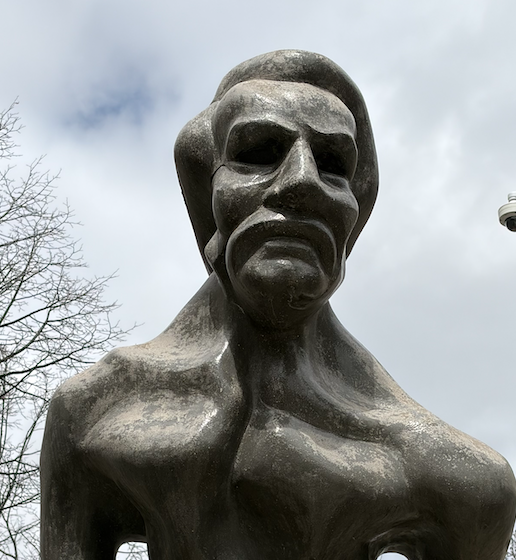
Summary of Riel’s Demands
Title to Lands: Riel demanded the federal government recognize and secure the land titles of Métis farmers who had been occupying and farming the Red River and Saskatchewan valleys for decades.
Fair Compensation: He pushed for guarantees that Métis hunting rights, river-lot land holdings, and traditional livelihoods would be protected against incoming white settlers and survey crews.
Entry into Confederation: Riel negotiated for the Red River Settlement to enter the Canadian Confederation as a recognized, full-fledged province (Manitoba) rather than a federally controlled territory.
Policial Voice: He demanded provincial control over local affairs, as well as fair representation in the federal parliament to advocate for minority interests.
Cultural Protections: Riel demanded official bilingualism (English and French) in the legislature and courts, as well as funding for denominational (Catholic and Protestant) schools.
Economic Sovereignty: In addition to Métis-specific rights, Riel advocated for local economic development, including a demand for Manitoba to extend to Lake Superior to secure a proper port for the region.
Conflict with Settlers
The North-West Rebellion (1885): As the transcontinental railway and waves of new settlers pushed west to farm the prairies, the Métis faced the threat of losing their land, livelihoods, and cultural identity. Desperate for representation, they called on Riel to negotiate with the federal government. When peaceful negotiations and petitions were ignored, the standoff escalated into a five-month armed conflict. The rebellion was eventually crushed by federal troops at the Battle of Batoche (Saskatchewan), and Riel surrendered.
Prime Minister Sir John A. Macdonald’s government charged Riel with high treason to make an example of the man who had now led two major uprisings in the West. The trial was moved to Regina, where an English-speaking, Protestant jury—with very little Métis representation, found Riel guilty.
Despite the jury recommending mercy, Prime Minister Macdonald refused to grant clemency. The Canadian government viewed Riel as a dangerous rebel and an obstacle to westward expansion. For many English-speaking Canadians at the time, his leadership and the loss of Canadian soldiers in the conflict demanded the ultimate penalty. Conversely, many French Canadians saw Riel as a hero fighting for minority rights, and his death severely fractured the country along linguistic and religious lines.