
At the end of Babymonster’s July 11 performance of “I Like It” on a weekly music show, the camera moved in for an unforgiving close-up of Asa for her “ending fairy” moment.
Wearing a purple-and-yellow dress with a matching hairpin, she looked directly into the lens as her shoulders rose and fell slightly, her warm hazel eyes polished to near-impossible perfection.
And that too-good-to-be-true glow was not merely a trick of the lighting — it had been designed into her eyes themselves.
Dayoon, a senior makeup artist at Oui Oui Atelier who currently works with K-pop acts such as BabyMonster, IVE, fromis_9 and more, is among the people behind the scenes who carefully constructed that exact moment.
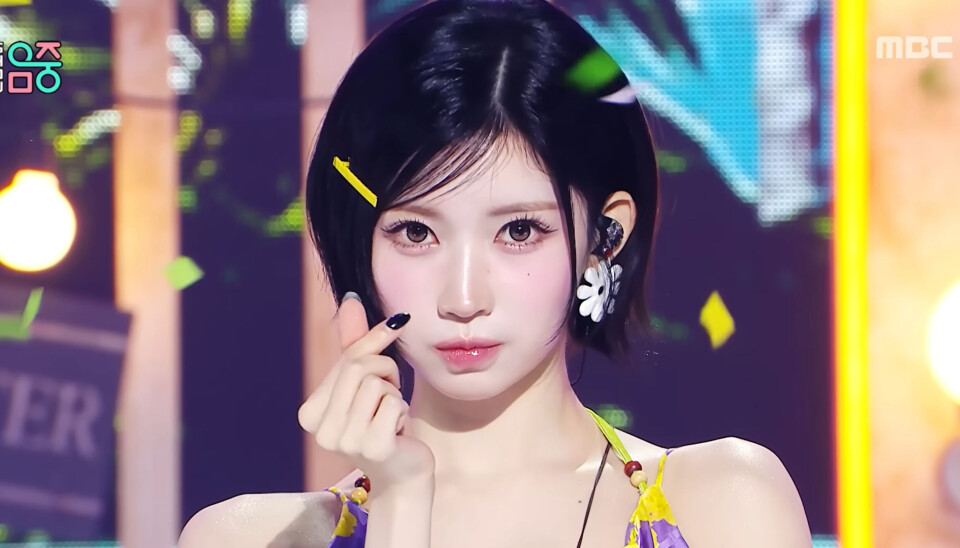
BabyMonster’s Asa poses for the camera at the end of the girl group’s performance of “I Like It” on the July 11 episode of MBC’s weekly music program “Show! Music Core” (2005-).
SCREEN CAPTURE
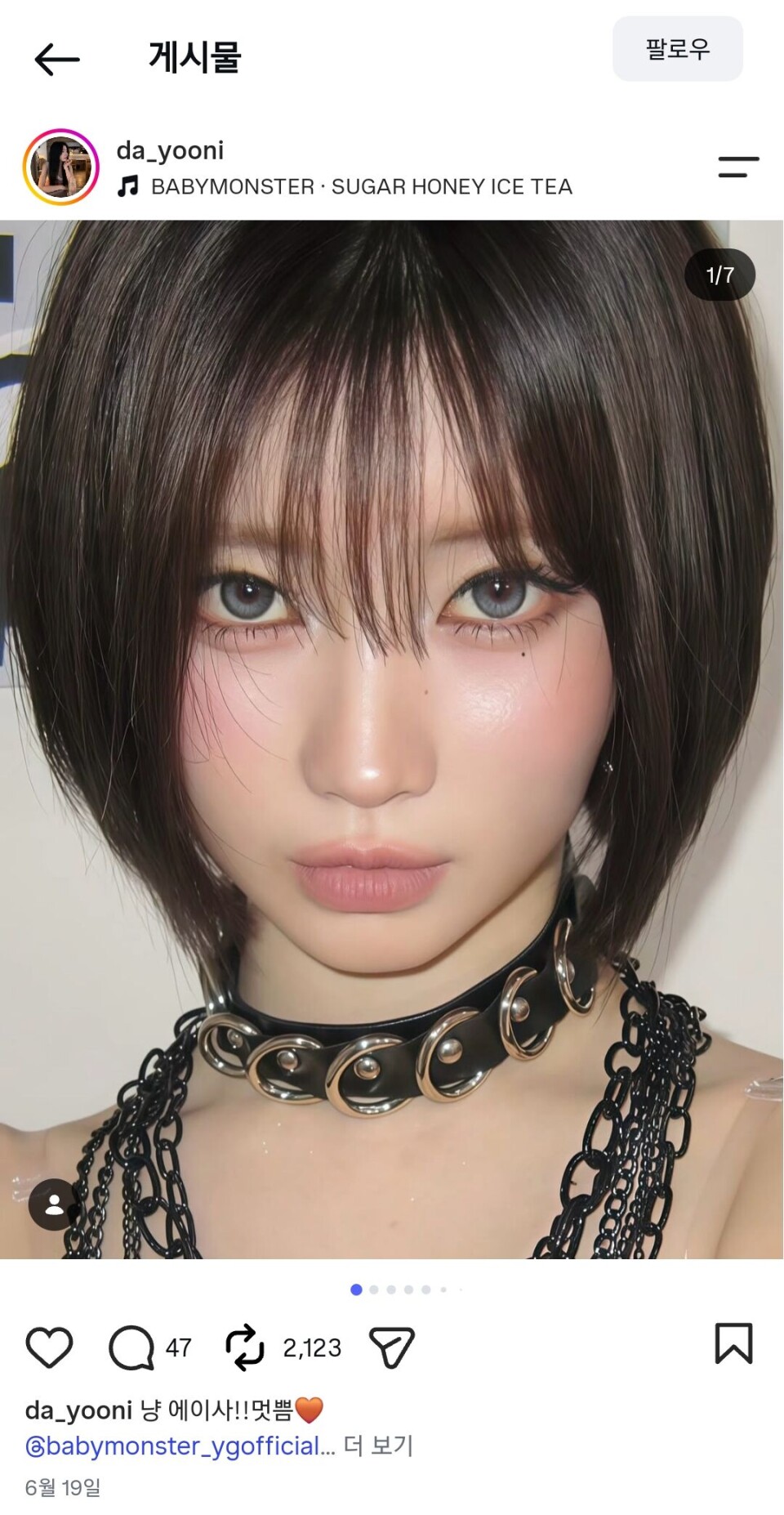
Makeup artist Dayoon’s Instagram post of her work with BabyMonster’s Asa
SCREEN CAPTURE
“Colored contact lenses are crucial elements that bring out the makeup and styling,” the veteran makeup artist told the Korea JoongAng Daily, explaining that she selects colored contact lenses by considering not only an idol’s eye makeup but also the colors and overall concept of the outfits worn onstage.
“Especially onstage, lenses can make the shape of the eyes appear more defined or add a focal point to the overall look through their glow,” Dayoon said.
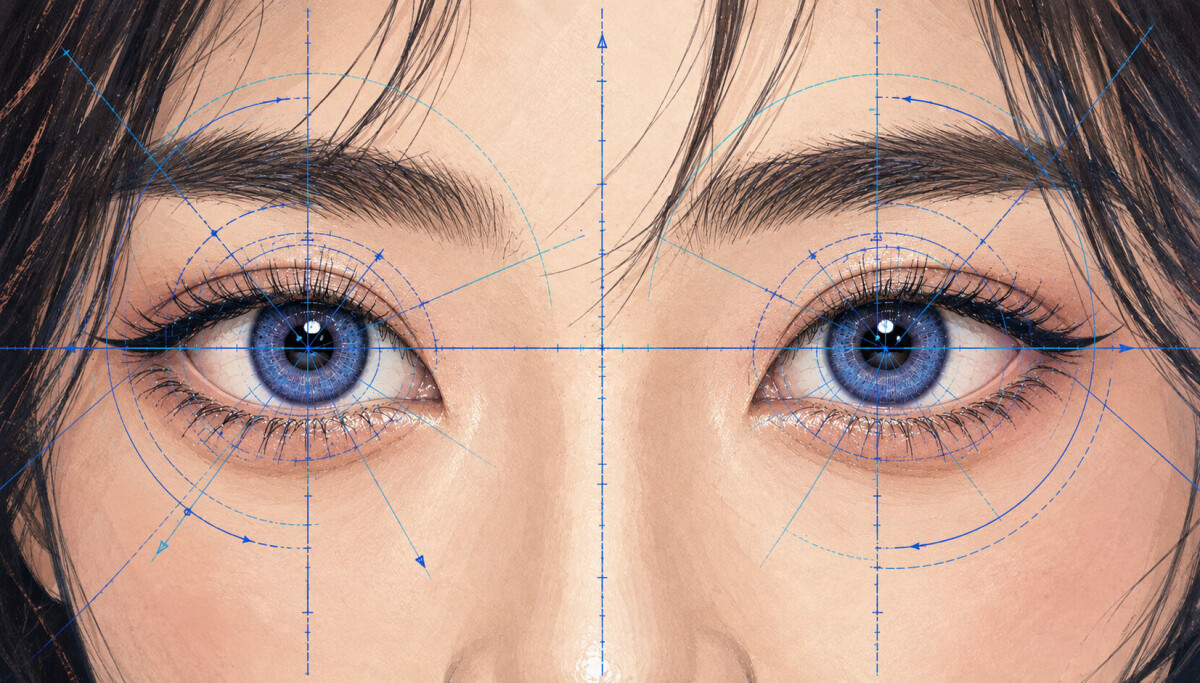
And that glow is itself the product of careful design: an illusion intended to make light appear permanently reflected in the wearer’s eyes — an optical innovation driven by the unforgiving digital mediascape and the increasingly elaborate aesthetic architecture of K-pop branding.
Catchlight engineered to stay
“The most noticeable trend among Idol lenses this year has 100 percent been weighted highlight lenses,” a Korean lens enthusiast who wished to be identified by their social media account, Idol_eotd, told the Korea JoongAng Daily.

A selfie of ILLIT’s Wonhee wearing blue weighted lenses
SCREEN CAPTURE
The account identifies certain contact lenses used by K-pop idols based on photos and shares the information online, with a combined following of around 28,000 across X and Instagram.
The “weighted highlight lenses,” also known as axis-stabilized highlight lenses, are designed to keep a printed highlight in a fixed position even as the wearer blinks or moves their eyes.
Contact lenses have been part of Korean beauty culture since the early 2000s, but highlight lenses — featuring bright crescents or gradients that create a permanent-looking glow within the iris — began gaining popularity in the early 2020s.
But these lenses could rotate on the eye, causing the printed highlight to shift into an unnatural position, which is where the weighted lens comes in.
The stabilizing technology of weighted lenses was originally developed to correct astigmatism. Weighted cosmetic lenses, which have a thicker lower section that prevents the printed highlight from rotating on the eyes, began entering the market in late 2024 and have gained popularity among K-pop idols over the past year.
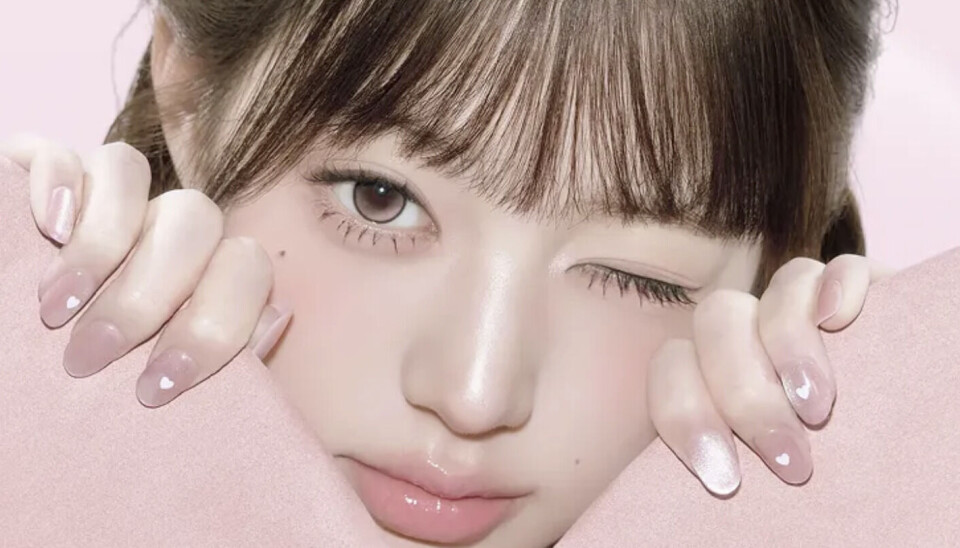
IVE’s Wonyoung in a promotional photo for Hapa Kristin, wearing the lens brand’s weighted contact lenses
SCREEN CAPTURE/HAPA KRISTIN
Brands including Lens Me, Lenbling and Hapa Kristin have since launched products in an increasingly diverse range of styles and colors.
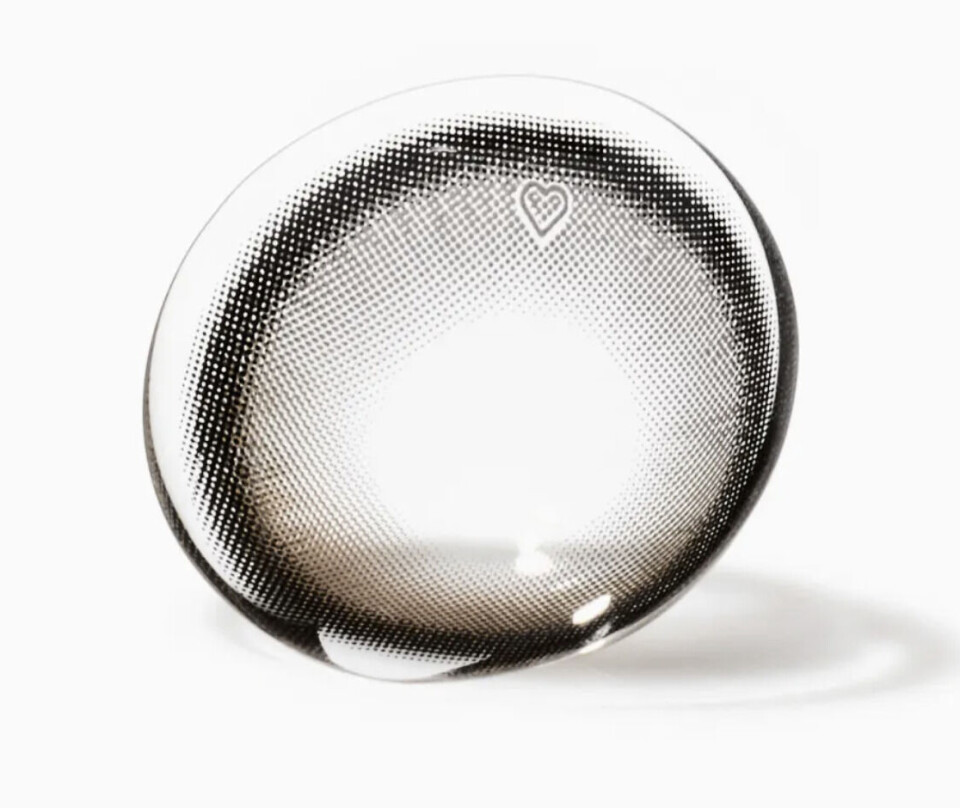
Hapa Kristin’s latest weighted lens, designed to keep a printed highlight fixed in place even as the wearer blinks and moves
SCREEN CAPTURE/HAPA KRISTIN
“Especially for a lot of the larger music shows and concept photo shoots, the color payoff of fixed [weighted] lenses under stage lighting gives off an extremely bright glow that looks almost AI-like, but also photographs really well,” Idol_eotd said.
Dayoon also noted that the use of weighted lenses has become increasingly common.
“Artists often have to wear contact lenses for extended periods for stage performances or concerts, and because it is difficult to check a mirror frequently during a performance, many prefer weighted lenses,” she said. “In particular, I think they are increasingly being used as a styling element to match the concept of an outfit or song.”
Devils in the details
If you are an idol, every mole on your face becomes part of your personal brand — and that level of scrutiny naturally encourages more elaborate styling.
Such scrutiny has intensified with the rise of unforgiving close-ups across K-pop content. High-resolution “face cams” that follow individual idols, focusing solely on their faces, have become routine, driven by advances in camera technology and the digital content landscape.
And such routines contributed to accelerating the adoption of intricate lens designs.
“The biggest characteristic of K-pop makeup is that it must be visible when viewed from afar while also looking beautiful from extremely close up,” said Prof. Han Ji-soo, head of the Department of Beauty Industry at Sungshin Women’s University, noting that this tendency was driven by digitalization and a social media culture where fans capture every moment from performance videos and actively share them online.
“You can see the texture of the skin, each individual eyelash and even the glitter or the patterns on contact lenses in detail on such face cams,” she said
And many idols’ dewy glints within the iris cannot be created solely by natural lighting or the size of the eyes.
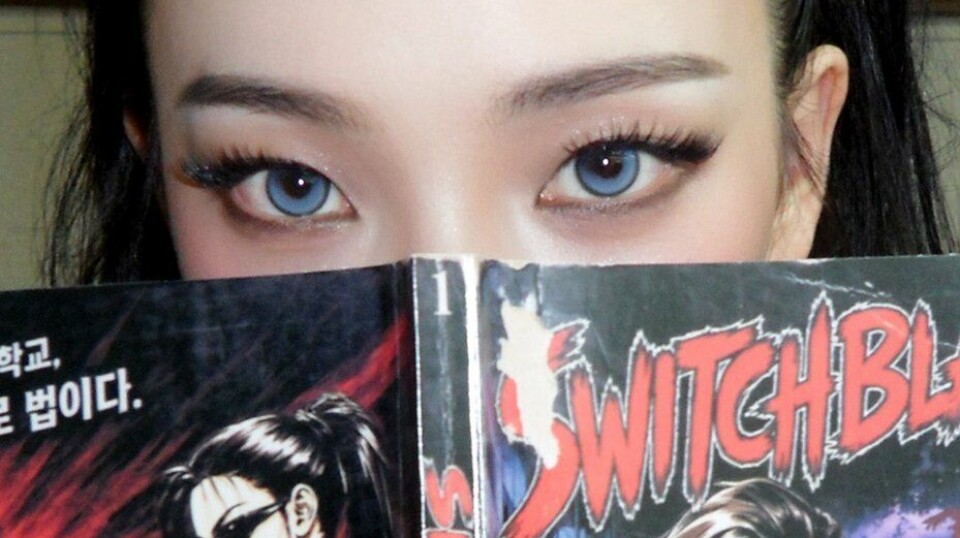
aespa’s Karina in a promotional photo for “Switchblade”
“Where the iris is bright or dark, and how light appears within it, matter far more than one might think,” Han said. “That is why lenses designed to make it look as though real light is reflected in the eye seem to get more popular these days than those that merely change the color of the entire iris.”
A representative of Hapa Kristin, a lens brand whose products are widely worn by K-pop artists, said the company actively communicates with K-pop agencies, makeup artists and also idols themselves for design feedback, often prioritizing “new styles with vivid colors that can express a concept,” when it comes to lenses designed for stage use.
“Comfort is also a key criterion,” the representative added. “Because long photo shoots under lighting create an environment in which the eyes can easily become dry, we consider testing in this area especially important, which, I believe, leads to many idols wearing our products.”
Gaze creates persona
In K-pop, eyes often help define an artist’s character within certain concepts and complete the visual narrative built around an album.
“I view colored contact lenses in K-pop not simply as products that change eye color, but as a makeup element used to create a character suited to a concept,” Prof. Han said.
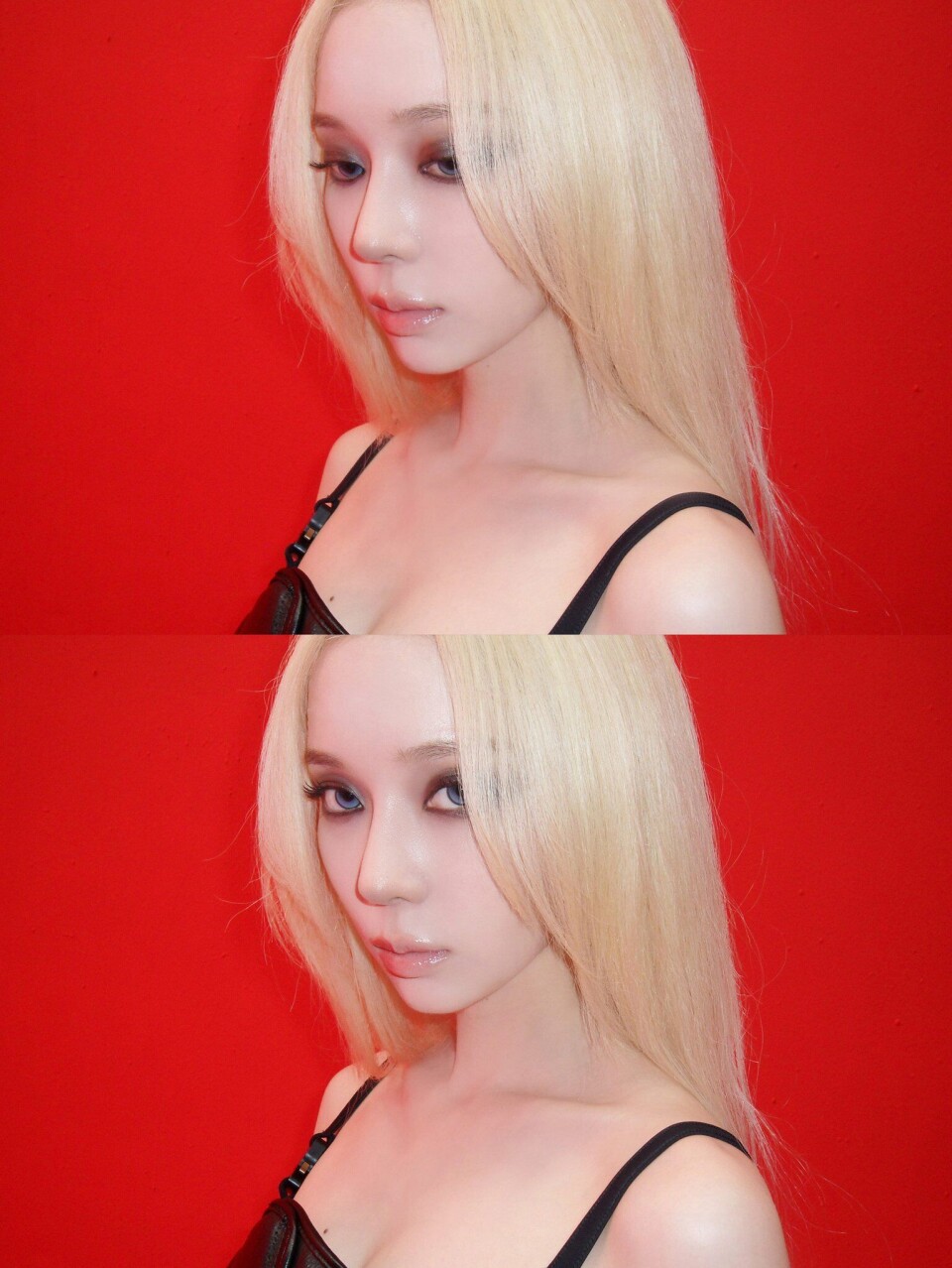
aespa’s Winter in a promotional photo for “Switchblade”
SM ENTERTAINMENT
“If I were to describe the recent evolution of colored contacts in one phrase, I would say they are shifting from a way to change eye color into a way to create a gaze.”
Idol_eotd also noted that the choice of lenses can significantly alter an idol’s overall visual presentation.
“When you consider how important visual storytelling is in K-pop — not just the music itself — you realize how much thought and detail go into something as small as the style of lenses an idol wears,” they said, citing the recent example of the girl group Hearts2Hearts.
The group released the upbeat summer song “Lemon Tang” last month, with teaser images featuring “big doe-eyed” warm-tone lenses and sun-kissed makeup that complemented a refreshing summer style, they noted.
Another prominent example is girl group aespa, whose futuristic aesthetic often incorporates vivid, unconventional contact lenses. In teaser images for “Armageddon” (2024), the members wore lenses that made their pupils appear heart- or butterfly-shaped, while also giving each eye a different color, creating an almost mythical image.
From idol gaze to global product
Riding on the global popularity of K-pop, lens brands are increasingly partnering with K-pop acts to accelerate overseas expansion.

Stray Kids’ Felix in a promotional photo for “This & That”
JYP ENTERTAINMENT
The members of Blackpink served as models for Olens from 2018 through 2022, while MEOVV was named the brand’s new model in February this year. IVE’s Wonyoung has served as Hapa Kristin’s global ambassador since July 2022.
According to Korea Customs Service data, Korea’s contact lens exports reached $217.6 million last year, up about 43 percent from 2016.
The Hapa Kristin representative said K-pop’s popularity has a significant effect on the brand’s international sales.
“When an idol becomes the persona of a brand and promotes its products, it produces the most effective promotional impact,” the representative said. “It is effective domestically as well, but its influence is even more pronounced overseas. The response is particularly strong in Japan and Southeast Asian markets, while Thailand and China have also shown meaningful responses recently.”
K-pop idols increasingly serve as style lookbooks for consumers.
“These days, when consumers see an idol, they immediately search what lenses, lip products or hair color they are wearing,” Prof. Han said. “The styling effect of contact lenses, in particular, can be seen relatively quickly when recreating idol makeup.”
The professor pointed out that consumers these days first describe the aesthetics they want as “I want my eyes to look dewy,” “I want visible catchlights” or “I want a cool, mysterious gaze.”
“That shows how an idol’s gaze itself has become a style reference,” she added.
BY SHIN HA-NEE [shin.hanee@joongang.co.kr]