
It’s been just over a year since a motion drew upwards of 30 speakers into a Vancouver City Council meeting, where they attempted to capture — in under three minutes each — the conditions forcing arts institutions to close their doors and artists to leave the city at an alarming rate.
Accessing affordable spaces to create art is one of the main challenges facing Vancouver’s creative community — it has been for years. The Eastside Arts Society’s oft-cited 2019 City Without Art report warned of already-devastating rent increases, resulting in a loss of 400,000 square feet of studio space throughout the ten years leading up to the report’s publication. Also in 2019, the City of Vancouver approved its cultural infrastructure plan, Making Space for Arts and Culture. At the time, two-thirds of arts spaces had leases of five years or less and one-third had leases of one year or less, leaving artists vulnerable to property redevelopments and unpredictable rent costs. You could count the number of facilities owned by non-profit arts organizations on one hand.
When I sat down with the organizers behind some of Vancouver’s most beloved arts organizations last summer, they had endless stories about their difficulties finding purpose-built spaces, and navigating impossible zoning requirements and high property taxes. It seemed the same concerns from years ago still rang true.
Councillor Pete Fry’s 2025 motion, which had been drafted by the city’s Arts and Culture Advisory Committee, responded to these concerns with funding and infrastructure-related suggestions for Council to look into before discussing next year’s budget. Several components were removed when it was amended by Councillor Sarah Kirby-Yung before being passed by an ABC Vancouver majority, and the amended version was primarily focused on consulting with artists to identify potential solutions. But those conversations have happened already, according to the arts organizers I spoke to last year. Plans like Making Space and Culture|Shift — the city’s 2020–29 strategic direction for arts- and culture-related issues — already exist, and little progress has been made on completing their goals.
But arts spaces were revisited at council this summer, and this time around, the outcome was more promising.
“Keep the Artists in: Creating a Cultural Land Trust for Vancouver” was a motion put forward by Councillor Sean Orr in July, who said he’s played music in at least 10 different jam spaces that have been lost over the past few years. “Every time a warehouse, industrial building or site of that ilk get[s] converted to something more profitable, we lose more of that space permanently, because nothing currently exists to secure it in the long-term,” he said in a council meeting.
A land trust is a non-profit that acquires and manages property — and it might be the best way to keep older spaces “alive and affordable,” Orr said. It could ensure artists are not subjected to unpredictable rent costs and redevelopment by making it easier for them to access long-term leases with stable rents or even pathways to ownership. Orr’s motion — which passed unanimously on July 15 — directs staff to come up with a framework for establishing a Vancouver-based non-profit to create and operate a cultural land trust by the end of the first quarter of 2027. This research will involve looking into any existing information on relevant policies and projects; an operating and policy model; rough operating costs and financial impacts on the arts in Vancouver; and the land values, operational costs, suitability and conditions of city-owned buildings that could potentially act as arts spaces.
Creating a Vancouver-based cultural land trust has been years in the making. Making Space first proposed supporting a land trust. In 2024, former Councillor Christine Boyle’s successful arts and culture motion pushed for progress on Making Space’s goals, including furthering land trust research.
But, neither would have happened without the efforts of 221A, the non-profit leading arts spaces and land trust research in the city.
Brian McBay sees 221A as a “homegrown solution” to the arts space crisis. It started as an art and design collective founded by him and Michelle Fu, then both students at Emily Carr University. With the help of McBay’s family, they ran a small gallery and artist studio in Chinatown, taking advantage of the location to observe what it meant to operate a creative space in an area where property and its uses are heavily contested. As the organization grew, its members realized Vancouver’s creative communities suffered a dire lack of spaces to make art.
The non-profit now operates seven spaces with rentable studios and artist housing. It doesn’t own the properties; it simply upgrades the spaces to make them suitable as studios, then subleases them to artists. 187 E 3rd, one of its properties, contains 30 units of housing for artists earning at or below the income limits set by BC Housing. At the seven-storey 825 Pacific, you’ll find 221A’s offices, along with 23 other rent-stabilized units for artist tenants. Both of these buildings are owned by the City of Vancouver. And, if there’s anything 221A has learned from years of working together, it’s that the city can’t solve this affordability problem alone.
In 2018, 221A began looking into what they hoped could become a permanent solution to the space crisis: a land trust specifically intended to support creatives.
As Fu said in her speech to Council, “we can’t lease our way to permanence.” Even groups or businesses that have used a space for many years aren’t immune to redevelopment, and the safest way to promise stability is through ownership. Rath Art Supplies on Main Street, for instance, has held its current space for over 20 years — they share the building with a coffee shop, a bookstore, artist studios and a burrito joint. Owner Theresa Frazao told Council that the owner of the building recently passed away, and while its residents don’t know anything about the future of the building yet, they’re fearful they’ll be priced out or evicted so it can be redeveloped.
Cultural land trusts are currently used in other cities around the world, including London, San Francisco and Seattle, which face similar crises to Vancouver when it comes to ensuring affordability for arts and culture communities. Ultimately, 221A’s goal is to become a tenant of the Cultural Land Trust, which will eventually operate completely independently — it’s like “starting up our parents,” said Carmut Me, head of 221A’s cultural space program. The CLT would manage the assets, and 221A, alongside other arts and culture organizations, would operate out of these spaces. Tenants of CLT-owned properties and members of the general arts community would be represented on the CLT’s board. Among other things, they’d provide input on questions of whether to redevelop CLT properties, like combining non-market housing and arts spaces to generate revenue for future growth.
“The infrastructure deficit has grown too large,” McBay said at council, noting that one of the city’s major challenges in pursuing a cultural land trust will be achieving the “scale and complexity of investment” to make this concept work for Vancouver. There’s clearly a hunger for this work — Contemporary Calgary received a $40 million federal capital grant this July for additions to Calgary’s Centennial Planetarium.
Orr’s motion notes interest in a Vancouver-based cultural land trust from the Ministry of Canadian Heritage; the Ministry of Tourism, Arts, Culture and Sport; the Metcalf Foundation; the Inspirit Foundation; and private landowners. “The question is whether Vancouver has the right investment vehicle to attract and recycle this capital,” McBay said. “These funds are typically geared toward large-scale investment, and small- and medium-sized non-profit organizations aren’t able to access these funds.”
The CLT is seeking $15 million in seed funding — enough for around six properties — to reach an eventual goal of 30 properties by 2050. This has proven difficult so far.
“While there is a lot of interest from [the] government, the CLT doesn’t fit perfectly in the current funding streams,” Me said. Last November, the Department of Canadian Heritage reduced its Canada Cultural Spaces Fund — which supports improvements of physical conditions related to arts and heritage culture — and reoriented the fund to focus solely on funding specialized equipment and renovations, rather than planning and design.
“Arts infrastructure proponents will now need to compete in a larger pool of infrastructure funding, [which] will rely on program criteria that recognizes the unique importance of culture that may not be as immediately apparent as swimming pools, hockey rinks, parks and RCMP facilities,” McBay wrote in a blog post reflecting on the reduction.
Part of Orr’s motion requests that the mayor write to the federal and provincial governments on behalf of the City of Vancouver, formally expressing the city’s support for the creation of a cultural land trust. McBay is optimistic this might help the municipal government “unlock and leverage more investment from senior government and philanthropy than the city can achieve on its own.”
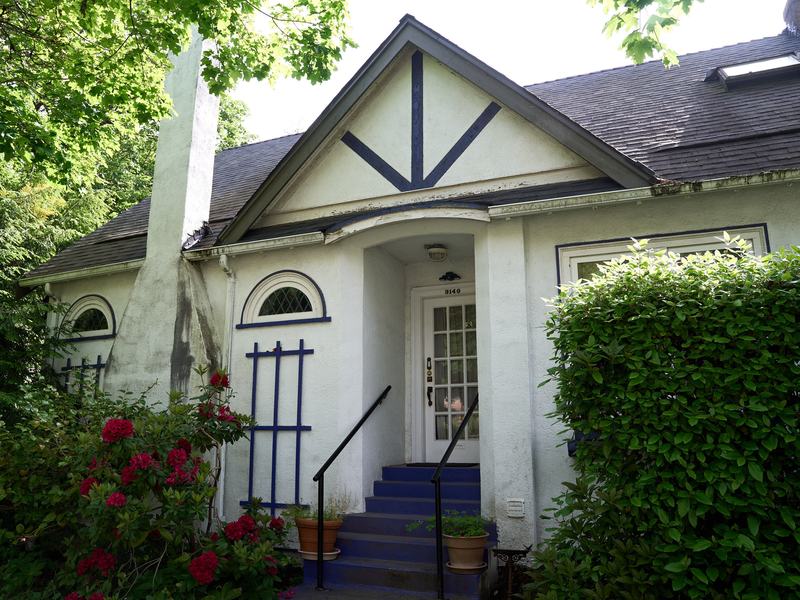
But now, in addition to backing from the city, the CLT has an asset under their belt — a sign that reaching their 2050 goal may still be entirely possible. This June, the CLT received a $2.77 million property previously belonging to the late Dr. Evelyn Pinkerton, whose estate initially reached out to the Community Land Trust, a partner organization of the Co-operative Housing Federation of BC. Pinkerton’s estate offered to donate the house to the Community Land Trust, but it wasn’t the right fit for their purposes because of its size. Pinkerton had been a big supporter of the arts, so the Community Land Trust got in touch with the CLT and asked if they might be interested in taking on the property instead.
The CLT doesn’t have a concrete plan regarding next steps for the house beyond immediate upgrades and repairs. But while we’re still a ways out from seeing the property up and running, it’s a significant step forward for the CLT in terms of gaining future support. “It’s something on paper,” Me said. “We have this asset in our books, and we would love to expand and grow using this as an example or starting point.” Her optimism about the future of the CLT was further reassured by the fact that “bigger players” have faith in what they’re trying to do. “Having the Community Land Trust of BC … acknowledge us as capable stewards of property says a lot. It feels like a really meaningful thing,” she said.
A cultural land trust could change the game for communities historically excluded from owning property. Miriam Berndt, 221A’s cultural space planner, initially joined the organization to investigate the possibilities of financial reciprocity with Indigenous communities in areas where the CLT might operate. Owning property is a colonial practice, Berndt said, but the CLT’s ideal model “breaks outside of the binary of transaction.”
Last year, the Canada Mortgage and Housing Corporation was seeking a tenant for the Granville Island Arts and Innovation Hub, which is on the site of Emily Carr University’s former campus. 221A’s shortlisted proposal for the space was an example of what working with Indigenous communities could look like, Berndt said. They collaborated with Musqueam Weaver Debra Sparrow and her studio, Salish Blanket Co., to develop a plan for a textiles hub. A good portion of the space would be occupied by companies that upcycle garments, and the rest would include shops, studios, showrooms and performance spaces.
Granville Island is managed by CMHC, meaning Berndt and 221A had to get a bit creative in how they might allocate land. “When you don’t have ownership, you have kind of limited power,” Berndt said. “So how do you leverage the power you do have to do as much as you can? You have to expand your imagination.”
In the plan for the proposed space, 221A used what Berndt calls a financial recovery model: each Nation would be allocated a specific square footage for free, then the organization would “placehold that use for a later date, when we had the power to have the conversations with the Nations.” To offset the costs, they would also work with tenants who could afford higher market rent rates. In this case, they spoke to Aritzia and Arc’teryx, since the brands have worked on design projects with the Musqueam Nation in the past. “[It’s] like instrumentalizing market real estate against itself to support access to space and a version of Land Back,” Berndt said.
In the end, the pitch wasn’t selected, but it was a chance to learn a bit more about what an eventual land trust might consider when it comes to working with Indigenous or other racialized communities. 221A has been documenting every step of their process, and Berndt is currently writing booklets to be released later this summer. “We’ve sort of been nestled away doing research and development,” she said.
Most progress on the CLT to date has happened within 221A, aside from occasional conversations with a few community members outside of the project. This year, as the CLT begins solidifying what its future might look like, the team plans to open their doors to the wider arts community by hosting events welcoming people into the research process. “There will be, I hope, more clear pathways to get involved in the CLT,” Berndt said.
Other land trusts in Vancouver have been seeing moments of success in the recent past, too. The Downtown Eastside Community Land Trust now manages a building on Keefer Street with single-room-occupancy units, and has also recently acquired a property on Powell. Me believes Vancouver is beginning to appreciate alternative possibilities for land use — not quite on par with the cities who have been doing this for some time now, but it’s a start.
“I think we’re actually starting to get that ball rolling, and understanding that the arts are important,” Me said. “The binary of private property ownership is not the only way to occupy space. That’s liberating, when people understand that … I feel really hopeful.”
Elena is the editor-in-chief. She covers music, theatre, and arts and culture infrastructures.