
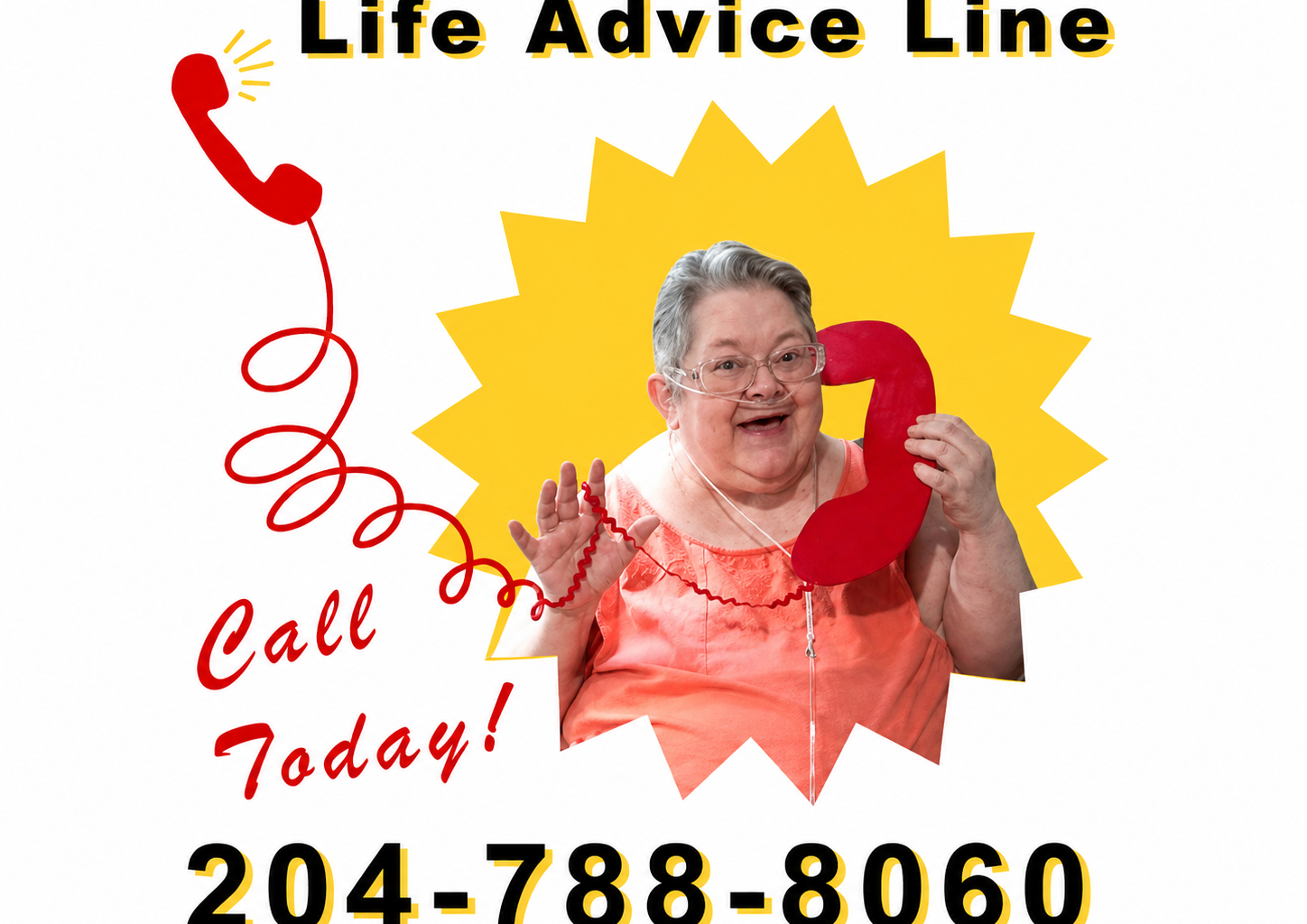
Winnipeggers looking for advice on love, friendship, family or even moose hunting can now pick up the phone and hear words of wisdom directly from residents and patients at Misericordia Place.
The Misericordia Place Life Advice Line is a free, pre-recorded phone hotline featuring short pieces of advice and stories shared by people living at the Winnipeg care and health centre.
Callers are greeted by a friendly voice and can use their phone’s keypad to choose from 10 different options.
The advice ranges from how to make friends and put yourself out there to relationships and other lessons learned through life experience.
Related Stories:
A project grows from conversations
Artists Natalie Baird and Toby Gillies have been working with patients and residents at Misericordia since 2011, leading regular art workshops and creating opportunities for people to share their stories.
Gillies says those creative sessions often lead to conversations about people’s lives, memories and experiences.
“We’ve been asking people for advice or like, what’s something you’re good at? Or what’s something you want to pass on to other people?” Gillies said.
The idea for the phone line grew out of those conversations, after colleagues at Misericordia suggested creating a project that would allow those voices to reach people outside the facility.
The recordings are all pre-recorded. While the artists initially considered allowing callers to speak directly with patients and residents, they say a live system would have been much more complicated.
Instead, callers can cycle through the different options and hear advice directly from Misericordia residents.
The project first launched around September last year and was initially expected to receive new recordings and greetings after a few months. But the artists say the response was strong enough that they decided to keep the original recordings available.
“It’s a very different experience than, let’s say, like looking through social media or something like that,” Gillies said.
The artists say callers have described the experience as comforting, particularly because it offers a chance to hear the voices and perspectives of older adults.
Some recordings are funny, others touching or emotional, while some include personal stories behind the advice.
Preserving voices and memories
For Baird and Gillies, the project is also a way of preserving the voices and stories of people they have come to know through their work.
One of those people was Randy, a Misericordia resident who died late last year.
Randy had once attended the artists’ workshops but, in later years, was unable to leave his room. Baird and Gillies continued visiting him, making art and recording conversations.
They say Randy had spent years reflecting on his life and experiences, and had a lot to share.
His advice remains part of the Life Advice Line.
For the artists, having his voice continue to reach people after his death is one of the meaningful parts of the project.
They say their long-term work at Misericordia often gives them a different perspective on the people they meet, one that can also be meaningful to their families.
“We’re kind of relative strangers in some ways, even though we’re friends with them,” Baird said. “And it’s really nice to have these long-form interviews and artworks that we can then share with families or also have for ourselves.”
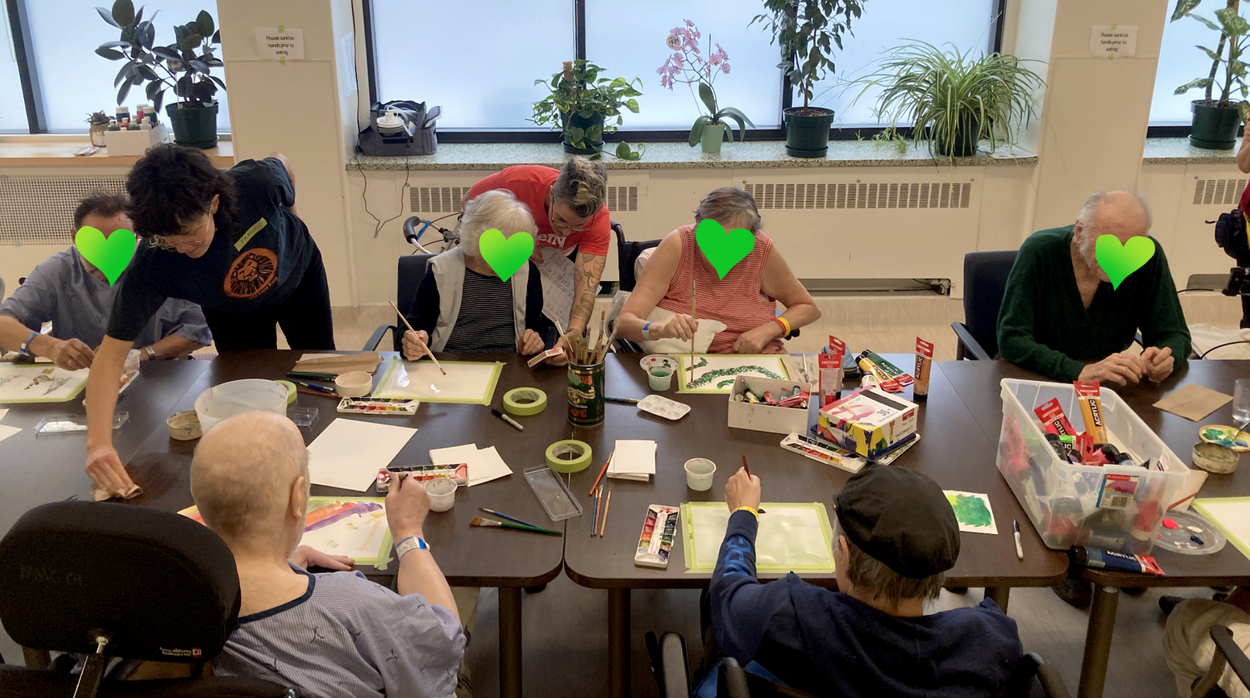 Patients working with artists and recreation staff on the health care unit (Supplied)
Connecting residents with the wider world
The Life Advice Line has also helped connect Misericordia residents with people far beyond Winnipeg. The artists say the project received attention from around the world, with people as far away as Singapore and Toronto hearing the residents’ stories.
They say the publicity even encouraged some family members to visit loved ones living at Misericordia — an unexpected outcome they found especially meaningful.
Baird and Gillies say the Life Advice Line is part of a larger goal behind their ongoing work: helping people living at Misericordia feel connected to their neighbourhood and the wider community.
“A big part of the project is just to share their voices so people feel connected to their neighborhood and to the larger world,” Gillies said.
The artists continue to hold art workshops and interview residents, with no set idea of what project might come next.
As the Life Advice Line demonstrates, sometimes those conversations can lead somewhere unexpected.