
Zoo recreated natural habitat
It’s official — a conservation effort in the United Kingdom has wings.
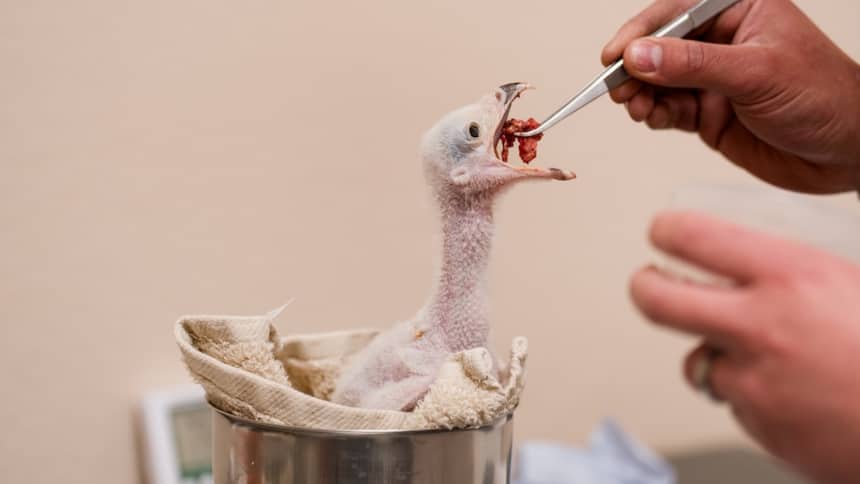
On Aug. 5, the Chester Zoo in Chester, England, announced that it had successfully hatched five secretarybirds chicks.
Secretarybirds are an endangered species of bird native to Africa.
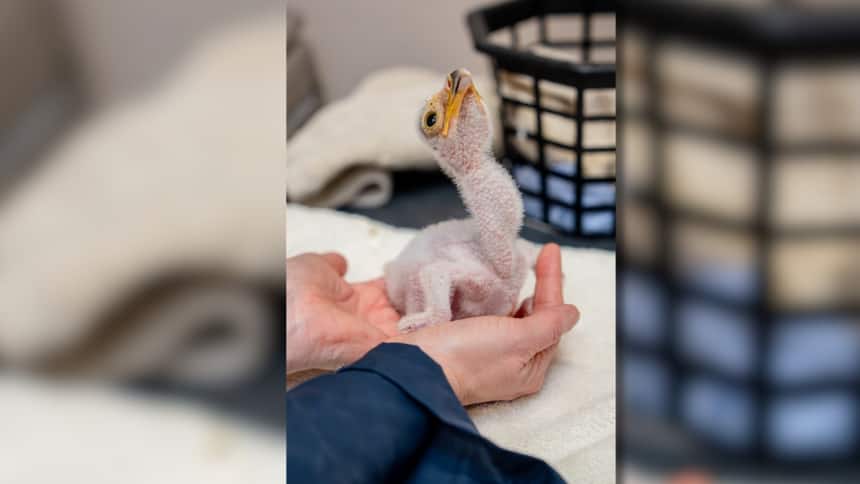
One of the newly hatched secretarybird chicks. (Image credit: Chester Zoo)
While they have been bred at zoos before, it’s a rare feat, and the clutch born at the Chester Zoo has experts especially interested because of how it was done.
The zoo hopes that its success and techniques will help other breeding programs.
What makes secretary birds unique
David Bird is an emeritus professor of wildlife biology at McGill University in Montreal, Quebec.
He is an ornithologist, which means that he studies birds. And yes, that is his real name.
He told CBC Kids News that he was “thrilled” by the news from Chester Zoo.
Through his work, he has seen secretarybirds in their natural habitat and describes them as “one of the more unusual birds of prey.”
He said that their name is thought to come from their resemblance to secretaries of the past, who often wore ink quills behind their ears, which the feathers on the birds’ heads resemble.
According to Bird, they also have very large eyeballs to help them spot prey and long “eyelashes” — actually very stiff feathers — to protect their eyes from debris and potential damage in the long grass they hunt in.
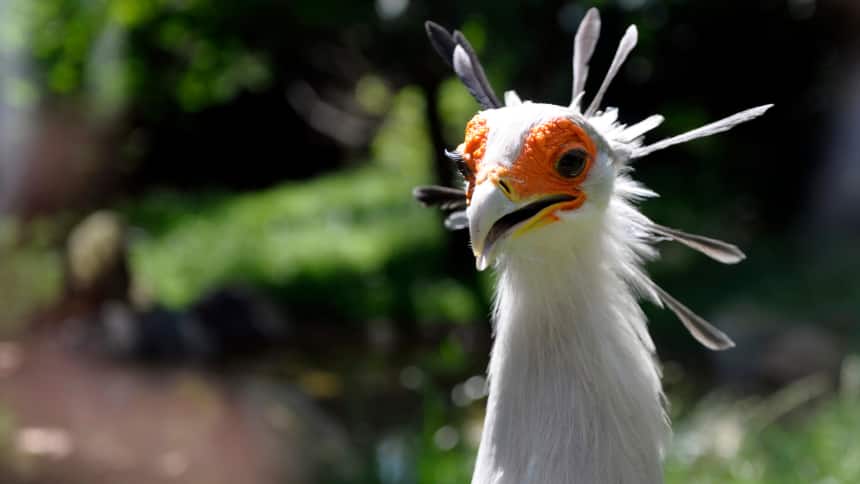
Secretarybirds are thought to have got their name because of their resemblance to secretaries of the past. (Image credit: Jean-Christophe Veraegen/Getty Images)
The birds are also known for their way of hunting.
They have long legs and strong toes and talons, which they use to stomp their prey, which includes venomous snakes, to death.
The Chester Zoo said that due to urban development and farming, a lot of their natural habitat and prey has been lost, resulting in their declining population.
They also said it is estimated that there are as few as 67,000 secretarybirds left in the wild.
Zoo hopes others can use what it’s learned
So, how did the Chester Zoo hatch more of the birds?
Well, it took a lot of work.
Jamie Cartwright-Stock, a birdkeeper at the zoo, said that staff studied the birds for several years to learn “exactly what conditions they need to reproduce successfully.”
They then worked to recreate the environment in the zoo.
This was a challenge because their native habitat is the African savannah, which is a hot and dry climate.
Trying to stimulate an open savannah in captivity is “not an easy thing to do,” Bird said. “England would not be my first choice to recreate it.”
Bird said the zoo accomplished this by “offering the right kind of artificial platforms and thorny trees” in their behind-the-scenes breeding facility, which was designed to imitate the natural environment of the secretarybirds.
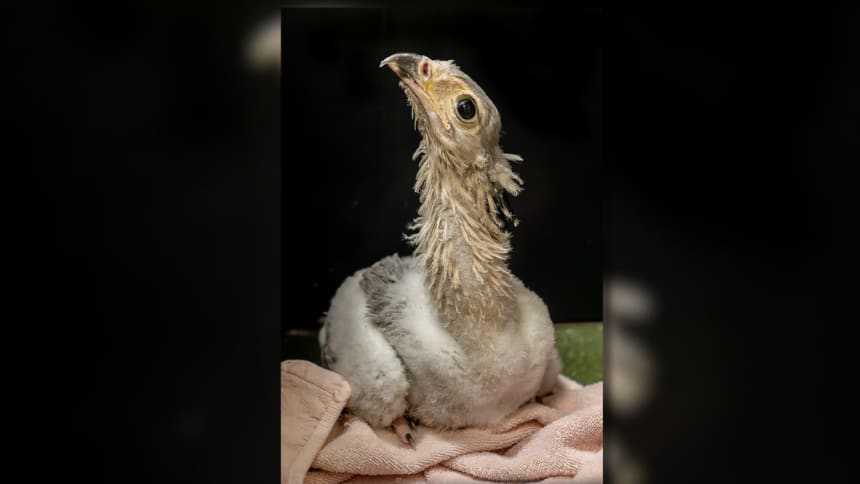
The Chester Zoo hopes that what it has learned about breeding secretarybirds will help other zoo conservation programs restore the species. (Image credit: Chester Zoo)
The Chester Zoo said that it still has a lot to learn about secretarybirds.
In a media release, it said it plans to “hand-rear” these newest chicks so that it can document “every stage of their development” and share that information with other breeding programs.
Bird said he hopes that learning more about birds like the secretarybird will make kids realize how important they are in our lives and become interested in conservation.
“They clothe us, they feed us, they pollinate our plants, they disseminate seeds, they warn us of impending disasters,” he said.
“If we don’t get the next generation of kids turned on to wildlife, we are going to lose so many species.”
Have more questions? Want to tell us how we’re doing? Use the “send us feedback” link below. ⬇️⬇️⬇️