
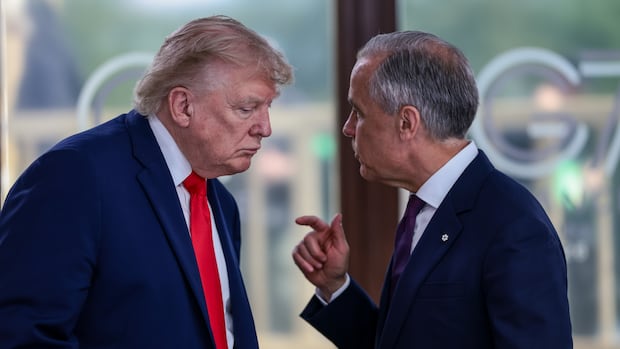
Prime Minister Mark Carney spoke with U.S. President Donald Trump on Tuesday by phone to try and hammer out a deal to avoid new tariffs on some $30 billion in Canadian goods due to take effect just after midnight.
In a short statement, a spokesperson for Carney said the two spoke about “ongoing negotiations,” but made no mention of the outcome of the call or if there would be another one before the Wednesday deadline.
The word “ongoing” in the sentence-long statement suggests bilateral talks are still underway.
This call follows another after a round of last-minute talks between their deputies in Washington on Monday. Canadian and U.S. negotiators have met several times in the last three weeks to work out a deal to address American trade irritants and deliver some relief for Canadian industries grappling with punishing Trump administration tariffs.
Auto tariffs a sticking point: sources
Sources have cautioned that Canada and the U.S. still remain at loggerheads over some finer points, including what sort of tariff, if any, will be applied on Canadian autos bound for the U.S.
CBC News is not identifying the sources because they were not authorized to publicly discuss the talks.
Trump has threatened to hit Canada with 50 per cent tariffs on a long list of Canadian products ostensibly in retaliation for Ottawa imposing tariffs on some U.S. goods, tariffs that were only levied after Trump launched his trade war on Canada last year.
WATCH | Trade talks expected up until deadline, adviser says: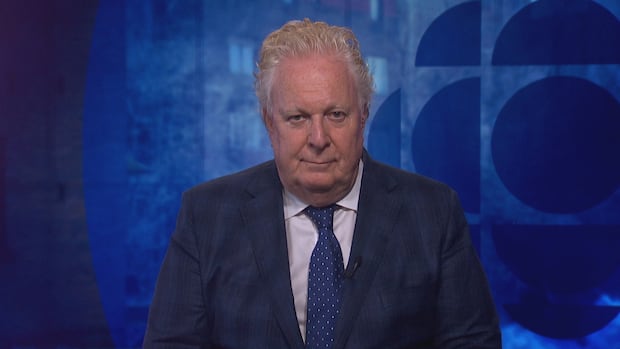
Trade talks with U.S. ‘may go down to the wire’: Charest
With 50 per cent tariffs set to take effect just after midnight, negotiators from Canada and the United States continue to work toward a deal. Member of the Advisory Committee on Canada-U.S Economic Relations Jean Charest joins Power & Politics to break down what the state of negotiations means for Canada.
If no deal is reached, Canadian liquor producers, hockey equipment manufacturers, wood and paper producers and dozens of other entities will face higher U.S. tariffs.
A senior government official said Canada is working on a response if those tariffs take effect.
Carney is weighing a range of options to hit back at the U.S., including more retaliatory tariffs, the official said. Canada will wait to see the legally binding paperwork on these prospective U.S. tariffs before deciding on an appropriate response.
At issue in these negotiations is just how much Canada can get out of the U.S. in exchange for a series of concessions of its own.
Canada-U.S. Trade Minister Dominic LeBlanc is pushing for the U.S. to scrap the new Section 338 tariffs but also lower the existing Section 232 tariffs on industrial products like steel, aluminum, autos and lumber.
WATCH | Carney avoids public comment on trade talks: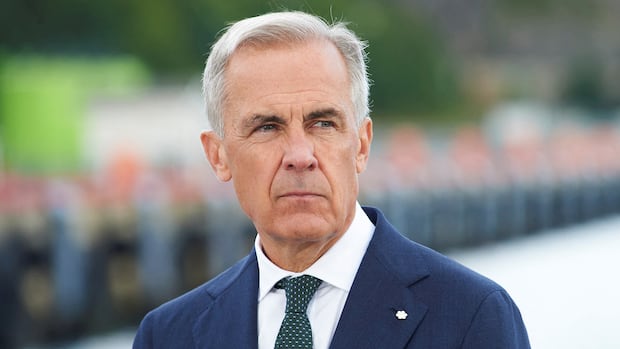
Carney avoids public comment on ‘delicate’ tariff negotiations
Prime Minister Mark Carney said last-minute tariff negotiations with the U.S. are “delicate” and “intense” as he plans to speak to President Donald Trump in the next 48 hours. Trump’s threat to raise tariffs on a number of Canadian goods takes effect on Aug. 19.
The Americans want U.S. liquor back on the shelves of provincially run stores, ending a boycott that has been devastatingly effective. The Trump administration is also pushing for Canada’s retaliatory tariffs on U.S. autos removed, and tweaks to how the supply-managed dairy sector allocates quotas.
U.S. Trade Representative Jamieson Greer has repeatedly signalled the U.S. is not open to dropping its tariff regime entirely, but there are some signs that the rate may be flexible if the Canadians address some U.S. demands.
Canada wants the U.S. to drive down tariff rates to the lowest possible level, and what’s been presented so far by Greer and his team is not satisfactory, sources said.
On autos, the latest U.S. offer would lower the tariffs on Canadian-made vehicles to a headline rate of 15 per cent, down from the current 25 per cent. The headline rate would be the official rate enacted by executive order.
But the tariff on Canadian-made vehicles can be reduced further by having more U.S. content, down to an effective rate (the actual duty rate collected) of 7.5 per cent.
Sources said that is still higher than Canada wants.
Lana Payne, the national president of Unifor, the union that represents many autoworkers, said a 15 per cent headline rate, while lower than it is now, would be “very, very difficult” to accept as it puts Canadian-made cars at a structural disadvantage.
“Auto was always going to be difficult in these discussions,” Payne said. “[Trump] says over and over again that we should not have an auto industry in Canada. And that’s why it’s been so important for us to stand up for that industry.”
WATCH | NDP on the state of tariff talks: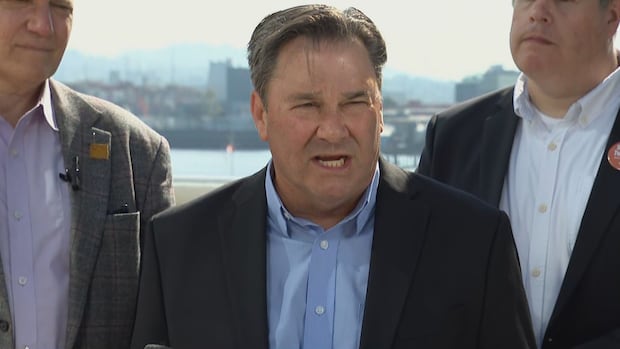
Carney has given ‘concession after concession’ on U.S. trade: NDP
New Democratic Party parliamentary leader Don Davies says Canadians are ‘very worried’ about the impact new U.S. tariffs could have on Canadian jobs. U.S. President Donald Trump has threatened to hit Canada with 50 per cent tariffs on a long list of Canadian products if a deal isn’t reached by midnight.
While organized labour is skittish about a potential agreement, there is substantial business pressure on Carney to cut a deal with Trump to normalize trade.
“We need to find a way back with the U.S. because we are very connected and we need our companies to sell there,” said Charlotte Laramée, the CEO of AluQuébec, an aluminum trade group.
“For the aluminum industry, we’ve been living with uncertainty for 18 months,” she said.
The U.S. Chamber of Commerce issued a statement on Tuesday calling for Canada and the U.S. to cut a deal to avoid more tariffs that could hurt businesses on both sides of the border.
“The introduction of higher tariffs would damage both economies, drive up costs for U.S. families, further disrupt critical supply chains and risk the 13 million American jobs that depend on trade” with Canada and Mexico, said Neil Herrington, the chamber’s senior vice-president for the Americas, in a statement.
But there is also pressure from some sectors, notably dairy, to avoid giving away too much — or anything at all.
The U.S. government and American dairy groups are pressing Canada to allocate tariff-rate quotas (TRQs) directly to Canadian grocery retailers rather than restricting them solely to domestic dairy processors and distributors as they are now, a manoeuvre that could make it easier to sell U.S. milk and cheese in Canadian stores.
“We’ve made it very clear to to this government that we don’t want anymore concessions made on dairy,” David Wiens, the president of Dairy Farmers of Canada, said in an interview.
“Every time things are loosened up, Canada’s food sovereignty is weakened along with it,” he said.
Former Alberta premier Jason Kenney, meanwhile, said if the tariffs do take effect, it’s not a disastrous development given relatively few products will be facing higher rates. The varied products facing the steep tariff represent about five per cent of all of Canada’s exports to the United States in 2024.
“I think it’s really important that our government and that we as regular Canadians not feed into the kind of chaos mentality that I think sometimes the president tries to create through his art of the deal,” Kenney said.
“This is not the end of the world.”