
While Canada has a three-day reprieve from the 50-per-cent tariffs threatened by the United States, the head of a Quebec furniture company says the unpredictability is almost as bad as the tariffs themselves.
“The uncertainty is maybe worse than anything,” Julie St-Arnaud, president of Huppé, said in an interview. “Each time it’s postponed, each time we don’t know, it affects our business.”
St-Arnaud says 45 per cent of her clients are in the U.S. The company has already lost about 50 per cent of its total sales over the last three years.
Hours before the United States was set to impose 50 per cent tariffs on a wide range of goods from Canada, President Donald Trump announced that the tariffs would be paused for three more days as the two countries continue negotiations.
Quebec exporters had braced to wake up to new tariffs on Wednesday, with business leaders warning the measures could cost the province customers, investments and jobs.
Business in the U.S. is ‘a strong relationship’
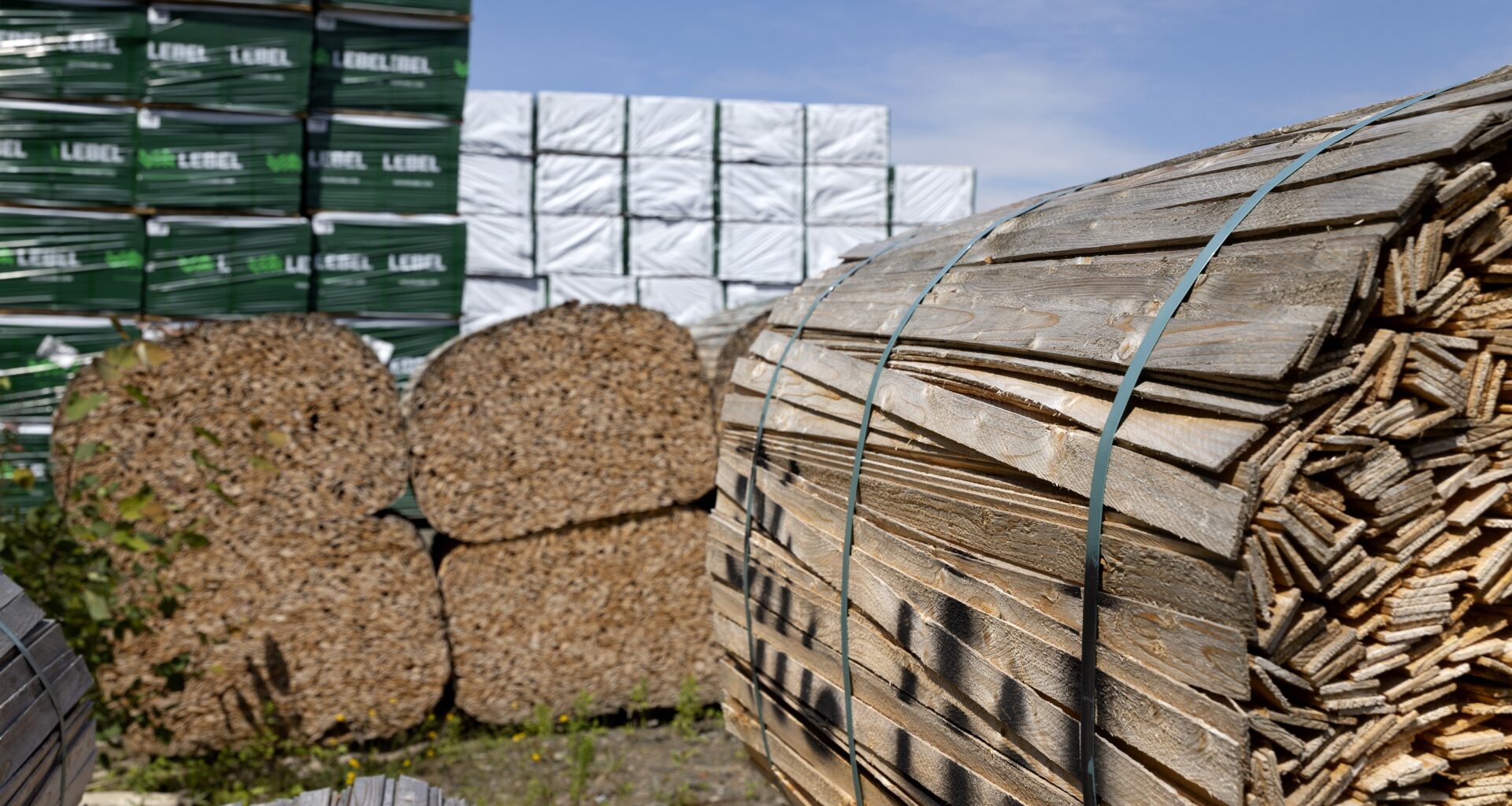
Among the list of goods that would be impacted by tariffs is wooden furniture, which St-Arnaud said would impact Huppé’s entire catalogue.
“We don’t want to stop doing business with United States. It’s too important for us (given) the proximity of that market. And it’s a strong relationship since so many years,” she said.
While St-Arnaud says her company will tolerate the whiplash trade conditions to keep their large American clientele, it is not sustainable over the long term. Eventually, they would have to raise prices to keep up with rising costs, but she believes U.S. customers won’t want to pay more.
While the company is already looking to diversify clients by expanding their Mexican and Latin American market, breaking into the European furniture market isn’t an option for a Canadian company. St-Arnaud says Huppé is meant to serve as an alternative to European-style furniture for a North American market, with the appeal of producing and shipping locally.
“(Europe has) a lot of competitors for us. It’s the same niche. So it’s more difficult to stand out in that market,” she said, plus there are added costs including shipping across the Atlantic.
Trump has regularly threatened tariffs throughout his second presidency term without seeing them through. While Canadians wait for a verdict on the negotiations, damage is still being done to our economy, says Mario Lefebvre, chief economist for Canada at CoStar Group.
“The biggest impact has been on investment, and I can understand (that) firms for the past year and a half have been more or less on the sidelines. Because it changes everything in your investment plans whether you’re going to be facing a 40-million-people market, which is Canada, or a 400-million-people market, which is Canada plus the United States,” Lefebvre said in an interview.
“That has put our investment on hold, and we desperately need investment.”
11% of Quebec exports could be affected
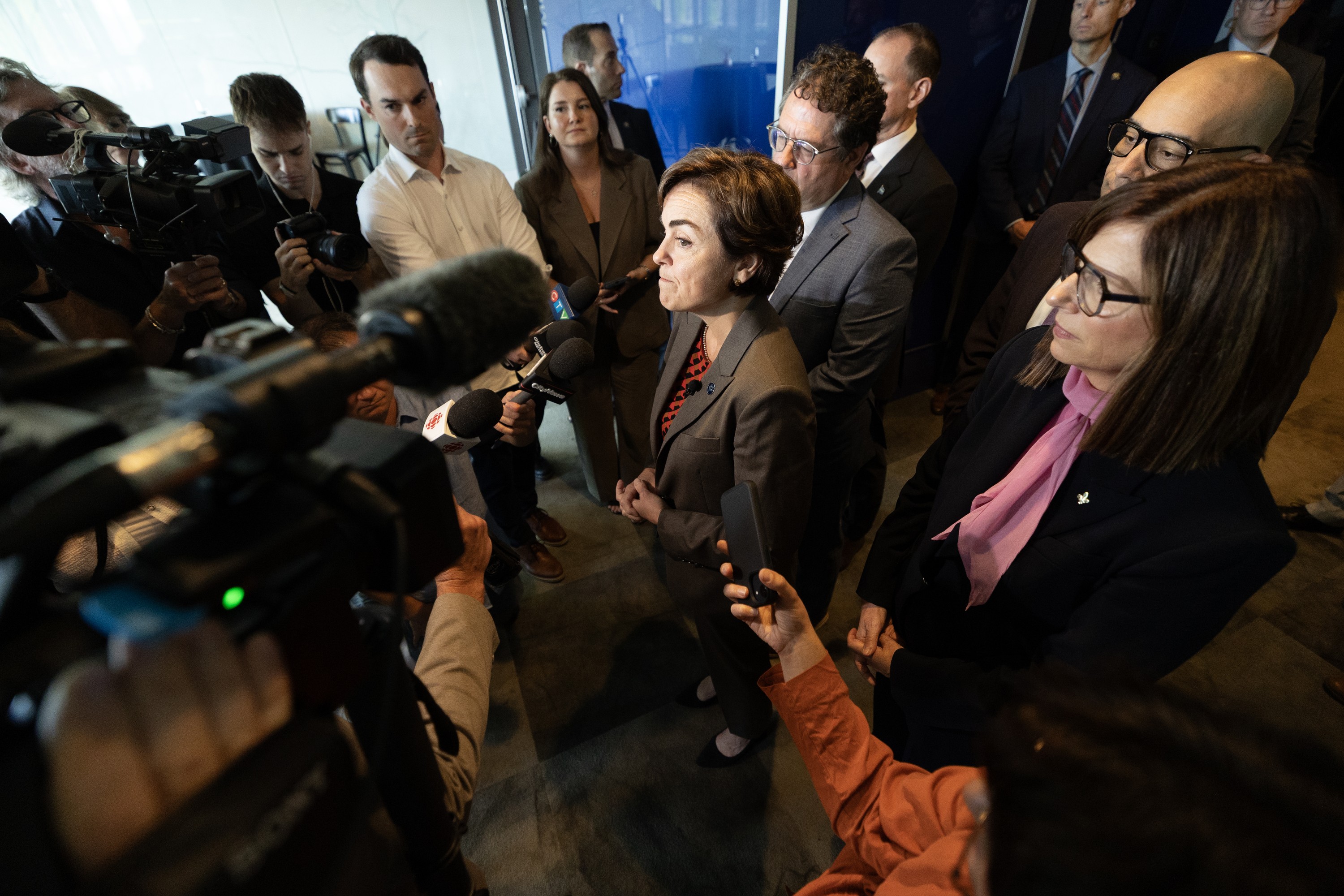 Quebec Premier Christine Fréchette discusses the economy and tariffs Aug. 13, 2026. Tim Snow / Montreal Gazette
Quebec’s premier also pleaded for an end to the unpredictability.
“What we know is that negotiations are still going on and we need to have all the information before establishing our position,” Premier Christine Fréchette told reporters as she arrived for a meeting of the Quebec cabinet Wednesday morning.
“What businesses need is confidence and stability and predictability.”
The tariffs would have applied to roughly US$20 billion worth of Canadian exports. Quebec is among the provinces most vulnerable: Fréchette said nearly 11 per cent of the province’s exports could be affected, while the Fédération des chambres de commerce du Québec (FCCQ) estimates more than $8 billion worth of Quebec goods would be affected by the measures.
The list of affected goods stretches across much of Quebec’s economy, including pulp and paper, packaging, agri-food, machinery and equipment, textiles and furniture. The tariffs also cover dairy, alcohol, electronics, building materials, clothing, sporting goods, cosmetics and agricultural products.
The tariffs apply to products even if they qualify under the Canada-United States-Mexico Agreement, removing a protection that had shielded many Canadian exporters from earlier tariffs.
“Every postponement is an opportunity to negotiate further,” Quebec Liberal Leader Charles Milliard said Wednesday. “I think we should view the possibility of reaching an agreement in a positive light.
“We know that the average tariff rate in Quebec is among the highest, so we’re the ones most affected,” he said. “I expect once again that there be good cooperation between the current Quebec government and the Carney administration on this issue, in a context where everything is a bit unpredictable.”
Gilles Pelletier, the president and general director of the Association des fabricants de meubles du Québec, which represents furniture manufacturers, said he’s pleased there appears to be “a certain degree of optimism” in terms of a potential deal.
“But it’s cautious optimism,” he said Wednesday morning.
Pelletier described the pause on tariffs as a “good demonstration” of the uncertainty businesses have had to face over the past 18 months.
“You can imagine companies that sent letters to their American customers saying, ‘OK, I guarantee these prices until Aug. 19, but after that we don’t know,’” he said. “Then they have to write another letter, and now it’s not the 19 anymore, it’s going to be the 22.
“All of this reflects the uncertainty hanging over the industry. We still don’t know exactly what’s happening with these agreements.”
Pelletier said the uncertainty is having “a devastating impact on people, families, businesses and users.”
‘Red lines, not to be crossed’
“We are asking the federal government to work for a reduction of the tariffs that are being applied and to avoid any new tariffs and make sure there is a review of the agreement we have, in order to give stability to our businesses,” Fréchette said Wednesday.
“Our red lines, not to be crossed, are the protection of the supply management mechanism as well as the protection of culture and language. These are our demands, and we are in close contact with the federal government. Every hour or two hours, we’re getting fresh news, but we still don’t have the big picture, and we need that.”
Milliard said Wednesday that he agrees with Fréchette on those points, but added: “Where I take issue with the Coalition Avenir Québec, however, is its lack of a network and alliances with the rest of Canada, and that works against us in trade negotiations. Having networks of and alliances with the rest of Canada on the trade front is extremely important. And that has been sorely lacking in recent years.”
Prime Minister Mark Carney confirmed on X that the tariff deadline has been pushed until the end of the day on Aug. 21.
“Substantial progress has been made, although there is important work still to be done,” Carney said.
On Wednesday, Trump declared that “we’ve come to a deal with Canada,” saying Canadian representatives “gave us the points we had to have” on issues including market access for U.S. agricultural products.
Les Producteurs de Lait du Québec said it’s too early to determine how Trump’s comments will affect the dairy industry.
“The American government is saying one thing. The Canadian government is saying another thing, and the Canadian government doesn’t communicate to us at this time,” PLQ spokesperson François Dumontier said in an interview. “It might change in a few hours or few minutes, but right now we can’t comment and say anything because there’s two stories, so which one is real?”
Some Quebec companies were losing business even before the duties took effect.
“Since President Trump announced the tariffs, we’ve had U.S. customers cancel orders,” FCCQ president and CEO Véronique Proulx said Tuesday. “They don’t want the uncertainty, and they don’t want to have to pay the bill.”
Proulx said some companies that export as much as 75 to 100 per cent of their production to the U.S. have warned the FCCQ they could be forced to close or lay off workers if the tariffs remain in place.
Asked Wednesday if she is concerned about the possibility of future tariffs, Fréchette said: “It’s preoccupying with what’s at risk and at stake. This could bring significant economic changes, and we’ll have plans if it is the case.”
Jesse Feith and Abby McLaughlin of The Gazette, and Bloomberg News, contributed to this report.
On Quebec Politics
The Gazette’s On Quebec Politics newsletter by Andy Riga breaks down key election issues, from polling shifts to legislative manoeuvring to ideas circulating in francophone commentary that don’t make it into English-language coverage.
To sign up, visit this page and check the box labelled “On Quebec Politics” before providing your email address.
Editor’s Picks