

Listen to this article
Estimated 3 minutes
The audio version of this article is generated by AI-based technology. Mispronunciations can occur. We are working with our partners to continually review and improve the results.
B.C. researchers have created a pulpy alternative to plastic packaging foam, a product that makes use of logging waste that’s often left behind and can fuel forest fires.
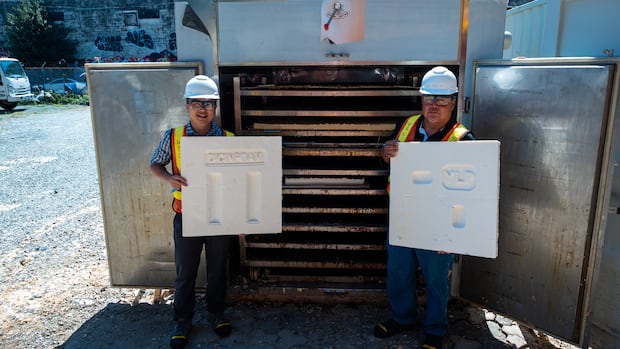
Dubbed “wood foam,” the plastic packaging alternative was developed at the University of British Columbia (UBC), and up to 200 kilograms a day is being produced at a pilot plant in East Vancouver. The company at the helm, DicinFoam, is majority owned by the Wet’suwet’en First Nation’s business arm.
“We’ve made it from low-value pulp, wood fibres, and forestry residues,” said Yale Zhu, the company’s chief technology officer. “What we’re trying to do is we want to extract the majority of the value out of it and make it into our day-to-day packaging needs.”
Zhu said the goal is to create a substitute to polystyrene, or packaging foam, which is among plastic pollutants found on Canadian shorelines, harbours or recreational areas, and shipping routes, according to research from Environment and Climate Change Canada.
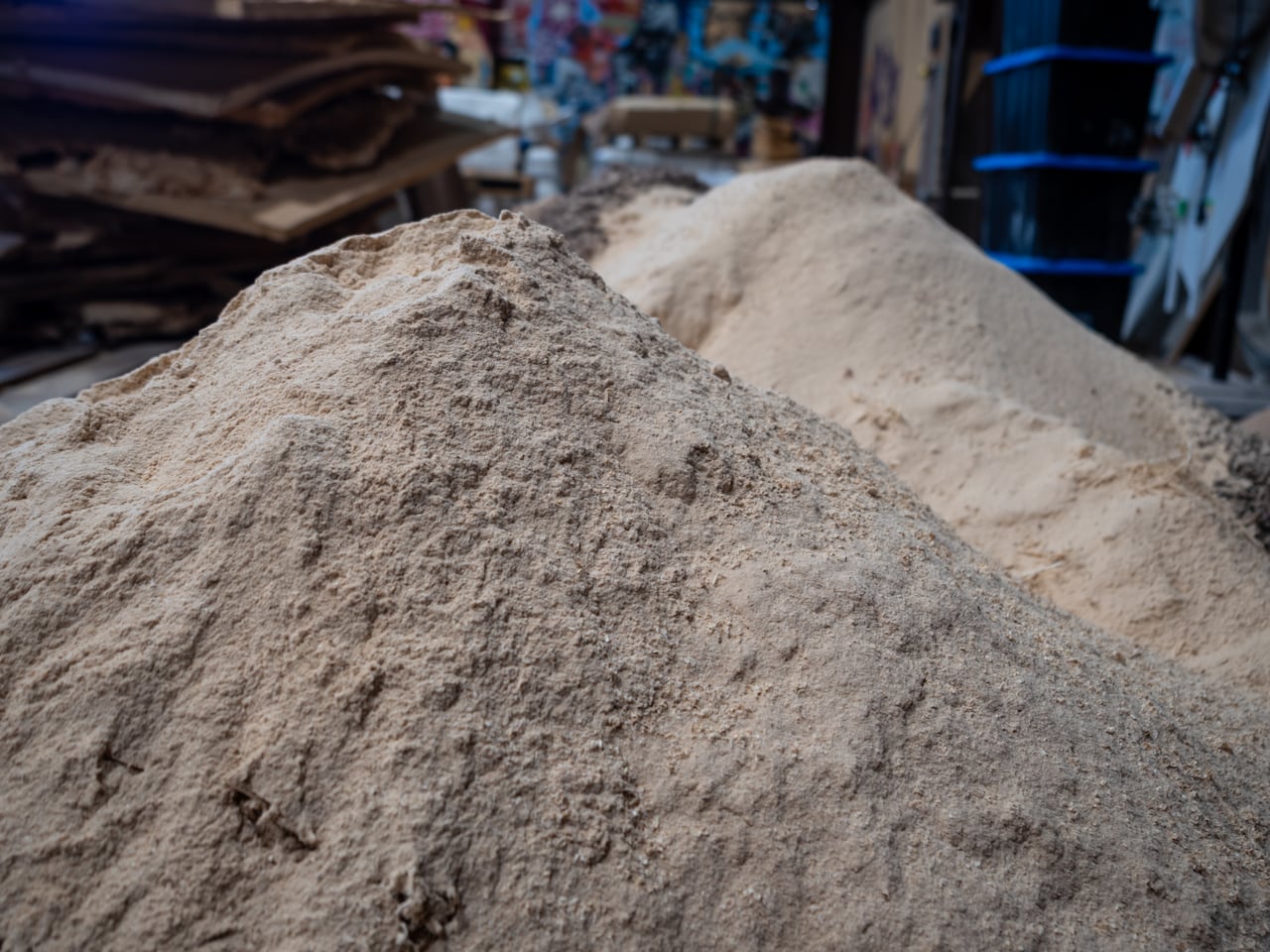 Wood waste is sourced from a variety of forestry manufacturers, including sawmills. (Clare Kiernan/UBC)
Canada is among the nations working to phase out single-use plastics, which includes foam products.
Making wood foam
The wood foam processing technology was developed in a UBC lab by forestry professor Feng Jiang. Zhu, one of his researchers, scaled it up for the pilot plant.
DicinFoam secures its wood waste, or feedstock, from different parts of the forestry sector, including logging waste, sawdust from mills, and recycled pulp.
Richard Chen, the company’s CEO, says it’s one way to deal with logging waste that’s left behind in the forests that can dry and fuel wildfires over time.
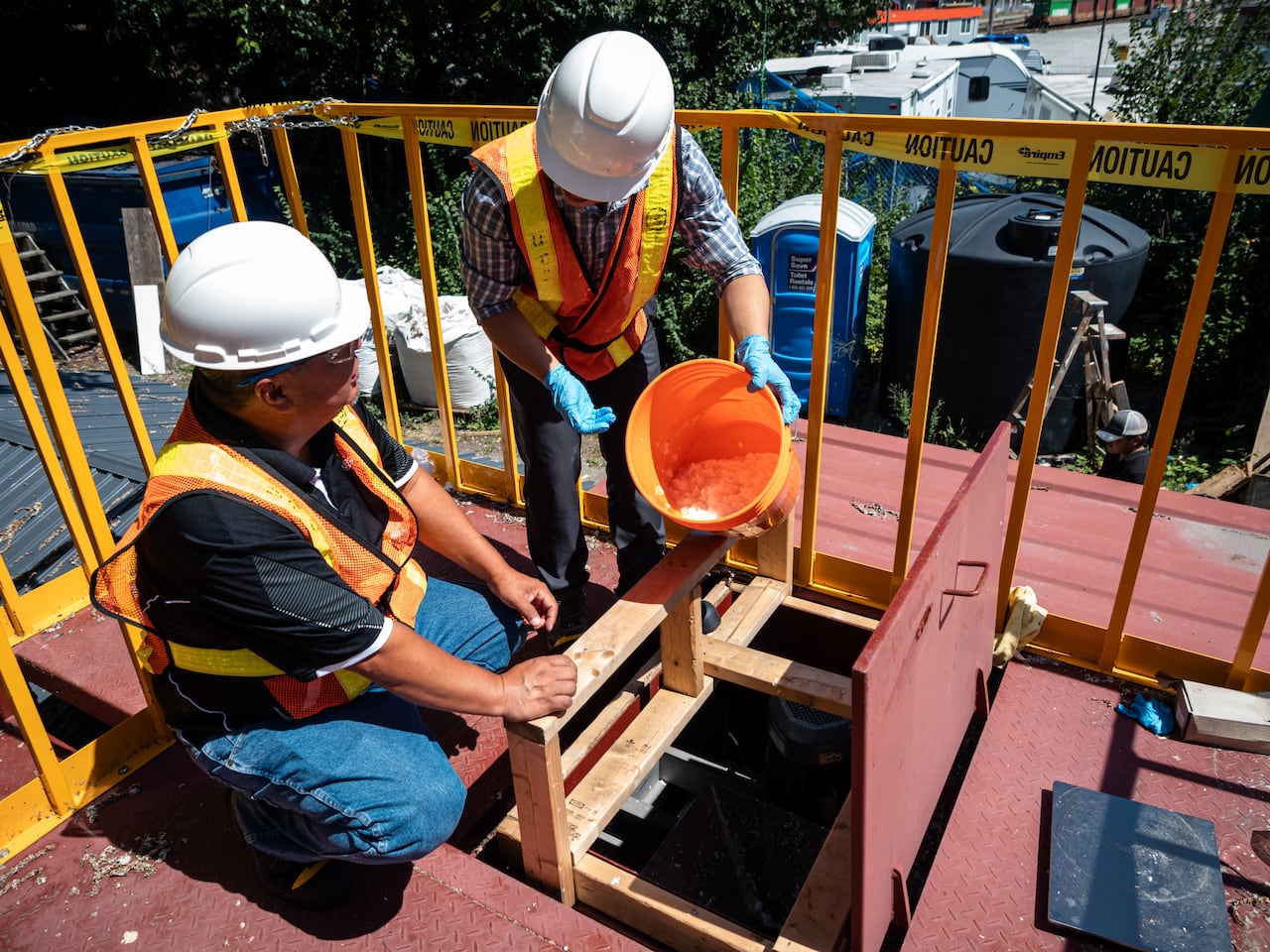 A pulpy mix of wood waste is poured into a machine from above and is then formed into a wood foam panel. (Clare Kiernan/UBC)
“Every tree that gets harvested, 30 per cent of the tree doesn’t get utilized,” Chen said.
“If we can even get a fraction of that and replace everyday existing products that are made of plastics … I feel that’s a big deal — especially when we have materials just sitting in the forest.”
The material is mixed and fed into a custom-built machine that refines and forms it into the desired shape. It’s then put into an oven and cured into the final product.
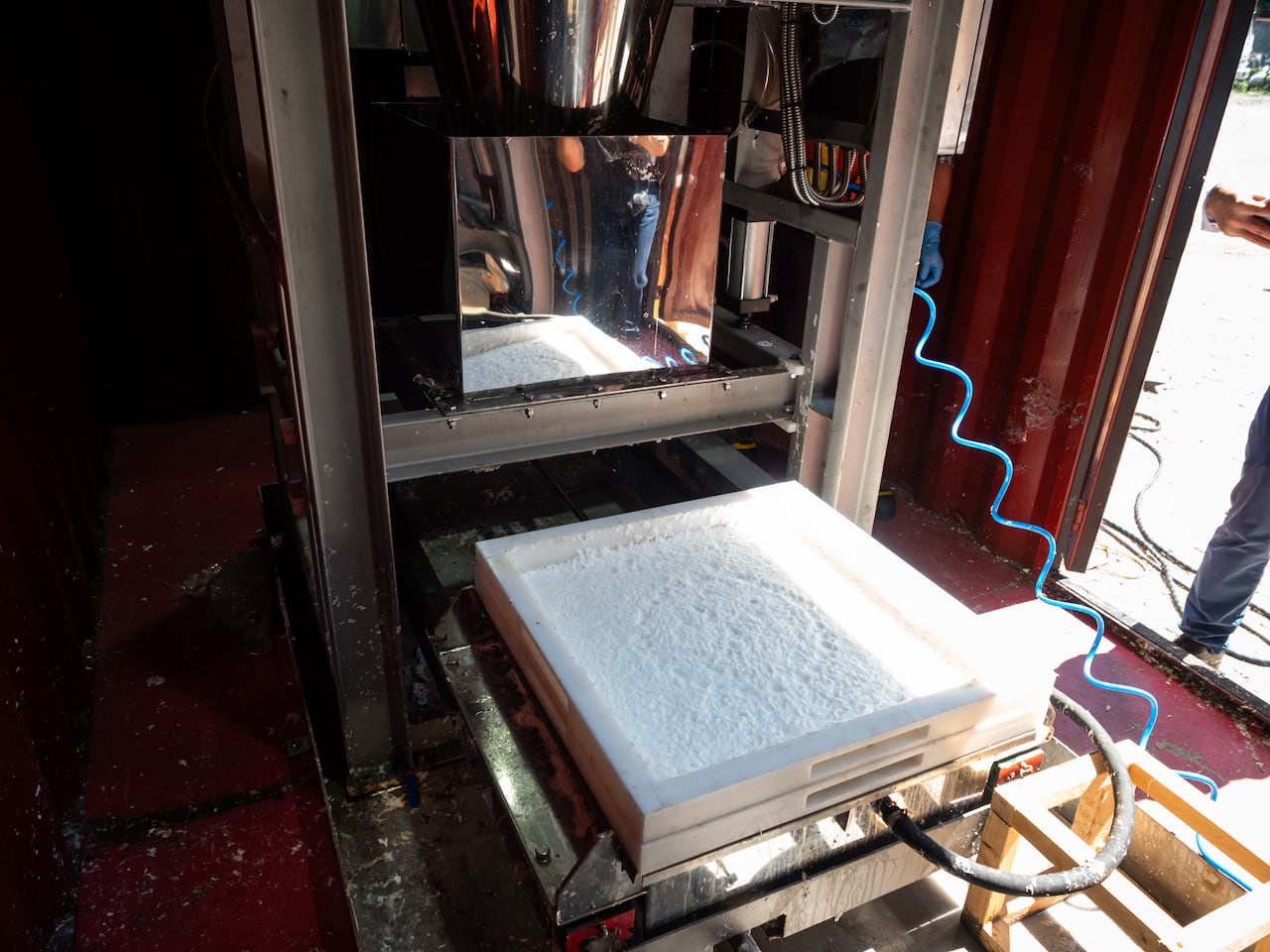 Wood foam is ejected from a machine that was custom-built. The technology is co-patented by UBC and the Wet’suwet’en First Nation. (Clare Kiernan/UBC)
Chen said the plan is to scale up to a facility in Burns Lake on Wet’suwet’en territory, where they’ll be able to produce up to 1,000 tonnes of wood foam per year.
From there, the company expects to expand to an even larger, 15,000-tonne facility on Vancouver Island. Chen said they’ll eventually be able to sell wood foam for the same price as its plastic alternative.
William Dennis is one of two Huu-ay-aht First Nation members training at the current plant to help lead the Vancouver Island site.
“I can’t see myself anywhere else,” said Dennis. “It feels good, being a part of something.”