
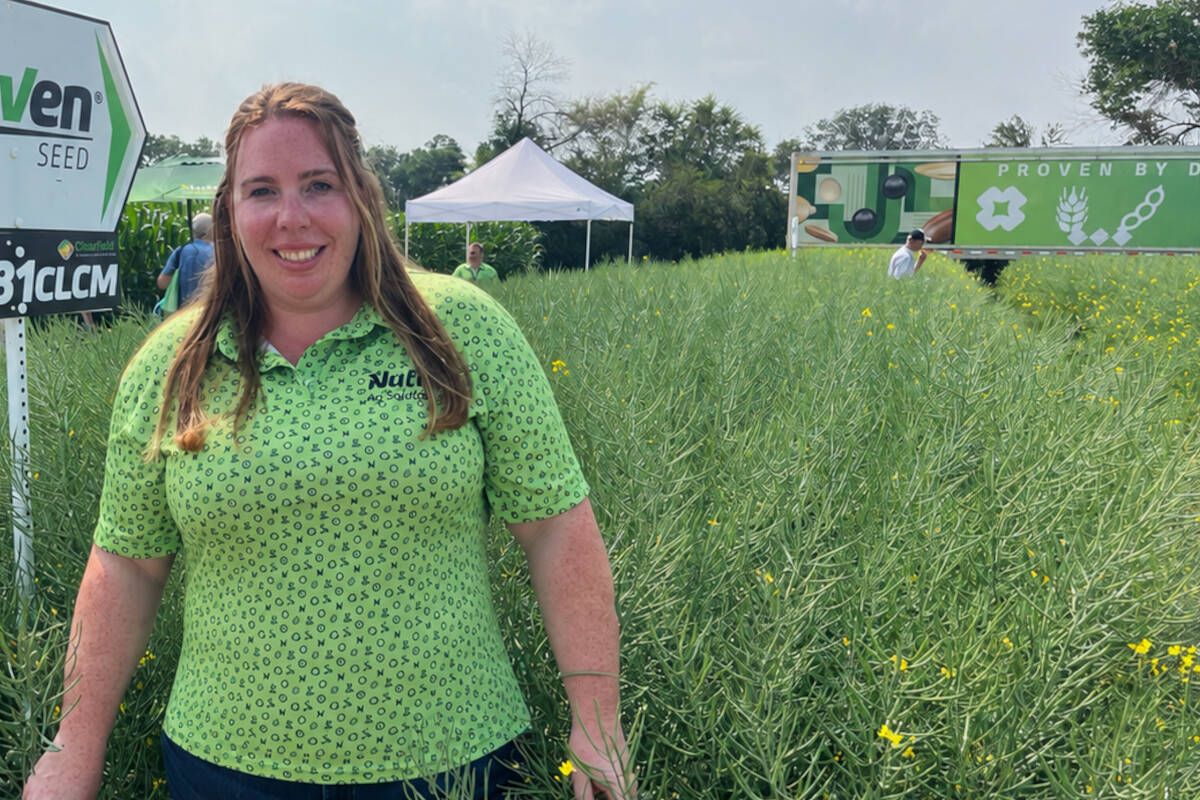
Disease resistance is taking on a larger role in canola variety selection.
Jennifer Dale, canola product line manager with Nutrien Ag Solutions, said growers are increasingly asking about the durability of resistance rather than simply whether a hybrid is resistant.
“Compared with five or 10 years ago, growers are thinking more about the durability of resistance rather than simply whether a hybrid carries a resistance claim,” she said.
The shift was illustrated in two new Proven Seed hybrids introduced at Ag in Motion in July.
You can follow all our coverage of Ag in Motion here.
Disease pressure is evolving across Western Canada. Understanding how new resistance packages fit into an overall disease management strategy can help growers choose hybrids that are better suited to their fields and local conditions.
Both hybrids feature multi-genic clubroot resistance, which uses more than one source of resistance to help protect against changing clubroot populations over time.
“That can provide a broader and potentially more durable defense than relying on a single resistance gene,” said Dale.
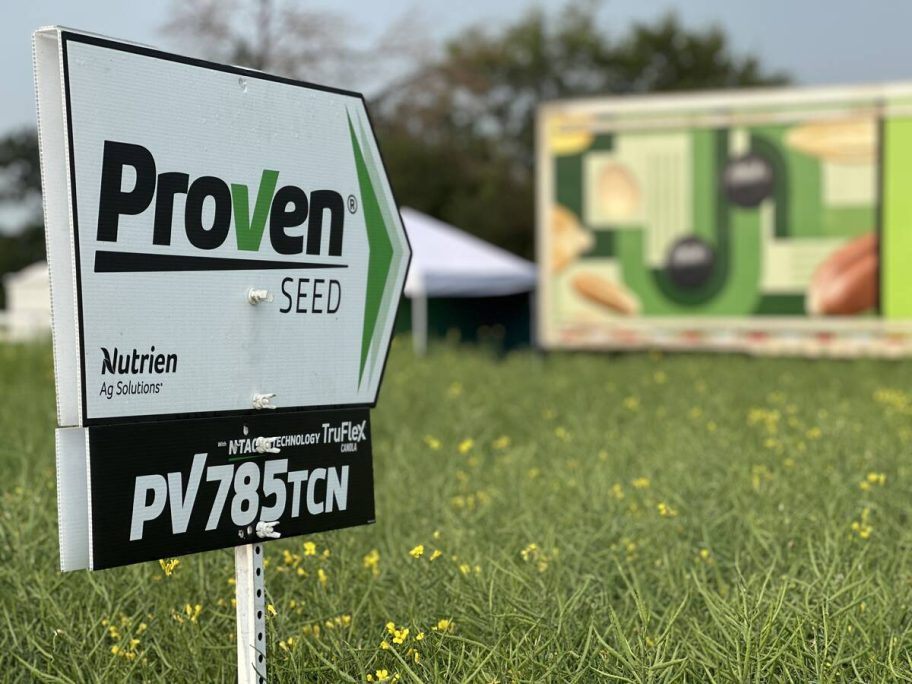
PV 785 TCN was introduced at Ag in Motion for growers facing higher disease pressure. The hybrid combines multi-genic clubroot resistance with the NTACT Technology trait package for increased pod integrity. Photos: Don Norman
The emphasis reflects the need to help growers stay ahead of evolving pathogen pressure without sacrificing yield or other agronomic traits.
Read Also

“Disease management has been a long-term focus for Proven Seed because protecting yield potential requires growers to stay ahead of evolving disease pressure,” she said.
However, Dale said it is still important to use an integrated approach. Resistant hybrids should be combined with crop rotation, sanitation, field scouting and local agronomic recommendations.
“No single hybrid or trait should be viewed as a complete disease-management program,” she said.
The company introduced PV 281 CLCM, a Clearfield hybrid with multi-genic clubroot resistance and harvest management flexibility, and PV 785 TCN, which combines multi-genic clubroot resistance with the NTACT Technology trait package for increased pod integrity.
PV 785 TCN is positioned for higher disease pressure areas, particularly in northern and central Alberta.
This year’s growing season has reinforced the importance of disease resistance, Dale said.
A wet season has created more favourable conditions for diseases such as blackleg, prompting more conversations with growers about selecting hybrids with stronger disease packages.
“We’re likely going to see some more blackleg show up in different parts of Western Canada than what we’ve seen the past two years,” Dale said during Ag in Motion.
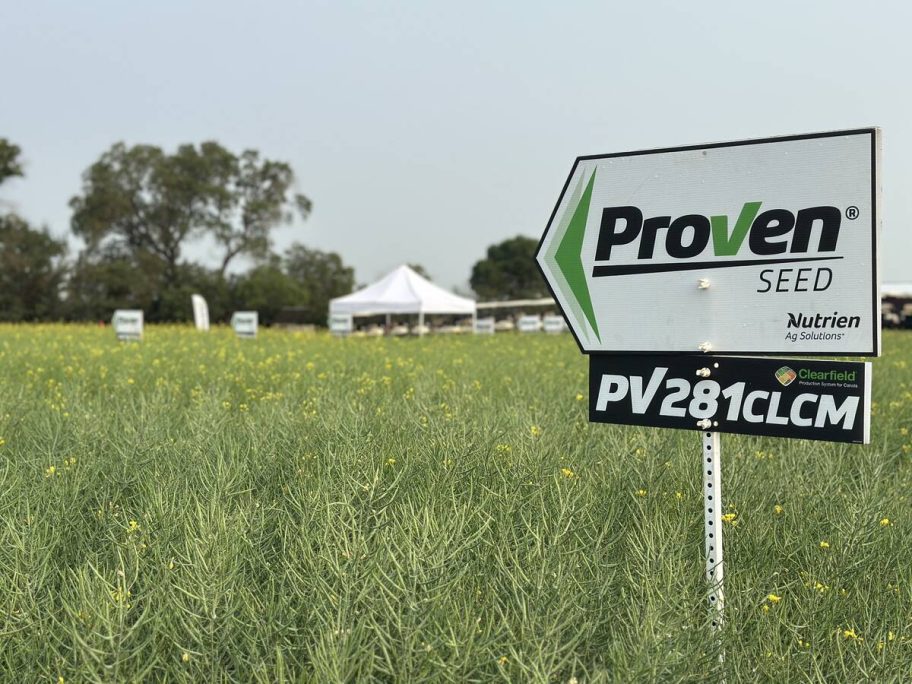
PV 281 CLCM was one of two new Proven Seed canola hybrids highlighted by Nutrien Ag Solutions at Ag in Motion. The Clearfield hybrid features multi-genic clubroot resistance and harvest management flexibility.
Developing new hybrids also involves balancing disease protection with the agronomic traits growers expect.
“A hybrid does not advance based on one trait alone,” Dale said.
“Disease resistance is important, but it also has to deliver the complete agronomic package growers need, including yield potential, maturity, standability, pod integrity and regional fit.”
The company evaluates hybrids over multiple years through research sites and field-scale trials before deciding where they fit best. Those trials assess more than yield, examining maturity, emergence, standability, disease response and harvest characteristics across a range of growing conditions.
Dale said local testing helps ensure growers are choosing hybrids suited to their own growing environments. She added growers should use that local information to choose hybrids based on the needs of each field rather than simply chasing the highest yield potential.
“I would encourage growers to begin those conversations early with their local crop consultant,” she said.