
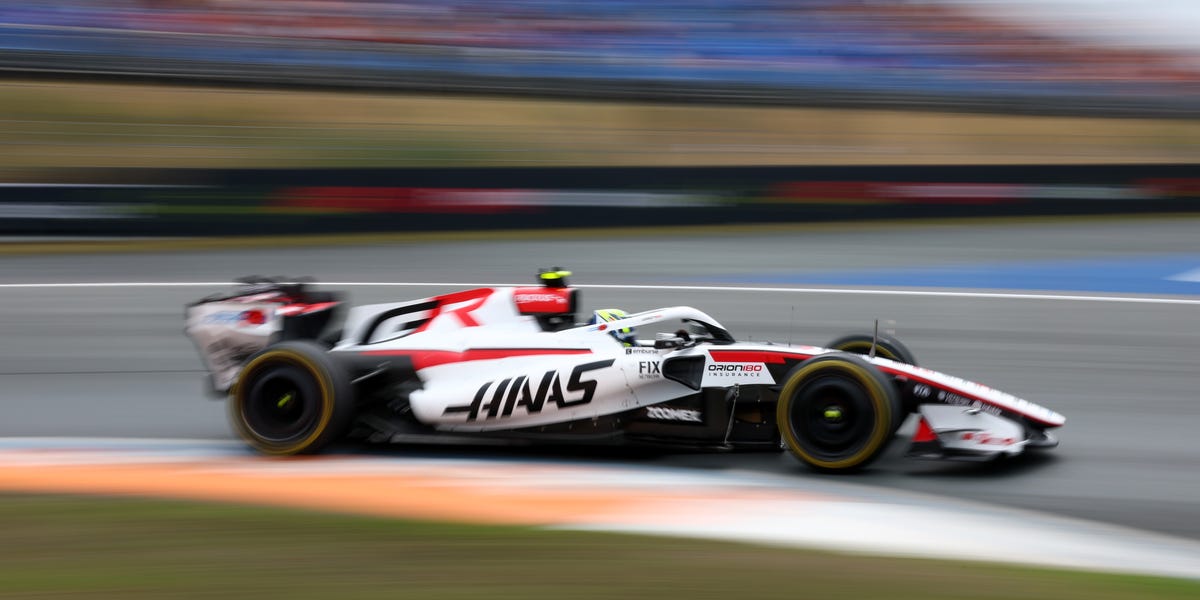
Oliver Bearman says Haas’ weaknesses have been “found out” in Formula 1 this year, owing to its in-season regression, with its prospects accentuated by its component inconsistency.
Haas hit the ground running under new regulations, with its VF-26 quick out of the box, allowing the team to score 17 points across the opening three events.
That put Haas fourth in the standings, but it has since accrued only four more points, and none across the past five grands prix, and it has slipped to seventh in the championship—a still misleading position with pure performance worse at recent events.
“The facts are we’re not quick enough,” Bearman said ahead of the Dutch Grand Prix. “The last eight events we haven’t been fast enough at all, it’s just more of the same really.
“We miss downforce. We started off incredibly strong, we had really, really good first races when the car was quick, performing well, step-by-step other [teams] caught up, others overtook and now they’ve left us totally behind.
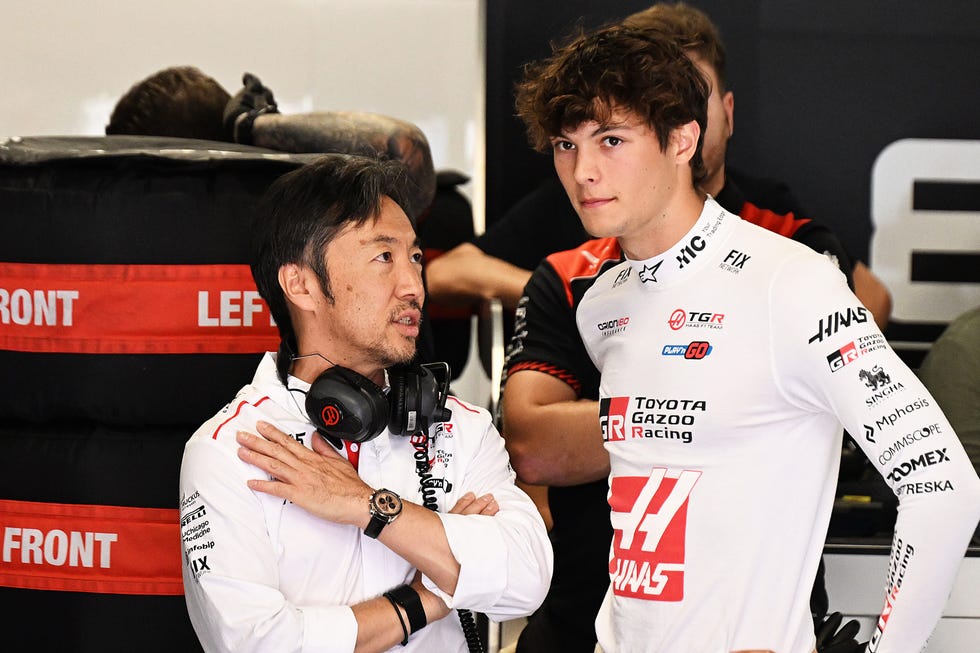 Mark Sutton – Formula 1//Getty Images
Ayao Komatsu, Team Principal of Haas F1 (left) and Oliver Bearman at the Hungaroring in July.
“2025 was really the first year for us—or one of very few years—where we seemed to have good pace through the year, we actually improved our relative performance as the year went on. Now 2026 is kind of more of what we’ve seen from Haas in the past of starting incredibly strong with a really quick car as a base but not being able to improve like the others have.
“Quite frankly we’ve been overtaken now, we are the tenth-best team, it really hurts, myself and all the others, we’re working hard to make that not be the case, but that’s the reality of that.”
“Quite frankly we’ve been overtaken now, we are the tenth-best team, it really hurts.”
The maturity of the regulations in 2025 meant some other teams did scale back development to focus on 2026, but regardless, Haas’ status as the smallest squad—and the only one not competing up to the increased budget cap—is currently proving an immutable albatross around its neck.
“The fact is we can’t bring as many upgrades as the others, when we do upgrade the car, it’s competitive and it works,” Bearman says. “When the rate of change is so fast, like at the start of a new set of regulations, we can’t keep up. If the others are putting on an upgrade every three races, we’re only able to do it every nine races, and that’s not quick enough. Last year we probably didn’t get found out because it’s the last year of a mature set of regulations, now we come to 2026, when everyone is updating the car.”
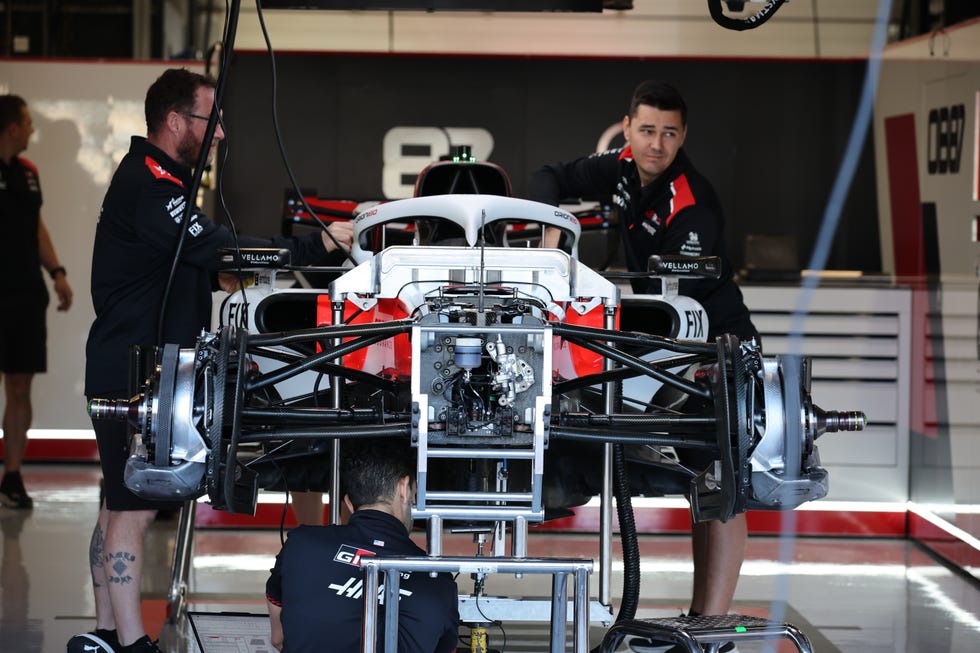
NurPhoto//Getty Images
Bearman, sat in Haas’ motorhome, points to the Red Bull suite on the other side of the paddock, and says, “these guys opposite us are bringing a different car every three races, it’s insane. Did you see the Red Bull from Japan to Miami? It was a different car. We couldn’t dream of doing that, ever, and Ferrari, the way they’re developing the car is incredible—all the top teams, we can’t do that.
“Everyone in this team is so, so passionate and knowledgeable, we’ve shown that in the past: When we have a competitive car, we can do excellent things, but everyone is fighting with less resource, everyone in the aero department, tire [department], chassis [department], everyone has less resource than their counterpart in a rival team, so it’s a big challenge.”
Haas’ slower development rate has been further hampered by the problems it has encountered with its VF-26, whereby performance has fluctuated in a manner that has perplexed both drivers and team.
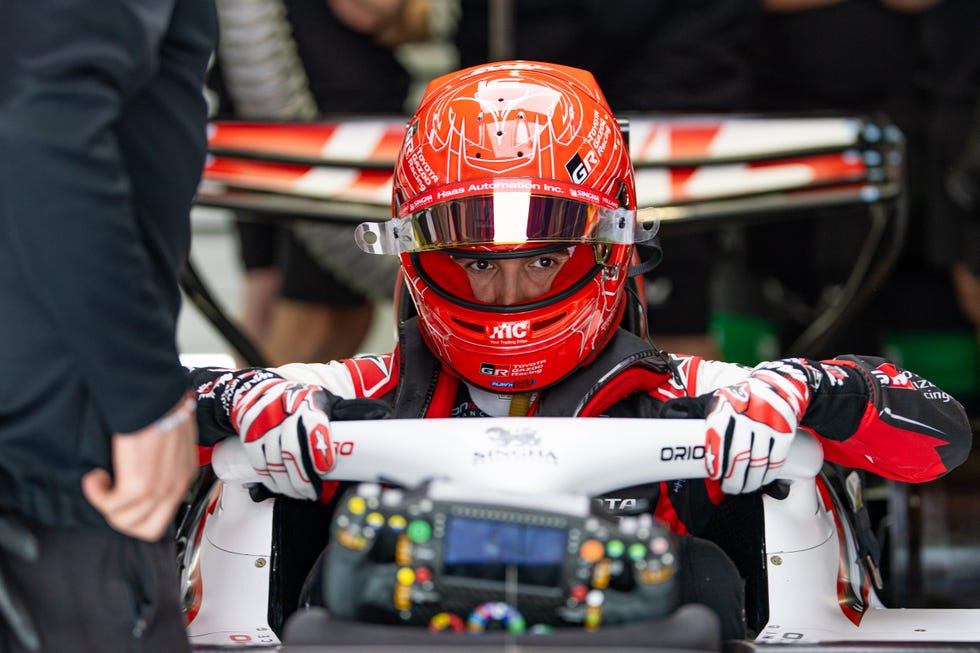
Kym Illman//Getty Images
“It has been difficult to really point out where that came from every time,” said Esteban Ocon, who reckoned his car has “performed to a good level” at just three grands prix so far in 2026. “You could put the same part on the car, and you have a car that performs and a car that doesn’t. There’s a certain problem with the consistency we don’t manage to fix, we are trying to identify the problems, we are clearly saying when there’s an issue we can’t do more—we’re not the problem as drivers at the moment, we need to fix these car problems.”
When pressed on how the situation manifests itself, Ocon explained the different feeling between Friday practice and Saturday running in Belgium, following the usual overnight work that every team undertakes.
“It’s most of the time day to day,” he said. “Spa was very clear, I was happy with the balance of the car [on Friday], the car was working well, we take the car apart [overnight], we fit another engine but the same gearbox, everything, and I go first lap [in Saturday practice], the car is completely different. Massive instability, no rear grip. We look and I’m missing 10 points of load on the rear, with the same parts, and that’s what we see most of the time.
NurPhoto//Getty Images
“In Budapest my car had a bit more downforce [than Bearman’s], it was the opposite in Spa, it doesn’t correlate or make sense, that’s not something I’ve ever seen in Formula 1.”
Conversely, Bearman enjoyed a surprisingly strong grand prix in Belgium, despite missing out on points, but then had a wretched display in Hungary.
“I was running the same floor in Budapest as I was in Spa, as it was very good in Spa, and came to Budapest and was performing very unfavorably compared to the other car,” Bearman said. “We didn’t change anything, in theory, so either it’s inconsistency of parts, or incredibly sensitive to how you fit the part. We don’t know, I wish I could explain it as it means we can mitigate it, but we can’t.”
Bearman described the difference in performance as “equivalent to the size of an upgrade,” explaining that “if I had the car I had in Spa here [at Zandvoort], it’s like putting an upgrade on the car that costs many millions, so if we can figure out how our car works, it’s for free.”

U.K.-based Phillip Horton started covering Grands Prix while still at university and swiftly deemed that writing about Formula 1 and the behind-the-scenes machinations was much more engaging than reading centuries-old novels. Degree gained, he went on to cover the sport full-time from 2014 and is as intrigued and excited by the destinations Formula 1 visits during its lengthy annual world tour as the racing itself. Phillip joined Autoweek in 2021 and while he has just about learned to spell in American English he has yet to find anywhere in America that makes a proper cup of tea.