
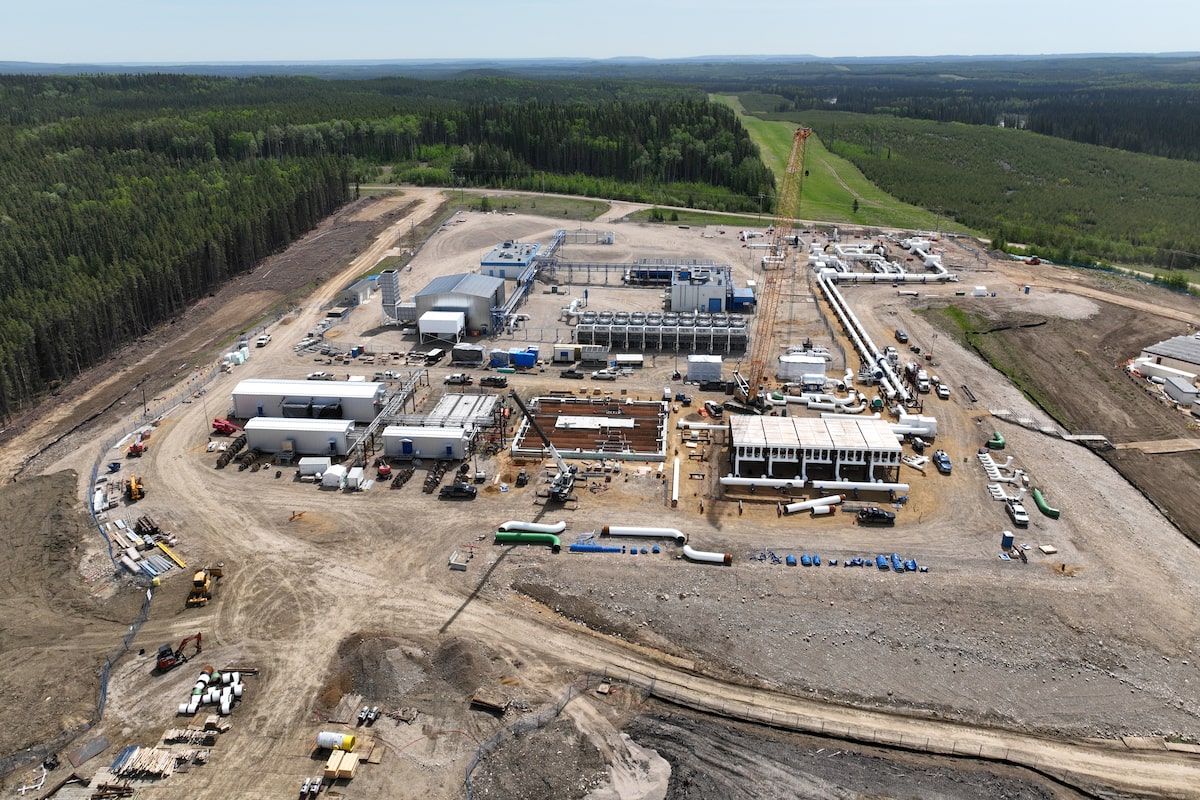
Berland River Compressor Station C3 unit addition site is shown in this handout image near Edson, Alberta.The Canadian Press
Betting on rising demand for Canadian crude oil and natural gas feels like a no-brainer right now, given the world’s rising energy needs and supply disruptions outside of North America.
That’s why the recent dip in Canadian pipeline stocks looks like an intriguing opportunity.
The biggest names in the sector have taken it on the chin over the past four weeks. TC Energy Corp. TRP-T and Enbridge Inc. ENB-T (full disclosure: I own shares in the latter) declined as much as 14 per cent each from their recent highs near the end of July, before a rebound on Thursday.
That put both stocks well into correction territory, even as major benchmarks, including the S&P/TSX Composite Index, remain close to record highs set about a week ago.
Other players in the sector are performing better – but not well. South Bow Corp., SOBO-T the crude oil network that was spun off from TC Energy in 2024, fell about 5 per cent since July 24. Pembina Pipeline Corp. fell almost 8 per cent.
Granted, investors who have held any of these stocks over the past several years are probably not losing much sleep over the recent setbacks, given the gains they are likely sitting on.
South Bow is still up nearly 38 per cent this year alone, not including dividends. TC Energy is up more than 80 per cent over the past two years.
Nonetheless, the reversals suggest that energy infrastructure plays are facing a few headwinds.
Consider stretched valuations. Two years ago, just before the South Bow spinoff, TC Energy languished at under 12-times estimated earnings from analysts and beckoned with a dividend yield above 8 per cent – an attractive payment for staying put.
By July, the price-to-earnings ratio had ballooned to 27, which was well above the 10-year average of about 17-times earnings, according to S&P Global Market Intelligence. The dividend yield fell to about 4 per cent offering another indication of a pricey stock.
Also, the backdrop has shifted. Bond yields have surged worldwide as investors grow concerned about massive government deficits and rising inflationary pressures.
This week, the yield on the 30-year U.S. Treasury bond rose above 5.33 per cent, hitting its highest level in nearly two decades.
Minutes from the Federal Reserve released this week suggest that most officials favoured raising interest rates last month. The implication: Borrowing costs could rise this year.
Opinion: Bond yields rise best when Fed chair Kevin Warsh says nothing at all
That’s not good news for pipelines with heavy debt loads. Rising bond yields can also make dividend-paying stocks look less attractive next to fixed income alternatives.
There may be portfolio pressures at work in the sell-off, too, as some investors rotate out of staid pipelines and into companies with exciting exposure to soaring oil prices.
“People don’t want to increase their energy weight, but they want exposure to oil. So they buy the oil producers instead,” said Laura Lau, chief investment officer at Toronto-based Brompton Funds.
Lastly, there is no guarantee that energy producers will jump at the chance to ramp up production.
But the bullish case for pipelines remains compelling.
After years of regulatory opposition to expanding pipeline networks, Ottawa is trying to usher in a golden age of Canadian energy production through new infrastructure that will spur additional oil and gas exports. As well, power-hungry data centres and a more general shift to electrification is raising demand for energy sources longer-term.
François Poirier, TC Energy’s chief executive officer, said on a call with analysts in late July that the company’s latest outlook points to a 40 per cent increase in North American natural gas demand over the next decade.
Greg Ebel, CEO of Enbridge, added this bit of colour on his company’s conference call with analysts last month: The widening array of opportunities, he said, reflects “possibly the best environment for growth that we’ve had in recent memory.”
Admittedly, pipelines are not exactly residing in bargain territory. Enbridge’s price-to-earnings ratio declined to a low of 23 earlier this week, down only a smidge from a high of 27.6 in July. The valuation remains well above its cheapo days in 2024, when it languished at about 16.
Perhaps low valuations are a thing of the past, though – relics of an era when we were counting down the days of fossil fuel production and governments thwarted any attempt at expansion.
Pipelines are central to Canada’s emerging energy policies. For investors who want steady performance and attractive dividends, declining share prices look like a gift.