
The Fate of the World: A History and Future of the Climate Crisis
Author: Bill McGuire
ISBN-13: 9780008806545
Publisher: HarperNorth
Guideline Price: £20; 288pp
This is a history book about the future. That’s how volcanologist Bill McGuire introduces his latest title on the climate crisis. The geological record, he reminds us, ‘is never wrong’, and what it has to say about our near- and longer-term future is anything but reassuring.
The closest analogue to today’s global climate occurred about three million years ago, during the mid-Piacenzian Warm Period, when sea levels were up to 25m higher than today. If global carbon dioxide levels remain at today’s levels, McGuire warns, all the world’s coastal cities will be drowned, with sea water “inundating vast areas of currently inhabited Earth”.
He dismisses recent backsliding on the climate emergency by politicians in Ireland and elsewhere under the guise of pragmatism as “dangerous drivel”, noting that doing anything less than what the science demands is recklessly irresponsible.
Our collective cowardice and selfishness, he believes, mean the world our children grow old in “will be marked not only by a broken climate but by mushrooming suspicion, prejudice and brutality”.
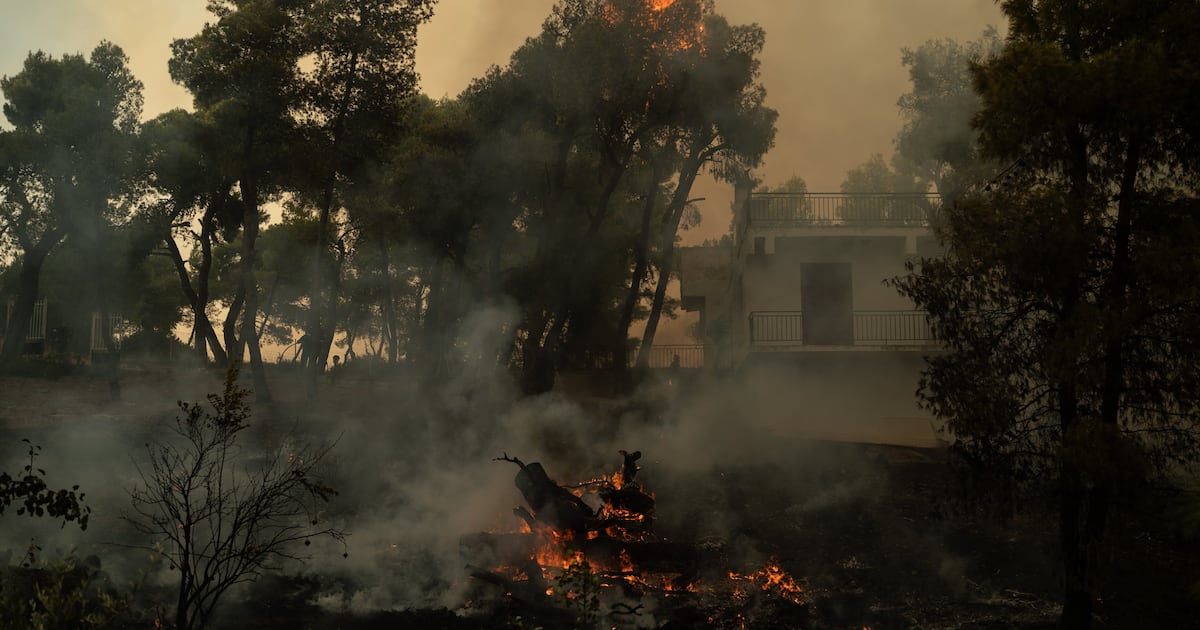
The brutal summer of 2026 seems to viscerally bear out McGuire’s concerns and his growing sense of outrage. “I am drawing on this anger in the fight to stop the madness.” It had been said that humanity is sleepwalking into climate catastrophe, but this is clearly no longer the case. “We are (now) doing it consciously, with our eyes open, and hang the consequences.”
If this all sounds like the counsel of despair, McGuire, a specialist in geophysical and climate hazards and a prolific popular science writer, is adamant there is still much to fight for. “I did not write this book to dismay or dishearten, to foster panic or to feed inertia but to galvanise action,” he stresses.
For those new to the science of climate change, this book is a solid, if sometimes blunt, introduction, though it is not one I would recommend to the uninitiated. For those already familiar with the field, it can feel repetitious and at times, somewhat hectoring.
McGuire is most effective when illuminating his uneven storytelling with vivid examples. For instance, he notes that every litre of petrol we burn today comprises 24 tonnes of prehistoric plant material. Or when he memorably compares the rate at which continents drift across the Earth’s surface as ‘about the same speed fingernails grow’.
John Gibbons is a journalist and author of The Lie of the Land: The Truth About Farming, Climate and Power in Ireland