
Many of these workers bring decades of experience working with local industries, employers, health-care providers, and injured workers. They also have deep knowledge of health-care systems and rehabilitation networks
North Bay and northern Ontario have been hit hard by a government announcement yesterday that local Workplace Safety and Insurance Boards (WSIB) are being closed.
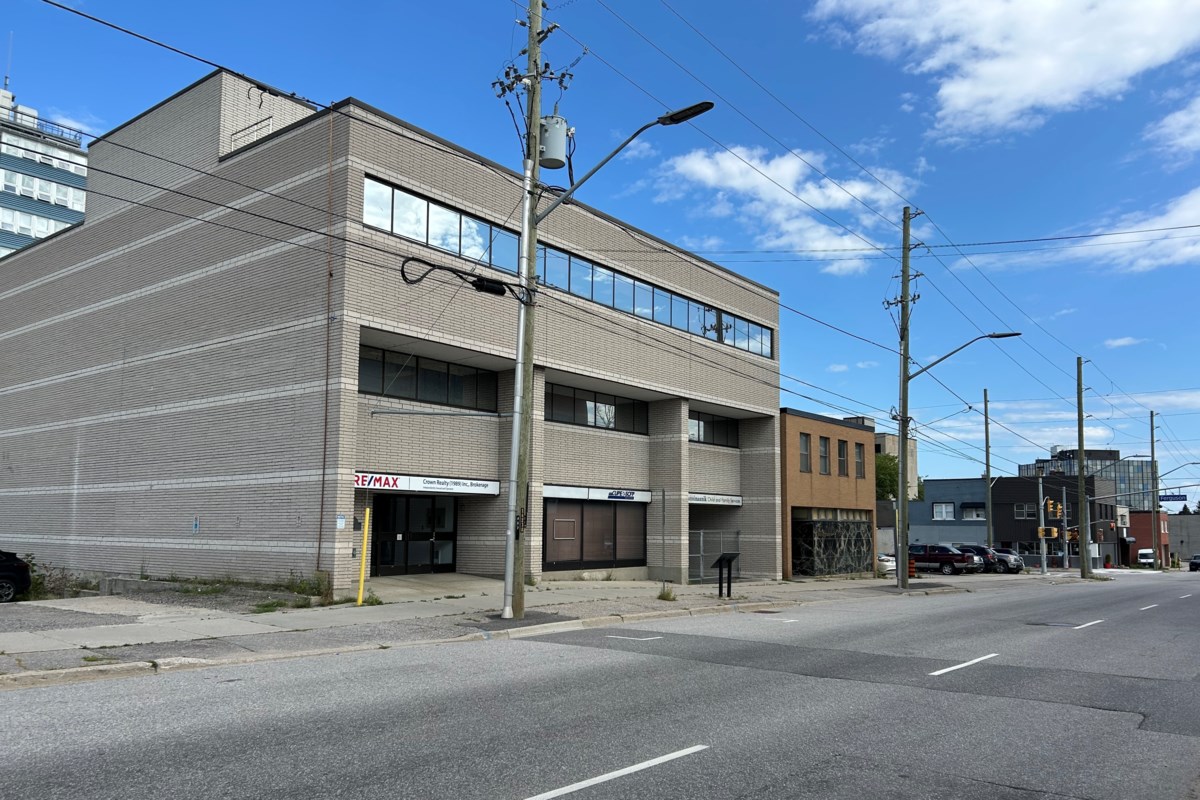
The union says 15 local workers have been laid off. The local office on McIntyre St. was closed in 2020 during COVID while employees worked from home. It eventually reopened at 555 Oak St E, on the third floor inside the Ontario Northland building, but closed that location last year.
After the government announced it was undertaking a review of WSIB, the agency announced office closures and job losses in regional and rural areas across the province.
“The proposed closure will result in the loss of stable, professional, middle-class jobs at a time when the government has made significant commitments to economic growth, workforce development and population retention across northern Ontario. These are precisely the types of jobs that communities are working to attract and retain,” says a release from the Ontario Compensation Employees Union (OCEU), which represents WSIB workers.
The WSIB maintained a regional presence in North Bay to provide no-fault workplace insurance, handle injury claims, and support safe returns to work. Local workers will now have to contact a call centre in Toronto.
The loss of jobs is part of 10 office closures in Ontario, with 466 jobs cut. In the north, 250 jobs were lost as other offices in northern Ontario have also been closed and those jobs eliminated. Besides North Bay, Sault Saint Marie, Thunder Bay, Sudbury, and Timmins are also losing local offices.
See: WSIB announces sweeping office closures, 136 Sudbury jobs lost
“Many of these workers bring decades of experience working with local industries, employers, health-care providers and injured workers. They also have deep knowledge of health-care systems and rehabilitation networks,” says the release.
“For example, a claims adjudicator based in North Bay understands the realities of serving workers across northern Ontario in a way that may be difficult to replicate through a centralized model. Local knowledge of health-care providers, employers, transportation challenges, and community resources can have a meaningful impact on claim outcomes and return-to-work planning.”
Harry Goslin, the president of OCEU, which represents WSIB workers, told BayToday that North Bay area workers will not have a local office to walk into.
“You’ll have to deal with a call centre, and many of the call centres are being impacted by these chatbots, so workers will have difficulty talking to somebody live. When you do get to somebody live, it’s not going to be somebody who is in your community, who’s aware of what your community is like.
“You won’t have decision-makers that understand what it’s like to travel those roads in the winter. You’ll have people that are in Toronto or London where the living conditions are dramatically different. It’ll be hard for people to understand what that’s like. It’ll be a loss of services.”
Goslin says the government has an official policy, the Ontario Community Jobs Initiative, which is to put good-paying government jobs into underserved areas in Ontario.
“What they’re doing here is they’re supporting an organization that’s stripping cities of those good-paying jobs.”
Goslin says almost all the local employees are women
“To have that stripped away means it impacts those people that are working there now, but it also impacts people that were looking for employment at the WSIB working in the North Bay office. So you won’t have people with those jobs; you won’t have people spending their money in those communities to support the spinoff benefits for other businesses; that’ll all be stripped away.
“I want people in North Bay and other communities to know that this union and these employees will be fighting for these jobs, to stay in those communities, and we hope that they will join with us to bring the government to the table, to talk about how we protect these jobs and how we serve these communities?
Goslin says in addition, there will be demonstrations and information picket lines going up across the province, including North Bay where the office of MPP Vic Fedeli is located.
“We have sent letters to Vic Fedeli to request a meeting. I’m not a conservative supporter, but I will say that in Vic Fedeli’s case, he’s really been a champion for the north and has gone against the cabinet, from what I understand, to be able to protect the interests of the north.”
BayToday reached out to Fedeli’s office for comment, but received no response.
WSIB Public Affairs Manager Christine Arnott told Sudbury.com that support will be delivered online or by telephone.
In an email to BayToday she said, “While the WSIB has not provided in-person service from our North Bay office since the pandemic hit in 2020, we continue to expand local health care access here, now working with 53 physical and mental health care providers in the community. We are also maintaining a local team to provide in-person return-to-work support.
“The WSIB is modernizing how we deliver service, and we have made the difficult business decision to consolidate some claim and account management functions. We recognize this is difficult news for affected team members and their families. We will treat everyone fairly and with respect in recognition of the valuable role they have played on our team, including opportunities to relocate, access to resume writing, job-seeking services, and a continuation of benefits including unlimited mental health support during this transition.”
WSIB president and CEO Jeffery Lang, in an email to staff, said, “A lot has changed since we were last working from the office full time,” citing online claim submissions, 24/7 digital forms, and telephone-based claim management.
“When we consider what a WSIB office for the future looks like, it’s very different from the storefront model we used to have. Our work model needs to support how we work today and be future-ready for how we will work tomorrow.”