
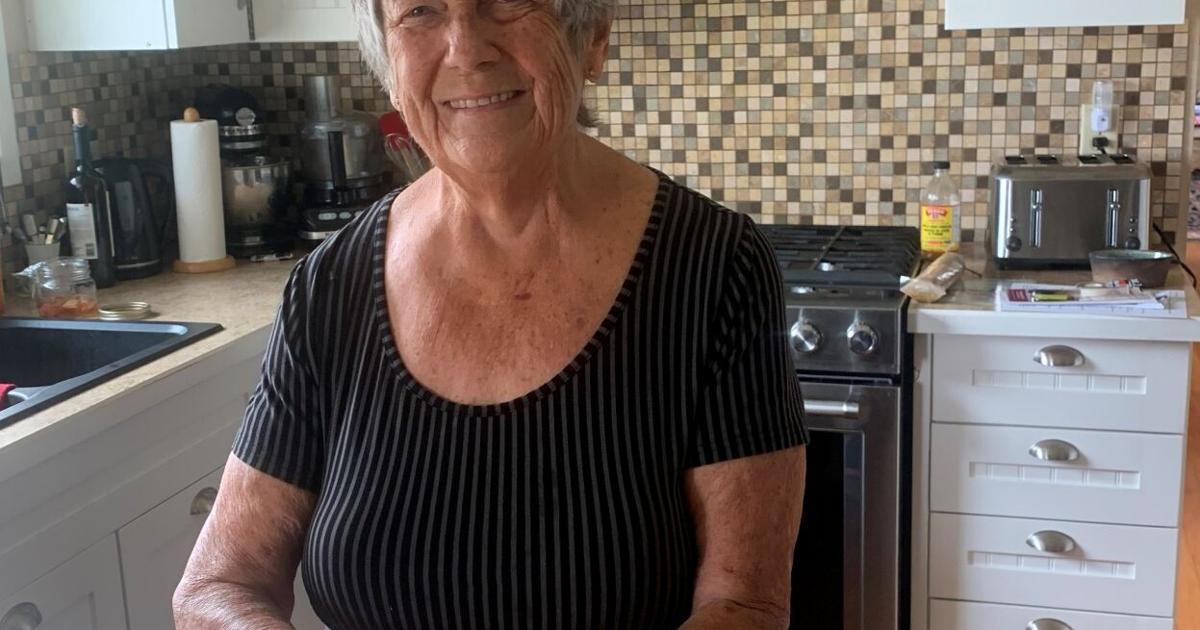
A Summerland woman is the first patient in Canada to receive a new heart valve device that is still under study.
In May, Dixie-Lee Rosher, 83, received an AltaValve at St. Paul’s Hospital in Vancouver to replace her faulty mitral valve.
The mitral valve regulates blood flow between the left atrium and left ventricle and has traditionally been especially difficult to treat.
The AltaValve, a minimally invasive transcatheter procedure, treats severe mitral valve regurgitation in patients who are not candidates for traditional treatment methods including surgery.
The valve is inserted through a tube inserted in the groin and moved through blood vessels to the heart.
“It has given me my life back,” said Rosher, who is quickly returning to friends, bridge, church and domestic life with her husband of over 60 years, Ron.
“I have realist expectations. I simply want to function as a healthy 80-year-old,” she said.
Developed by 4C Medical Technology in Minnesota, a clinical trial is underway in the United States, Europe and now Canada to evaluate the safety and effectiveness of the new valve.
Rosher was told she was patient number 200 in the study whose leaders want to recruit a total of 400 patients.
St. Paul’s is the only hospital in Canada to offer the procedure to a small number of patients who qualify.
Eventually, if the study yields positive results, the procedure will be established at other Canadian medical centres.
Rusher said she was able to travel home the same day as the procedure, but the doctors wanted her to stay in hospital for observation according to study guidelines.
She returned to St. Paul’s for a check-up one-month post-procedure and will return after six months and then annually.
Rosher’s mitral valve problem started several years ago with symptoms, such as shortness of breath, inability to walk any distance and sluggish thinking, that gradually increased.
About three years ago her local cardiologist said there wasn’t anything more that could be done for her here and referred her to St. Paul’s.
Late 2025, her symptoms increased significantly.
Less than 40 percent of the normal amount of blood was flowing through her body.
“The medications were no longer working, I was considered a poor risk for surgery, and I knew I couldn’t carry on much further,” Rosher recalled.
When offered the chance to be part of the study, she didn’t hesitate for a moment.
“Let’s go for it,” she said.
With over 35 years of experience as a registered nurse, Rosher understood her precarious position, the risks of the procedure and the potentially life-saving opportunity presented to her.
The gift of extra years of life has given Rosher a greater appreciation of the good things in her life—her community, a secure home, friends and family.
“Ron and I have three adult children, eight grandchildren and our third great grandchild is due in September,” Rosher said.
It has also given her a purpose.
“I feel strongly that I have a responsibility to tell others not only to enjoy life but also to encourage anyone with mitral valve problems. Currently, there are several good treatment options for the early stages. Research is being conducted on new procedures and devices and should be available in the near future,” she said.