

Listen to this article
Estimated 4 minutes
The audio version of this article is generated by AI-based technology. Mispronunciations can occur. We are working with our partners to continually review and improve the results.
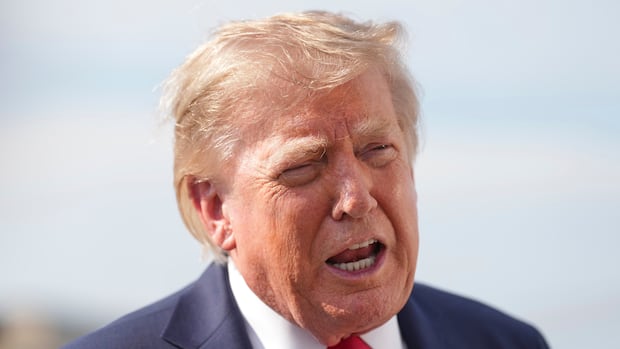
U.S. President Donald Trump says Canada “wants the benefits” of being a U.S. state “without being one.”
Trump’s comments, in a brief post on his Truth Social platform early Sunday, are his first since trade talks between the two countries broke down and come after a slate of new U.S. tariffs came into effect.
Trump also accused Canada of imposing “massive amounts of Tariffs” on American farmers for years. “No more!!!” he wrote in the post.
There was no immediate reaction from the Canadian government to the remarks from Trump, who has repeatedly said since entering his second term in office in 2025 that he wants Canada to become the 51st U.S. state.
Fifty per cent tariffs on a range of Canadian goods were ushered in early Saturday after extended negotiations aimed at reaching a trade deal fell apart.
WATCH | U.S. tariffs designed to ‘hurt and divide,’ Carney says: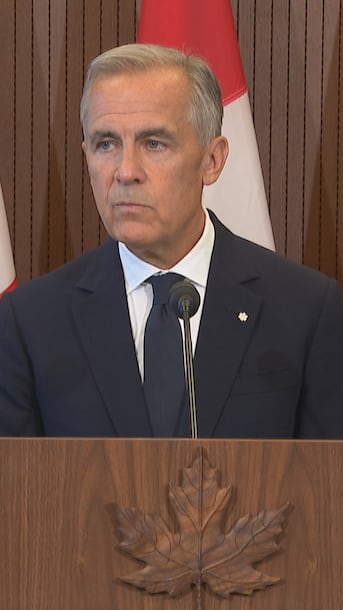
Carney says U.S. tariffs designed to ‘hurt and divide us’
Prime Minister Mark Carney called U.S. President Donald Trump’s new 50 per cent tariffs a ‘miscalculation’ because Canadians are united and ‘masters of our destiny.’Carney says U.S. made ‘unacceptable’ demands
Prime Minister Mark Carney told reporters that Canadian negotiators walked away from the talks after the Trump administration made “unacceptable” demands, including restrictions on Canada’s ability to make trade deals with other countries.
“We cannot accept what they’ve offered, and we will not give what they’ve asked,” said Carney, adding that the U.S. “asked too much and offered too little.”
Carney also announced that his government would impose reciprocal, “dollar for dollar” tariffs on U.S. goods, starting Sept. 8.
Under the Trump administration’s new policy, tariffs of 50 per cent will apply to hundreds of products worth more than $28 billion — from plywood and cement to wine and hockey sticks.
Cross Country Checkup wants your reaction to Canada’s trade dispute with the U.S. Leave your comment here and our team may get in touch or read your comment on air
The trade deal was also expected to lower existing U.S. tariffs on the Canadian aluminum, steel and automobile sectors, sources told CBC.
On Sunday morning, Conservative MP Shuvaloy Majumdar urged the federal government to release “the full details of the proposed deal.”
Majumdar, the party’s shadow minister for Canada-U.S. relations, said Conservatives aren’t asking for “negotiating secrets,” but are seeking information that Ottawa and Washington already knows.
“This information will allow Canadians to debate and discuss the way forward as a country,” Majumdar wrote in a letter addressed to Canada-U.S. Trade Minister Dominic LeBlanc and shared on X.
Support from premiers
Provincial and territorial premiers have largely backed Carney’s decision to walk away from the negotiations. Ontario Premier Doug Ford, for instance, said Saturday that he was “glad” the prime minister didn’t sign the pact “because it was a bad deal.”
“We need to fight these tariffs, tariff to tariff, dollar to dollar,” Ford told reporters.
U.S. Trade Representative Jamieson Greer said Saturday there were no plans for new talks with Canada.
“Our interest is in protecting American workers and protecting American supply chains,” Greer said in an interview with Fox News.
He said the Trump administration had offered to cut tariffs on steel, automobiles and lumber.
“They’ve always had the best deal, and they still would have an even better deal, but they didn’t want that,” Greer said, referring to Canada.
WATCH | B.C. premier weighs in on the Canada-U.S. trade situation: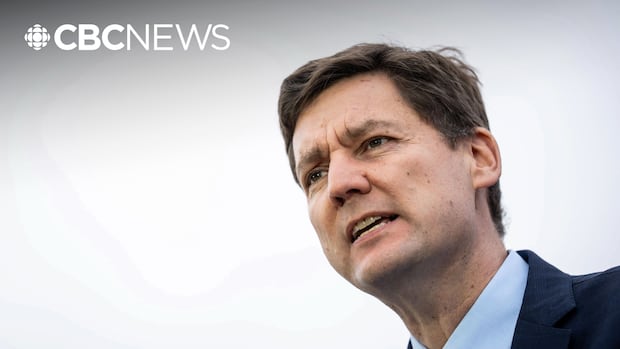
B.C. premier says U.S. alcohol won’t return to provincial shelves amid tariffs
B.C. Premier David Eby says that U.S. booze won’t be seen on provincial liquor store shelves until the softwood lumber sector is treated fairly. Ebay says even Russian forest products have better access to the U.S. economy than Canadian forest products’Canadians do not want to be bullied’
Jamie Gillies, co-ordinator of the communications and public policy program at St. Thomas University in New Brunswick, said there was an expectation that Canada “would match” U.S. tariffs “dollar for dollar.”
“Polling has shown that Canadians do not want to be bullied by the U.S. administration,” Gillies told CBC News.
Despite the escalating dispute, he said, there is “some wiggle room” to get back to the negotiating table because Canada’s retaliatory tariffs aren’t expected to come into effect until Sept. 8.
Gillies also said the Trump administration is looking for a trade win as the cost of living in the U.S. is rising and could become a major issue for Republicans ahead of midterm elections in November.
“There might be some pressure on Greer to salvage parts of what they were trying to negotiate; maybe [there is] something that Canada and the U.S. can agree to, where we can climb down from just this set of tariffs.”