
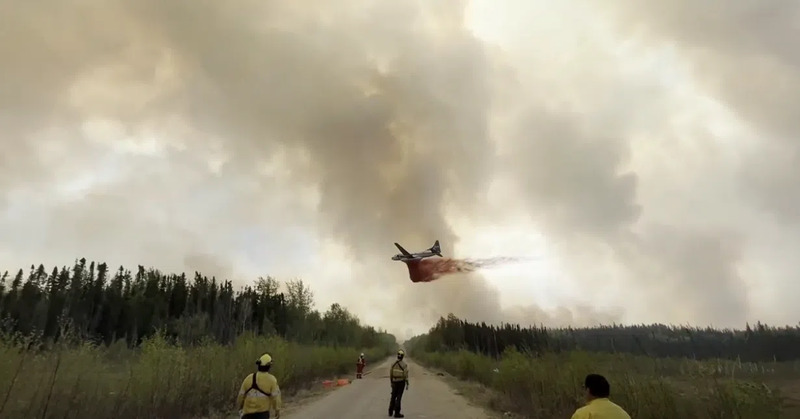
Canada remains in the heart of its 2026 wildfire season, with hundreds of fires still burning across the country and federal officials warning above-average temperatures and dry conditions could keep the risk elevated into September.
The federal government provided its latest national wildfire update this week, reporting 582 active wildfires as of Aug. 18, including 31 classified as out of control and receiving a full response.
So far this year, 4,793 wildfires have burned approximately 4.1 million hectares across Canada.
While the number of fires is slightly higher than at the same point last year, the amount of land burned is significantly lower. By mid-August 2025, Canada had recorded 4,584 fires that had burned about 7.7 million hectares.
Heat and dry conditions fuel summer fires
Federal officials said prolonged heat, low humidity and dry conditions have contributed to wildfire activity in several regions this summer.
Northwestern Ontario experienced a series of intense wildfires in mid-July that caused significant damage and forced evacuations from several communities, including First Nations.
The federal government received a precautionary request for assistance from Ontario on July 15. The Canadian Armed Forces began helping evacuate Eabametoong First Nation, also known as Fort Hope, on July 18.
British Columbia has also faced persistent heat and below-normal precipitation, particularly in the Fraser Canyon and Okanagan Valley.
The federal government approved a request for assistance from B.C. on Aug. 8 to help provide shelter and accommodations for people displaced by wildfires.
More than 10,000 people remained under evacuation orders at the time of the federal update.
Emergency Management and Community Resilience Minister Eleanor Olszewski said governments and emergency responders remain prepared as conditions evolve.
“We are still in the heart of the 2026 wildfire season, and communities across the country are facing the very real impacts of these fires,” Olszewski said.
Related Stories:
Saskatchewan wildfire danger expected to ease in September
The outlook for the remainder of the season varies significantly by region.
Environment and Climate Change Canada is forecasting above-average temperatures across much of the country from August through September.
Natural Resources Canada modelling indicates fires in southern British Columbia are expected to remain active through the remainder of August, although forecast precipitation could reduce activity.
Localized areas of above-normal fire danger are also expected in northern British Columbia, Yukon, the Northwest Territories, northwestern Quebec and Nunavut.
By September, wildland fire danger is forecast to remain above normal across much of Canada, with Alberta and Saskatchewan among the exceptions.
Officials noted that even where northern regions experience above-normal fire danger in September, the typical seasonal risk is already relatively low, meaning widespread large fires or significant fire growth are not necessarily expected.
International crews bolster Canadian response
Canada has also received significant international assistance during the 2026 wildfire season.
More than 500 firefighters from Mexico, Costa Rica, New Zealand and Australia have assisted crews in Ontario and British Columbia throughout the summer.
The international personnel have worked alongside Canadian firefighters and emergency responders protecting communities and critical infrastructure.
Indigenous Services Canada is also working with First Nations, provinces, territories and other partners on wildfire response and recovery.
Through the Emergency Management Assistance Program, the department will reimburse 100 per cent of eligible wildfire response costs for affected First Nations.
Eligible expenses can include evacuation transportation, accommodations, food, security and mental-health and wellness supports.
Funding can also cover equipment including air purifiers, air scrubbers and generators to help communities cope with wildfire smoke and poor air quality.
Wildfire activity remains below five-year average
Despite significant fires and evacuations this summer, federal officials said overall 2026 wildfire activity remains below the five-year national average.
However, officials cautioned fire danger could remain high through the rest of summer and into early fall.
Olszewski said federal, provincial, territorial and Indigenous governments continue working together to respond to affected communities.
“We remain prepared, and ready to respond as conditions evolve to keep Canadians and their communities safe,” she said.