
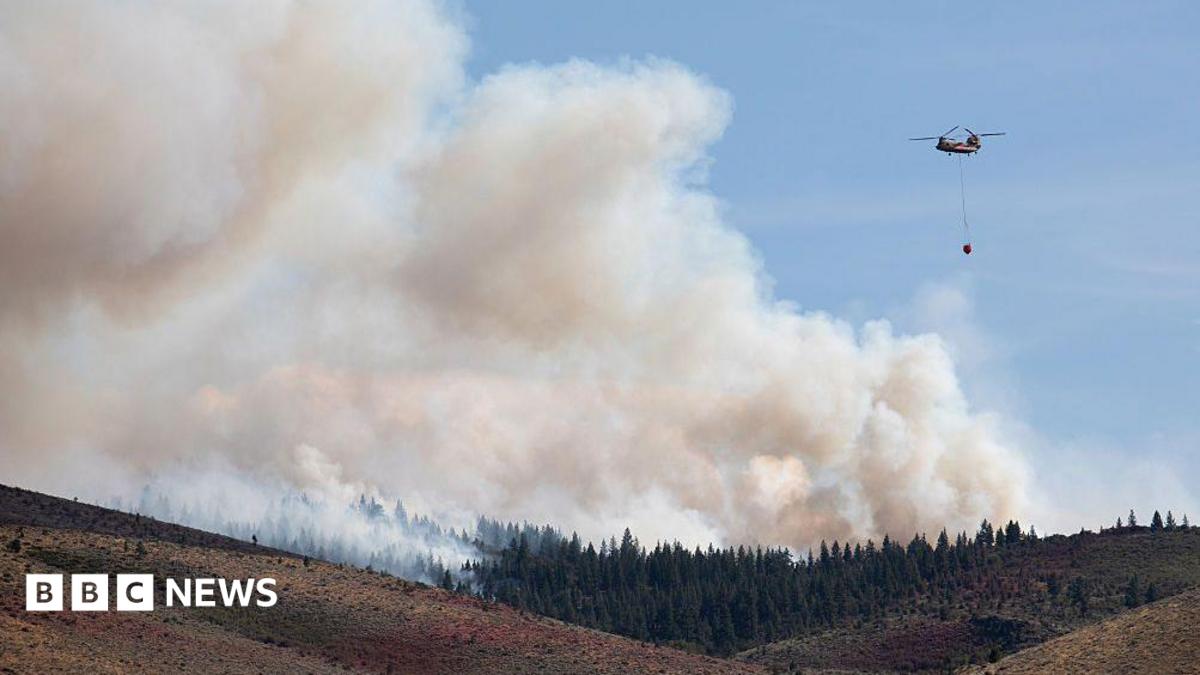
Rising number of highly destructive fires in some parts of worldpublished at 18:29 BST
18:29 BST
 Matt McGrath
Environment correspondent
Despite the powerful images of wildfires coming from Reno, and the raft of fires we have had globally this year, the amount of land burned globally has actually fallen over the past two decades.
That’s mostly down to how land is farmed, with far less controlled burning across the savannahs of Africa for example.
But what’s rising is the number of fast, highly destructive fires in the forests away from the Tropics – especially in the American west, southern Europe and the huge northern forests of Canada and Russia.
More of them are also reaching people as cities spread towards the tracts of forest and farm that surround them.
Driving the fires themselves is the changing climate that is helping dry out the ground, priming trees and vegetation to burn, and extending the fire season. Reno is a good example.
The city’s average temperature has gone up by over 4C since the 1970s, faster than any other big US city, according to Climate Central.
The climate, and city growth, set the conditions. The spark was human, as is often the case.
So a warming climate doesn’t necessarily mean more fires everywhere – but it does mean more of them reaching the places people live.