

Listen to this article
Estimated 4 minutes
The audio version of this article is generated by AI-based technology. Mispronunciations can occur. We are working with our partners to continually review and improve the results.
At least 47 people were killed and 22 more injured in an overnight gang raid on a neighbourhood overlooking Haiti’s capital of Port-au-Prince, the UN said on Monday, prompting anger over the lack of protection from repeated deadly attacks.
The United Nations Integrated Office in Haiti said estimates could still change.
Jean Massillon, the mayor of Kenscoff, said armed men raided the community late on Sunday, setting fire to homes and killing residents.
The hillside community overlooking routes into the capital has suffered a dozen attacks by armed gangs since last year, forcing thousands to flee their homes.
Powerful gangs under a broad alliance have for years cemented their influence over Haiti’s capital and expanded to nearby regions, despite attempts by foreign nations to reinforce the country’s outgunned police.
Even as Haiti’s government decried a “heinous attack” and promised to reinforce security, residents demanded the local police chief step down, saying officers failed to protect people killed just minutes from the police station.
“Kenscoff will not be abandoned,” the prime minister’s office said on social media. “The government’s authority will be restored, without weakness and without delay.”
WATCH | CBC News got access in June as UN’s secretary general toured Haiti: :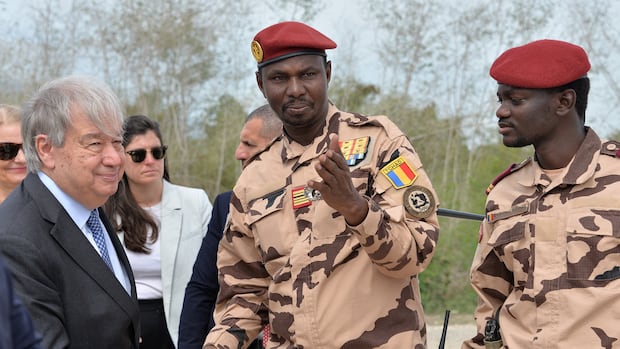
UN chief visits Haiti as new Gang Suppression Force moves in
CBC’s Paul Hunter joined UN Secretary-General António Guterres on a visit to Haiti’s dangerous, gang-ridden capital, Port-au-Prince, where a new UN-backed Gang Suppression Force is attempting to quell violence and restore order. | CORRECTION (June 18, 2026): An earlier version of this video and description called this mission a UN force. In fact, it is a multinational effort backed by the United Nations.’They sowed chaos’
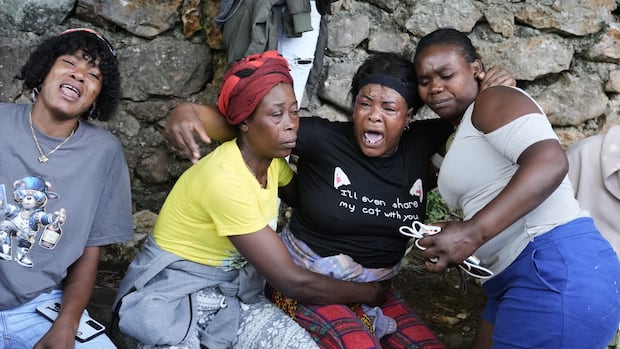
Wails filled the air in Kenscoff as survivors found the bodies of friends and family strewn on the streets early Monday.
“They killed my son!” one woman kept yelling as people nearby tried to comfort her.
One man flung himself on the side of the road, head on his right arm as he cried on the ground. Nearby, people picked up the bodies of those killed, some wrapped in blood-spattered sheets.
Robert Jean recalled how he heard shooting before dawn and tried to rustle people from their sleep to escape being killed. He said he was frantically looking for his brother, who was killed: “I was calling to see if everyone was safe. I could not find my brother.”
Another Kenscoff resident blamed the government for the killings. “If only we had a good police force that would have placed an armoured truck here, what happened here would been prevented,” said Verti Enold-Saint as he lifted a sheet over the body of his brother-in-law.
Mathurin Pierre, 41, a farmer, told The Associated Press he lost 14 loved ones and that an unknown number remain missing.
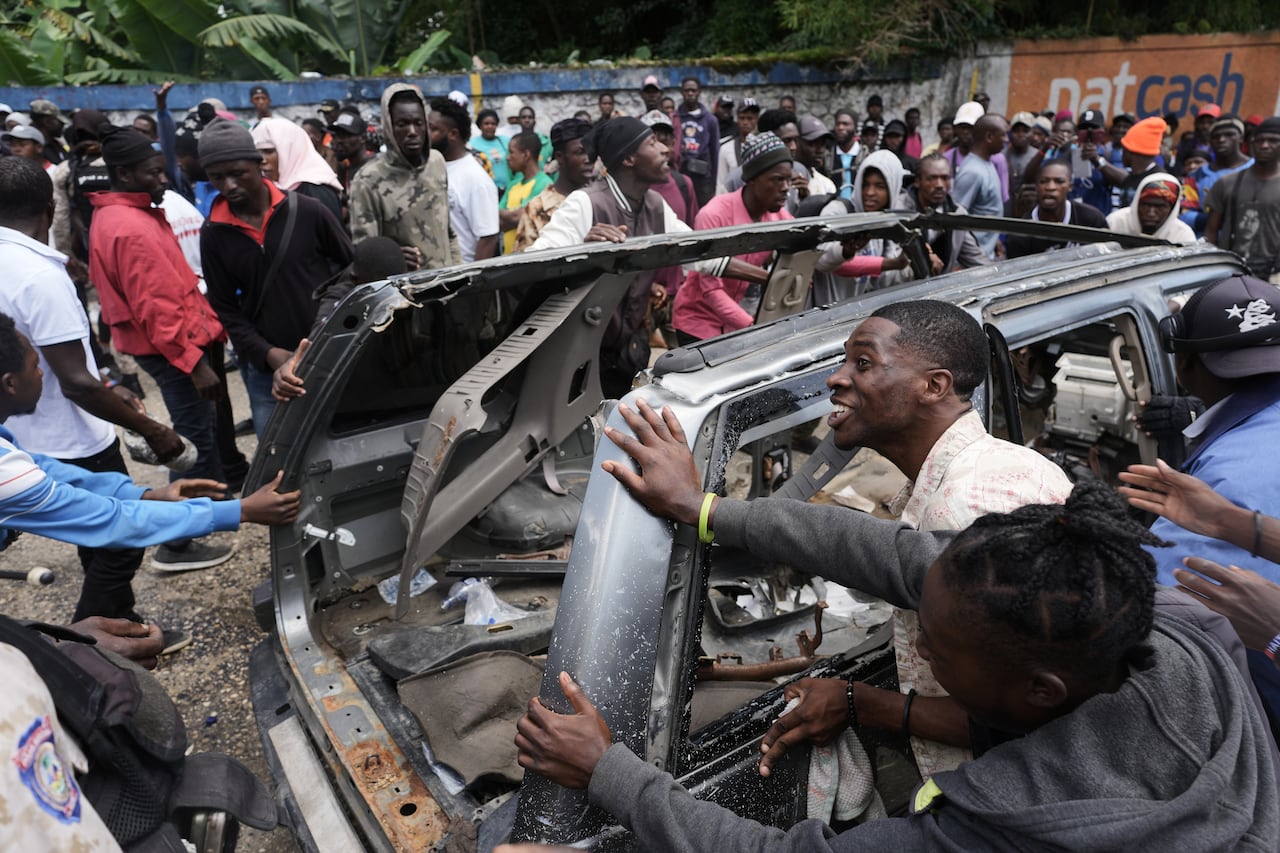 Residents of Kenscoff try to flip over a car to block a street as they call for police intervention following the deadly attack. (Odelyn Joseph/The Associated Press)
Massillon blamed the attack on members of Viv Ansanm, which the U.S. government designated as a foreign terrorist organization last year.
“They sowed chaos,” Massillon said.
He said gang members targeted a church and homes, including those owned by Dr. Jean (Bill) Pape. He is a renowned doctor who runs a non-governmental organization in Haiti that helps patients, including those with HIV and tuberculosis.
Gangs control an estimated 70 per cent of Port-au-Prince, the capital, with Viv Ansanm repeatedly targeting nearby Kenscoff.
Gang violence has displaced a record 1.5 million people across Haiti, where more than 3,100 people were reported killed from January to June and another 1,189 injured, according to UN statistics.
WATCH | Ottawa urged to protect Haitian refugees fearing deportation to U.S.:
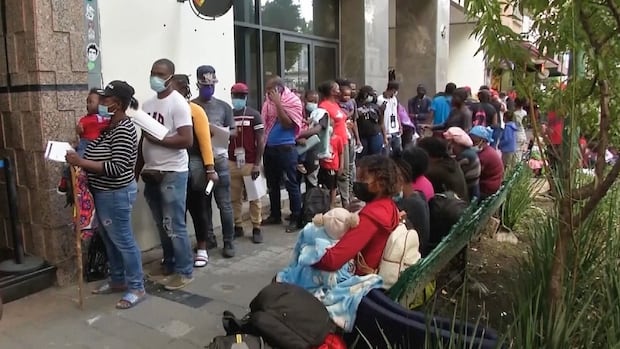
Quebec advocates urge Canada to protect Haitian refugees fearing U.S. deportation
In June, the U.S. removed protections that prevented Haitians from being deported. Now, some advocates say Canada needs to rethink its Safe Third Country Agreement with the U.S. for Haitians seeking asylum.
The attack comes less than a week after the U.S. government deported more than 160 people to the troubled Caribbean country for the first time since the Trump administration won a legal battle to end temporary protected status (TPS) for some 350,000 Haitians.
Haiti’s government has said some of the deportees included TPS holders working legally in the U.S. and even some who were Haitian in origin but not born in Haiti. The U.S. Department of Homeland Security said in a statement to the AP on Monday that those deported on Friday included several gang members with criminal records ranging from assault to drug trafficking.
Haiti is scheduled to hold general elections for the first time in more than a decade on Dec. 13, and it has been registering voters in Port-au-Prince and beyond. Experts have warned it’s currently too dangerous to hold elections.