
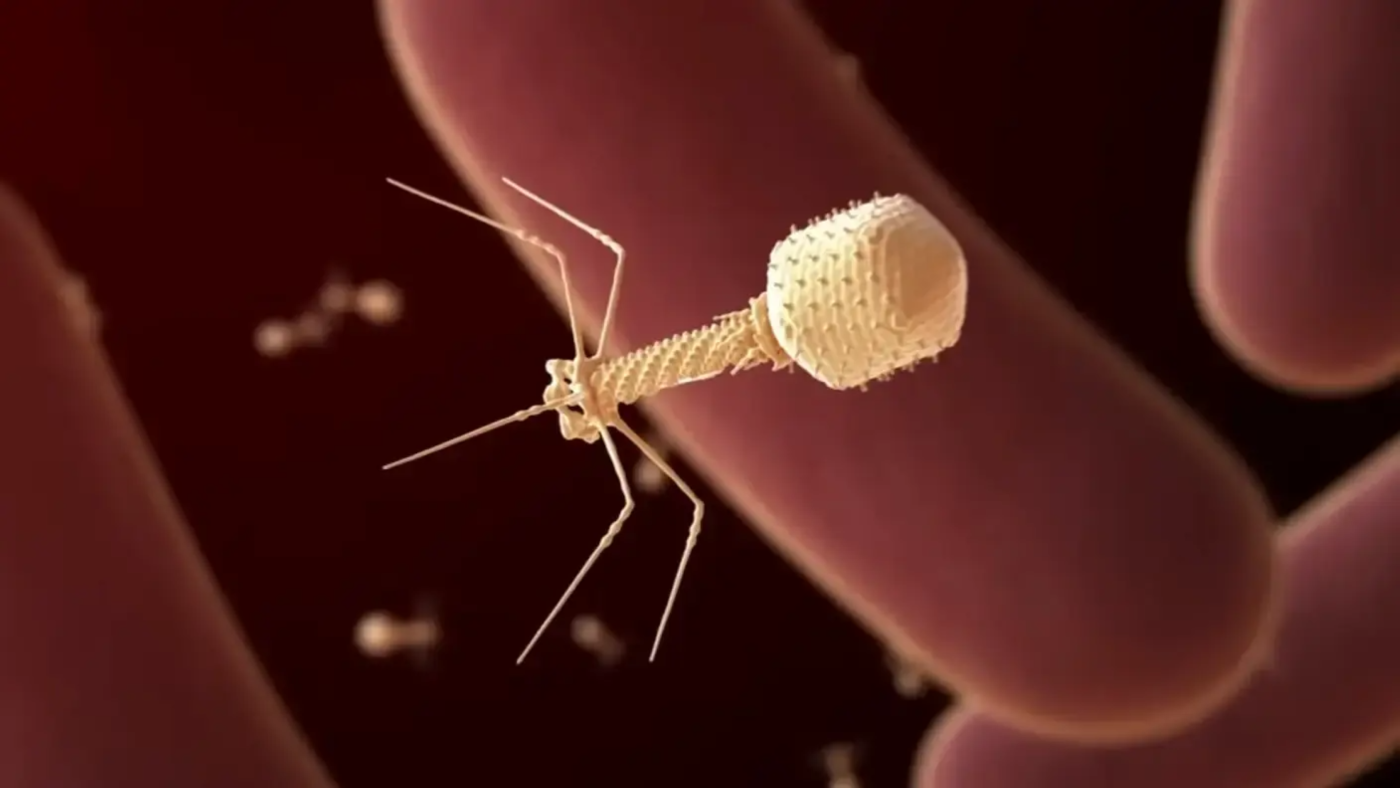
Scientist are exploring how AI viruses could be used to target harmful bacteria.
The National Institute of Allergy and Infectious Diseases./The National Institute of Allergy and Infectious Diseases.
hide caption
toggle caption
The National Institute of Allergy and Infectious Diseases./The National Institute of Allergy and Infectious Diseases.
The era of AI-generated viruses is here. Some scientists are using AI to design viruses that can attack bacteria. The hope is that these tailor-made viruses can fight drug-resistant bacterial infections in people. And longer-term, Brian Hie, the Stanford researcher spearheading this project, hopes that AI can help create more complicated biological systems to treat formidable diseases. But some experts warn that placed in the wrong hands, this technology could create the next pandemic.
Interested in more AI-related research? Email us your question at shortwave@npr.org.
Support public media with NPR+ and enjoy perks for over 25 podcasts like this one. This show’s perks include sponsor-free listening. Learn more at plus.npr.org.
Listen to Short Wave on Spotify and Apple Podcasts.
This episode was produced by Juan Diego Ramirez. It was edited by Rebecca Ramirez. Tyler Jones checked the facts. The audio engineer was Jimmy Keeley.