
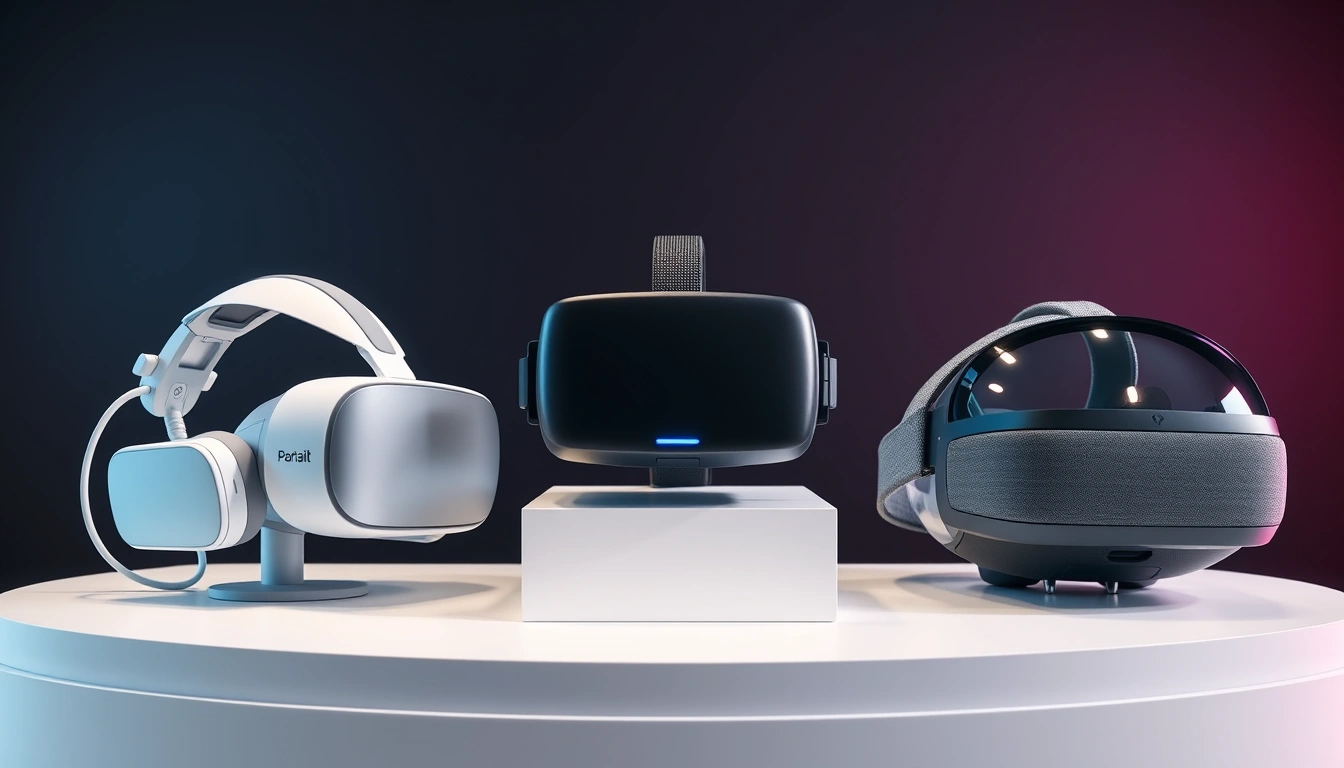
Three headsets, three operating systems, and a price spread wide enough to buy a used car. Samsung Galaxy XR, Meta Quest 3, and Apple Vision Pro (now running Apple’s M5 chip) represent three completely different bets on what mixed reality is for in 2026 — gaming, productivity, or something Samsung and Google are still figuring out together. Samsung’s headset launched October 21, 2025, at $1,799, landing squarely between Meta’s $599.99 Quest 3 and Apple’s $3,499 Vision Pro. That’s a $2,900 gap from cheapest to priciest, and the specs inside each box justify almost none of it in a straight line.
Why This Comparison Matters Right NowSamsung Galaxy XR vs Quest 3 vs Vision Pro: Quick VerdictFull Specs Comparison: Galaxy XR vs Quest 3 vs Vision ProPricing Breakdown: What You Actually PayChipset and Raw PerformanceDisplay Quality and PassthroughGaming Library and App EcosystemMeta Quest 3: Mature VR Gaming CatalogSamsung Galaxy XR: Android XR Is Still BuildingApple Vision Pro: Spatial Computing First, Gaming SecondThe Three Operating Systems, ExplainedMeta Horizon OS: The Known QuantityAndroid XR: Google’s New Bet, Built With Samsung and QualcommvisionOS: The Slowest-Growing Catalog, the Deepest Apple IntegrationGemini AI on Galaxy XR: What’s Actually NewSecurity and Privacy: Iris Scans, Eye Tracking, and DataComfort, Weight, and BatteryReal-World Examples and Early ReviewsApp Ecosystem Comparison5 Use Cases: Which Headset Fits Your NeedsMigration Guide: Switching Between HeadsetsQuest 3 to Galaxy XRVision Pro to Galaxy XR (or vice versa)Any Headset to PC VRAccessories and Long-Term Ecosystem SupportWho Should Skip All ThreePros and ConsSamsung Galaxy XRMeta Quest 3Apple Vision Pro (M5)Frequently Asked QuestionsIs Samsung Galaxy XR good for gaming?Does Meta Quest 3 or Samsung Galaxy XR have a better screen?Is there a Vision Pro 2?How much does the Samsung Galaxy XR controller cost?Can you play SteamVR games on Galaxy XR or Vision Pro?Why is Apple Vision Pro so much more expensive than Galaxy XR and Quest 3?What is Android XR and why does it matter for Galaxy XR?Should I wait for a Galaxy XR 2 or a bigger price cut before buying?What’s the difference between Quest 3 and the cheaper Quest 3S?Does Samsung Galaxy XR require a Samsung phone to use?Is the original Apple Vision Pro (M2) still worth buying used?The Bottom LineRelated Coverage
This comparison breaks down every spec that matters for gaming and general use: chipsets, displays, field of view, battery life, controllers, app ecosystems, and the early benchmark and reviewer data that’s actually been published since Galaxy XR’s launch. We’ll also cover pricing, real-world use cases, a migration path if you’re switching platforms, and a verdict based on what each headset is actually good at — not marketing copy.
Industry insights, the latest tech news, and special interviews, all in the Tech Insider Newsletter.
One email a week. No spam, unsubscribe anytime.
Google · Preferred Sources
Don’t miss new tech stories on Google
Add Tech Insider once in the Google app and our stories appear in your news suggestions.
Why This Comparison Matters Right Now
Mixed reality hardware went from a two-horse race to a three-way fight in the span of a single quarter. For years, buying a headset meant choosing between Meta’s gaming-and-social ecosystem or Apple’s expensive, productivity-first visionOS. Samsung’s entry changes that math by bringing Google into the room. Galaxy XR is the debut hardware for Android XR, a platform Google built specifically to compete with both rivals at once — cheaper and more gaming-curious than Vision Pro, sharper and more AI-forward than Quest 3. One industry market-sizing estimate put the broader XR hardware category at roughly $32 billion to $45 billion in 2026, reflecting how much capital Samsung, Google, Meta, and Apple are all pouring into this fight simultaneously.
That three-way split matters for anyone reading this specifically for gaming. It’s tempting to treat “VR headset” as one category, but Quest 3, Galaxy XR, and Vision Pro are increasingly built for different jobs, and the specs below make that split obvious once you look past the marketing.
Samsung Galaxy XR vs Quest 3 vs Vision Pro: Quick Verdict
If you only read one section, here it is. Meta Quest 3 remains the best value for gaming specifically — it’s the only headset of the three with a mature native VR game catalog, PC VR streaming via Air Link, and a price under $600. Samsung Galaxy XR is the sharpest screen and the best passthrough of the group according to early reviewers, wrapped in a new Android XR platform with Gemini AI baked in, but its gaming library is thin and its Snapdragon XR2+ Gen 2 chip posted underwhelming Geekbench 6 scores. Apple Vision Pro (M5) is the most polished piece of hardware, now more comfortable thanks to the Dual Knit Band, but it remains the most expensive by a wide margin and the least gaming-focused of the three, with an app catalog that Apple itself puts at roughly 3,000 titles — a fraction of Quest’s.
None of these three is a “just buy this one” answer. Your existing app library, your budget, and whether you actually want to play games in the headset — versus watch movies or work in virtual monitors — should decide it.
Full Specs Comparison: Galaxy XR vs Quest 3 vs Vision Pro
The table below pulls confirmed specs from Samsung, Meta, and Apple’s own tech-spec pages, plus hands-on measurements from Road to VR, Android Central, and Tom’s Guide. Apple’s original M2 Vision Pro has been discontinued in favor of the M5 refresh, so all Vision Pro figures below reflect the current model sold as of August 2026.
SpecSamsung Galaxy XRMeta Quest 3 (512GB)Apple Vision Pro (M5)
Launch dateOctober 21, 20252023 (still current SKU)October 15–22, 2025 (M5 refresh)
US price$1,799$599.99$3,499 (256GB)
ChipsetSnapdragon XR2+ Gen 2Snapdragon XR2 Gen 2Apple M5 (10-core CPU) + R1
RAM16GB8GB16GB unified
Storage256GB (single config)512GB (128GB discontinued)256GB / 512GB / 1TB
Display resolution3,552 x 3,840 px/eye (~29M px total), Micro-OLED2,064 x 2,208 px/eye, LCDMicro-OLED, ~10% more rendered pixels than M2
Refresh rate60 / 72 / 90Hz90Hz native, 120Hz experimentalUp to 120Hz (up from 100Hz on M2)
Field of view~109° horizontal / 100° vertical~110° horizontal / 96° verticalNot officially published by Apple
Weight (headset)545g + 302g battery pack~515g, fully standaloneNot officially updated for M5
Battery life~2h general use, 2.5h video~2–2.5h gaming, up to 2.9h light use“Extended” vs M2’s ~2h (no new figure published)
ConnectivityWi-Fi 7, Bluetooth 5.4Wi-Fi 6E, Bluetooth 5.2Wi-Fi 7 (reported), Bluetooth 5.3
Operating systemAndroid XR + Gemini AIMeta Horizon OSvisionOS
Geekbench 6 (single/multi)970 / 2,242Not independently published in our researchNot independently published in our research
A few numbers here are worth flagging before you make any decisions. Galaxy XR’s Geekbench 6 score of 970 single-core and 2,242 multi-core, reported by Tom’s Guide after hands-on testing, is notably modest for a $1,799 device — the Snapdragon XR2+ Gen 2 prioritizes display and camera throughput over raw compute. Apple has not published a new battery-life figure for the M5 Vision Pro; its newsroom only says the chip delivers “extended battery life” versus the outgoing M2 model, which was commonly rated around two hours on the external battery pack.
Pricing Breakdown: What You Actually Pay
List price is only part of the cost. Controllers, storage tiers, and accessories change the real number significantly, especially for Galaxy XR and Vision Pro.
ItemSamsung Galaxy XRMeta Quest 3Apple Vision Pro (M5)
Base unit$1,799 (256GB)$599.99 (512GB) / $449.99 (Quest 3S, 256GB)$3,499 (256GB)
Higher storage tierNot offered — single 256GB SKUN/A (512GB is the standing config)$3,699 (512GB) / $3,899 (1TB), pricing consistent with prior visionOS tiers
ControllerGalaxy XR Controller: $249.99 (sold separately)Touch Plus controllers included in boxHand/eye tracking primary input; no bundled controller
Financing option$75/month for 24 monthsMeta financing varies by retailerApple Card monthly installments available
Effective “ready to game” price~$2,049 with controller$599.99 all-in$3,499+ (no controller purchase needed, but band/accessories add cost)
Quest 3 wins on total cost of ownership by a wide margin. Even with the Galaxy XR Controller bundled in, Samsung’s headset costs roughly 3.4x what a Quest 3 costs, and Vision Pro costs nearly 5.8x. For anyone budgeting specifically for gaming, that gap is hard to justify unless you have a specific reason to want Android XR or visionOS.
Stretch that comparison over two years of ownership and the gap doesn’t close much. Quest 3 owners typically spend on individual game purchases, usually in the $10 to $40 range per title, with no mandatory subscription. Vision Pro owners layering in Apple TV+ and Apple Arcade subscriptions add roughly $200 to $250 a year in ongoing Apple services costs if they weren’t already subscribers. Galaxy XR’s ongoing costs depend heavily on which Android apps and subscriptions you already pay for on your phone, since those largely carry over rather than requiring new purchases — a genuine advantage of building on an existing mobile ecosystem instead of a fresh, XR-only storefront.
Chipset and Raw Performance
Samsung’s Snapdragon XR2+ Gen 2 and Meta’s Snapdragon XR2 Gen 2 are close cousins from Qualcomm’s XR line, but Samsung’s “+” variant is tuned for higher display throughput rather than raw CPU/GPU headroom. That tracks with what reviewers found: Galaxy XR handles 8K video playback at 60fps and drives nearly 29 million total pixels across its dual Micro-OLED panels without stuttering, according to a CES 2026 hands-on from the Indian Express, but its Geekbench 6 numbers (970 single-core, 2,242 multi-core) trail what you’d expect from a flagship-tier chip at this price.
Apple’s M5 chip is a different category entirely. It’s a laptop-and-tablet-grade silicon, not a mobile XR chip, and Apple claims over 4x the peak GPU compute of the M4 generation thanks to a new Neural Accelerator built into each GPU core, plus hardware-accelerated ray tracing. Memory bandwidth jumped from 100GB/s on the M2 Vision Pro to 153GB/s on the M5 model. That horsepower shows up in spatial app responsiveness and Persona rendering, not necessarily in gaming frame rates, since visionOS’s game catalog remains small.
Meta’s approach is the most gaming-optimized of the three: the Snapdragon XR2 Gen 2 inside Quest 3 is tuned specifically for standalone VR game rendering, and years of developer tooling around the Meta Quest SDK mean titles are optimized to squeeze real performance out of comparatively modest 8GB of RAM.
Display Quality and Passthrough
This is where Galaxy XR earned its best reviews. UploadVR’s first-impressions piece called Samsung’s passthrough “the best on the market yet,” noting it felt as sharp as Vision Pro’s passthrough while avoiding the “annoying warping distortion” the reviewer found on Meta Quest 3. Android Police’s hands-on echoed the sentiment, praising the depth perception and color accuracy from Galaxy XR’s 6.5MP 3D camera.
On raw resolution, Galaxy XR’s 3,552 x 3,840 pixels per eye comfortably beats Quest 3’s 2,064 x 2,208 pixels per eye — nearly double the pixel count per panel. Apple hasn’t published exact resolution figures for the M5 Vision Pro but says the M5 model renders roughly 10% more pixels than the outgoing M2 version, alongside a refresh-rate bump from 100Hz to 120Hz. TechRadar’s review of the M5 model was blunt about the upgrade’s real impact: “faster, clearer, and finally comfortable,” crediting the new Dual Knit Band as much as the chip itself.
Quest 3’s LCD panels remain a step behind both Micro-OLED rivals on contrast and black levels, though its 18 PPD (pixels per degree) full-color passthrough is still considered strong for a headset at its price, and its 110° horizontal FOV is the widest of the three when measured horizontally.
Gaming Library and App Ecosystem
This is the section that should decide the purchase for most readers of this site. The three headsets run three fundamentally different operating systems, and that determines what you can actually play.
Meta Quest 3: Mature VR Gaming Catalog
Quest 3 runs on Meta Horizon OS, the most established standalone VR platform in the consumer market. It has years of native VR titles, backward compatibility with the entire Quest catalog going back to Quest 2, and PC VR streaming through Air Link or a wired Link cable for SteamVR titles. If gaming is the primary use case, Quest 3 is not a close call — it’s built for this specifically, and major franchises continue to launch there first among standalone headsets.
Samsung Galaxy XR: Android XR Is Still Building
Galaxy XR is the first commercial headset running Google’s Android XR platform, which gives it access to standard Android mobile apps alongside apps built specifically for XR, according to Road to VR’s launch coverage. That’s a meaningful advantage for productivity and media — you can run familiar Android apps on giant virtual screens — but native XR gaming titles remain a small subset of what’s available. Reviewers have been consistent that Galaxy XR is positioned first as a productivity and media device, with gaming as a secondary use case Samsung and Google are still cultivating.
Apple Vision Pro: Spatial Computing First, Gaming Second
Apple’s own figures, cited by MacRumors in January 2026, put the visionOS app catalog at roughly 3,000 apps specifically built for Vision Pro — a number that has grown slowly since launch and remains far smaller than Quest’s native VR library. Vision Pro can run many iPad and iPhone apps in virtual windows, which is useful for productivity, but its dedicated game catalog is thin. Most Vision Pro “games” are spatial experiences rather than the action, shooter, and rhythm titles that dominate Quest’s charts.
The Three Operating Systems, Explained
The single biggest difference between these headsets isn’t the display or the chip — it’s what software they’re allowed to run, and that comes down to the operating system underneath. This is where most buyers get surprised after the purchase, so it’s worth spelling out clearly before you commit to any of the three.
Meta Horizon OS: The Known Quantity
Meta Horizon OS (formerly just “Quest OS”) has been iterating since the original Quest launched in 2019. It’s a closed ecosystem controlled entirely by Meta, distributed through the Meta Quest Store, with a well-documented SDK that thousands of studios already build against. The tradeoff for that maturity is that you’re fully locked into Meta’s app review process and storefront — there’s no equivalent to Android’s sideloading culture unless you’re comfortable with developer mode workarounds.
Android XR: Google’s New Bet, Built With Samsung and Qualcomm
Android XR is genuinely new — Galaxy XR is the first commercial headset to ship running it. Because it’s built on the Android foundation, it inherits Google Play compatibility for a huge number of existing mobile apps, which is a real advantage no other headset in this comparison can match: you can, in theory, run apps you already own from your phone. The tradeoff, as Road to VR’s launch coverage and multiple hands-on reviewers noted, is that the XR-native side of the store — the apps built specifically to take advantage of spatial tracking, hand controllers, and passthrough — is still thin. Software maturity, not hardware, is Android XR’s biggest current weakness.
visionOS: The Slowest-Growing Catalog, the Deepest Apple Integration
Apple’s visionOS is the most restrictive of the three in one specific sense — it doesn’t inherit the iPhone’s massive App Store catalog automatically. Developers have to specifically build or adapt an app for spatial computing, which is part of why Apple’s own cited figure of roughly 3,000 dedicated Vision Pro apps has grown so slowly since the 2024 launch. What visionOS does offer that neither rival can match is deep, native integration with Mac, iPad, and iPhone — Continuity features, Handoff, iCloud photo libraries, and FaceTime Personas all work more seamlessly here than Android XR’s or Meta Horizon OS’s equivalents.
Gemini AI on Galaxy XR: What’s Actually New
Samsung’s biggest differentiator isn’t a spec — it’s the operating system’s AI layer. Galaxy XR ships with Google’s Gemini assistant integrated directly into the Android XR experience, positioning it as an AI-first mixed-reality device rather than purely a gaming or media headset. Neither Quest 3’s Meta Horizon OS nor Apple’s visionOS currently ships with a comparably deep, always-available conversational AI layer built into the core OS. This is a genuinely new angle for headset hardware, though our research didn’t surface a detailed, verified feature-by-feature breakdown of exactly which Gemini capabilities are exclusive to Galaxy XR versus what Meta AI or Apple Intelligence already offer on their respective platforms — treat this as an emerging differentiator to watch rather than a settled advantage.
Security and Privacy: Iris Scans, Eye Tracking, and Data
All three headsets collect biometric data by design — that’s how hand tracking, eye tracking, and passthrough work at all — but they handle authentication differently, and it’s worth knowing before you strap one to your face. Galaxy XR uses iris recognition for secure login, a first among mainstream consumer headsets in this comparison, paired with four dedicated eye-tracking cameras for foveated rendering and UI navigation. Vision Pro relies on Optic ID, Apple’s iris-based authentication system that ties into the same secure enclave architecture used for Face ID on iPhone. Quest 3 doesn’t offer iris-based login at all; authentication happens through a standard PIN or pattern, which is simpler but less secure against shoulder-surfing in shared spaces.
For gaming specifically, this mostly matters for shared-household setups — if multiple people use the same headset, Galaxy XR and Vision Pro can switch user profiles instantly via iris scan, while Quest 3 users have to manually swap accounts.
Comfort, Weight, and Battery
None of these three headsets is built for marathon sessions. Galaxy XR’s 545g headset plus a separate 302g battery pack (worn on a cable, similar to Vision Pro’s design) delivers roughly 2 hours of general use and up to 2.5 hours of video playback. Quest 3, fully standalone at around 515g with the battery built in, lasts a similar 2 to 2.5 hours during gaming and slightly longer for lighter use. Apple’s M5 Vision Pro uses the same external battery pack architecture as the M2 model; Apple markets “extended battery life” from the more efficient 3nm M5 chip but has not published a new hour figure, so budget for roughly 2 hours per charge until independent testing confirms otherwise.
Comfort reviews favor the newest hardware. TechRadar credited Vision Pro’s new Dual Knit Band with finally making extended wear comfortable — a common complaint about the original M2 model. Galaxy XR’s reception was mixed: UploadVR’s early impressions were largely positive on ergonomics, though a Reddit thread of early adopters flagged the lack of USB video passthrough support and reported roughly 15 to 20ms more latency than a wired DisplayPort PC VR headset in specific tethered setups.
Real-World Examples and Early Reviews
Here’s what reviewers and early adopters have actually reported since Galaxy XR’s October 2025 launch, based on hands-on coverage through mid-2026:
Tom’s Guide review summed up Galaxy XR as “cheaper, lighter and buggier” than Apple Vision Pro — acknowledging the price advantage while flagging software stability as an early weak point.
UploadVR’s first impressions ranked Galaxy XR’s passthrough above Quest 3’s, calling it “the best on the market yet” for depth and color accuracy.
Indian Express’s CES 2026 hands-on reported no stuttering during 4K video playback and called the overall experience “way better than Apple Vision Pro” for media consumption specifically.
TechRadar’s M5 Vision Pro review concluded the chip and Dual Knit Band finally made Apple’s headset comfortable for extended sessions, addressing the most common M2-era complaint.
Android Central’s hands-on described Galaxy XR as “the laptop for your face,” emphasizing its productivity angle over gaming.
On the sales side, IDC estimates Apple shipped roughly 390,000 Vision Pro units in its 2024 launch year, but that pace slowed sharply — the same research firm projected only around 45,000 units sold in Q4 2025, a period that included the M5 launch, according to reporting from The Guardian and 9to5Mac. The Guardian also reported that Apple’s Chinese manufacturing partner, Luxshare, had reportedly paused Vision Pro production at the start of 2025 amid the soft demand. Samsung and Meta have not disclosed comparable unit-sales figures for Galaxy XR or Quest 3 in our research for this piece.
Those sales figures matter for a practical reason beyond bragging rights: third-party accessory support, resale value, and long-term software commitment all tend to follow install base. A headset with weak sales is a riskier long-term bet even if the hardware itself is excellent, since developers allocate their limited XR budgets toward the platforms with the most users.
App Ecosystem Comparison
Ecosystem factorSamsung Galaxy XRMeta Quest 3Apple Vision Pro (M5)
App storeGoogle Play + Android XR native storeMeta Quest StorevisionOS App Store
Existing app compatibilityStandard Android phone apps run on virtual screensQuest-native only; no phone app inheritanceMany iPad/iPhone apps run in windows
Native XR apps built for the platformSmall but growing catalog since Oct. 2025 launchLargest native VR catalog of the three, years of titles~3,000 apps built specifically for Vision Pro (Apple, cited by MacRumors)
PC VR / SteamVR supportLimited — Reddit users report no USB video passthroughMature — Air Link and wired Link cableNone
Built-in AI assistantGemini, integrated at the OS levelMeta AI, present but less deeply woven into XR UIApple Intelligence, more limited scope in visionOS
Backward compatibilityN/A — first-generation Android XR deviceFull backward compatibility with Quest 2/Pro libraryCompatible with earlier M2 Vision Pro app catalog
The pattern is consistent across every column: Quest 3 wins on maturity and gaming-specific content, Galaxy XR wins on flexibility for people already inside the Android ecosystem, and Vision Pro wins on polish for people already inside the Apple ecosystem — but loses on raw catalog size to Quest 3 by a wide margin.
5 Use Cases: Which Headset Fits Your Needs
Pure VR gaming on a budget: Meta Quest 3. Its native game catalog, PC VR streaming, and $599.99 price make it the only realistic gaming-first choice of the three.
Movies, 3D photos, and passthrough-heavy mixed reality: Samsung Galaxy XR. The 29-million-pixel display and top-rated passthrough make it the best screen for watching content and blending it with your real surroundings.
Professional spatial computing and Apple ecosystem lock-in: Apple Vision Pro (M5). If you’re already deep in Mac, iPad, and iPhone workflows and need virtual monitors for work, the M5 chip’s performance jump makes the case, price aside.
Android power users who want AI-first XR: Samsung Galaxy XR. Native Android app support plus Gemini integration is unique to this platform; nothing else lets you run your existing Android apps on a headset.
Developers building for the next XR wave: All three, but for different reasons — Quest 3 for the largest existing install base, Galaxy XR for ground-floor access to Android XR before the platform matures, and Vision Pro for the highest-end visionOS spatial APIs.
Migration Guide: Switching Between Headsets
If you’re moving from one of these platforms to another, here’s what actually transfers and what doesn’t.
Quest 3 to Galaxy XR
Your Meta Horizon OS game library does not transfer — Android XR is a different app ecosystem entirely. Expect to rebuy native VR titles if equivalents exist on Android XR, though standard Android apps you already own (Google Play purchases, subscriptions) generally do carry over since Galaxy XR runs the same Google account infrastructure as your phone. Budget separately for the $249.99 Galaxy XR Controller, since Quest’s Touch controllers are not compatible.
Vision Pro to Galaxy XR (or vice versa)
No app library crossover between visionOS and Android XR. If you’ve invested in Apple ecosystem subscriptions (Apple TV+, Apple Arcade), those stay tied to Apple hardware. Galaxy XR’s advantage here is broader Android app compatibility versus visionOS’s more curated, XR-native catalog — but you’ll be starting your XR game and app library from scratch either direction.
Any Headset to PC VR
Quest 3 has the most mature wireless PC VR path via Meta’s Air Link and wired Link cable support for SteamVR titles. Galaxy XR’s Reddit-reported lack of USB video passthrough currently makes tethered PC VR streaming rougher than on Quest 3. Vision Pro has no native SteamVR support at all — it’s the least PC-VR-friendly of the three if that’s a requirement.
Accessories and Long-Term Ecosystem Support
Hardware accessories tend to follow install base, and that pattern is already visible across all three platforms. Meta Quest 3, with the largest and longest-running install base of the group, has the deepest third-party accessory market: aftermarket head straps, battery packs, prescription lens inserts, and carrying cases from multiple manufacturers, refined over several hardware generations. Apple’s Vision Pro accessory market is smaller but higher-end, largely centered on official Apple accessories like the Dual Knit Band and prescription ZEISS lens inserts sold directly through Apple.
Galaxy XR’s accessory ecosystem is the newest and thinnest of the three, which tracks with its October 2025 launch date. Beyond the official $249.99 Galaxy XR Controller, third-party accessory support is still emerging. Anyone buying Galaxy XR today should expect fewer aftermarket options for comfort upgrades, carrying cases, or battery-pack alternatives than Quest 3 owners currently enjoy — a real practical tradeoff for being on the newest platform of the three.
Who Should Skip All Three
Not everyone should buy into any of these three ecosystems in 2026. If you get motion sickness easily in VR and haven’t tried a headset before, none of these price points are worth the risk of buying hardware you might not tolerate — try a friend’s Quest 3 or a retail demo station first. If your gaming budget is genuinely tight, a Quest 2 or refurbished Quest 3 at a steep discount will deliver most of the gaming value here for a fraction of the cost of any of these three current-generation devices. And if you specifically want handheld gaming rather than headset-based VR, none of these three compete with dedicated gaming handhelds — they’re solving a different problem entirely.
Pros and Cons
Samsung Galaxy XR
Pros: Sharpest display of the three (29M total pixels), best-reviewed passthrough, native Android app support, Gemini AI integration, Wi-Fi 7, roughly half Vision Pro’s price.
Cons: Weak Geekbench 6 scores relative to price, thin native gaming library, controller sold separately for $249.99, only a single 256GB storage tier, early reviewers flagged software bugginess and USB passthrough limitations.
Meta Quest 3
Pros: Best price of the three at $599.99, largest and most mature native VR gaming catalog, mature PC VR streaming, controllers included, widest horizontal FOV.
Cons: Lowest-resolution display (LCD, not OLED), only 8GB RAM, weakest passthrough quality of the three per reviewer consensus, shortest official battery ceiling.
Apple Vision Pro (M5)
Pros: Most powerful chip by far (M5, hardware ray tracing, 153GB/s bandwidth), newly comfortable Dual Knit Band, deepest integration with Mac/iPad/iPhone workflows, highest build quality per reviewers.
Cons: $3,499 starting price is nearly 6x Quest 3’s, smallest dedicated gaming catalog (~3,000 total apps per Apple), weak reported sales (IDC estimates ~45,000 units in Q4 2025 alone), no SteamVR support, unspecified battery life for the M5 refresh.
Frequently Asked Questions
Is Samsung Galaxy XR good for gaming?
Not primarily. Galaxy XR is built around Android XR’s productivity and media strengths, plus Gemini AI integration. It has a much sharper display and better passthrough than Meta Quest 3, but its native gaming library is far smaller. If gaming is your main priority, Quest 3 is the stronger choice.
Does Meta Quest 3 or Samsung Galaxy XR have a better screen?
Galaxy XR, decisively. Its dual Micro-OLED panels deliver 3,552 x 3,840 pixels per eye (about 29 million pixels total) versus Quest 3’s 2,064 x 2,208 pixels per eye on LCD panels. Reviewers also rated Galaxy XR’s passthrough above Quest 3’s for sharpness and lack of distortion.
Is there a Vision Pro 2?
Not by that name. Apple released an updated Apple Vision Pro with the M5 chip and a new Dual Knit Band on October 15, 2025, starting at $3,499. Apple’s official branding keeps it as “Apple Vision Pro,” not “Vision Pro 2,” though the M5 chip brings a real performance jump over the original M2 model.
How much does the Samsung Galaxy XR controller cost?
The Galaxy XR Controller is sold separately for $249.99, on top of the $1,799 headset price. That pushes the effective “ready to use” cost of Galaxy XR closer to $2,049 for anyone who wants traditional controller input rather than relying solely on hand and eye tracking.
Can you play SteamVR games on Galaxy XR or Vision Pro?
Meta Quest 3 is the only one of the three with a mature SteamVR streaming path via Air Link or a wired Link cable. Galaxy XR users on Reddit have reported that the lack of USB video passthrough currently makes tethered PC VR rougher than on Quest 3. Apple Vision Pro has no native SteamVR support.
Why is Apple Vision Pro so much more expensive than Galaxy XR and Quest 3?
Vision Pro’s M5 chip is desktop/tablet-class Apple Silicon, not a mobile XR chipset, which drives up bill-of-materials cost substantially. Apple also positions Vision Pro as a professional spatial computing device first and a gaming or media headset second, which supports the premium price despite reportedly soft sales — IDC estimated only around 45,000 units sold in Q4 2025.
What is Android XR and why does it matter for Galaxy XR?
Android XR is Google’s new operating system for headsets and glasses, and Galaxy XR is the first commercial device to run it. It gives Galaxy XR access to standard Android mobile apps alongside dedicated XR apps, plus built-in Gemini AI. It’s a newer, less mature app ecosystem than either Meta Horizon OS or visionOS, so expect gaps in native XR gaming titles for now.
Should I wait for a Galaxy XR 2 or a bigger price cut before buying?
If gaming is your priority, waiting doesn’t change the fundamental calculus — Quest 3 remains the stronger gaming platform today regardless of what Samsung ships next. If you specifically want Android XR’s productivity and passthrough strengths, Galaxy XR’s current bugginess (flagged by Tom’s Guide and other early reviewers) may smooth out with software updates, which is a reasonable argument for waiting a generation if gaming isn’t your main use case.
What’s the difference between Quest 3 and the cheaper Quest 3S?
Quest 3S is Meta’s budget option at $449.99 for 256GB, sitting below the $599.99 Quest 3 covered throughout this comparison. It uses similar internals but a lower-resolution, Fresnel-lens display rather than Quest 3’s pancake lenses, trading some visual sharpness for a lower price. For gaming specifically, Quest 3 remains the better screen; Quest 3S is the better entry point if $599.99 feels steep and you just want to try VR gaming first.
Does Samsung Galaxy XR require a Samsung phone to use?
No — Galaxy XR runs Android XR independently and ties to a Google account rather than requiring a specific Samsung device. That said, Samsung’s ecosystem features (like continuity between a Galaxy phone and the headset) work most seamlessly if you’re already on Samsung hardware, similar to how Vision Pro’s best features assume you already own a Mac or iPhone.
Is the original Apple Vision Pro (M2) still worth buying used?
Apple has moved its current lineup to the M5 chip, and the M2 model is being phased out of retail. If you can find a used M2 unit significantly discounted below the $3,499 M5 price, it’s still capable hardware, but you’ll miss the 120Hz refresh rate, the Dual Knit Band comfort improvements, and the M5’s substantial GPU and ray-tracing gains. For gaming purposes specifically, neither Vision Pro generation is the priority pick regardless — that’s still Quest 3.
The Bottom Line
For gaming specifically, the data points in one direction: Meta Quest 3 remains the best choice at $599.99, backed by the deepest native VR library and the most mature PC VR streaming of the three. Samsung Galaxy XR is a genuinely impressive piece of display and passthrough hardware — best-in-class on both counts according to early reviewers — but it’s priced and positioned as a productivity and media device first, gaming device a distant third. Apple Vision Pro’s M5 refresh finally fixes the comfort complaints that dogged the original model and brings real performance gains, but at $3,499 and with roughly 3,000 total apps, it remains the least gaming-relevant of the three despite being the most powerful chip on paper.
The $2,900 gap between Quest 3 and Vision Pro isn’t really about gaming performance — it’s about what kind of computer you want strapped to your face. Pick based on that question first, and the right headset gets a lot more obvious.
Related Coverage

Cybersecurity Analyst
The Tech Insider Newsletter
Industry insights, the latest tech news, and special interviews, every week.
One email a week. No spam, unsubscribe anytime.