
A lockout is coming, as you might have heard, and so very many issues are at play in collective bargaining between Major League Baseball’s players and owners. We asked what you wanted to know about the situation; here are answers to nine of your questions on the off-field drama.
By the way, MLB and the Players Association were both given an opportunity to respond to these questions themselves. MLB declined the opportunity, while the union offered comments on two questions.
Fear not: I, your friendly neighborhood baseball labor writer, filled the void while blasting Bryce Pinkham’s version of “The Arbiter.”
Questions have been lightly edited for clarity.
Do the majority of players actually like the current system? It seems like this is a system that really benefits the top 10 percent but not the majority of players. But the top players have the loudest voices and carry the most weight, so you only ever hear their perspective and that’s the water the union will carry. I’m curious if the majority of players would rather overhaul the system and are just muzzled essentially — Billy J.
Really light stuff to start out with, thanks, Billy.
I haven’t conducted a scientific poll, but players largely support a meritocracy: the best get paid the most. Whether they should or shouldn’t believe that, you can decide on your own, but that’s the starting point.
At the same time, the players who are not the best of the best would also love to be paid more. They do want change.
The question for them is, what’s the right overhaul?
The league would say a salary cap, and the union would counter that a cap would almost never be an improvement, and that there are plenty of better alternatives.
Let’s assume that the league will always be willing to pay players a higher minimum salary in a cap system. If you’re a young player, it becomes a question of trade-offs: well, how much higher is that minimum salary? Is it a notable amount compared to what you would otherwise receive? And what did you give away to get it? Do you care about the impacts on your peers?
The union position is that a cap is so onerous that a corollary gain in one area is almost never going to make the switch worth it. A cap does much more than just limit team salary: it’s a sea change with really wide-reaching effects.
But, Billy, reality is you’re touching on something that will be the crux of the league’s push for a cap. If MLB is going to flip players to its worldview, it has to convince some of them that a cap is actually good for them.
It’s trying.
And the union, as you’ll glean from the following quote, has to continue to demonstrate to players that there are better ways to achieve the changes players want than what the league is peddling.
“Our priorities are to increase compensation and opportunity for players at all levels and in all categories,” Bruce Meyer, the interim head of the Players Association, said in response to this question. “In the last round of bargaining, the players who benefited the most monetarily were the youngest players, not the stars, because the union fought and achieved record increases in minimum salaries and for the establishment of the new pre-arb bonus pool.
“Our current proposals continue to provide record increases in the minimum salary and pre-arb bonus pool for the youngest players, would result in more money for arbitration-eligible players, and would incentivize and reward teams who compete, benefitting free agents of all types.”
How united are the 30 ownership groups on the strategy for this lockout? The small and large market teams have radically different incentives, and are very differently situated in what they have to lose or gain. A small-market team like the Rays could wind up having to spend *more* to hit the floor. How long into the winter and spring will the owners remain in lockstep? — Alex R.
Let’s take the second part of your question first, about smaller markets spending to the floor.
In the big picture, a salary cap benefits all teams. Franchise values would go up across the board. But there are two other effects: cost savings and redistribution.
As the league proposed it, a cap would reduce overall player compensation. Between MLB player salaries and amateur signing bonuses, players in 2026 will receive more than 55 percent of the pie, the union estimates (which is a slightly higher estimate than the union offered earlier this year).
MLB’s cap proposal would drop the players’ percentage, so teams would save overall. Then, from there, the money gets moved around in a cap system. All local TV income would be newly shared equally. That would allow the Rays and other small-market teams to reach the floor.
Keep in mind: if a cap was an awful outcome for a bunch of small-market teams, MLB wouldn’t have proposed it.
Now, let’s talk about unity.
At every moment in this negotiation, both sides are incentivized to project only strength. It’s expected that players and owners will say things like, “we’ve never been more united.” Why would they say anything different? (And if they did say something different, well, make sure to let me know.)
Which means, when you hear things like, “we’ve never been more united,” it could be true — but it’s not true just because someone said it. They’re always going to say as much.
So, are the owners really united?
They seem to be, yes, but here’s the rub: it just doesn’t mean much right now.
The owners might believe with every bone in their collective bodies that they are willing to miss an entire season or more — whatever it takes to get to a salary cap. The players, too, might believe the same on their end, that they’ll fight as long as they need.
But what matters is how they’ll feel when checks are on the line. At that point, the sides will have to stay strong every day. And no one actually knows whether they will.
So much vitriol will be directed at both sides if games are missed. Fans, media partners, sponsors and politicians (likely including the president) will be hammering away at players and owners to get a deal done. Everyone’s bank accounts will start to ache, even with funds put aside.
Heck, financial situations can change independent of a lockout: ask Los Angeles Dodgers owner Mark Walter.
Bottom line: It’s one thing to say you’ll miss games, and another to actually do so.
History says owners will cave on a cap before the players do. Could this time be different? I don’t know, and right now, neither do they.
How will a lockout affect the service time of players? If the lockout does go through all of 2027, do players not accrue any service time or will that be something that is negotiated/resolved when a deal is ultimately reached? If it’s a shortened season, will whatever amount of games played still count as one year? — Julian M.
This would be negotiated. Naturally, the union would fight to have players receive as much service time as possible, and the league would want the opposite.
It also becomes a form of leverage. For example: If we’re in late February without a deal, on the cusp of missed games, MLB might say, “we’re not going to give you service time for games you miss,” trying to pressure a deal right then. But that doesn’t necessarily mean the sides would not work out a retroactive grant if games were canceled.
For what it’s worth, players did retroactively receive service time following the 1994-95 strike.
How likely is it that this will end up being like the last lockout? Maybe the season starts late but they still play 162 by using doubleheaders and adding some extra days at the end? — Cameron K.
I know this won’t be satisfying, but anything is possible.
If you look at what has happened historically, there’s definitely reason to think they’ll find a way to play a full season. They did last time, as you point out. And there hasn’t been a formal stoppage that’s cost the sport games in more than 30 years, since the 1994-95 strike, which is something commissioner Rob Manfred himself touts. So recent history says — in Jeff Goldblum’s voice — baseball finds a way.
(I say there hasn’t been a “formal” stoppage because some industry folks point out that the contentious negotiations over the shortened 2020 season functioned basically as a work stoppage, but that was a unique circumstance during the coronavirus pandemic.)
But let’s go beyond the history lesson, since every negotiation is different. We arrive at a discussion of incentives.
The damage to the sport, in terms of lost revenues and fan disengagement, rises the more games that are missed. Missing, say, 30 games would likely not be as damaging as missing half a season, or a whole season.
Everybody involved here likes to make money, and they make money by playing the games. But there’s also potentially big financial gain for the owners in a cap system.
The owners could be comfortable taking a shot to see if players cave relatively quickly, to see if this group is less willing to fight than players of yore. Hypothetically: What’s 15 or 30 games missed to the owners if it produces the salary cap that owners have always wanted? And if it doesn’t work, maybe the owners say OK, we tried, let’s go play and get our TV rights fees.
And then there’s the scariest scenario for fans, which comes if owners do decide to sit out for a long time to get a cap — and the players are willing to go toe to toe.
One more thing to keep in mind is that the calendar will sneak up. For example: If we’re in March and no deal is in place, April starts to fall away fast.
That’s because the season can’t start the moment a deal is reached. There would have to be at least a shortened spring training.
And here’s an added wrinkle: If the owners back off a salary cap, it would probably take some time for the sides to hash out a revision to the current system.
The MLB Players Association’s eight-member executive sub-committee is comprised of Chris Bassitt, Jake Cronenworth, Paul Skenes, Brent Suter, Pete Fairbanks, Cedric Mullins, and Tarik Skubal. None of these players came up through the international system. Those players have considerably different life experiences and paths to the Major Leagues. Is this going to be a blind spot for the PA? How might the owners try to exploit this? — Jay O.
Jay, you forgot to list Marcus Semien on the subcommittee! We won’t tell him, though.
On to your question. The bottom line is that some Latin American players and agents do not feel as connected to the process as their U.S.-born peers. It’s a problem, but not a simple one to solve.
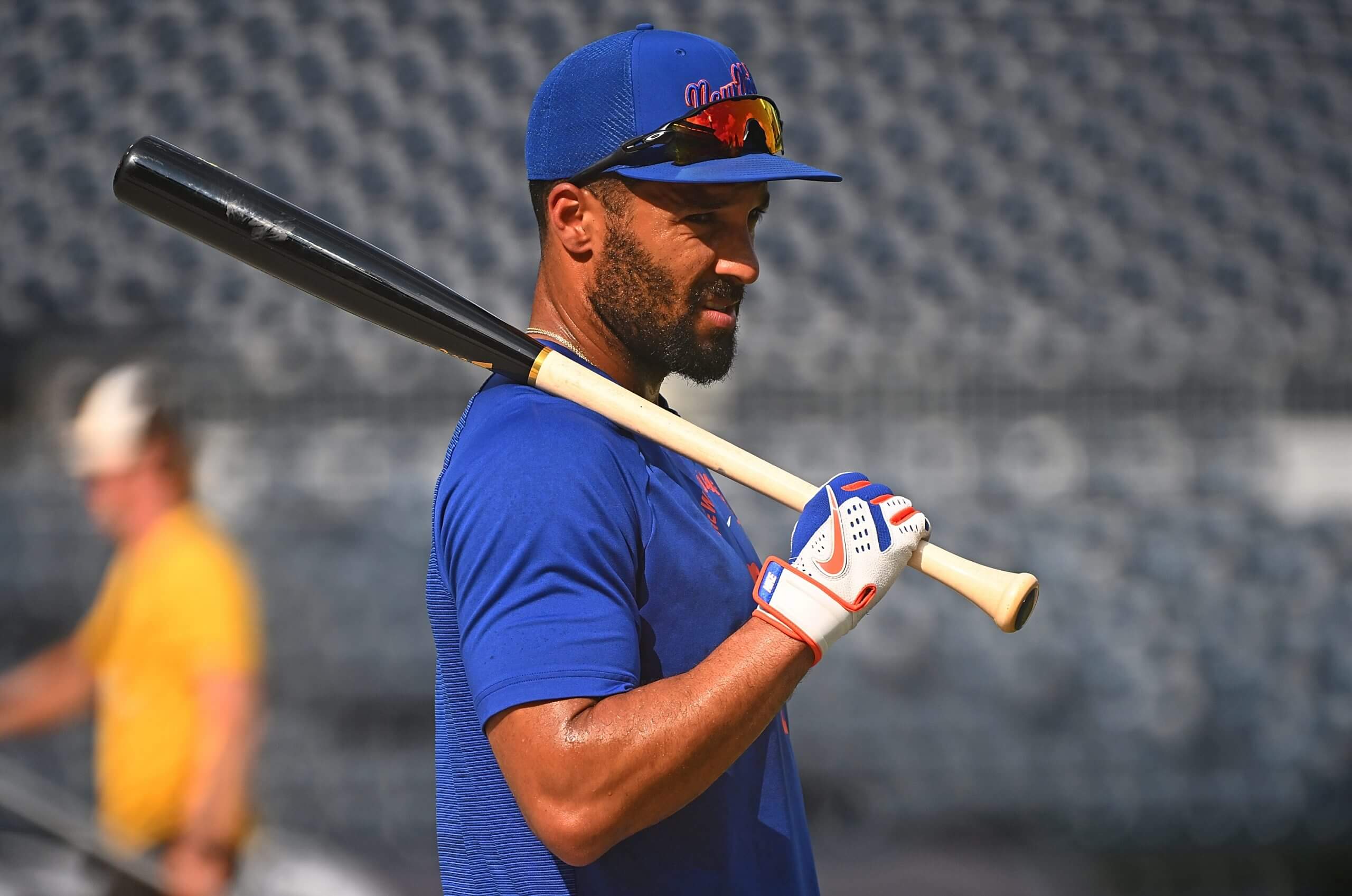
Marcus Semien is, in fact, a very important member of the union. (Justin Berl / Getty Images)
Jorge Castillo at ESPN did a good story on this subject recently that you should check out.
The eight-player executive subcommittee isn’t the end-all be-all for union decisions. A new bargaining agreement would be voted on by 38 players who collectively are known as the executive board. That’s the eight on the subcommittee, plus 30 reps from each team.
All 38 are supposed to consider input from players broadly. Yet, even in that wider group of 38, there’s only one Latin American player, Pablo López of the Minnesota Twins. That’s suboptimal, to put it lightly.
Part of what’s tricky is that players have to volunteer for these board positions. The union can’t force players into them. Education and language barriers play a role. But that doesn’t mean the union also cannot do more than it does presently to encourage participation.
Meyer, of the union, provided the same statement to The Athletic that he gave to ESPN:
“The Players Association regularly solicits and receives input from players across our entire membership, at all levels and backgrounds, and not limited to players on our executive board,” Meyer said. “Our positions at the bargaining table are a direct reflection of that feedback, including on international issues.
“While our elected positions are open to all players, we view representation as far more than just a title on an executive board. In that spirit, our player services staff and leadership are in constant communication with players on issues big and small, and ahead of the last negotiations, we sought and received input in numerous ways from Latino players on international market proposals and other issues.”
The union has not agreed to an international draft so far because it believes the league’s offers for that system haven’t done enough for the players who go through the system.
What’s the upshot of all this? It’s something to watch.
In labor relations, solidarity is everything. If the league can successfully divide different groups of players, or if the union can’t successfully unite various factions, players overall will have a tough go.
Are MLB teams actually losing money? And if some do lose money year to year, are the losses so severe that they make the appreciation of the value of the franchise not worth the investment? Are they losing money because they’re poorly run? I’m trying to understand why the owners are taking such a hard line. — Michael M.
Franchise values consistently go up in baseball and other sports leagues. But baseball owners have not seen their assets appreciate in the same way as owners in other leagues with a cap system. That’s a big part of MLB’s push for a cap.
Now let’s talk about annual profits. While the books for most teams are not open to the public, some teams do lose money on an operating basis.
The Mets are one such club. Their owner, Steve Cohen, who is an incredibly wealthy man, can afford those losses, in the sense that he has plenty of personal funds he can put into the team without going broke.
But, he and other owners don’t like having to cut a check annually to sustain their business, regardless of what they can cash out for down the road. That’s not how it should work, they believe.
Some on the players’ side will argue that because the club values continue to appreciate, annual operating losses are less important. Others, on management’s side, will say that’s hogwash. Another one to make up your own mind about.
What makes the conversation more complicated, though, are the ancillary businesses. Teams build real-estate developments around their ballparks. Some of them own their TV networks. Cohen is building a casino.
Those operations provide additional revenues that rely, to varying degrees, on the baseball team’s existence — but are not reflected in the team’s financial statements. A team might be losing money, but the overall enterprise it sits in the middle of might well be profitable.
Detailed financial information would really be a help. But even without it, there seems to be some truth to the idea that if these teams were terrible businesses, they wouldn’t be sold for billions of dollars.
One team plays a special role in these conversations. The Atlanta Braves are publicly traded as a standalone entity, so they have to disclose their earnings. They reported a roughly $14 million loss in operating income for 2025. But by another measurement, adjusted operating income before depreciation and amortization, they said they made about $108 million last year.
Can you explain how CBT money is distributed to recipient teams? Is it separate/on top of local revenue sharing? Thanks — sfrangerety
When people talk about baseball’s local revenue sharing set-up, they’re probably not talking about the competitive balance tax (or luxury tax, as it’s often called) that teams pay when they spend over a certain amount in payroll. It’s probably easier to think about those mechanisms separately, even though there’s a similar concept at play.
So, what happens to those fat luxury-tax bills that large-market teams have to cut?
The first $3.5 million of proceeds collected for each year offset some of MLB’s costs for player benefits. You can largely ignore that.
Everything that’s left over is then split two ways.
Half goes toward funding player retirement accounts, and the other half goes into what’s called the “supplemental commissioner’s discretionary fund.” From there, Manfred can make distributions to clubs that receive revenue sharing — often smaller-market teams — and to teams that grow their local revenues in areas other than media, such as attendance.
This is actually relevant to some of the talking points that are out there as the league and union fight over a cap.
When MLB highlights a $446 million gap in payroll between the team with the highest payroll (the Los Angeles Dodgers) and the team at the bottom (the Miami Marlins), it’s including what the Dodgers pay in straight salary as well as luxury tax. But it doesn’t reflect what the team at the bottom, the Marlins, receive from the luxury tax money that the Dodgers and other teams pay — irking the union.
The amounts distributed to teams from the luxury tax are not publicly announced.
Who has the larger war chest in this battle of attrition between labor and management? — matt B.
The owners do, and that will probably always be true. They’re pretty wealthy folks.
The union reported earlier this year that it began 2026 with about $519 million in total assets, and about $415 million of that in cash, securities and investments.
The league, meanwhile, has put aside $75 million per team, or $2.25 billion in all. The league also has lines of credit and various investments it can draw on.
To consider: if the stoppage lasts long enough that one side is running out of money, well, something bad has happened.
For more, check this out.
Why aren’t the players and owners meeting every day or at least regularly in a room trying to hash out a new deal instead of waiting until the last minute? Why does each side always have to just push the other side? Wouldn’t it be great to announce a new deal right at the start of the playoffs or the World Series? — C B.
One thing to remember is that there are many subjects of bargaining besides core economics, and the league and the union have been meeting almost weekly since May to discuss various topics. So it’s not like they’re sitting still at the moment.
But to your larger point: the league blames the union for things not moving fast enough, and the union blames the league. That was true last time too, in the 2021-22 talks.
Who’s right? Meh. Neither side has great evidence that shows it’s just burning to talk more and the other side won’t meet, or anything like that.
There is this prevailing reality that in all sorts of negotiations, deadlines create pressure and movement. Both sides very much want to preserve their leverage.
But a huge issue in these talks specifically is that the sides are operating in disparate frameworks. MLB wants a cap, and its proposals are based around that system. The union doesn’t, and blames the league for introducing something it knows will cause a big hold-up.
Until the sides get alignment on the overall core system, they could sit in a room all day, but they’d just be talking past each other on economics. And neither side is inclined to move much this early in bargaining. Hence, the importance of deadlines, which won’t arrive until the spring.
Yes, it would be nice to have a deal by the start of the World Series. And as my late grandmother used to say, “And I would like to be the Queen of England.”