
For the best part of a decade, Indian investors had little reason to look abroad. Domestic returns were strong enough that offshore allocation remained more in theory than practice. That period has ended. A softer rupee, two subdued years in Indian equities and the emergence of transformative global themes with few domestic proxies have moved global diversification to the top of the family office allocation agenda. The open question is whether this is a cyclical reaction to relative performance, or a permanent reordering of how Indian wealth is deployed.
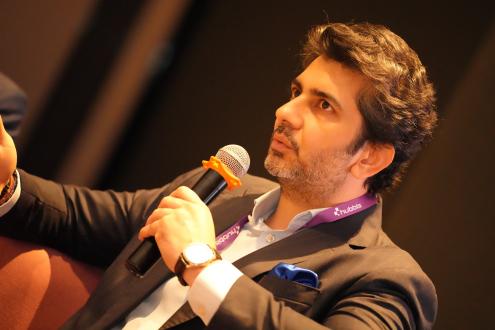
At the Hubbis India Wealth Management Forum 2026, the third panel of the day, chaired by Brett Kennedy, Managing Director for Investments at Hubbis, brought together chief investment officers, product heads and senior advisers to move the discussion from soundbite to execution. Anuj Kapoor, Managing Director and Chief Executive Officer for Private Wealth at JM Financial Services Limited, opened with an unambiguous position: the shift offshore is structural, it will outlast the currency cycle that accelerated it, and the binding constraint today is regulation rather than appetite.
Key Takeaways
A Structural Shift, Not a Currency Trade: Offshore allocation has moved from a minority conversation to a near-universal one, and Kapoor does not expect that to reverse even if the rupee stabilises.
Product Depth Is the Real Driver: The diversity and thematic reach of global product remains the strongest pull factor, particularly in sectors with few investable domestic proxies.
GIFT City Requires Patience: Progressive in design, but the regulatory regime is still evolving and needs time before it can be judged on outcomes.
Inflows Are Outpacing Outflows: GIFT City has worked better as a channel into India than as a route out of it, and was not intended as an externalisation tool.
Themes Will Rotate, Direction Will Not: Today’s focus on the United States and artificial intelligence may give way to other markets, but the underlying trend is durable.
From Minority Interest to Default Conversation
Asked directly whether current appetite reflects a structural shift or a cyclical response to rupee depreciation and United States outperformance, Kapoor did not hedge.
“Short answer, I think it’s a structural shift, very clearly,” he said.
He illustrated the change with the simplest available measure, which is how often the subject comes up at all. “A few years back, when we were approaching large family offices, I would say three or four, maybe five out of ten would want to talk about offshore diversification and wanted to figure out how they could put some part of their wealth offshore,” he recalled. “Today, if you ask me, it’s pretty much nine out of ten families who want to talk about offshore diversification.”
Critically, he attributes only part of that to the currency. “That’s not only because of rupee depreciation,” he noted. The more durable driver, in his reading, is familiarity: families that have made a first allocation rarely treat it as an experiment, and appetite compounds from there.
Product Depth as the Pull Factor
If the rupee provided the trigger, product provided the reason to stay.
“The quality of product, the diversity of product, and also because of regulation, sometimes you can’t do those kinds of products in India. Those are not available,” Kapoor said. “The quality and diversity of product is immense and it’s incomparable to products in India.”
He pointed to thematic exposure as the clearest illustration. Artificial intelligence and its associated supply chains dominate client conversations, but the domestic market offers limited ways to express the view. “With the advent of AI, there are a lot of these buzzwords, and if you want to play industries like semiconductor chips and so on, there are very few players in India to really look at taking those bets,” he observed.
Beyond product, he described a broader recalibration of how families think about concentration. Wealth built entirely within a single market, however well that market has performed, carries its own set of exposures, and families are increasingly comfortable saying so. “The mindset of the family office is pretty much renewed towards now making sure that they are diversifying their play,” he said.
Other panellists reinforced the point. One participant framed it as the evolution of the global Indian, noting that children studying overseas, international travel and global consumption have all softened the psychological barrier to investing abroad. “India would be, what, four to four and a half per cent of the global market capitalisation,” the participant said. Another highlighted liquidity events as a driver: “Today there’s a lot of capital creation, not only by way of business but by way of exits, listings, private equity buyouts or dilutions. So you don’t need that money in the business anymore.”
GIFT City: Progressive in Design, Still Maturing in Practice
Turning to the International Financial Services Centre at GIFT City, Kennedy asked panellists what the jurisdiction might look like in two to three years. Kapoor’s answer was constructive but measured.
“In two to three years’ time, I would imagine the regulatory regime in GIFT City becomes more evolved and stabilises,” he said. “I think that’s one thing that’s perhaps a little underwhelming at this point of time. While it’s a very progressive jurisdiction, I think it still needs to be given a little bit of time.”
He was equally clear about what GIFT City is not. “One thing is clear, the GIFT City route is not a way to externalise your wealth,” he said. “It’s a mechanism to invest overseas for a finite period of time, when your wealth comes back.” Its more successful function has been the opposite direction of travel. “Vice versa, it’s for inflows into India as well, which actually, to my mind, has taken off much better than the externalisation.”
That reading is visible in who has set up shop. “If you see the establishment of offices in GIFT City today, it’s actually led by asset managers and a lot of other consulting and advisory outfits, and to some extent wealth managers as well,” he noted.
The observation was echoed around the table. One participant put it plainly: the centre was conceived primarily to encourage efficient inflows into India rather than outflows, and families seeking genuine externalisation will continue to look at overseas direct investment and offshore structures. Another suggested the more significant change may come from retail participation on the outbound side, enabled by evolving regulations.
Allocation Levels and the Regulatory Ceiling
One of Kapoor’s more revealing points concerned how advisers have historically sized offshore exposure, and why. “Three to four years back, when we spoke to clients in family offices, we told them, as part of our model portfolios, that 10 to 15 per cent of your wealth should be overseas,” he said. “And that too because it’s constrained by the regulatory regime.”
In other words, the number reflected what was permissible as much as what was optimal. “LRS can only do as much,” he said, noting that meaningful expansion depends on how the outbound direct investment framework develops from here.
He also returned to the counterfactual, which is the real test of whether a trend is structural. “If the rupee were to stabilise and if Indian markets were to do well, I don’t see this reversing of flows as far as overseas wealth is concerned,” he said. “This is a diversification tool which is structurally here to stay.”
Themes Will Change, The Direction Will Not
Looking ahead, Kapoor expects the composition of offshore allocation to keep moving even as the overall direction holds. “AI or the US may be a theme, but two or three years from now, it could be Korea, or it could be Japan, or it could be Europe as a theme, or various other plug-and-play sectors into AI which could be emerging as themes, and which perhaps will not be available in India,” he said.
That rotation should itself pull the supply side forward. “This structural shift in itself will lead to evolution of product, will lead to more asset managers establishing shops,” he said, with the quality of product and access improving in parallel.
From Appetite to Architecture
Kapoor’s contribution captured the tension the panel was convened to address. Demand for global diversification has arrived comprehensively. What has not arrived at the same pace is the infrastructure to serve it, whether that is regulatory clarity at GIFT City, headroom within existing outbound routes, or genuinely integrated offshore solutions rather than a shelf of offshore products.
For advisers, the easy part of the conversation is over. Persuading clients of the case for global exposure now takes very little effort. Delivering it in a compliant, well-structured and durable form is where the work sits.
**