
There’s no need for Mercedes to panic just yet, but the Dutch Grand Prix has given the championship leaders some food for thought in terms of the threat from the opposition after the team looked unbeatable earlier this year.
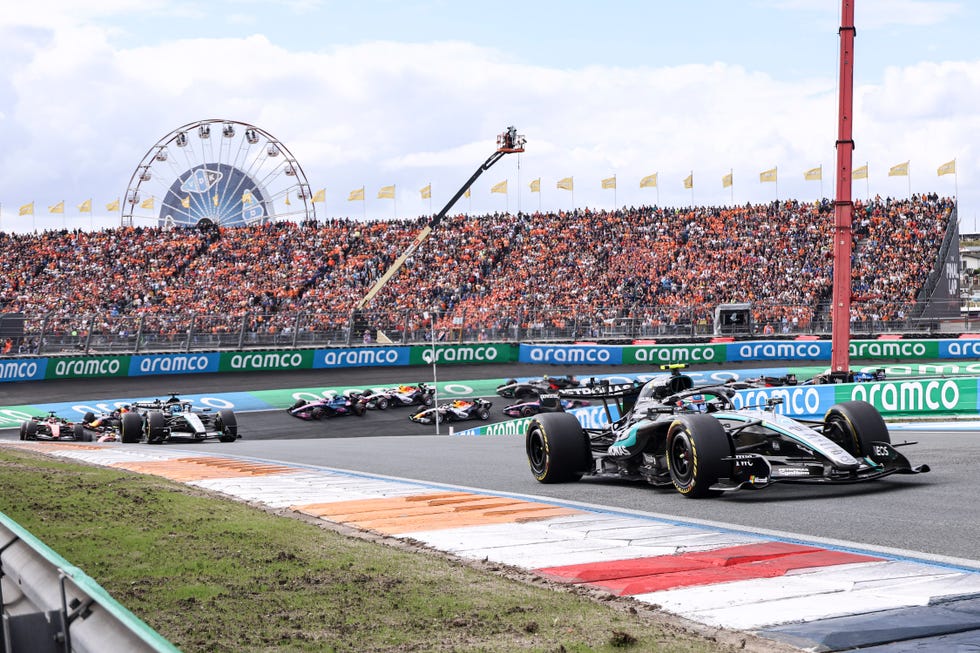
Zandvoort was by no means a bad weekend for them, given that George Russell took pole for the sprint and went on to win it, but Lando Norris and McLaren were on top in both main race qualifying and the event itself. Kimi Antonelli still finished second and Russell third, and thus both scored decent points; however, this was the second consecutive victory for Norris, and a fourth defeat in six races for Mercedes, a run that started with Lewis Hamilton’s victory in Spain in June.
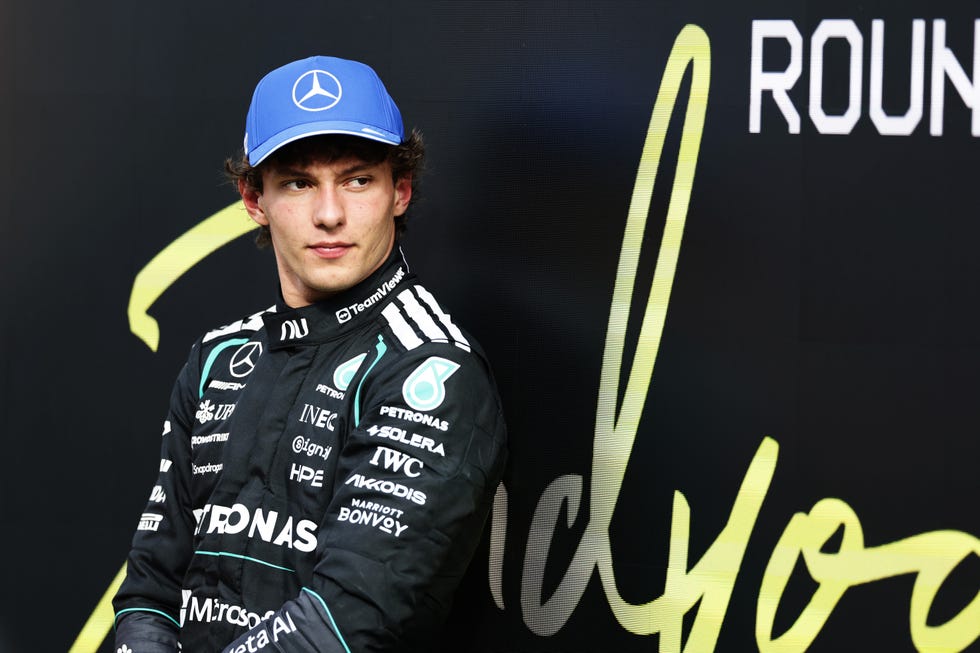
Antonelli remains the odds-on favorite to clinch the crown; after all, he is currently a handy 59 points ahead of Russell and Hamilton, and 83 clear of Norris. But history has shown that things can change quickly with a couple of bad races, and Antonelli faces a tough weekend in Monza as he faces grid penalties for taking a new power unit. Not something he likely would have wanted to compromise for his home race, but it had to happen somewhere, and it is likely to be balanced out later on—at least within the intra-team battle—by a similar penalty for Russell.
Mark Thompson//Getty Images
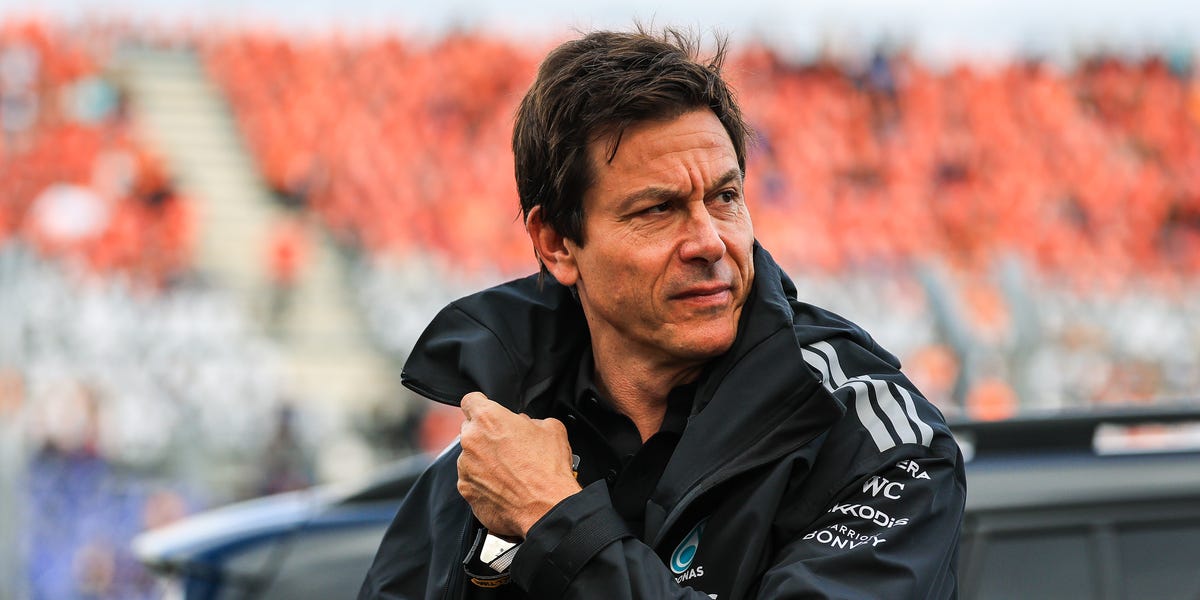
“With Kimi, we’re taking the full thing [at Monza],” team principal Toto Wolff noted in Zandvoort last weekend. “In theory, our calculations say that’s the best track to take it. Obviously, algorithms don’t take the nationality into consideration, but we’re here to fight for a championship and not get the most PR. So yeah, that’s what we’re going to do. With George, the discussions are ongoing, if we were to take it.”
Max Verstappen’s successful charge in the second half of last season showed that anything is possible in the points race, especially when two teammates are in the title fight taking points off each other. Norris and Lewis Hamilton don’t have priority status within their respective teams, and so could also lose points to their teammates. Nevertheless, if both continue to score well, Mercedes won’t be able to rest.
“Absolutely conscious of the threat,” said Wolff. “It’s not only Norris—if you have a gap of 50 [sic] points to Lewis, that’s something you need to be worried about. So this is going to be tough, and it could become tighter. And yeah, we just need to do the optimum job every single weekend, every single session. I think we as an organization are good enough to win races. And they [McLaren] have got two now, on tracks where they’ve been very, very good in the previous years also. So let’s see if we can regain some momentum.”
An intriguing aspect to this season has been just how relentless the development race is, with the teams still learning about the new regulations—and thus adding significant performance every time they bring a new aero package. Everything that comes through the system has to earn its place within the constraints of the cost cap, and Wolff has made no secret of his constant surprise at how McLaren and Ferrari have continued to bring new parts almost on a race-by-race basis.
“We haven’t got the money to put developments on the car,” he noted last weekend. “And I said it before, that we are trying to evenly split that through the season, based on our calculations of when we can bring the biggest updates and optimizing the championship points. But we can just do what we can do. And that’s why it is a development race. If you bring an upgrade, each of the top teams will have a couple of tenths in it at least, and that’s what you lose. So yeah, the ride has been a bit tougher than at the beginning of the year.”
“You will see how towards the end of the year whether they are going to be able to deploy as much stuff onto the car as they do now,” he added. “Someone might have a different strategy in spending more at the beginning and in the middle of the year than towards the end.”
Why Mercedes appears to have less leeway to spend on developments than its immediate rivals is not a straightforward question to answer. Balancing the budget within the cap is a complicated equation; for example, teams have different head counts and wage bills, and different ways of operating.
NurPhoto//Getty Images
“There’s many reasons you can look at,” said Wolff. “Did we spend too much at the beginning in the initial development? I don’t think so. I just think we’re an organization … we have a certain size and infrastructure, and in that respect, we had a really quick car. We left between 50 and 100 points on the table with reliability issues that would have given us a little bit of a gap, a little bit more of a gap than we have today.”
Have Ferrari and McLaren, as Wolff hinted, shot their respective bolts by using up their development budgets early, or do they have more to come? And has Mercedes not deployed many updates in the last few months because it felt it had enough performance for the summer, and preferred to defer new parts until it could bring a bigger step for the decisive final part of the campaign? Only time will tell. However, Antonelli indicated after Sunday’s race that his team has something on the way—and he can’t wait for it to reach the track.
“For sure, we’re clearly not the fastest car anymore on the grid,” the Italian said. “We’re probably second or third, at least in today’s race. And McLaren has taken a huge step, especially since Hungary, since the big upgrade package they brought. But I’m confident with the team; the team has been working super-hard on this next package that is coming up, and they just want to make sure that it’s going to work out well, once we put it on. It’s going to be more difficult, it’s going to be challenging, but we’re ready to do our best and to maximize every opportunity. And then hopefully it’s going to be our turn to bring the package that’s going to give us a little bit of the upper hand again.”