
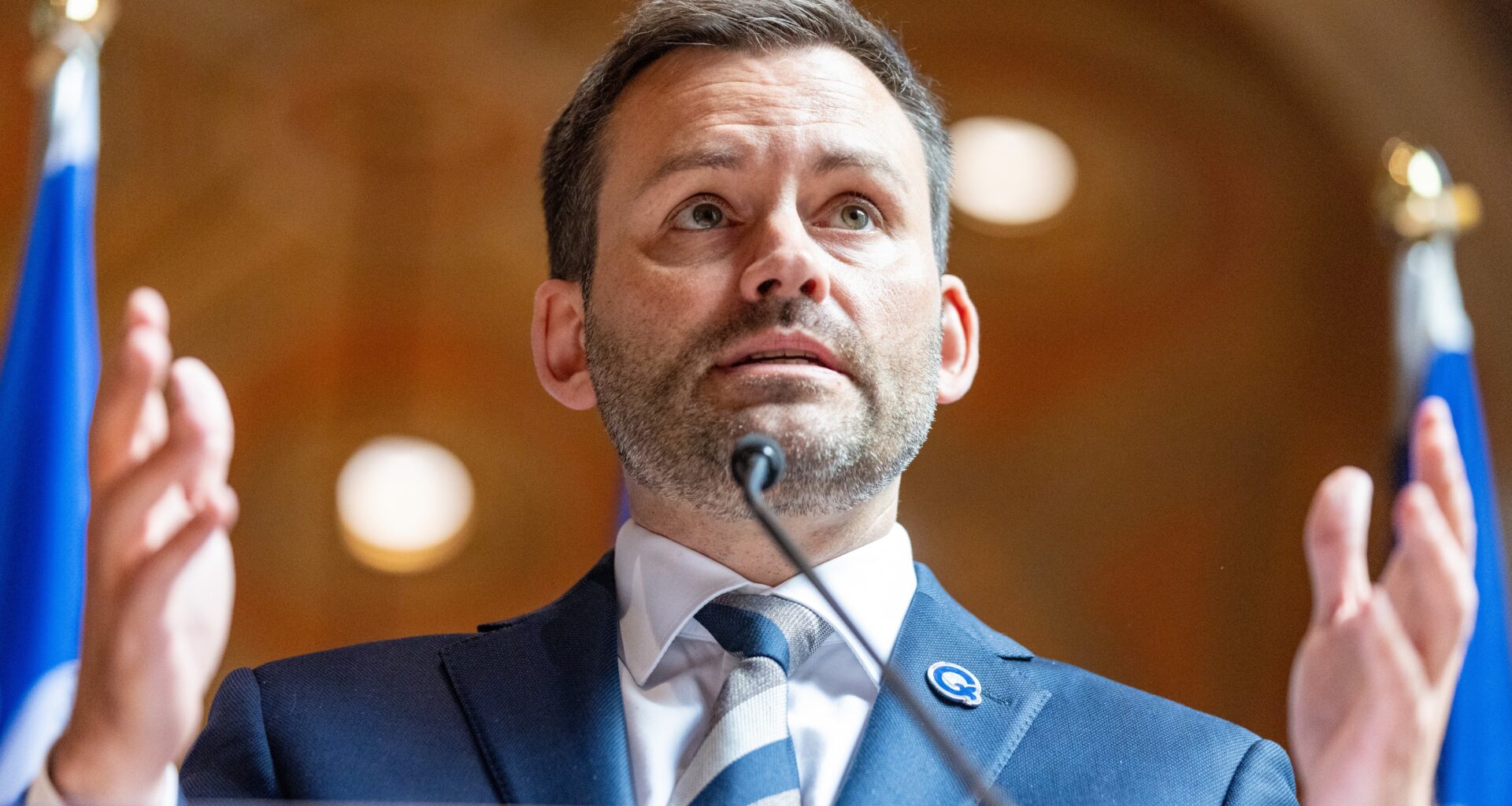
The renewed threat of separation, an unhinged U.S. president attacking Canada and a dire economic landscape are the backdrop to a Quebec election the likes of which we’ve never seen before.
The Parti Québécois has the most to lose. It has been so giddy with its first-place standing in the polls that its leader, Paul St-Pierre Plamondon, hasn’t given enough thought to the fact that 70 per cent of Quebecers don’t want a referendum, much less separation.
Yes, the PQ is in first place, polling at 30 per cent. That’s exactly what you’d expect. It’s what happens with the other 70 per cent of voters that will determine the result of the Oct. 5 vote. Many of those voters are looking for one main thing: the party that can defeat the separatists. As highly respected pollster Jean-Marc Léger recently said, the federalist party of choice to beat the PQ is now Christine Fréchette’s Coalition Avenir Québec, rather than the Quebec Liberals.
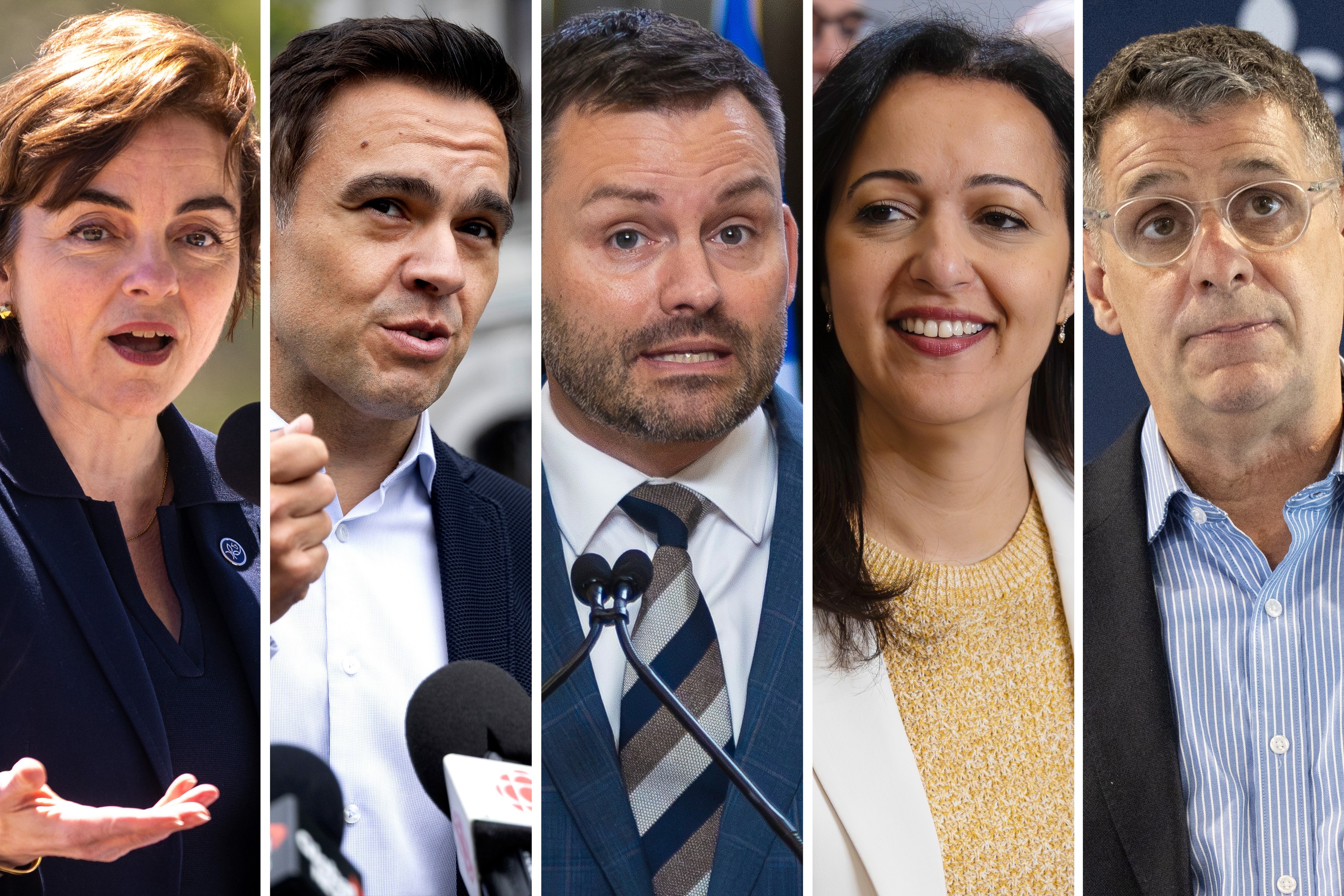 Quebec party leaders in the 2026 election, from left: Coalition Avenir Québec Leader Christine Fréchette, Quebec Liberal Party Leader Charles Milliard, Parti Québécois Leader Paul St-Pierre Plamondon, Québec solidaire co-spokesperson Ruba Ghazal, and Conservative Party of Quebec Leader Éric Duhaime. Evan Buhler, Allen McInnis, Francis Vachon and Tim Snow / Montreal Gazette
Fréchette has been outstanding in the leadup to the election. Sure, she’s the premier and has taken full advantage of her incumbency, making announcements across the province all summer. But she’s also been strong and consistent in her opposition to a referendum and has set a welcome new tone in relations with minorities generally and the English-speaking community in particular.
Her economic experience and expertise have been on full display, as much as her engaged, positive character. This all stands in stark contrast to the drab, uninterested François Legault. But Fréchette still has work to do to get voters to forget the eight years of intolerance and incompetence from the likes of Simon Jolin-Barrette and Pierre Fitzgibbon.
Fréchette has shown an ability to work with Mark Carney and his federal Liberal government on key files like the monumental Churchill Falls hydroelectric project and the exceptional announcement this week of an $11-billion icebreaker contract for the Davie shipyard near Quebec City.
You’re going to hear the word “momentum” a lot during this campaign. As the starting gun gets fired, the momentum is with Fréchette and her team.
Charles Milliard is an honest, hard-working politician who has never run for office, and it shows. He’s articulate, but has a very hard time canning a message. Nothing remains after you’ve heard him speak. The downward drift of the Quebec Liberals, especially among francophone voters, is going to be very hard to stop.
Even the most ardent Liberals I’ve spoken to don’t believe they’ll get more than a couple of dozen seats. Campaigns can be unpredictable and things can turn around quickly, but it would require an unprecedented set of events to change things for the moribund Liberals, who have become so anchored in Montreal that the rest of Quebec largely ignores them.
Editor’s Picks
The one to watch in this campaign is Quebec Conservative Leader Éric Duhaime. He’s showing a message discipline that was woefully lacking during his 2022 bid, and it’s paying off in spades.
He’s concentrating his efforts in the Greater Quebec City area and polls show him in a position to possibly win a large share of the 18 seats on offer.
He’s done something exceedingly rare for a party leader with candidates in every riding — he’s admitted that he has no chance of forming a government. He’s asking to be given the balance of power to hold an eventual minority government’s feet to the fire on budgetary and economic policies, irrespective of who wins.
He might just pull it off.
The sad state of affairs at Québec solidaire is reminiscent of the drubbing the NDP received in the last federal election. They’re becoming collateral damage in the head-on collision between separatists and federalists.
QS can’t seem to shake off the influence of its most marginal policies even during a general election. Out of nowhere, they’re calling for the closure of Quebec’s office in Israel. Perhaps that was meant to attract the anti-Israel crowd, but it appears to have backfired. Their numbers have tumbled since that announcement.
During a year that has seen unprecedented attacks on synagogues and Jewish schools here, voters seem to be looking for bridge builders, not agitators.
There are three main ballot questions heading into this election: Who can block the separatists, who can best work with Ottawa to stymie Trump, and who can ensure healthy public accounts?
On the first two, thus far, Fréchette has the edge.
On the third, Duhaime’s Conservatives are increasingly being seen as a bulwark against a return to out-of-control growth of government.
In less than six weeks, we’ll have the answers.
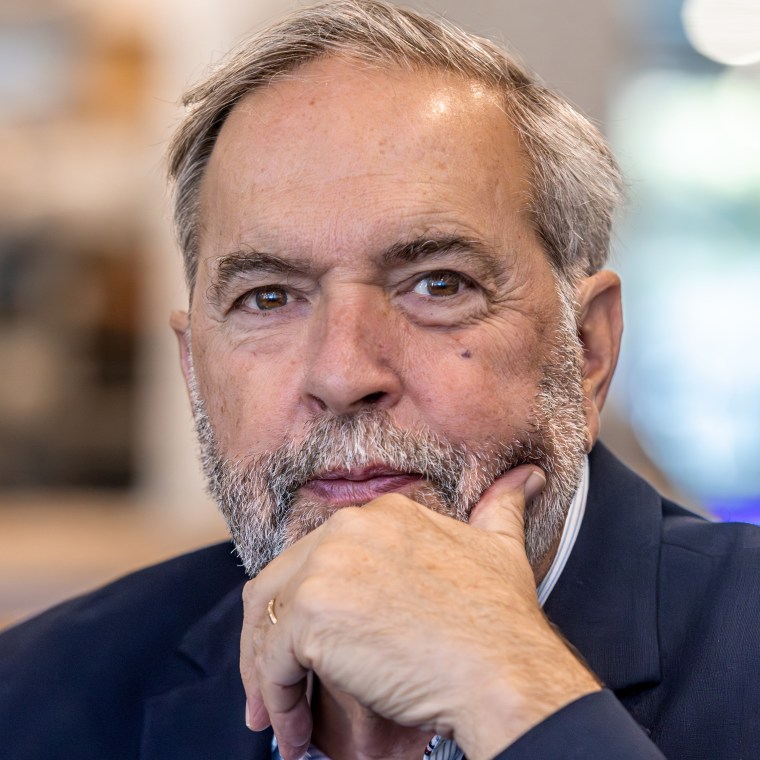
Tom Mulcair, a former leader of the federal NDP, served as minister of the environment in the Quebec Liberal government of Jean Charest.