
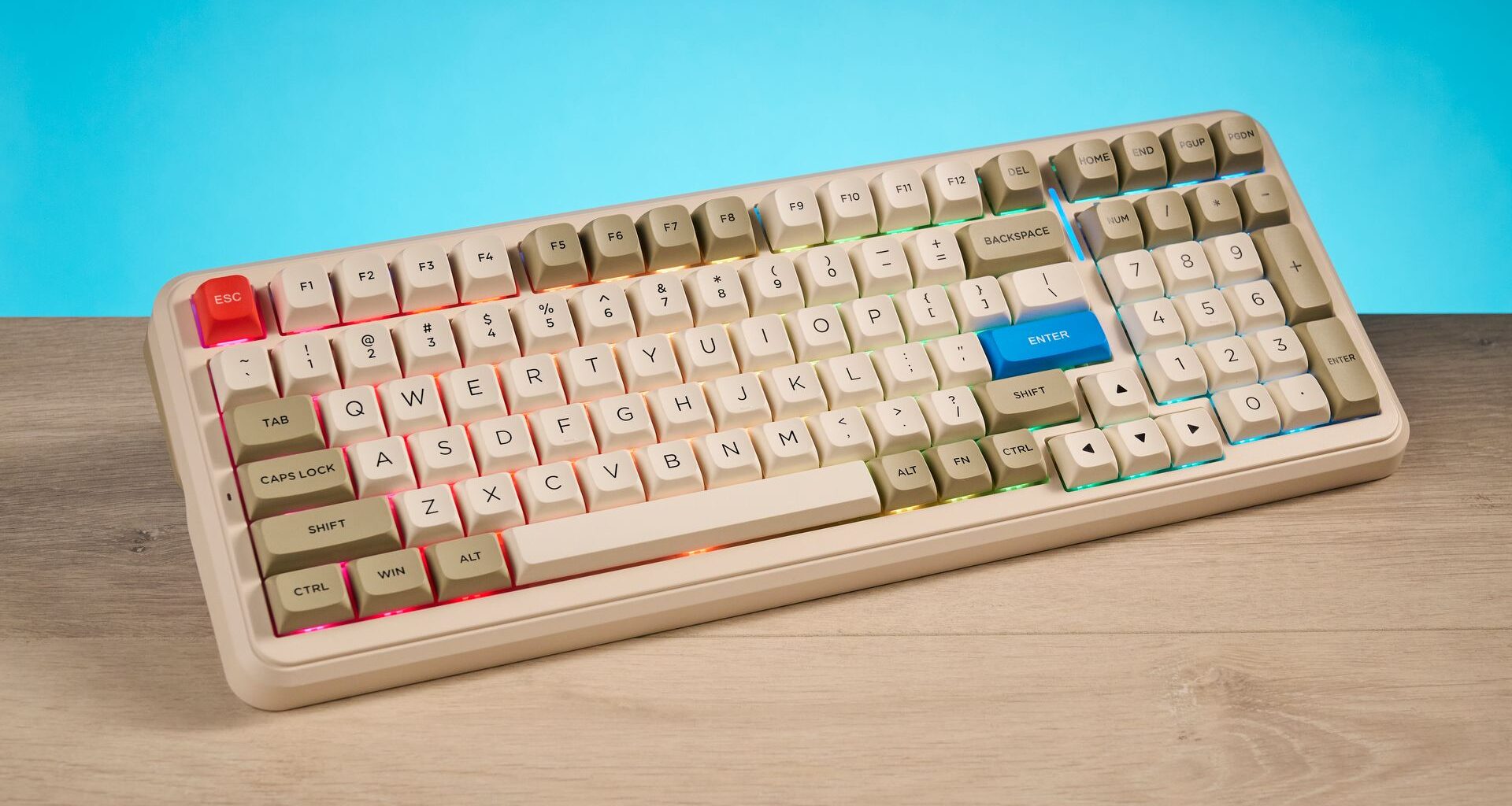
The best mechanical keyboards can make typing all day long feel like a walk in the park, and that’s exactly what the MCHOSE K99 V2 does. Fitted with responsive linear switches, the K99 V2 is a delight to type on — and its creamy-thocky sound profile is a joy to listen to. The keyboard sports a colorful design, and its proprietary software makes customization a walk in the park. Oh, and it’s got 1,000Hz polling for casual gaming.
But the K99 V2 isn’t perfect, and I really wish it was. There’s some flex in its body, and there isn’t much variety when it comes to stock switches. My biggest issue, though, is its web-based software which simply refuses to work on macOS.
Should you still buy this keyboard? Read my full MCHOSE K99 V2 review to find out.
Latest Videos FromTom’s Guide
Swipe to scroll horizontally
Price
Switches
Hyacinth or Icy Creamsicle (linear) mechanical
Keycaps
Double-shot PBT
Construction
ABS plastic
Mount
Gasket
Layout
98%, 99 keys
Operating system
macOS, Windows
Backlighting
Per-key RGB
Polling rate
1,000Hz
Paired devices max
3
Connectivity
Bluetooth, 2.4GHz dongle, wired
Battery
6,000mAh
Measurements
15.71 x 5.91 x 1.85 inches
Weight
3.73lbs
Colors
Navy Blue, Emerald Green, Glacier Gradient, Sky Blue, Horizon Orange, Mountains Gradient
MCHOSE K99 V2 review: Cheat sheetWhat is it? A near-full-size mechanical keyboard with linear switchesWho is it for? Hardcore typists and casual gamersHow much does it cost? The MCHOSE K99 V2 is available for $99 / £78What do we like? The colorful design, excellent typing experience and sound, 1KHz polling for gaming, and user-friendly companion softwareWhat don’t we like? The limited stock switch choice, flexible body, and finicky web-based softwareMCHOSE K99 V2 review: The ups
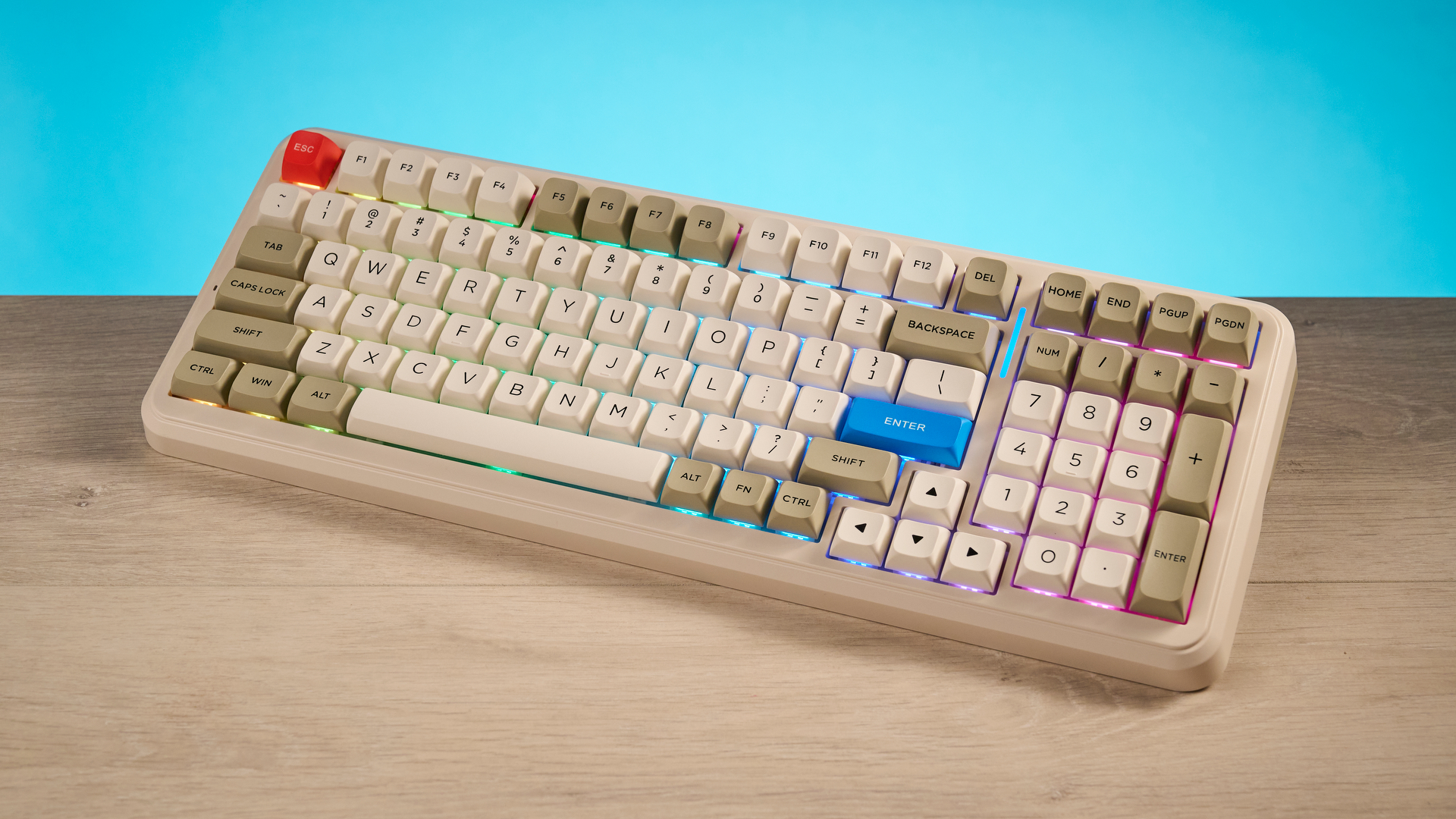
The MCHOSE K99 V2 sports a lovely, colorful design, and it’s a joy to type on. Its proprietary software is extremely user-friendly, too.
(Image credit: Tom’s Guide)
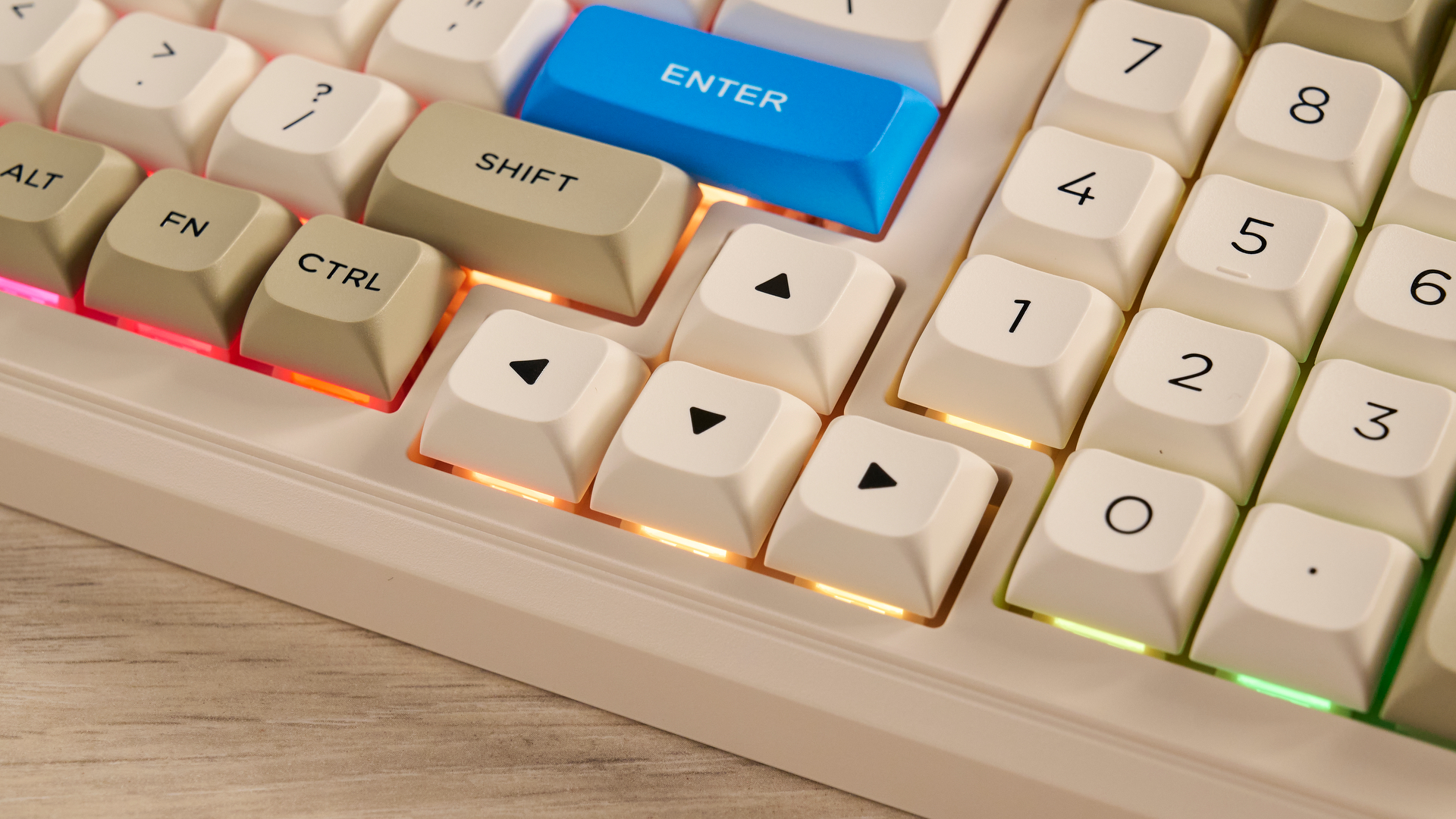
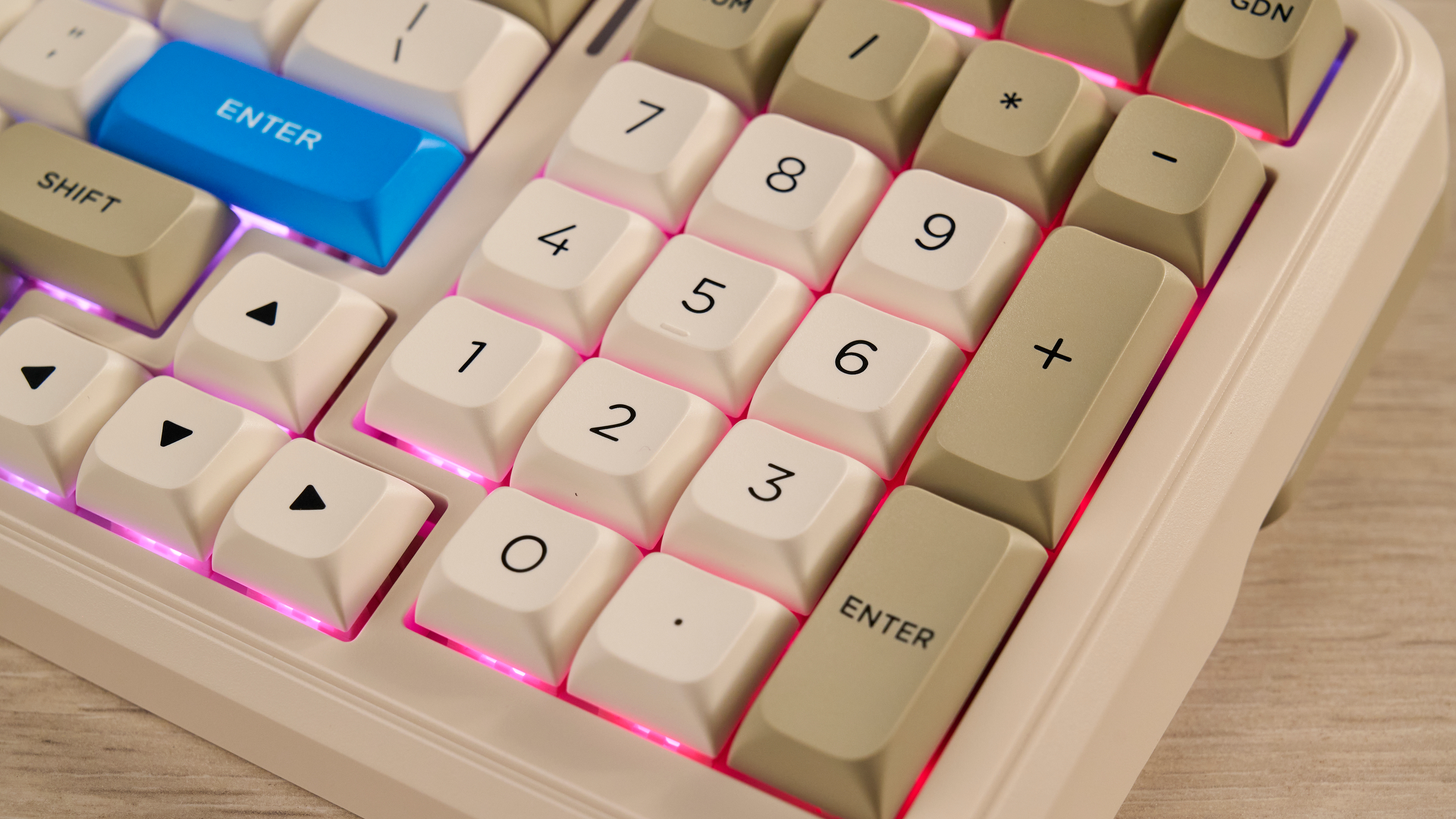
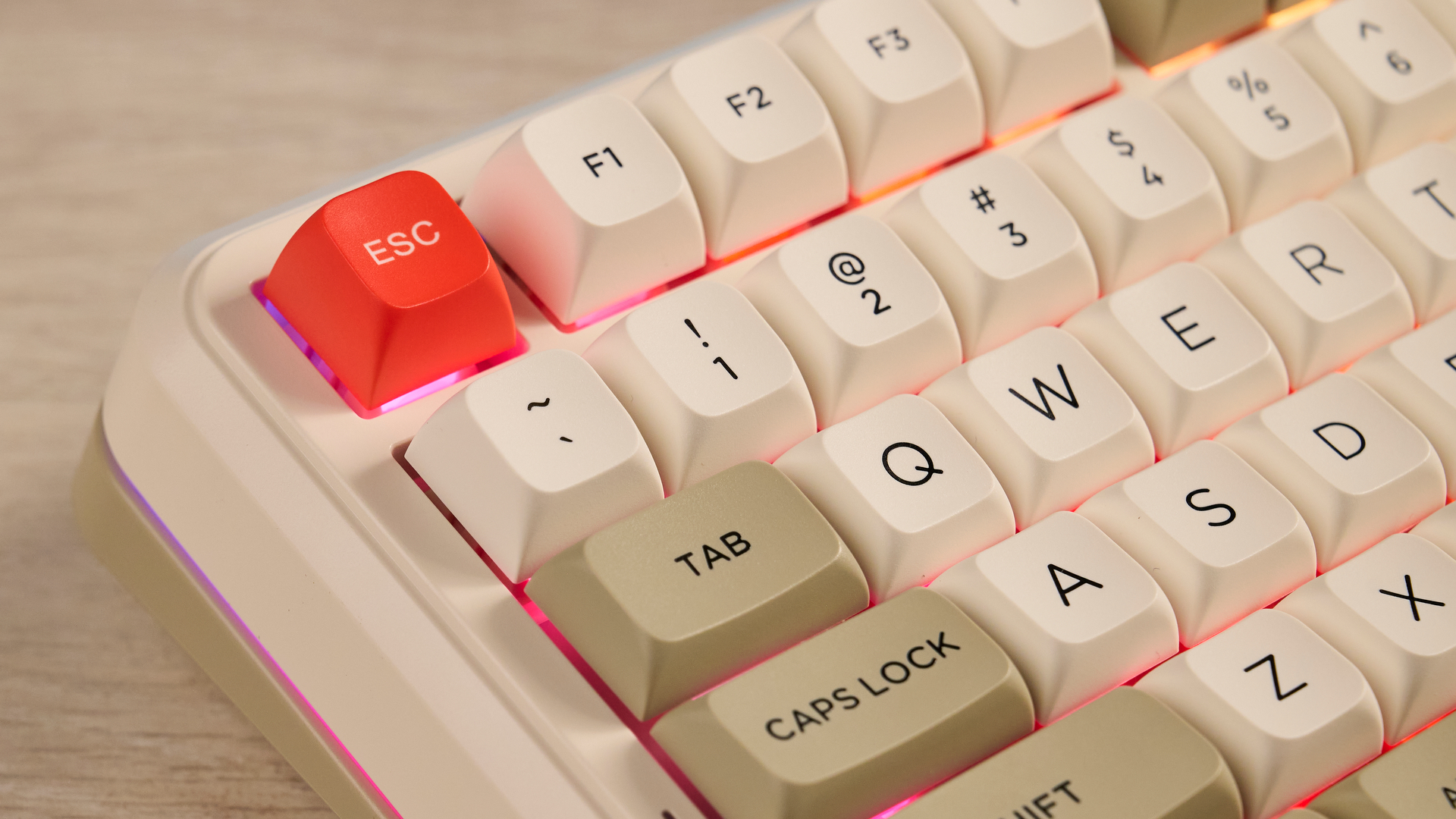
MCHOSE knows how to make a good-looking keyboard, like the X75 V2 ($89), but it’s also no stranger to making boring ones — case in point, the GX87 ($109). Thankfully, the K99 V2 falls into the former category, as it’s a lovely deck. It’s available in a bunch of colors, such as Navy Blue, Emerald Green, Glacier Gradient, etc. The model I tested features a combination of blue, orange, white and steel keycaps, and I think it looks gorgeous.
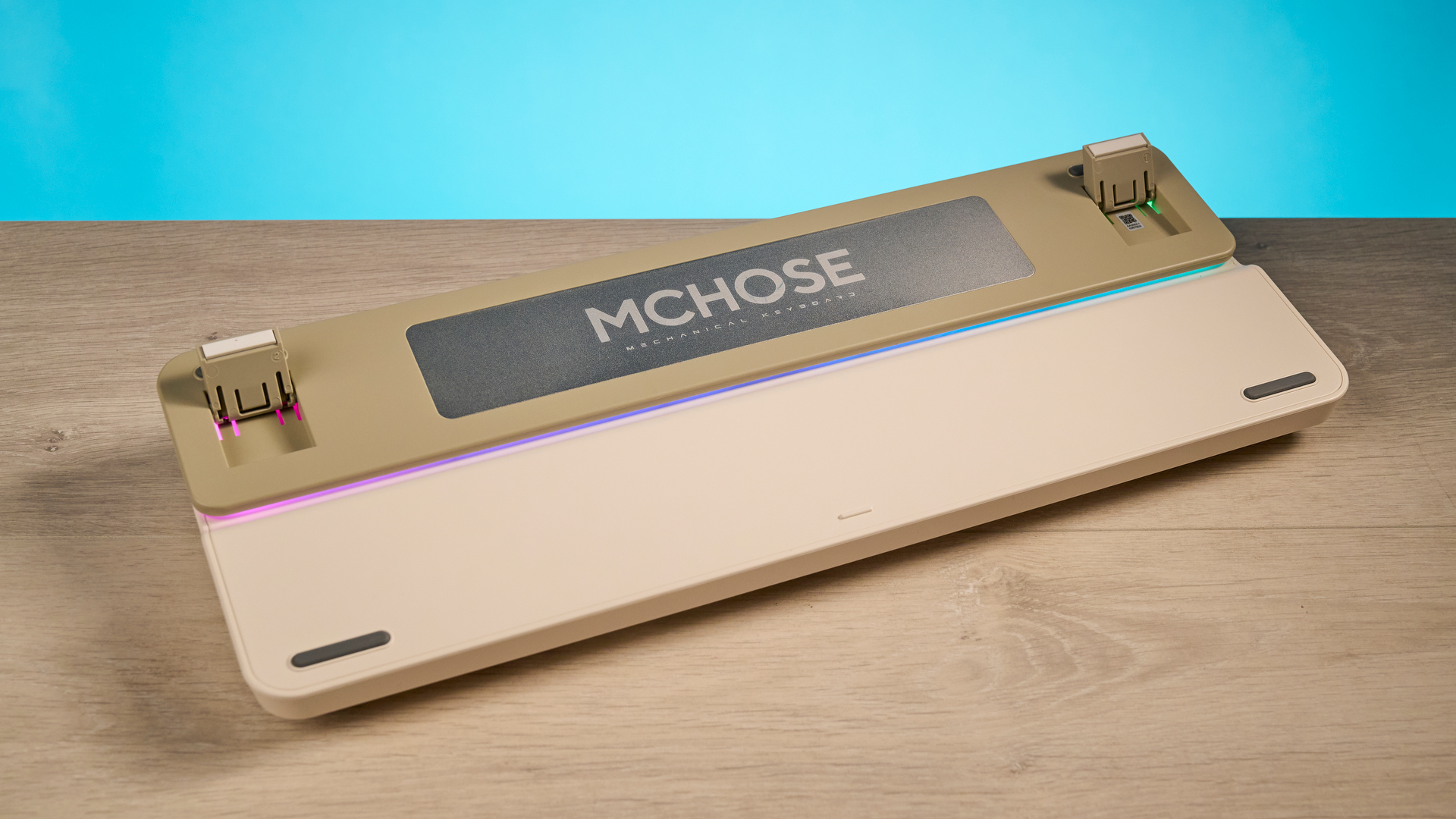
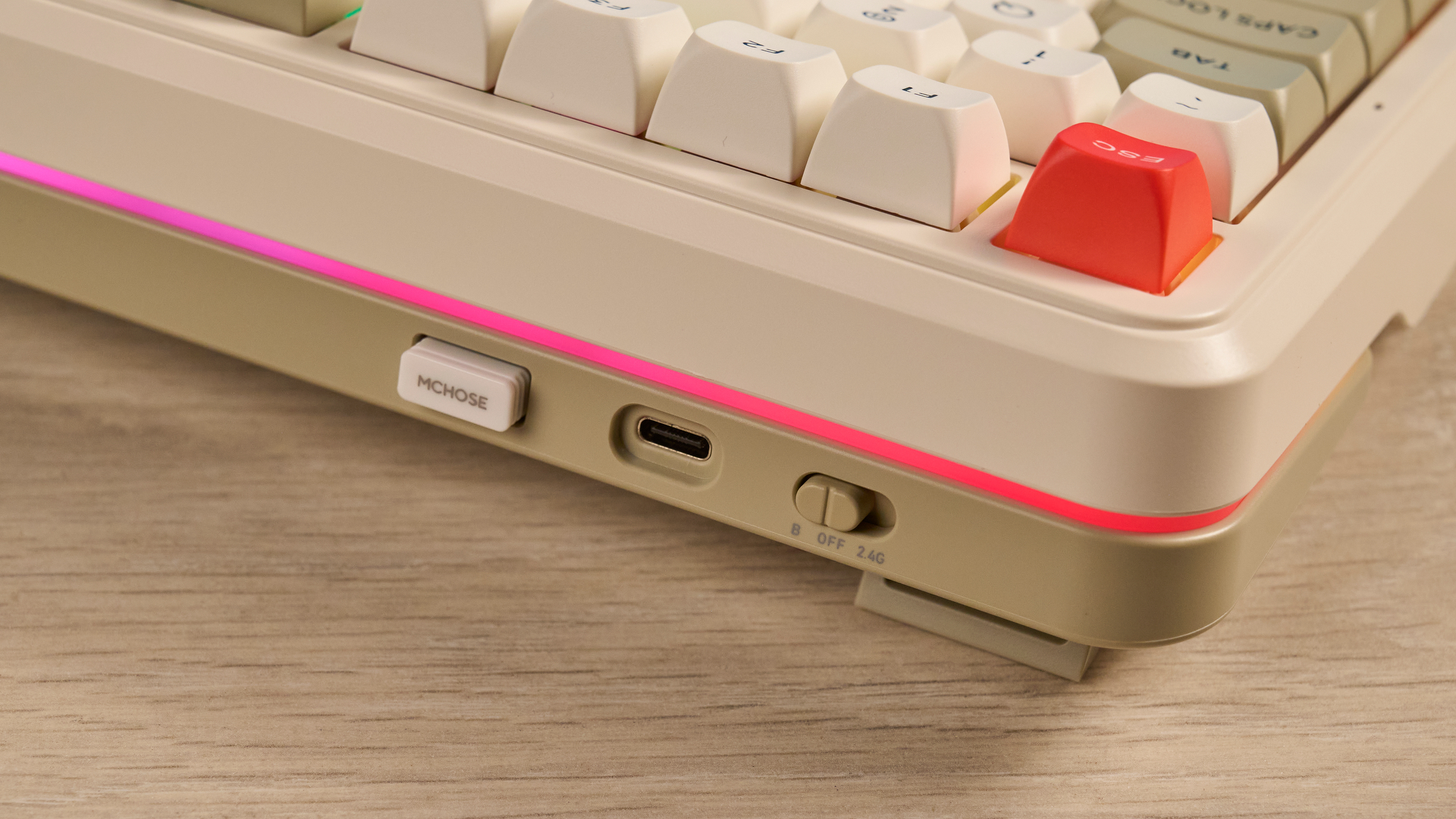
Adding to the K99 V2’s charm is its per-key RGB lighting which is customizable via either web-based or downloadable software (more on that shortly). There’s also an anodized mirror plate on the keyboard’s underside with RGB lighting running around it, which, according to MCHOSE, makes the K99 V2 look stylish. The keyboard’s design is practical too, with a slot located along the top to store the 2.4GHz dongle.
(Image credit: Tom’s Guide)
Similar to the GX87, the K99 V2’s box has the words “YOUNG’S CHOICE” (yes, in all caps) inscribed on it. Reading that left me stumped but thankfully, Pete, our senior reviews editor, had already asked MCHOSE what this means, to which the brand clarified: ‘youthful design.’ And I suppose the K99 V2’s design looks like it would appeal to… Gen Z, perhaps? It’s more colorful than the GX87, at least.

(Image credit: Tom’s Guide)
I’ve tested my fair share of keyboards — somewhere around the 100 mark, at the time of writing — so I can confidently say that the MCHOSE K99 V2 offers a seriously beautiful typing experience. The K99 V2 comes fitted with pre-lubed Icy Creamsicle switches which I’ve tested before with the X75 V2.
These linear switches require a moderate 42g of force to activate, and they have a pre-travel distance of 1.3mm (3.5mm total). This means that you don’t need to press them all the way down to register a command, resulting in fast type speeds. The Icy Creamsicles are ever-so-slightly heavier than the 38g Wisterias in my trusty Epomaker Glyph ($139) but the difference is hardly noticeable in real-world use.
(Image credit: Tom’s Guide)
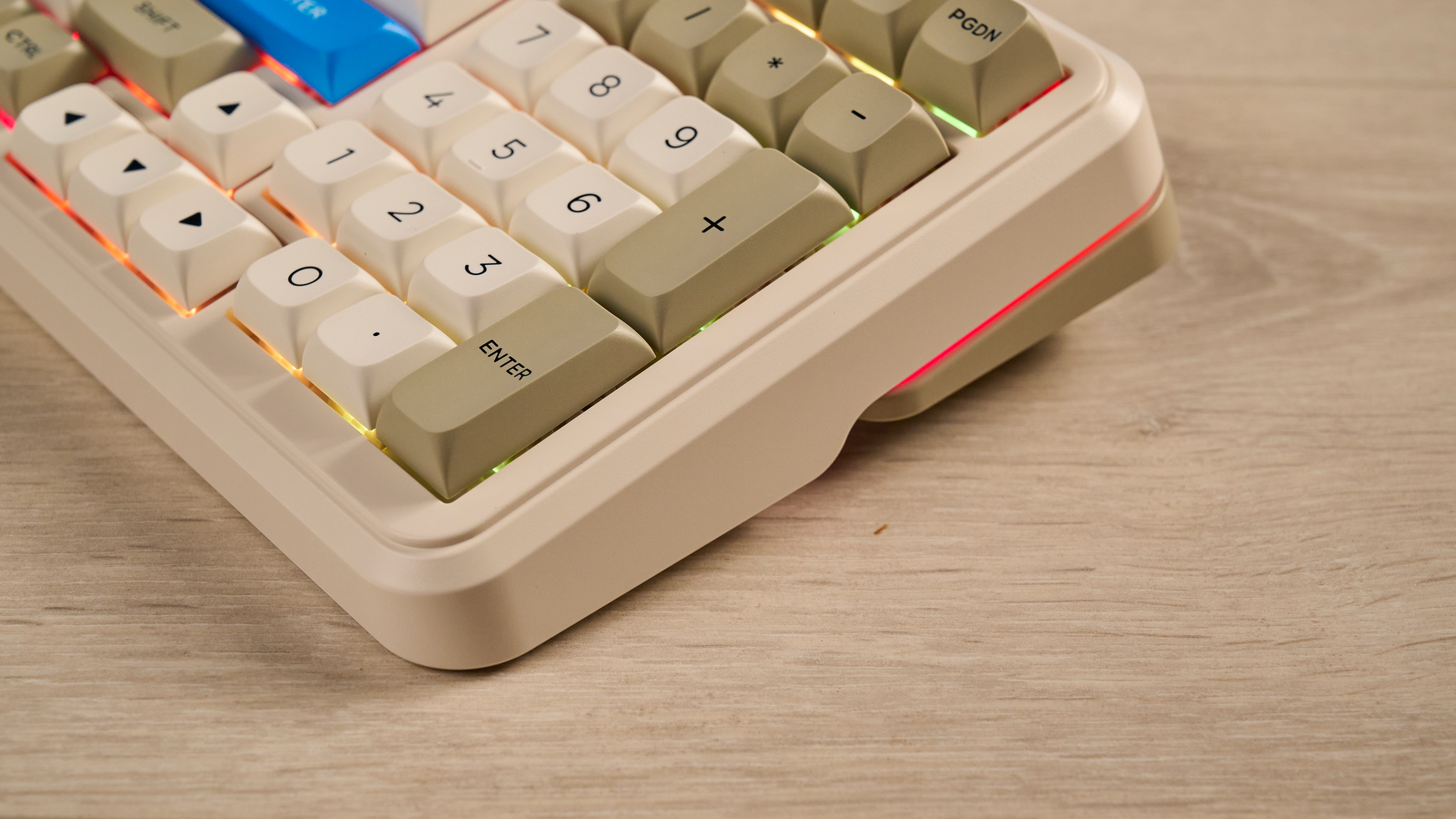
The K99 V2 features a gasket-mount design which ensures structural integrity while reducing vibrations and unwanted metallic pings. It also makes typing feel super comfortable — and even after a full day’s worth of typing on the K99 V2, my fingers didn’t feel tired at all. Combined with six layers of sound-dampening foam and the switches, the K99 V2 makes a lovely, creamy-thocky sound.
Lastly, the K99 V2 is fitted with double-shot PBT keycaps which are more durable and resistant to wear-and-tear than their ABS counterparts. One thing worth noting, though, is that the keycap profile differs depending on the keyboard color you get. The Navy Blue, Sky Blue and Horizon Orange models have MDA-profile keycaps, while the Mountains Gradient has Cherry-profile ones. MDA keycaps feature a taller, semi-sculpted rake (generally more comfortable) while Cherry ones are more low-profile (usually better for touch-typing). A lot of this comes down to preference, though — you can always swap out keycaps later on.
Swipe to scroll horizontally
I put the K99 V2 through its paces by taking a typing test at 10fastfingers.com as soon as I unboxed the keyboard. Right off the bat, I achieved a speed of 98 words per minute with 91% accuracy. I’m happy any time I get over 90WPM, so I’m very pleased with the K99 V2’s performance. This is a fantastic keyboard for hardcore typists.
1,000Hz polling for gaming, too
(Image credit: Tom’s Guide)
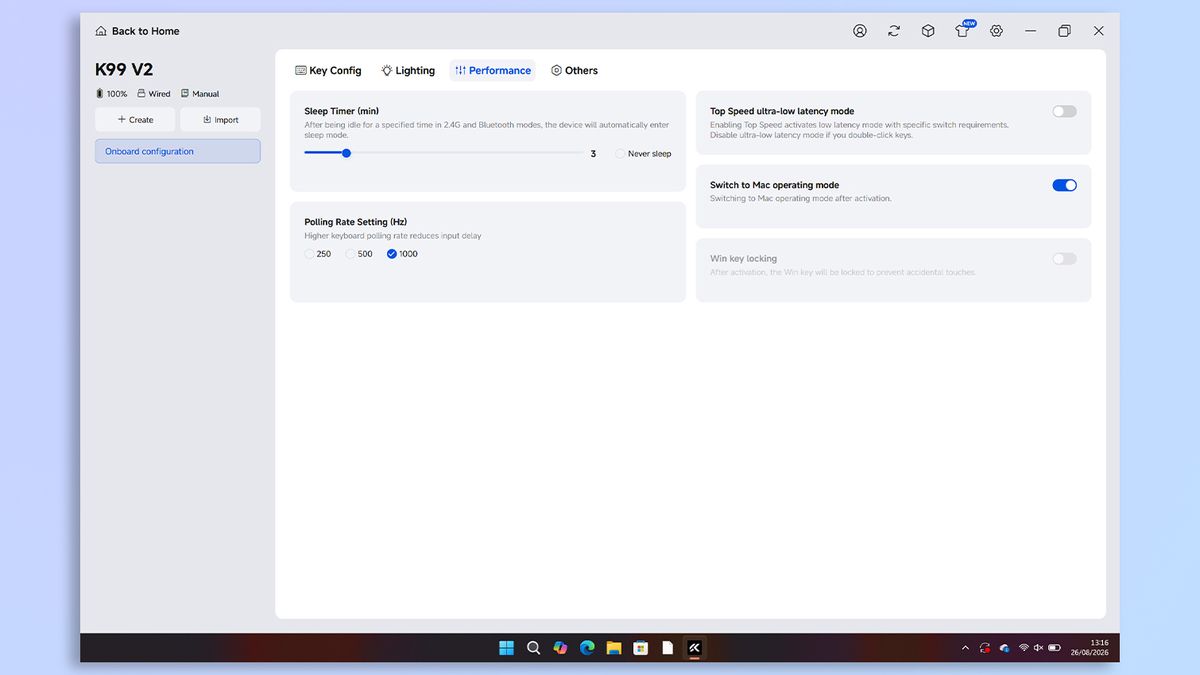
Though it isn’t mentioned on the MCHOSE K99 V2’s product page or box, it actually has a 1,000Hz polling rate (according to its companion software) which is more than sufficient for casual gamers. MCHOSE has since come out with the K99 V3 ($109) which features 8,000Hz polling over wired and 2.4GHz wireless connections. But like I’ve said in prior reviews, 8KHz polling is overkill for 99% of gamers, and it’s a drain on system resources. The K99 V2’s 1KHz polling should be just fine for you.
(Image credit: Tom’s Guide)
When I played Cyberpunk 2077 and Forza Horizon 5, I didn’t notice any input lag or latency issues. I found the switches extremely responsive, and I appreciated the short pre-travel distance as it meant I could simply tap a key to execute an action. The K99 V2 also features N-key rollover which ensures that each keypress is scanned and correctly detected by the keyboard’s hardware, so you can hold down several keys and rest assured that your inputs will be registered. For instance, in Forza Horizon 5, I held down W to maintain full throttle and A to steer hard into a corner, and I was able to tap the spacebar for the emergency brake too.
Of course, if you still want a mechanical keyboard with 8KHz polling, you can’t go wrong with the Keychron V1 Ultra 8K ($114). And if you’re a serious or competitive gamer, it’s worth checking out Hall Effect keyboards like the Epomaker HE75 Mag ($99).
User-friendly companion software
Image 1 of 4
(Image credit: MCHOSE / Tom’s Guide)
(Image credit: MCHOSE / Tom’s Guide)
(Image credit: MCHOSE / Tom’s Guide)
(Image credit: MCHOSE / Tom’s Guide)
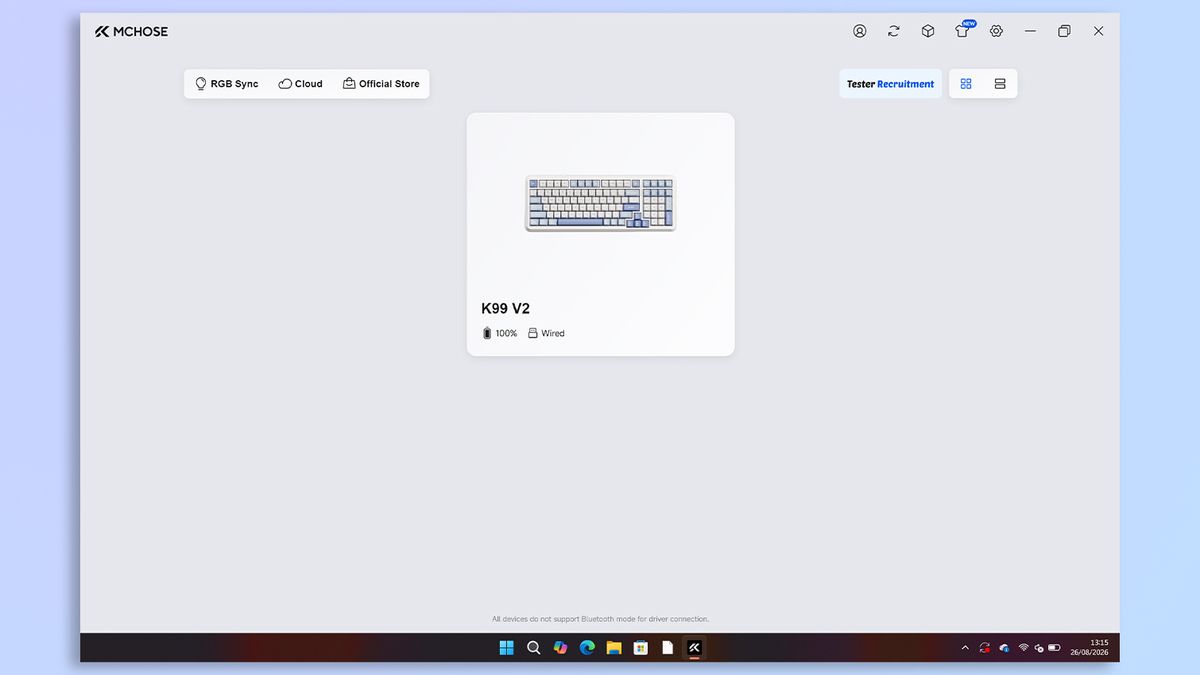
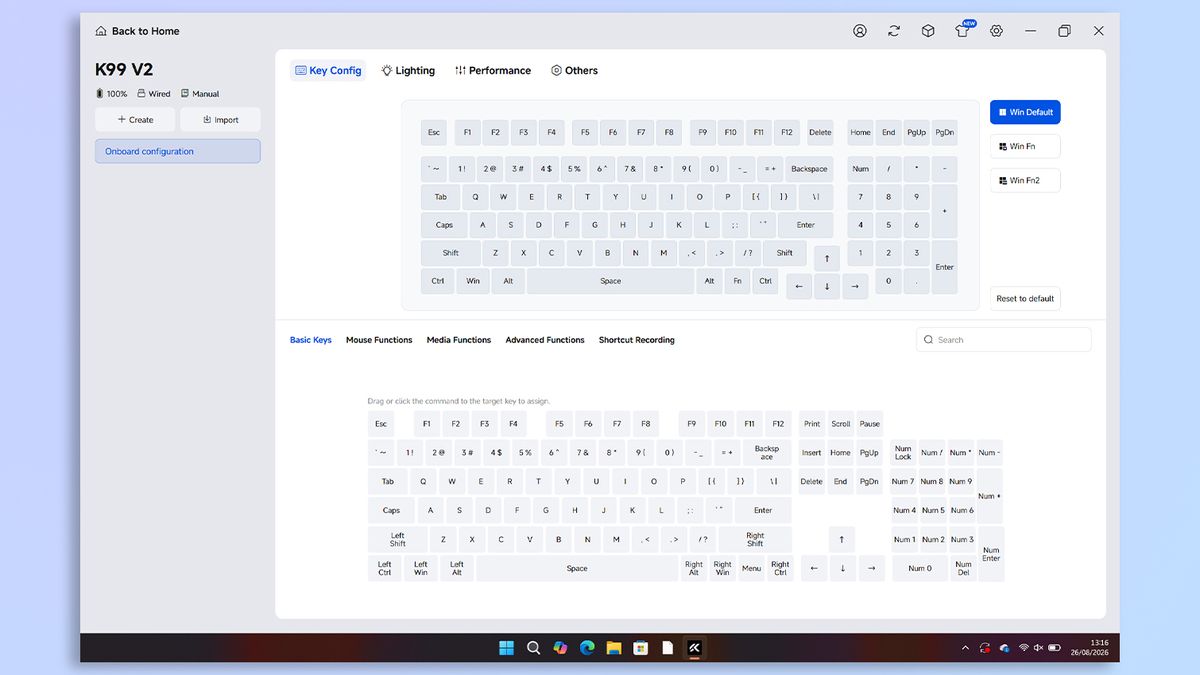
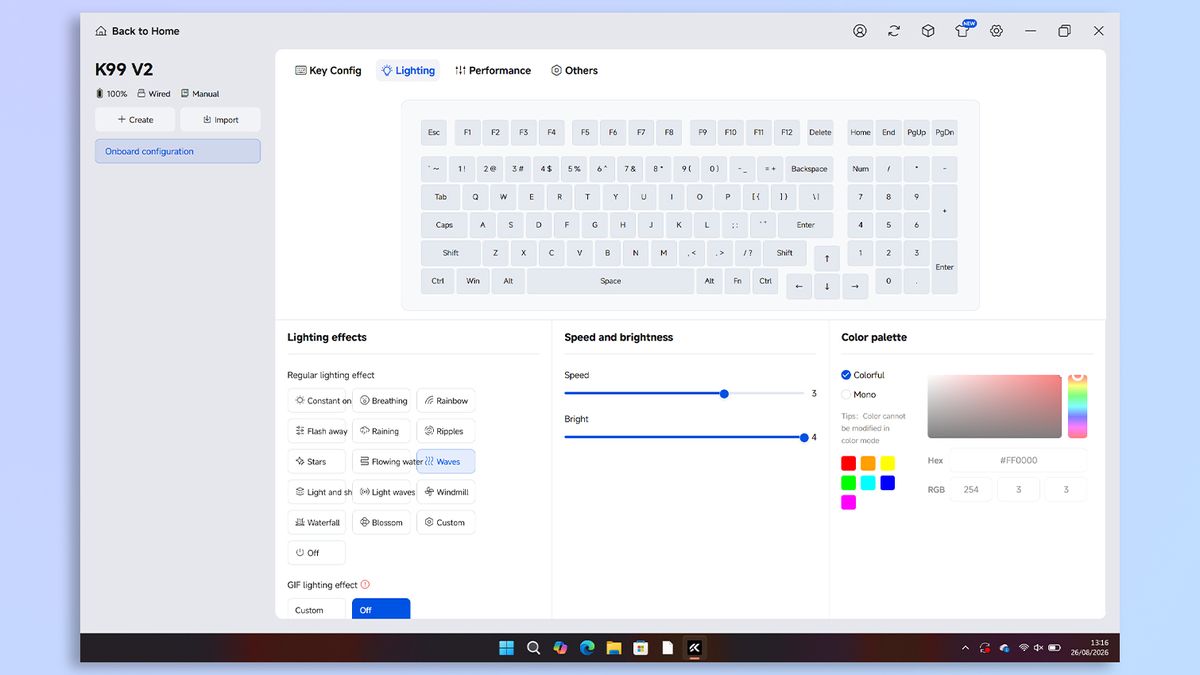
The MCHOSE K99 V2 is accompanied by M HUB Driver, a user-friendly app that enables you to customize every aspect of the keyboard. It’s available for free on Windows 10 and above, but annoyingly, it isn’t compatible with macOS (even though the K99 V2 itself is).
Once you’ve downloaded and installed M HUB Driver on a Windows machine, all you need to do is plug in the K99 V2 or connect it over 2.4GHz to customize it. The software sports a clean interface and is extremely straightforward to use. There are no annoying, intrusive pop-ups or ads — like the ones you get on Asus Armoury Crate when customizing the Asus TUF Gaming K3 Gen II ($99) — which is great. It enables you to customize the K99 V2’s RGB lighting and effects, remap its keys, record macros, and choose between three polling rates (250, 500 and 1,000Hz).
(Image credit: Tom’s Guide)
The MCHOSE K99 V2 offers a beautiful typing experience and boasts decent gaming performance, too, without breaking the bank. In the U.S., you can buy the keyboard directly from MCHOSE for $99, and in the U.K., it’s available for £78 at Amazon. It’s available at Amazon U.S., yes, but it costs a whopping $199 — holy markup, Batman!
We’ve tested some excellent keyboards in the sub-$100 price range, like the Royal Kludge S98 ($99), the Epomaker Cypher96 ($89), and the five-star NuPhy Node75 ($99). Is the K99 V2 better than all of them? Not necessarily, but if you want a mechanical keyboard for typing on all day long, you can’t go wrong with it.
MCHOSE K99 V2 review: The downs
Though the MCHOSE K99 V2 is great, it isn’t without its flaws. There’s some flex in its body, there are no tactile stock switches, and the web-based software is finicky on macOS.
(Image credit: Tom’s Guide)
Now, this is a common issue I’ve encountered when testing budget-friendly, plastic keyboards — that doesn’t necessarily make it okay, though. The MCHOSE K99 V2 has a fair bit of flex in its body, and it twists when you hold it by its sides. I’ve seen this on the Epomaker Cypher96, the MCHOSE x Unbox Therapy UT98 ($139) and the Epomaker EK68 ($89).
It’s not the end of the world, but if it’s a dealbreaker for you, the Royal Kludge S98 and the Keychron K10 V2 ($84) are solid alternatives.
(Image credit: Tom’s Guide)
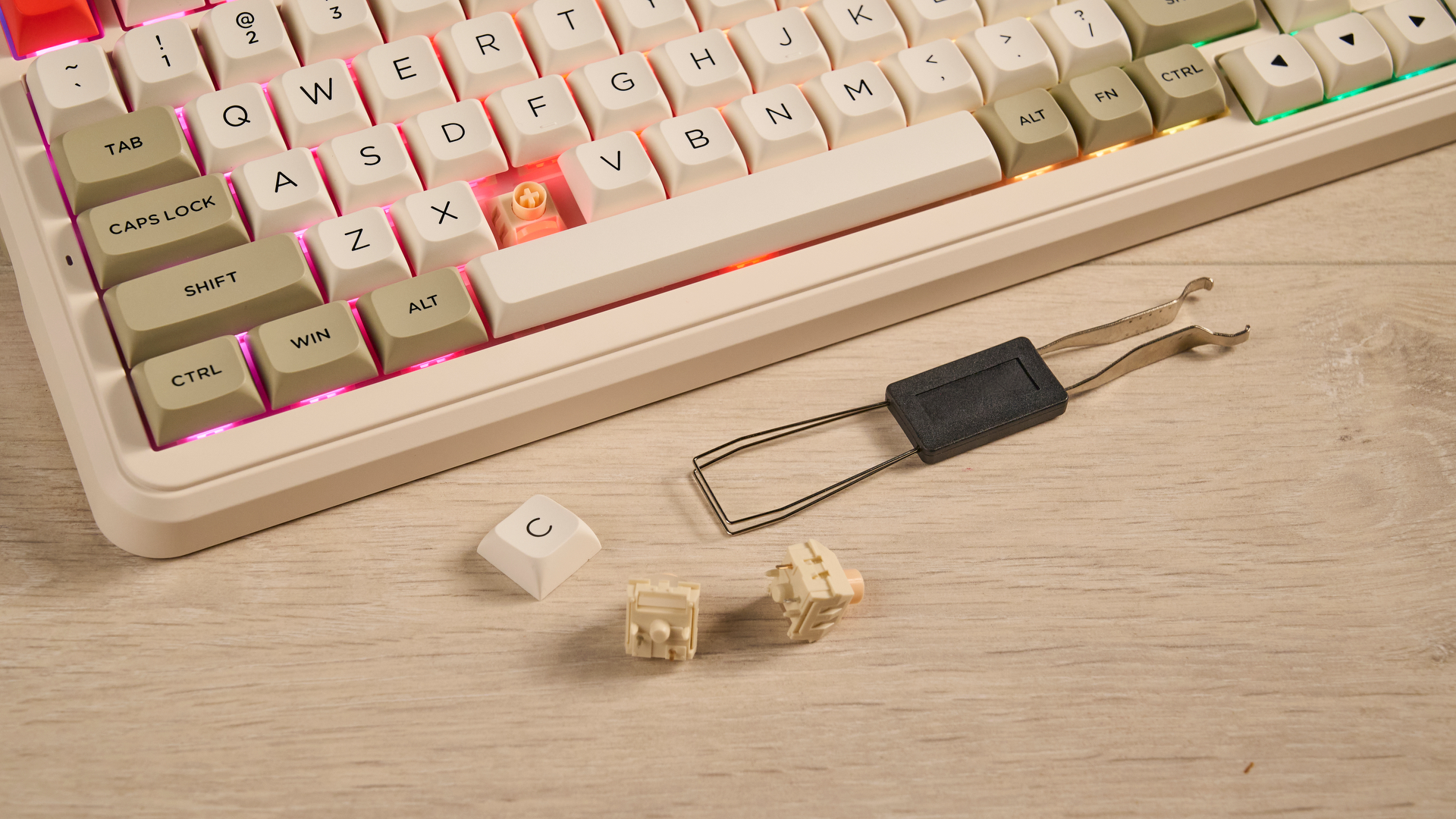
One of my biggest gripes with the MCHOSE K99 V2 is the limited stock switch choice. At checkout, you can buy either the Hyacinth or the Icy Creamsicle linears. This could be a little disheartening for fans of tactile, clicky or silent switches. The K99 V2 is hot-swappable and compatible with 3- and 5-pin south-facing switches, but you’ll need to buy them separately.
If you don’t want to purchase them separately and want more variety at checkout, I’d recommend the Keychron V1 Ultra 8K, the Royal Kludge S98 or the Royal Kludge L75 ($79).
Issues with web-based software on macOS
(Image credit: MCHOSE / Tom’s Guide)
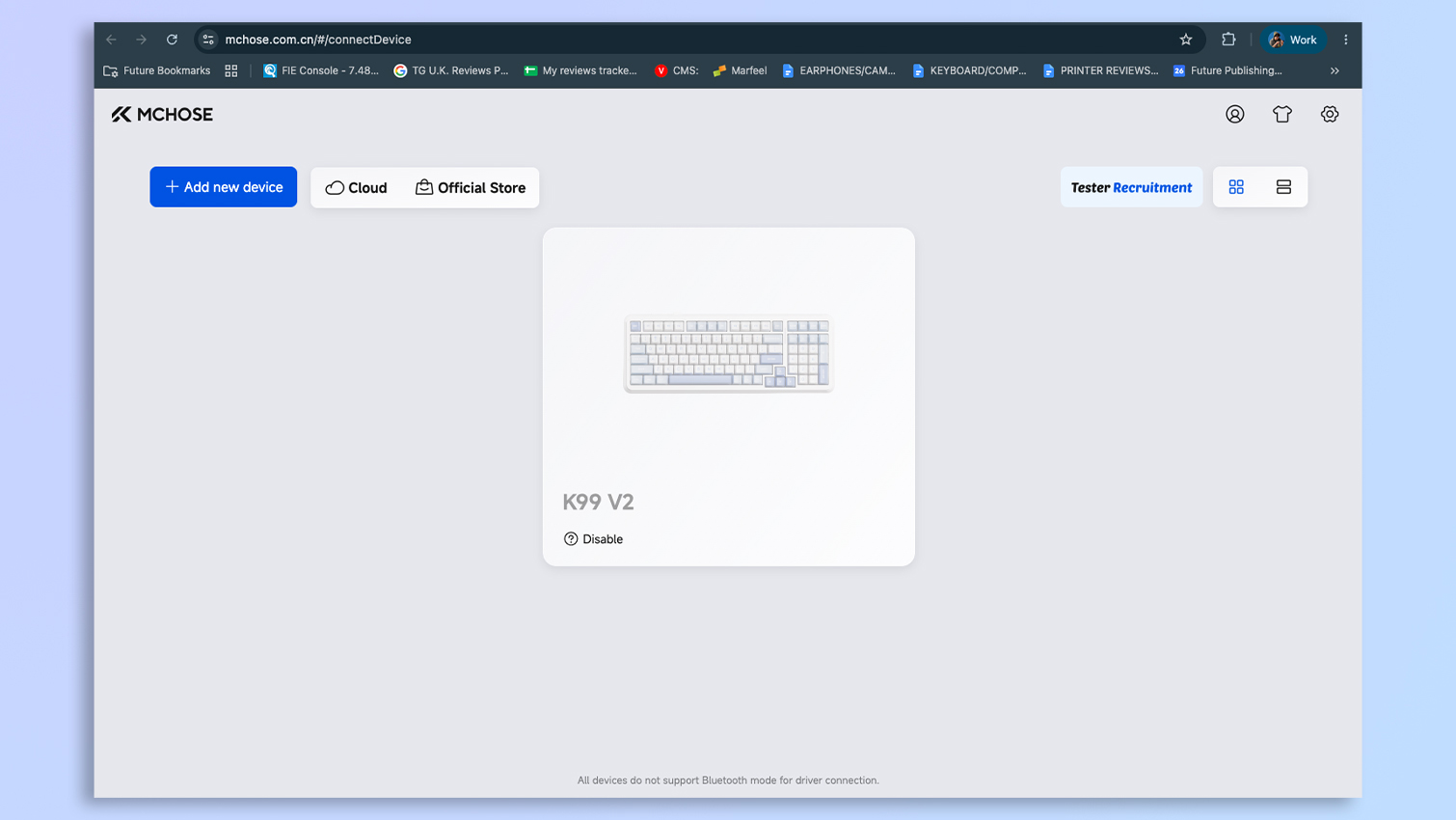
As I mentioned earlier, the MCHOSE K99 V2’s proprietary, downloadable software is extremely user-friendly — but what do you do if you’re a macOS user? You use the M HUB Web web-based software, of course… if it works, that is. Unfortunately, I couldn’t get the website to work.
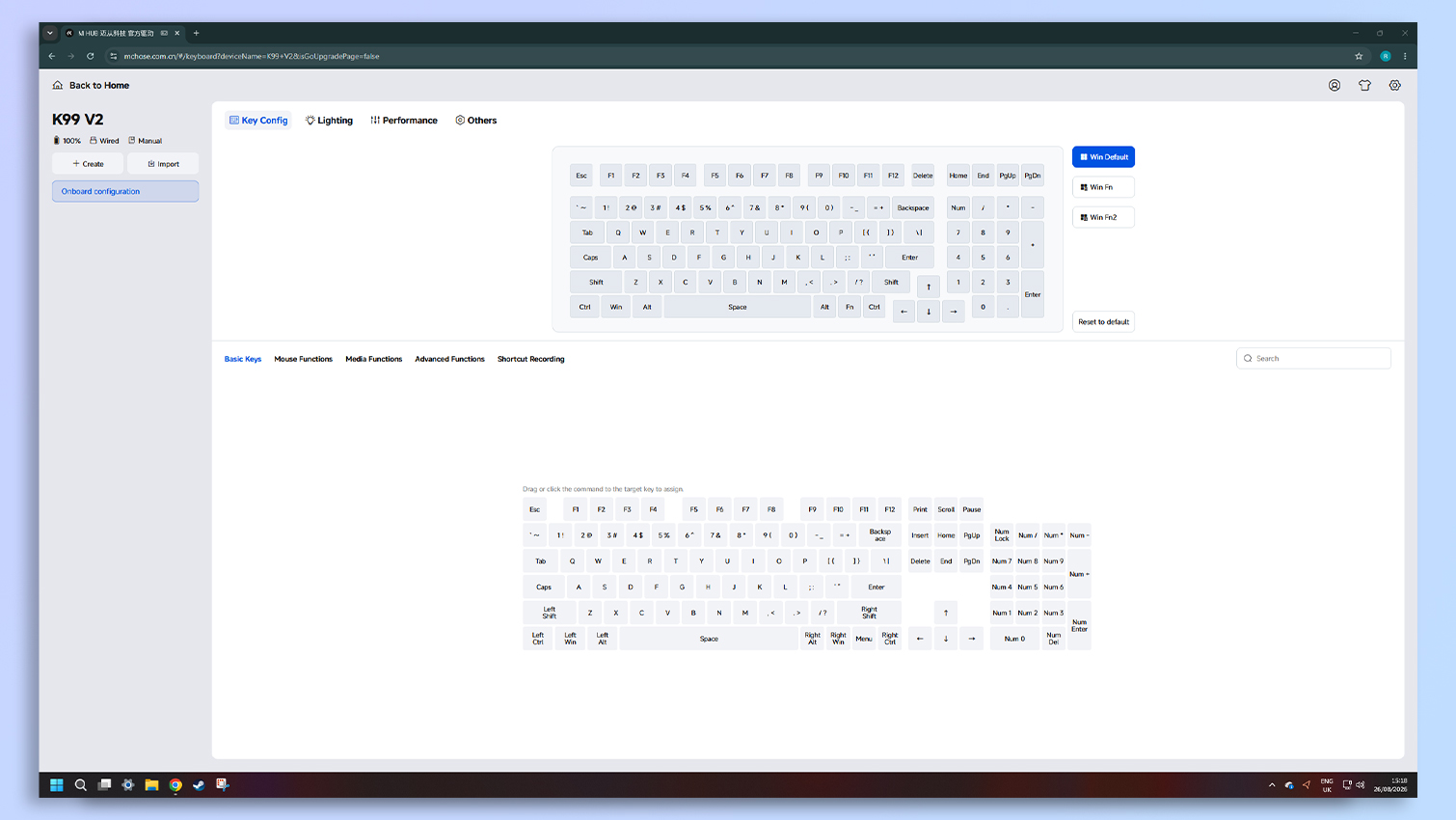
For some reason, the website noted that the K99 V2 had been disabled, and regardless of what I tried, it wouldn’t work. I tried launching M HUB Web in Google Chrome and Safari on my MacBook Air M2. No luck. I then tried it on my personal MacBook Pro M1. Still no luck. I even flashed the K99 V2’s firmware using the proprietary software on the Alienware 16X Aurora but no joy.
(Image credit: MCHOSE / Tom’s Guide)
However, the website worked just fine on the Alienware 16X Aurora. Personally, I’ve never encountered such an issue before. For instance, Keychron Launcher, VIA, and NuPhy IO seem to work fine across operating systems, so this is quite disappointing.
I’ve reached out to a MCHOSE representative to see if there’s a solution to my problems, and I’ll update the review if/when I hear back. If this is a persistent issue, it’s problematic for macOS users with no access to a Windows machine, as they won’t be able to fully customize the K99 V2. You can make some changes via key combinations, though, as per the keyboard’s manual.
(Image credit: Tom’s Guide)
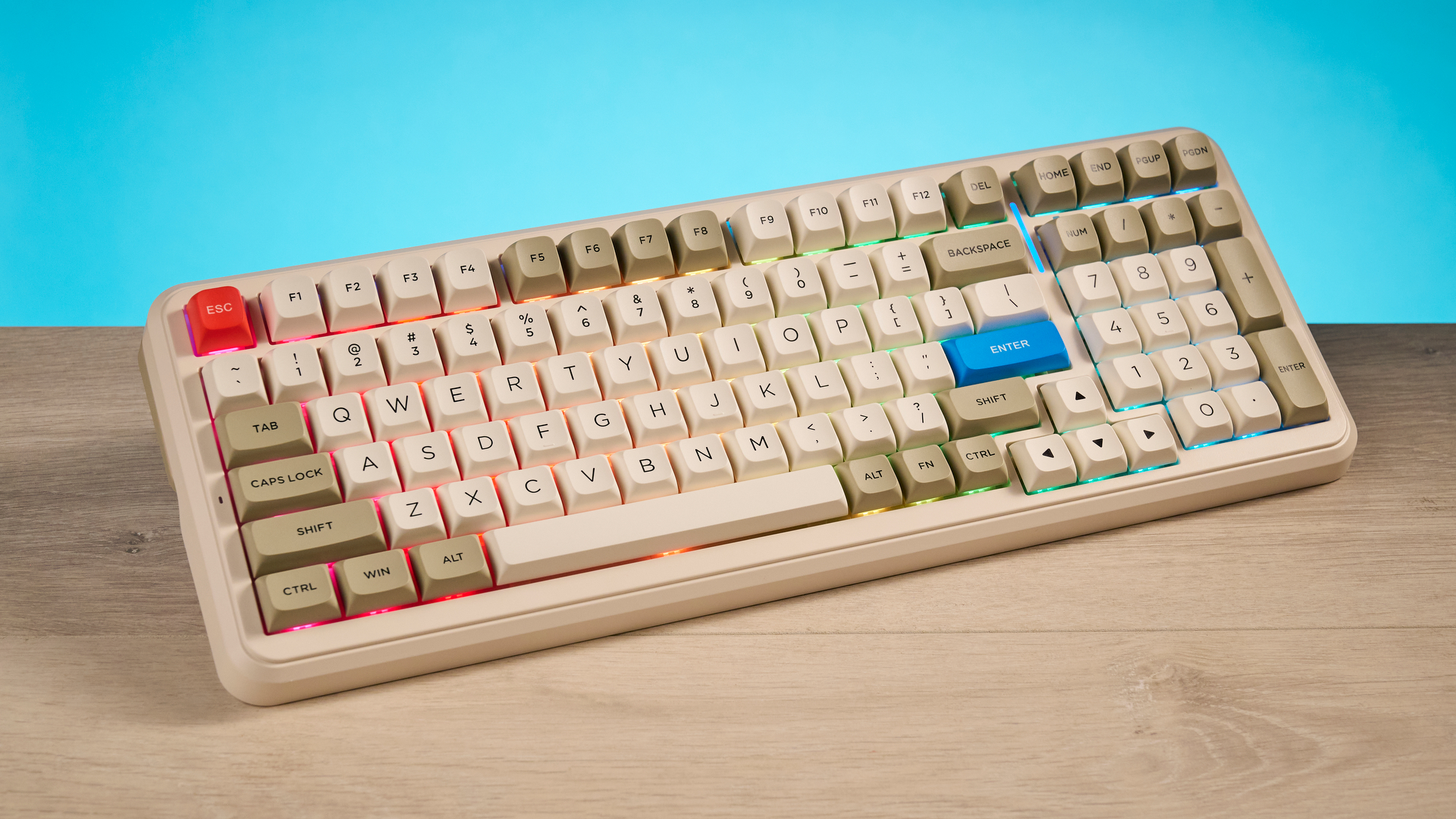
If you want a mechanical keyboard for typing all day long, the MCHOSE K99 V2 warrants a recommendation. Its stock linear switches are a joy to type on, and they don’t feel fatiguing either. The keyboard packs a 1,000Hz polling rate for casual gaming, too, and its proprietary software makes customization a breeze.
On top of that, the K99 V2 sounds beautiful with a creamy-thocky sound profile, and it sports a lovely, colorful design. But it’s far from perfect. There’s some flex in the body and you’re confined to only two stock switch sets — both of them are linear, sadly. Web-based software sounds good on paper but in practice, I found it to be finicky on macOS.
If none of those flaws sound like dealbreakers, then the K99 V2 could be yours for just under $100. At the end of the day, if you need a keyboard that’s simply delightful to work on, the K99 V2 is a hoot.
MCHOSE K99 V2: Price Comparison