
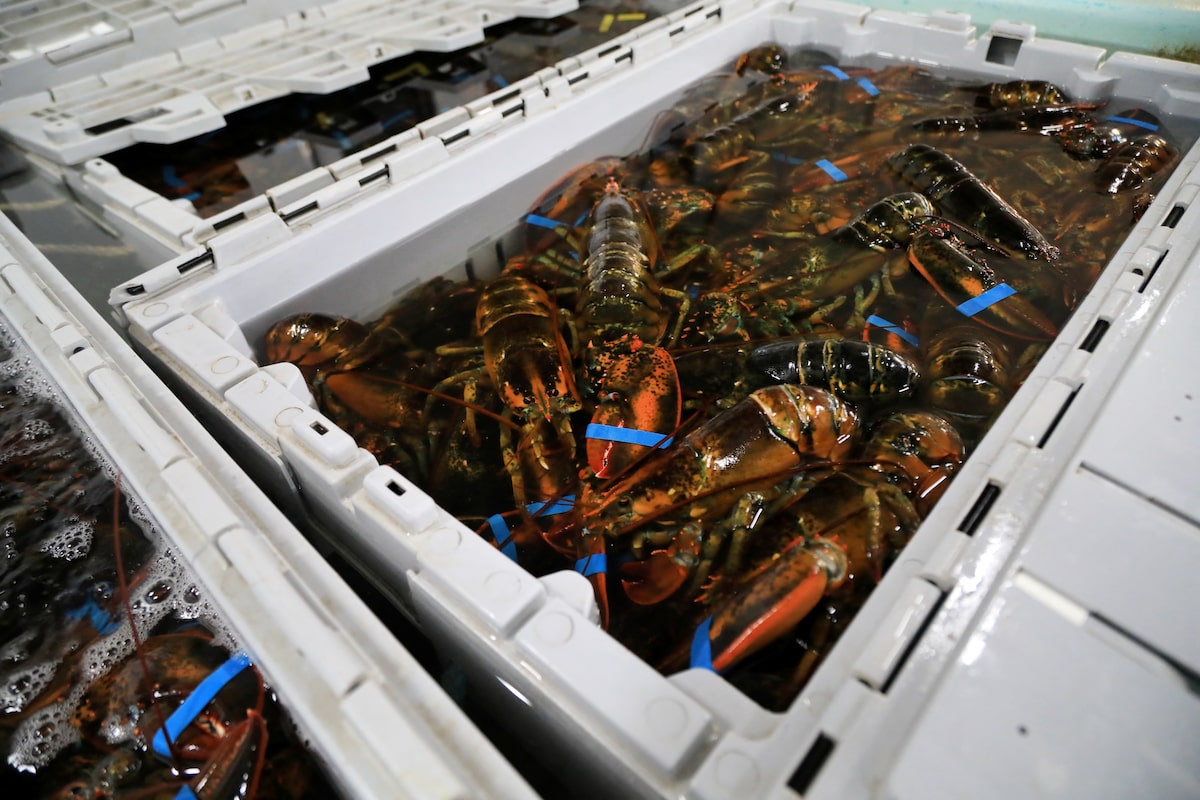
Lobsters sit in crates at The Lobster Co in Kennebunk, Maine, on May 13. Huge volumes of seafood caught in coastal waters off Maine are processed in plants in New Brunswick.Lauren Owens Lambert/Reuters
Ottawa reversed its planned retaliatory tariffs targeting U.S. fish and seafood after warnings that the levies could damage Atlantic Canada‘s seafood industry, including the processing in New Brunswick of Maine lobsters.
Canada announced late Wednesday that it is removing the items from a list of retaliatory tariffs that are due to kick in on Sept. 8.
Both U.S. and Canadian politicians on the Atlantic seaboard welcomed the policy reversal. Canadian fishermen and restaurateurs, who saw the price of shrimp rise steeply in India after the announcement of the planned tariffs, also expressed relief at the government U-turn.
Two federal government sources said the change was made after it became apparent that imposing tariffs on U.S. seafood could harm Atlantic Canada’s seasonal fishing and fish processing, which is closely integrated with the U.S. industry.
Huge volumes of seafood caught in coastal waters off Maine are processed in plants in New Brunswick. In the fall, almost half of the Maine lobster catch goes to Canada for processing. The planned tariffs would have been applied to those lobsters.
Four takeaways from Canada’s tariff counterpunch
The Globe and Mail is not naming the sources, who were not authorized to speak publicly about the matter.
In a statement, the Canadian Independent Fish Harvesters’ Federation thanked the government “for listening to the concerns of the industry.”
“The seafood sector is fundamentally different from many other industries. Independent fish harvesters operate in a highly integrated, time-sensitive supply chain that crosses provincial and international borders,” it said. “Harvesters, buyers, processors, trucking companies, cold-storage facilities, wholesalers and retailers are interconnected. In many cases, the market for a Canadian landed product is dependent upon an established processing, distribution and customer network in the United States.”
Canada’s Fisheries Minister welcomed the news of the reversal on Wednesday. In a social-media post, minister Joanne Thompson said the adjustments to the tariff list were made “to protect our economy.”
“The fish and seafood sector drives Canada’s coastal economy,” she added.
Earlier this week, after the list of retaliatory tariffs was announced, Maine Senator Angus King warned that imposing duties on U.S. seafood would have a devastating impact on his state’s lobster fishery.
U.S. businesses fear prolonged trade war with Canada could permanently strain cross-border ties
He also warned that a 25-per-cent tariff on lobsters, beginning in September, would affect the enormous shipments that head from Maine to Canada for processing in the fall.
”If the President’s misguided trade war further escalates, the processed lobsters could be taxed again when they are shipped back from Canada to the United States,” he said. “If the President doesn’t relent, this hammer blow to hardworking Maine people would devastate the Maine lobster industry and leave many of these hardworking people literally high and dry.”
Maine Senator Susan Collins said in a social-media post Thursday that she very much appreciated Canada’s decision to remove seafood and fish products from its retaliatory tariff list.
“These tariffs would have caused tremendous harm to Maine’s lobstermen, disrupting one of their most important markets during the fall fishing season,” she said.
Restaurants Canada chief executive officer Kelly Higginson said in an interview Thursday that although more than half of fish and meat purchased by the country’s restaurants comes from Canadian suppliers, much of it is sourced internationally.
Loblaw to restore country-of-origin, countertariff labels amid renewed ‘Buy Canadian’ push
She said that if Ottawa had imposed the planned tariffs, restaurants sourcing seafood such as shrimp from the U.S. would have had to tap into the international supply, putting pressure on stocks and driving up prices.
“We had some operators who might be able to replace that U.S. seafood with product from other countries, but the increased demand for those alternatives was going to put the pressure on the supply and the price,” she said. “We had a few operators who we spoke to, who source their shrimp from India, and had seen a price increase of almost 20 per cent almost immediately come through.”
Ms. Higginson said there were concerns that the planned tariffs would put the American fish industry in “a lot of distress” and could lead to U.S. retaliation. She said she was pleased Ottawa had listened and made a swift and “smart decision” to cancel the proposed tariffs.
John Fragos, a spokesperson for Finance Minister François-Philippe Champagne, said in a statement that the government had been “working with and listening to stakeholders and provinces all throughout this process.”
“That has informed our response and crucially helped us adjust our support measures to ensure our sectors and workers’ immediate needs and reality are acted on,” he said. “This decision was made in the interest of strengthening Canada’s sectors and our tariff response – and to better match the American tariffs dollar for dollar, rate for rate.”