
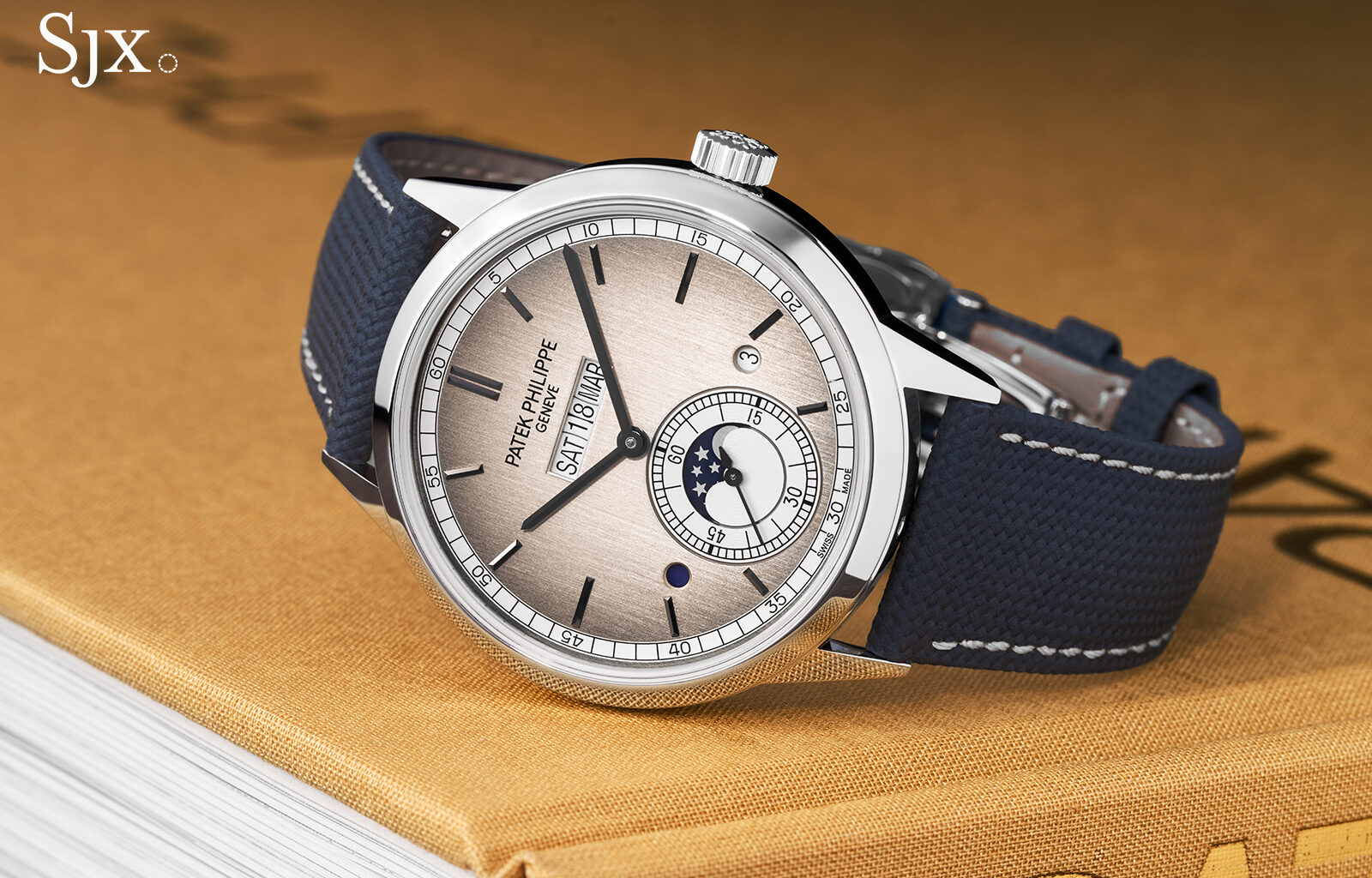
Patek Philippe’s latest take on its flagship perpetual calendar is the In-Line Perpetual Calendar ref. 5236P-011 with a “gradient silver” dial. Though a cosmetic update to a model that’s only been in production since 2021, the new dial is unexpectedly appealing, giving the watch a striking different feel from its predecessors.
Patek Philippe’s most advanced calendar movement, the cal. 31-260 PS QL inside the ref. 5236P is a latest-generation base movement matched with a newly-developed perpetual calendar module. The movement is now in the third generation of the reference; the ref. 5236P-011 replaces the ref. 5236P-010 with a “rose gilt” dial that was only in the catalogue for two years.
Initial thoughts
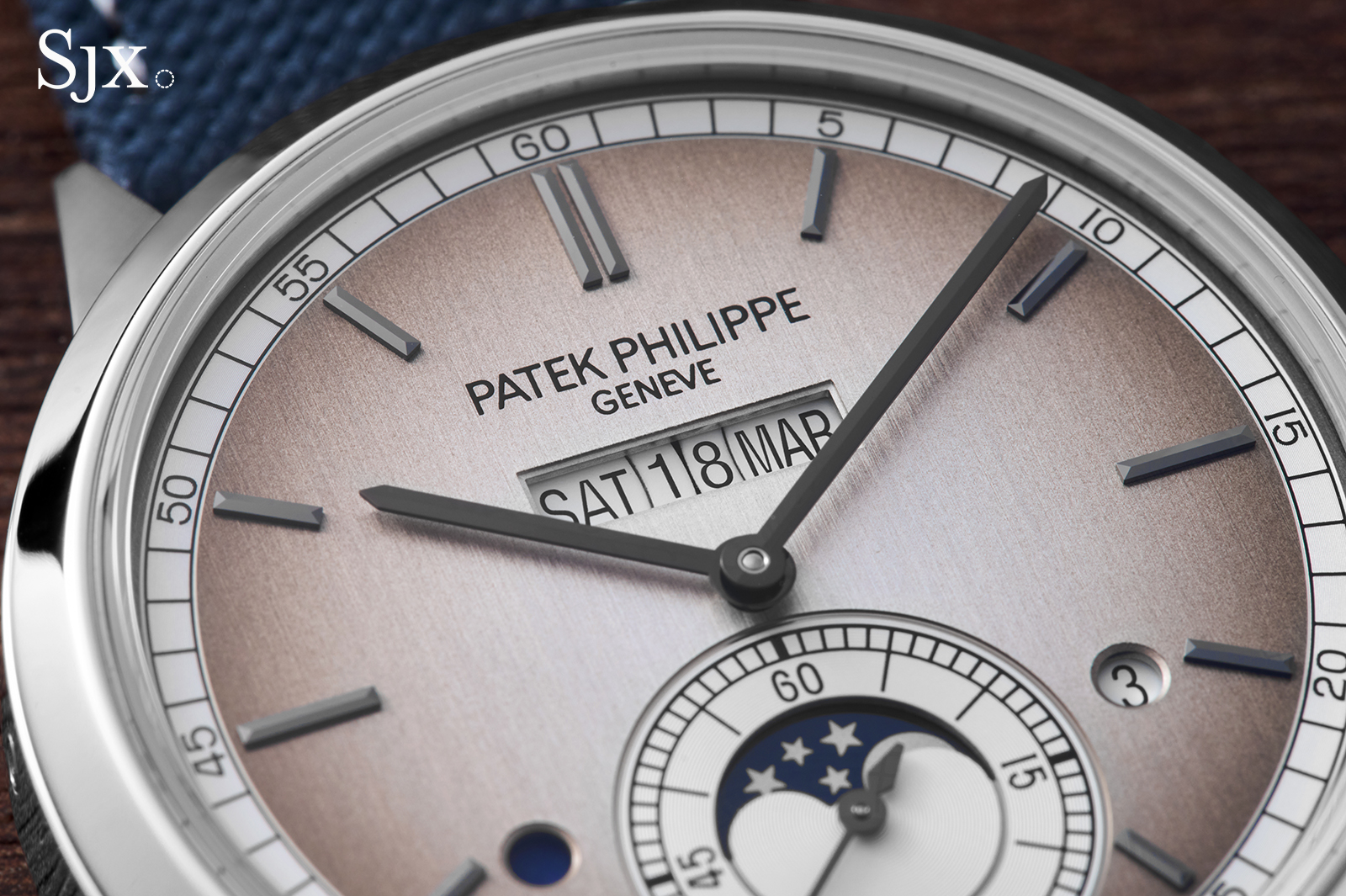
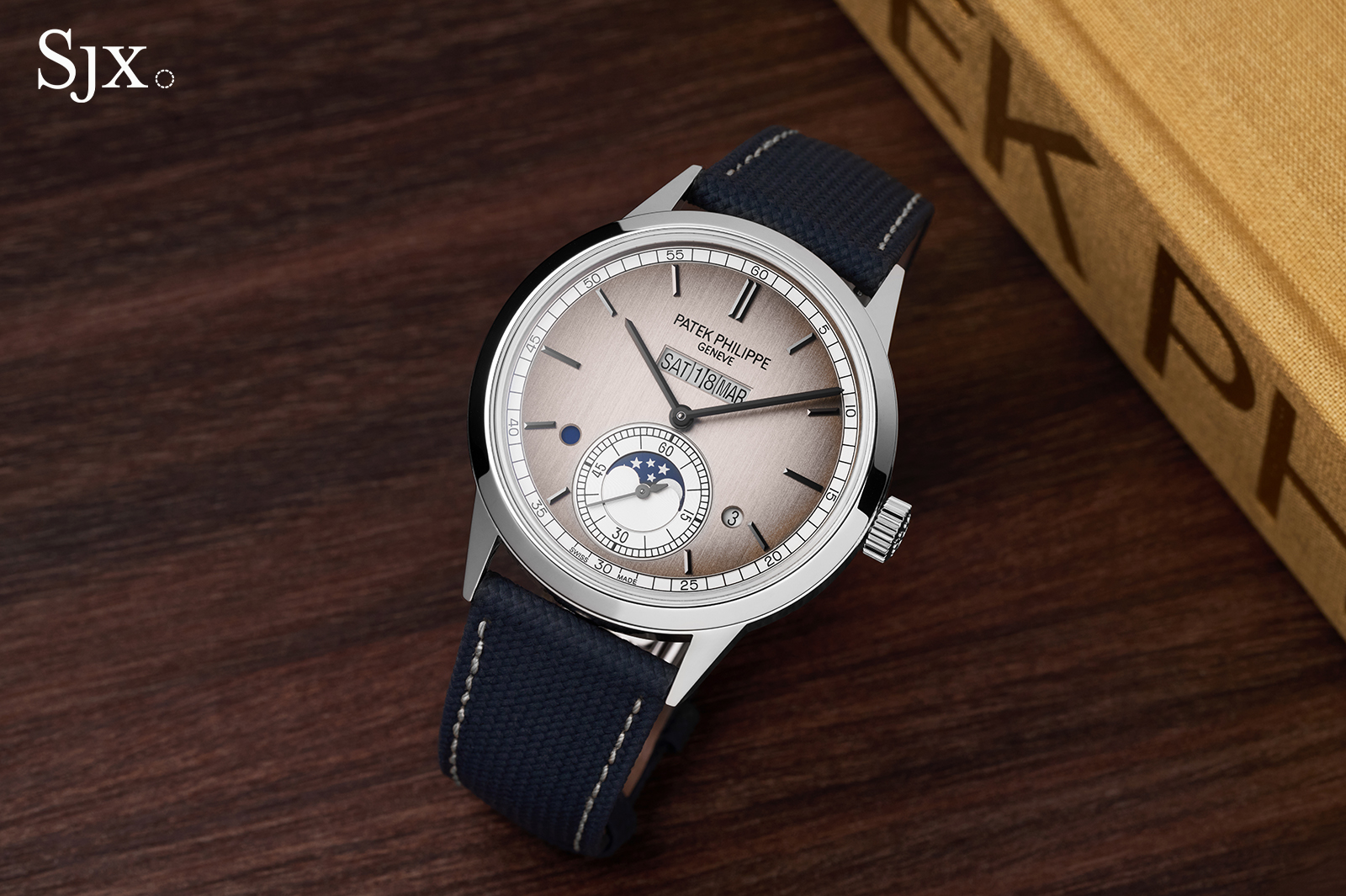
The ref. 5236P-011 is a new face for an existing model. Though the design remains unchanged, the dial finish that darkens towards the edges gives it a more modern feel. The composite strap adds to the modern feel, though the strap might be a bit too sporty for the watch. Paradoxically, the smoked dial finish also brings to mind aged or “tropical” dials on vintage watches.
The rest of the watch stays the same, but it’s a good one. The ref. 5236P is an impressive watch in both technical and physical terms – it’s the brand’s most advanced perpetual calendar and also its largest. The size and weight are reassuring, and actually bring to mind complicated models from a rival brand from Germany. But the case is made up of lots of flat surfaces and entirely polished, which makes it somewhat more liable to wear.
But the case size is not merely vanity; the base movement is a large calibre while the calendar module is even wider in order to accommodate the linear display. Almost perfectly symmetrical, the calendar is both legible and intuitive, but a lot is going on under the dial to pull it off. The simplicity of the in-line calendar belies the complexity underneath.
While Patek Philippe deserves credit for the calendar’s construction, but it is still an old-school “grand lever” mechanism at heart, bringing with it the need for corrector pushers that need a stylus and somewhat inconvenient calendar setting.
The only downside of the ref. 5236P-011 is its price. Already the original iteration was expensive at launch, and it’s only climbed since then. At US$156,039, the ref. 5236P-011 costs about 10% over the equivalent from A. Lange & Söhne. No doubt part of the price stems from the name; some might say there is nothing comparable to Patek Philippe, just as Ferrari stands alone in automobiles.
Linear calendar
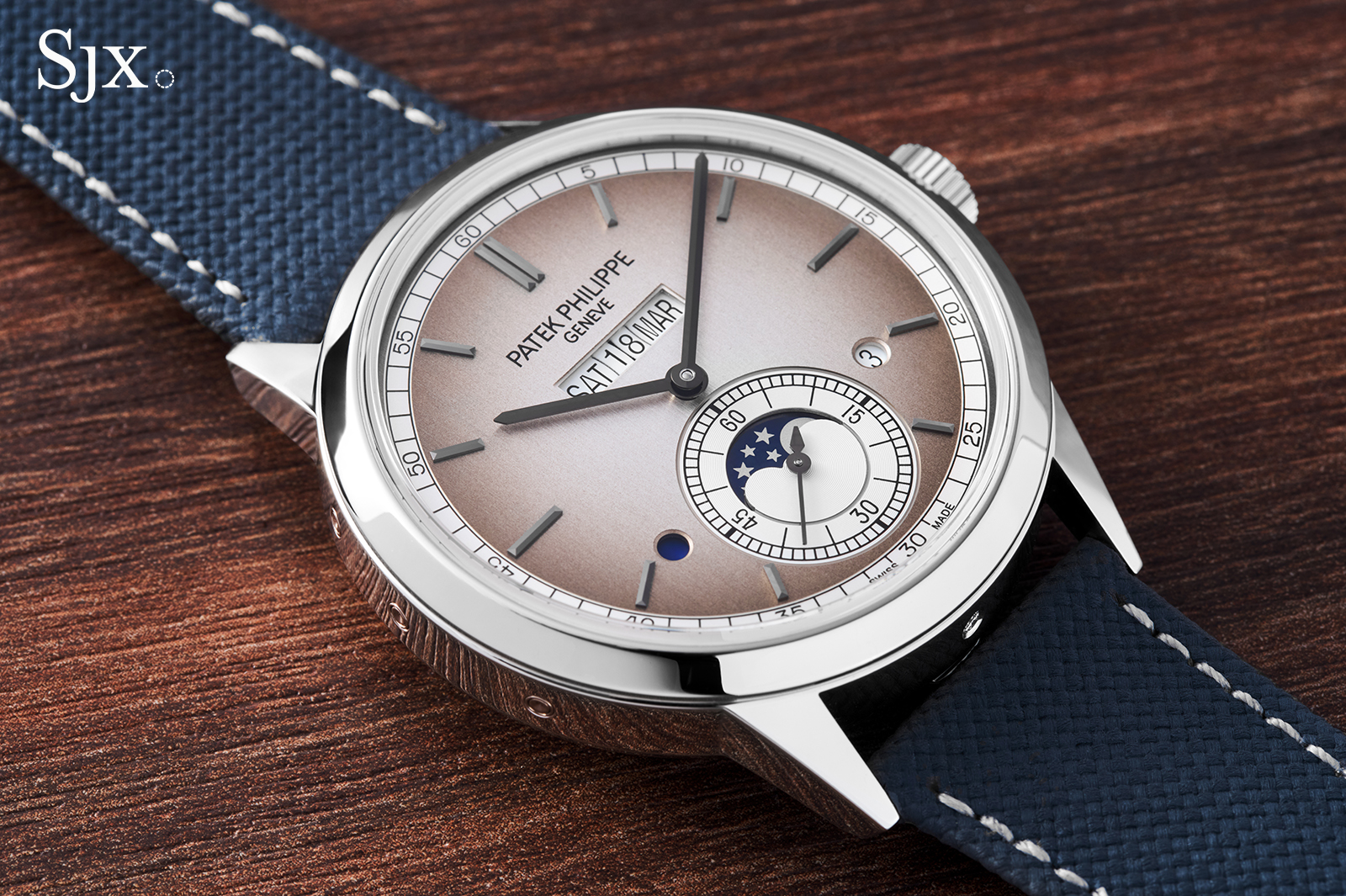
The new ref. 5236P is exactly the same as its predecessors in every way except for the facelifted dial. The case is still platinum and retains the same design that’s modelled on the refs. 3448 and 3450, both perpetual calendar models from the 1960s nicknamed “Padellone”, Italian for “small frying pan”, for the case shape.
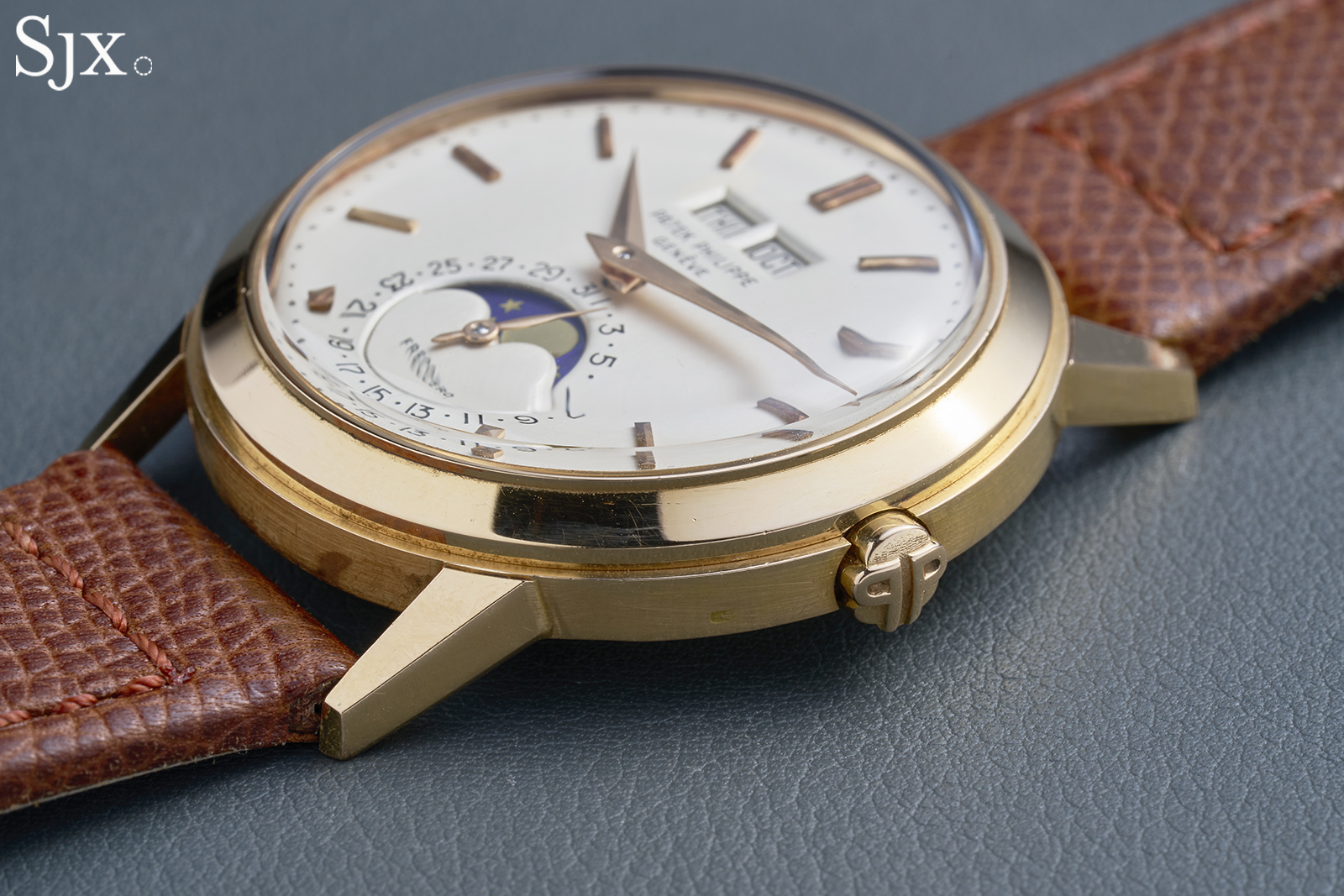
The vintage ref. 3448 “Padellone”; the ref. 5236P is much larger but proportionally thinner than its vintage counterpart
The ref. 5236P case is a large one, both bigger and thicker than most other Patek Philippe calendar models. It’s 41.3 mm wide, but still a relatively thin 11.07 mm; Patek Philippe watches are usually as thin as possible, which is a good thing.
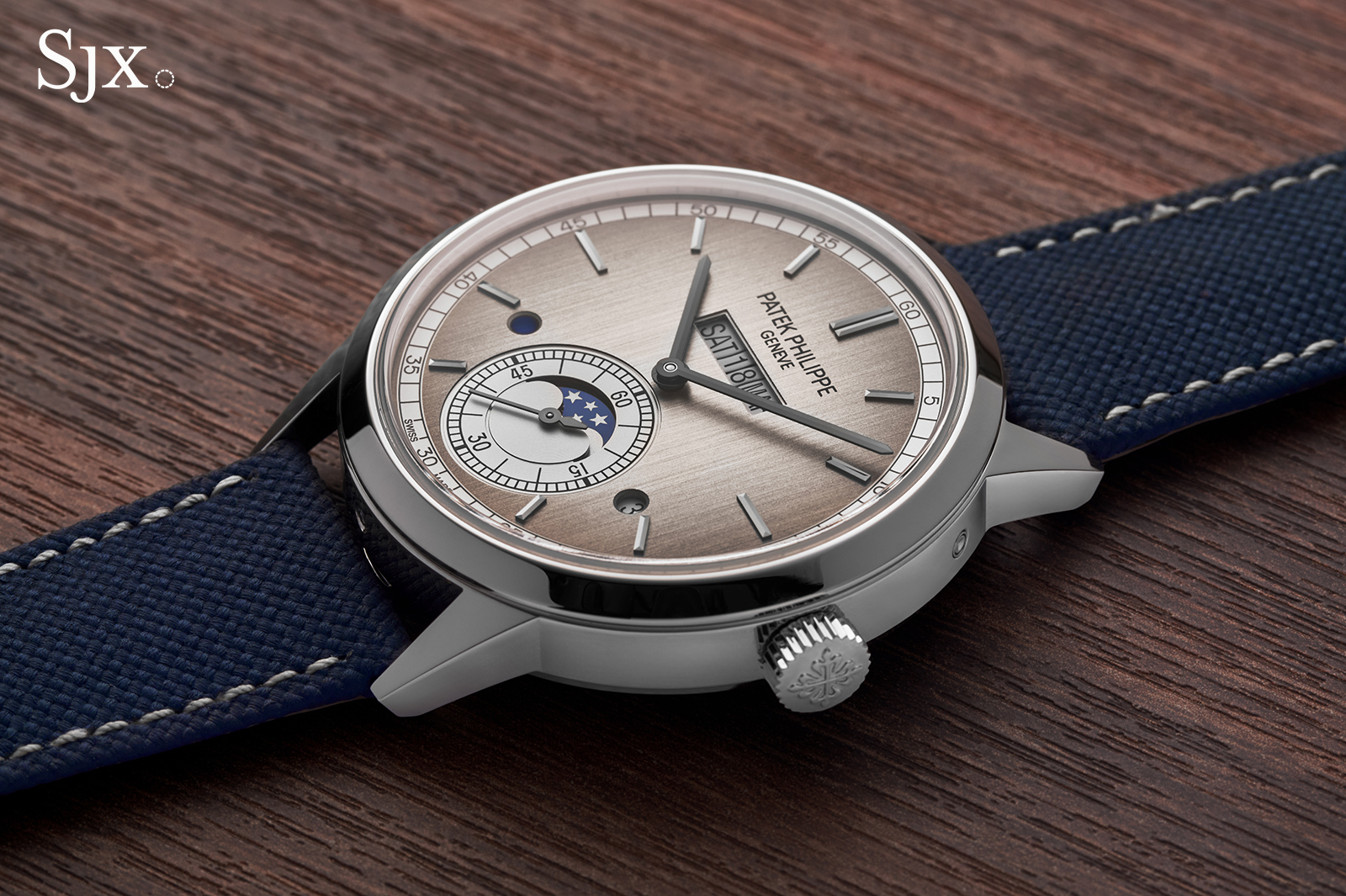
The case has four pushers recessed on its flanks to set each of the calendar indicators, as is the norm for Patek Philippe calendar watches, whether perpetual or annual.
Each indicator has to be set individually, and a stylus is required for this, making the process somewhat inconvenient. However, this, as well as other Patek Philippe perpetual calendar models, is delivered with a winder box, which theoretically makes setting unnecessary.
Still, it would be useful to utilise a simpler setting system, as multiple brands now do. That said, Patek Philippe is nothing if not conservative, and it feels like the brand is very much committed to the calendar-pusher format.
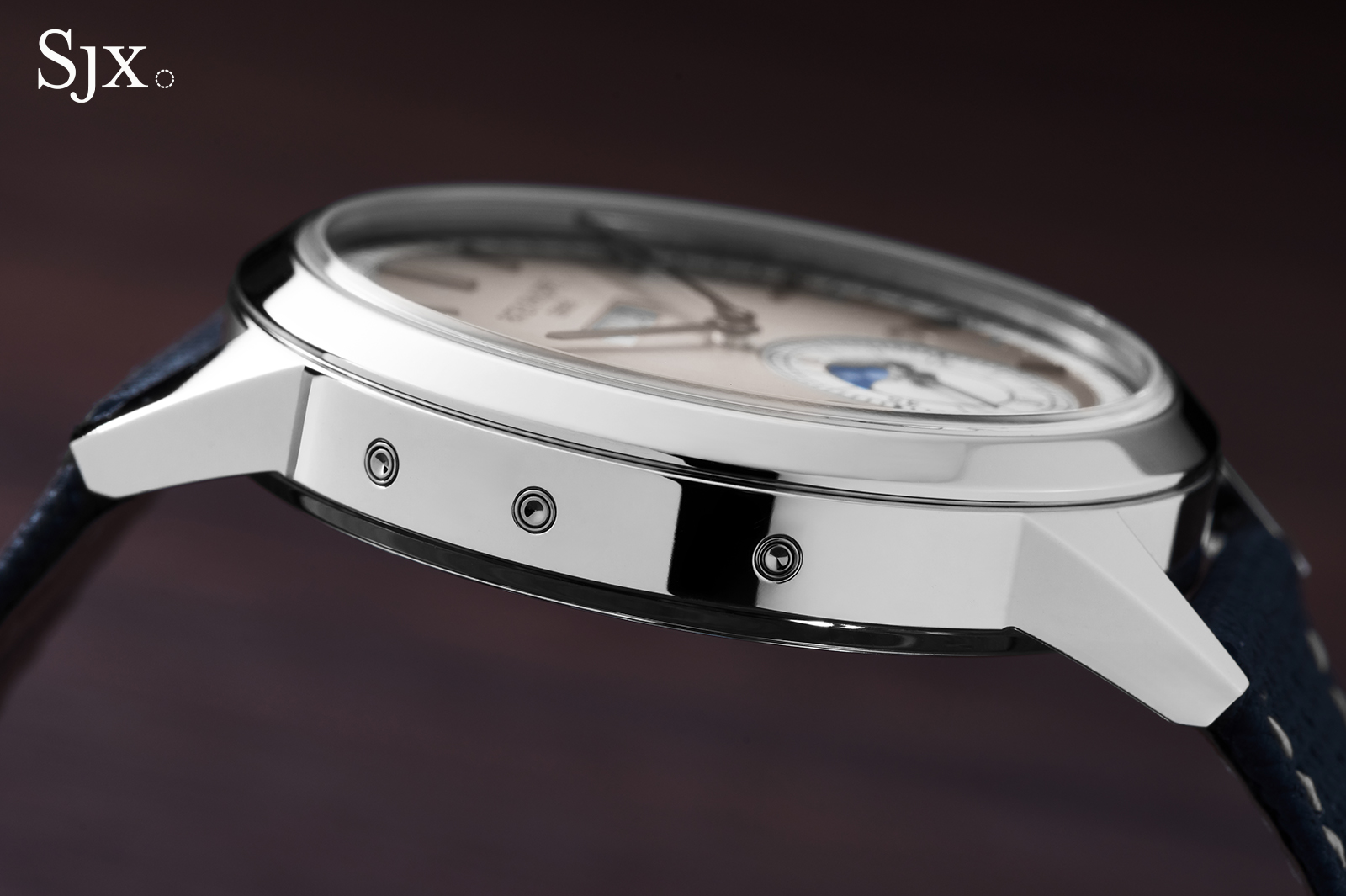
The size of the watch is in part due to the calendar display, which requires a large calendar plate in order to accommodate the one-line display of day, date, and month, rendered on a readable scale to boot. The last time Patek Philippe did this before the ref. 5396P was on pocket watches, reflecting the size of the mechanism.
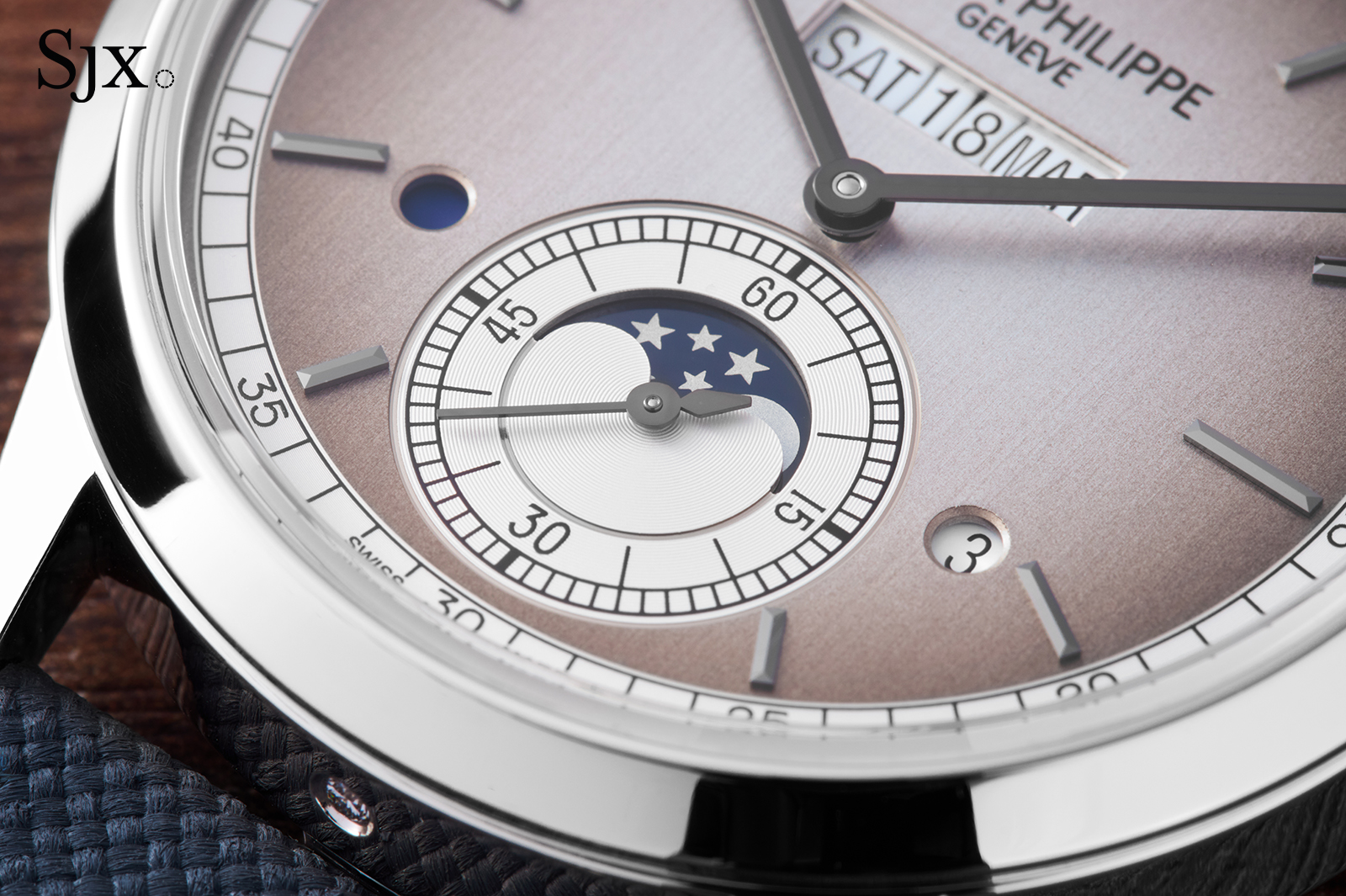
Like many Patek Philippe perpetual calendars, this has a pleasing symmetry on the dial. Nothing has changed here in terms of design, or even the dial finish, with the sole difference being the colour treatment. The dial retains the vertically brushed finish, but it is now silvered with a black gradient applied to its periphery. This gives it something of a vintage feel since the effect brings to mind ageing on vintage watch dials.
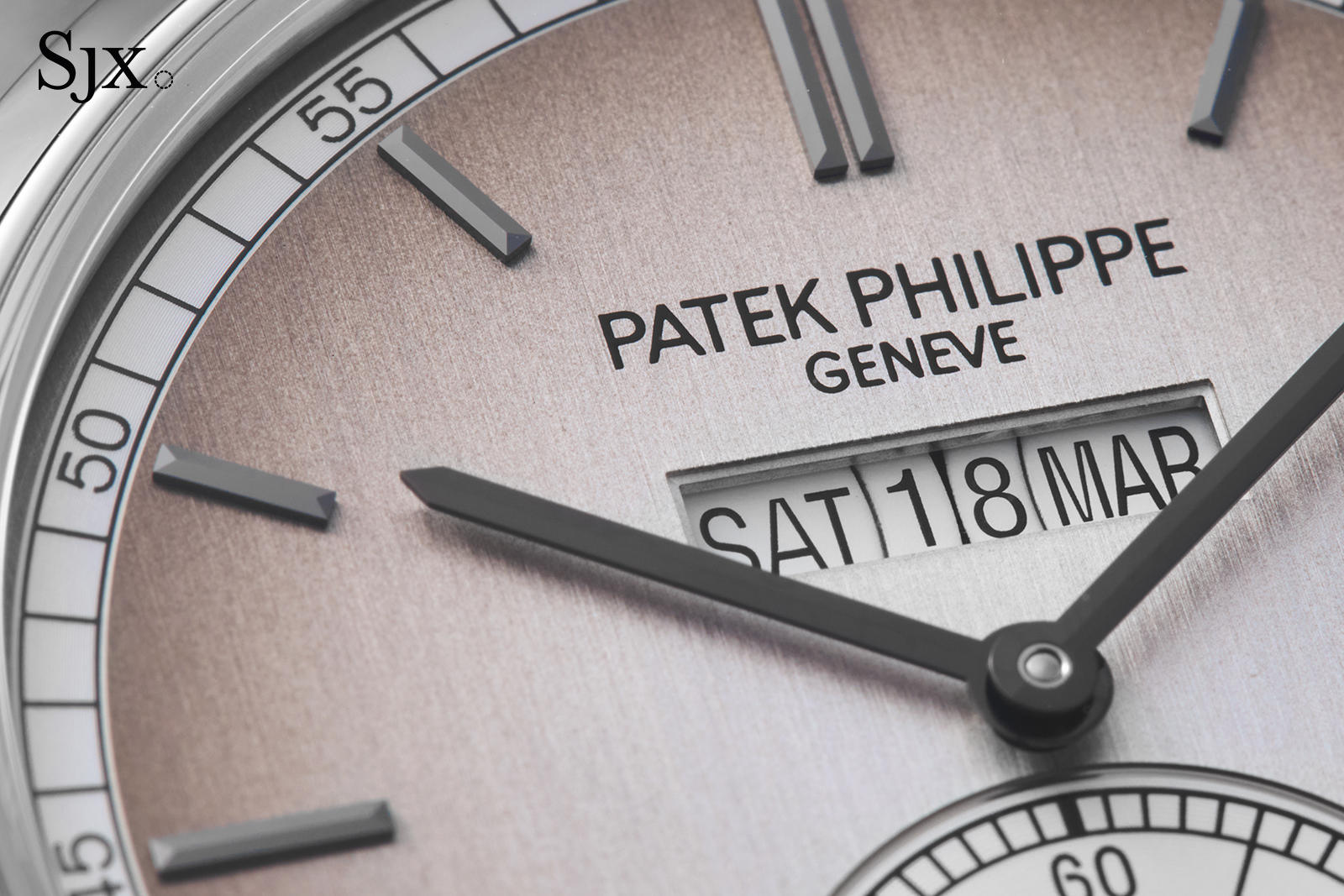
The dial quality is as expected for Patek Philippe, which is to say high. The hands and applied indices are black-coated white gold, while the details on the dial itself are neat.
That said, the dial is not elaborate. Given the price, it could be a fancier. The moon phase disc, for instance, is common to all Patek Philippe calendar watches, regardless of price. And the black-on-white calendar discs are a little incongruous with the dial.
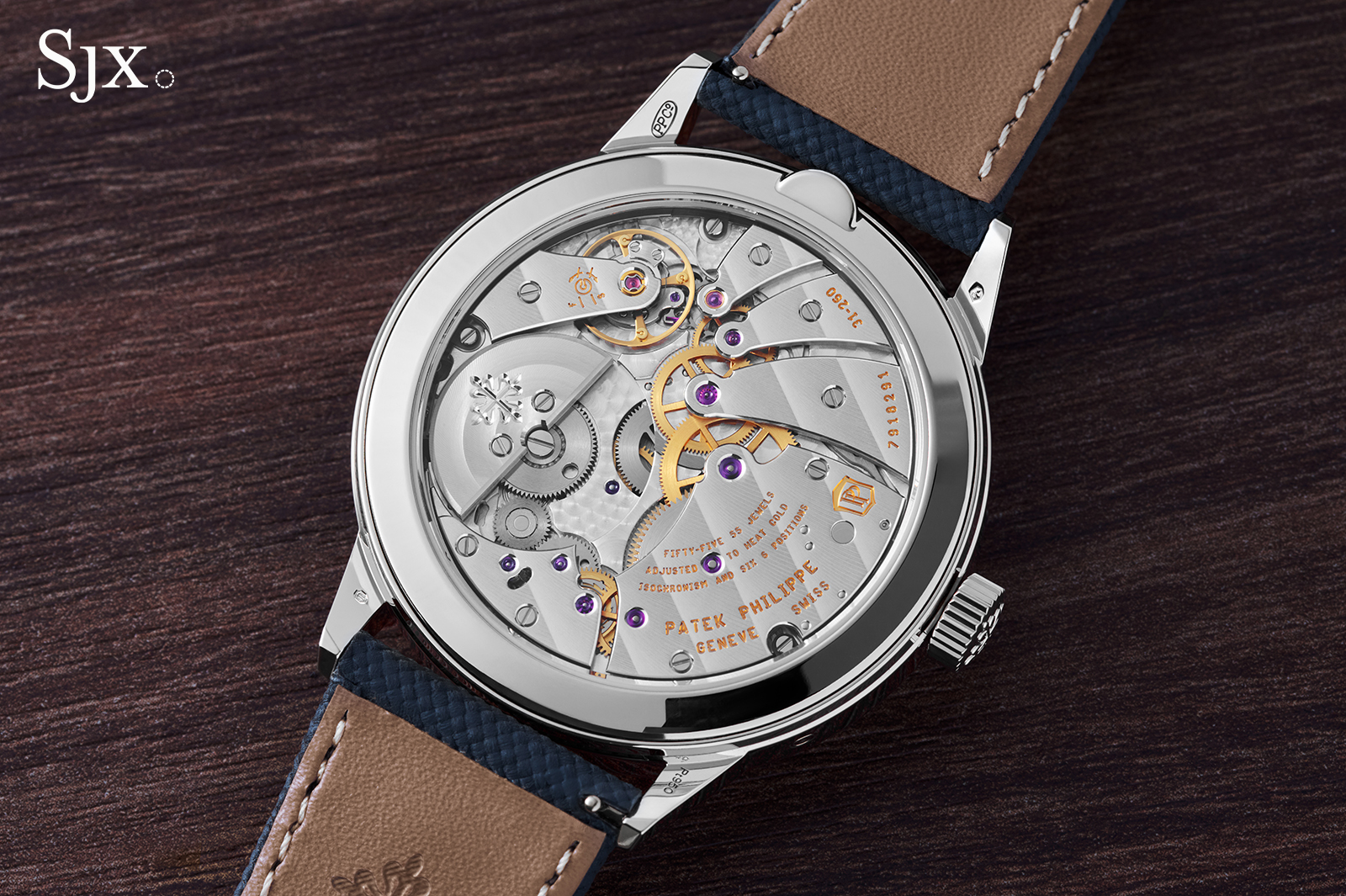
The cal. 31-260 PS QL inside is unchanged from prior references, but as Patek Philippe’s newest and most sophisticated perpetual calendar movement, there isn’t much that needs changing, at least within the constraints of industrial-haute horlogerie at scale.
While Patek Philippe is clearly the most successful watchmaker in its class, the brand has evidently dedicated itself to better manufacturing, albeit at a gradual, typically Swiss pace – and the cal. 31-260 PS QL illustrates this.
The perpetual calendar module is the most complex in Patek Philippe’s repertoire. The linear display is legible with a simplicity that belies the complexity of the mechanics behind it. Besides the display, the movement also incorporates multiple, esoteric patented refinements to enhance functionality, almost all of which the wearer will never notice, which is the usual Patek Philippe style.
That said, the calendar mechanism is fundamentally a traditional “grand lever” type with the associated drawbacks of a “dragging” changeover for the display and multiple pushers in the case to advance the calendar indicators.

The calendar display and its gears. Image – Patek Philippe
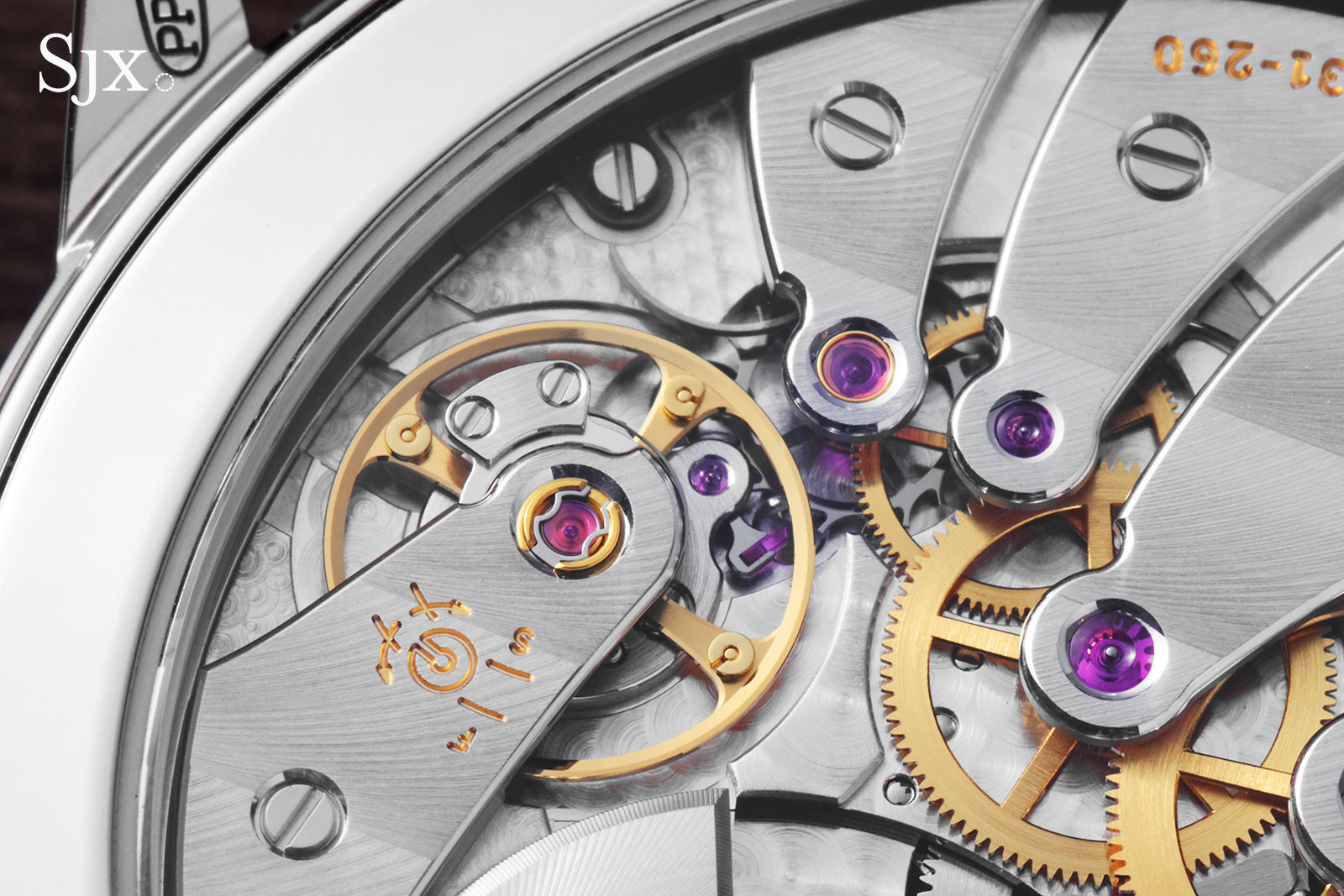
The base movement is a large, thin calibre that’s one of the brand’s latest generation movements, with an architecture and decoration that underscores Patek Philippe’s advances in both construction, design, and finishing.
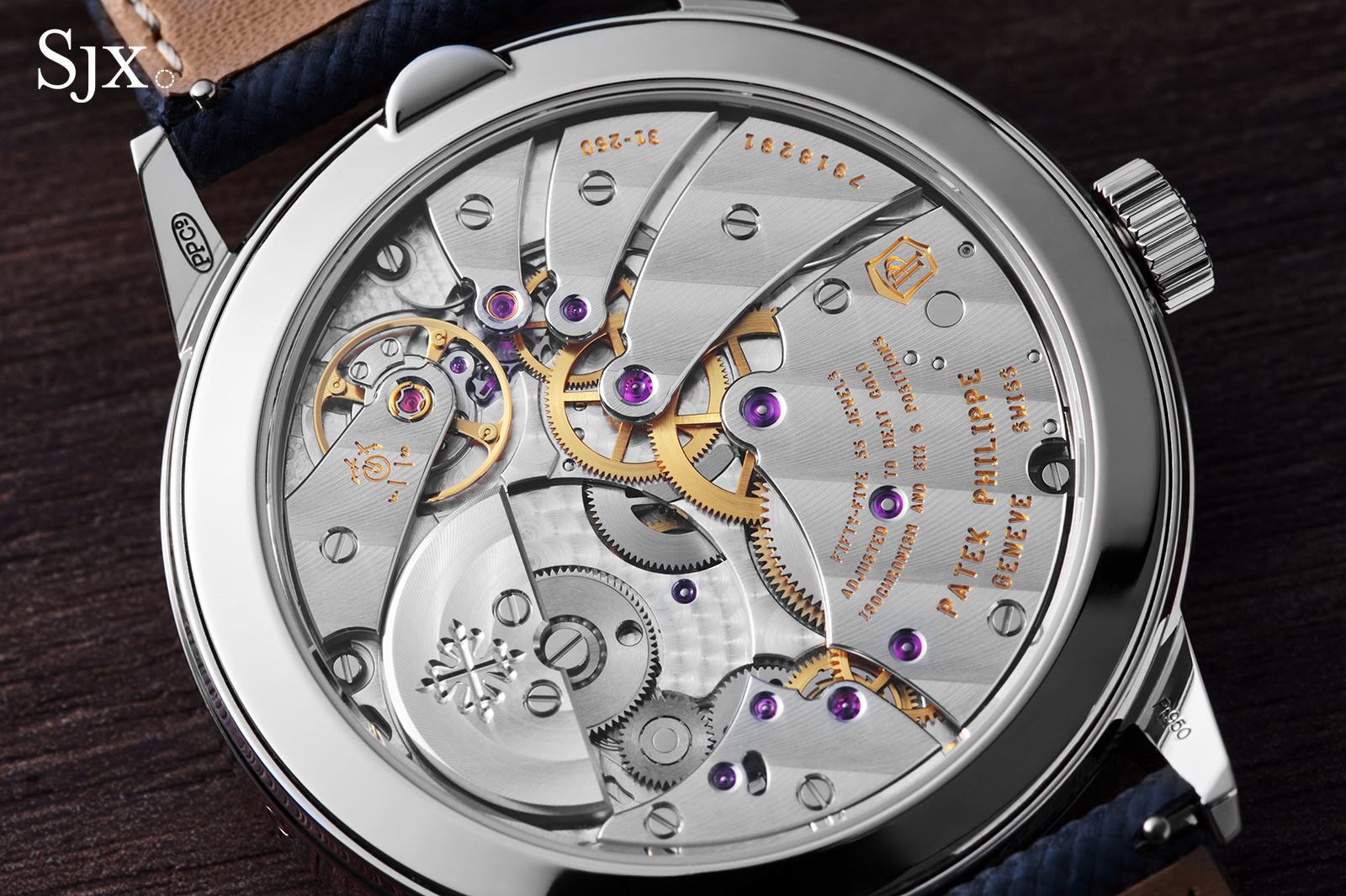
Compared to earlier generation movements, the cal. 31-260 PS QL is more pleasing visually, with bridges that are elegant and complementary. It’s also reminiscent of pocket watch movements with finger bridges for the going train.
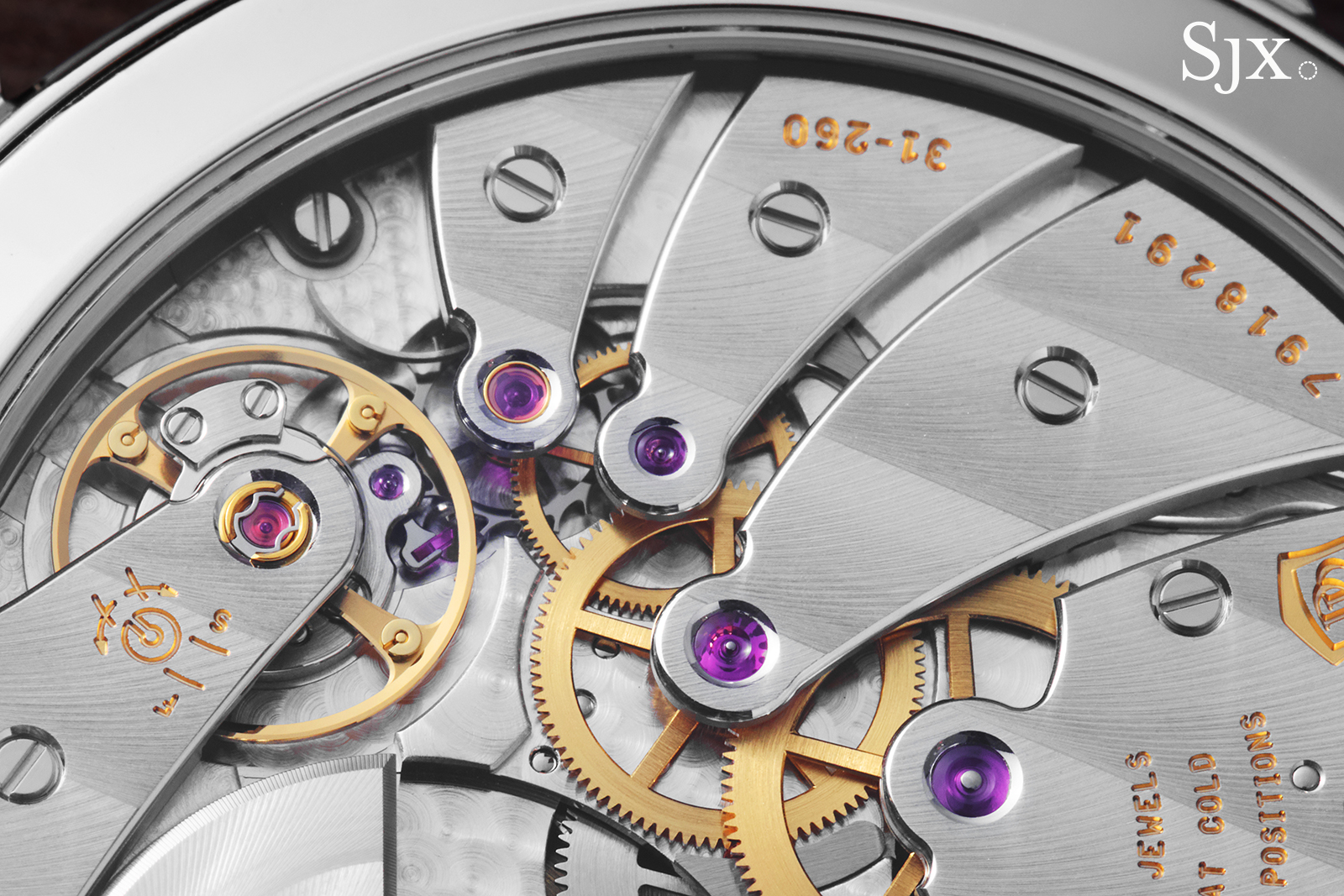
Likewise, the decoration has improved, both in terms of refinement and detailing, but also because the movement has been designed to accommodate more decoration. This is especially apparent when comparing it to earlier generations of perpetual calendar movements, though the comparison is not exactly fair, since prior generations originated in the 1980s and 1990s.
Key facts and price
Patek Philippe In-Line Perpetual Calendar
Ref. 5236P-011
Diameter: 41.3 mm
Height: 11.07 mm
Material: Platinum
Crystal: Sapphire
Water resistance: 30 m
Movement: Cal. 31-260 PS QL
Functions: Hours, minutes, seconds, and in-line perpetual calendar with moon phase
Frequency: 28,800 beats per hour (4 Hz)
Winding: Automatic
Power reserve: 38-48 hours
Strap: Composite with platinum folding clasp
Availability: Now at retailers
Price: CHF124,800, or US$156,039
For more, visit Patek.com.