
Leading Toronto mayoral candidates are sounding off on how the city should support local businesses through Canada’s tariff war with the U.S., should they win the job.
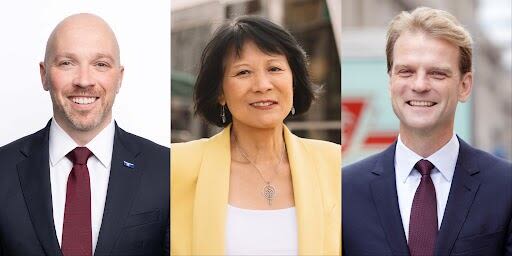
Mayor Olivia Chow and her rival Coun. Brad Bradford held separate news conferences Thursday, days after the Trump administration’s tariffs against $28 billion worth of Canadian goods took effect.
Chow says the city’s plans of using the budget to buy locally is working.
Some 98 per cent of the city’s spendings in 2026 went to Canadian companies, she said. Chow and the city council first barred U.S. businesses from any city contracts as part of her economic action plan in 2025, during the first wave of American tariffs.
“We are using our mighty operating budget of $18 billion in the capital budget of $60 billion, so that we are buying local and procuring locally,” she said Thursday. “We are doing a team Canada approach.”
Bradford focused on promising a 25 per cent tax cut for businesses, which he unsuccessfully introduced to city council last year.
The candidate criticized the ongoing tax deferral program Chow unveiled in 2025, which grants local industry owners a six month deferral on taxes, at which point they would be due to the city.
“A tax deferral for part of a year is not adequate,” Bradford said Thursday. “That doesn’t send the signal that we want to compete for business dollars and talent.”
Bradford promises permanent tariff response
Bradford did not specify how the revenue loss from his proposed tax cut would be offset, but said that the city’s tax stabilization reserve account is meant for measures like this.
He also promised Thursday to establish a permanent tariff response table at city hall to make support more accessible.
“I’ve been on the phone with manufacturers and employers over the past week,” he said. “They’re scrambling right now trying to navigate these support programs and complicated tariff codes, and to understand what they are eligible for.”

Mayor Olivia Chow and Coun. Brad Bradford held separate news conferences Thursday, ahead of election for city’s top job. (Patrick Morrell/CBC)
Chow’s economic action team was established last year for counter-tariff strategies. But Bradford says her team hasn’t been consistently engaging with local businesses, and that his plan is different.
Bradford proposed a type of “concierge service to make sure that every Toronto employer gets access to every provincial and federal dollar of relief that they’re eligible for.”
“It’s a competitive advantage if we can support our businesses and make sure they get relief as quickly as possible.”
Both candidates found middle ground in their plans to continue campaigning for Torontonians to buy local.
Chow emphasized Thursday the city’s “love local” campaign that launched last year to encourage Torontonians to choose Canadian-made goods and services.
“We love local. We are drinking Brio and National Dry soda,” Chow said, referring to the Canadian version of Italian chinotto soda and its Canadian manufacturer. “We believe in our local economy and we are going to invest, drink and love local.”
Bradford also said his campaign will buy Toronto and Canadian, and platform Toronto entrepreneurs and businesses. He called for residents to send their favourite local businesses to his email for his campaign to share.
Alexander to ‘sharpen’ city’s existing plan
Chris Alexander, who has been third in early polling, announced his U.S. tariff response plan in an email to CBC News.
Alexander says he plans to expand the city’s economic development and growth in employment program, which covers five years of property tax for businesses building to expand.
Building on the city’s previous initiatives, but with a “sharper focus,” he said his proposed initiatives include creating a loan guarantee program for small businesses and reducing the ratio of commercial to residential property tax.
According to a new poll released last Thursday by Liaison Strategies, a national public opinion research firm, Chow continues to lead the mayoral race with 49 per cent support.
Bradford, who currently represents Beaches-East York, is second place with 38 per cent support and Alexander, former Conservative MP and cabinet minister, is in third with 11 per cent.
The polling figures came from a random sample of 1000 Torontonians polled between Aug. 14 and 16.
There are 53 candidates in the race to be Toronto’s next mayor. A full list of mayoral candidates can be found on the city’s website.