

Listen to this article
Estimated 5 minutes
The audio version of this article is generated by AI-based technology. Mispronunciations can occur. We are working with our partners to continually review and improve the results.
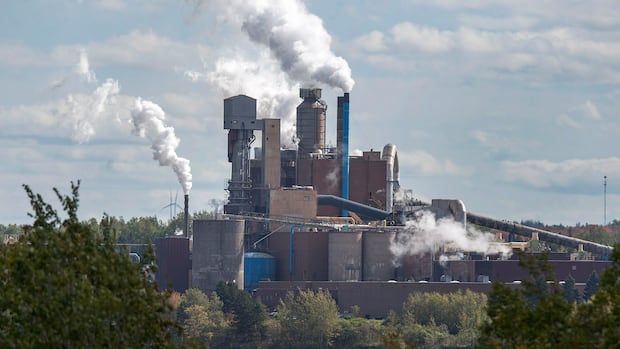
The wrecking ball is readying for the former Northern Pulp mill, a once major player in Nova Scotia’s forestry sector that also came to be recognized as one of the province’s most prominent examples of environmental racism.
Environment Minister Tim Halman announced an amended ministerial order on Thursday, clearing the way for the decommissioning, abatement and demolition of buildings and other infrastructure at the site in Abercrombie that sits on the edge of Pictou Harbour.
According to a government news release, officials with Northern Timber Nova Scotia, the company that owns the property, expect the work to begin as early as September.
A spokesperson for the Municipality of Pictou County confirmed that the company filed an application this week for a demolition permit.
Work must be complete within 18 months
Halman’s amended order says all solid waste, including construction and demolition debris from the mill site, must be disposed of in an approved facility and everything must be removed within 18 months.
An official for Domtar, the company formerly known as Paper Excellence and parent of Northern Timber Nova Scotia, said the work is expected to be complete in the last quarter of 2027. Materials removed from the site will go to either a scrap metal purchaser or an approved landfill, “ideally utilizing rail as much as possible,” Brenda Martin said in an email.
As part of the company’s closure plan, which came about through its creditor protection process, $15 million has been set aside for the work. Martin said that’s expected to be enough to cover the cost of the work.
Town of Pictou Mayor Jim Ryan said he thinks people in his community will be pleased to see the structure come down.
“We’ll be glad to see the end of it,” he said.
“Even people who supported the mill, I think with the mill closing, I think they’ll be glad that it’s not on the other side of the harbour falling down in front of us.”
Future of land remains in question
Ryan said a “much larger issue” will be determining the future of the property once the mill and its associated buildings are removed.
The site is heavily contaminated from the decades of operation of the bleach kraft pulp mill and a chemical plant before that. Northern Timber’s closure plan does not include remediation of the land and it’s unclear what such an effort would cost.
A spokesperson for Nova Scotia’s Environment Department said next steps for the property would be determined as the company continues to go through the creditor protection process.
The mill has sat idle since 2020 after failing to secure government approval for a new effluent treatment facility to replace its Boat Harbour site.
History of the mill
The former tidal estuary by Pictou Landing First Nation had been where the mill’s waste was treated since the operation opened in 1967, something members of the Mi’kmaw community agreed to because they were told it would not affect the waters they used for fishing and recreation.
The waters quickly became polluted, however, and concerns about impacts to health and the environment in the community persisted for years.
Officials with Pictou Landing did not respond to a request for comment on Thursday.
In 2015, the former Liberal government passed the Boat Harbour Act, legislation that ordered an end to effluent being sent to Boat Harbour within five years.
After the mill’s closure, which had a dramatic impact on the province’s forestry sector, the company went into creditor protection and engaged in a variety of legal wranglings with the province.
Boat Harbour cleanup still to come
Ultimately, the two sides reached a settlement agreement in 2024 that ended any attempts to reopen the mill and the threat of a $450-million lawsuit by the company. The focus shifted to the potential of establishing a new operation in Queens County, something the company later determined was not economically viable.
Since then, the company’s timberlands have been auctioned off, with a company controlled by Nova Scotia billionaire John Bragg successfully adding the land to its holdings.
The proceeds from the $235-million sale helped pay off debts of about $102 million owed to the province, secure pensions of former millworkers and set aside the $15 million for the closure efforts.
And while the province has managed to avoid lawsuits by the company and other legal sabre-rattling, it is on the hook for the cleanup costs for Boat Harbour. At last check, the budget estimate for that project is $425 million and work has yet to begin.
One of the outstanding issues to settle is where contaminated sludge from Boat Harbour will be stored.
MORE TOP STORIES