

Listen to this article
Estimated 3 minutes
The audio version of this article is generated by AI-based technology. Mispronunciations can occur. We are working with our partners to continually review and improve the results.
Record-breaking levels of rain in Edmonton this summer have wreaked havoc on municipal infrastructure and a number of public construction projects, causing millions of dollars in damage not expected to be covered by insurance, city councillors heard during a recent committee meeting.
City staff updated councillors on weather-related impacts to city infrastructure and construction projects at an infrastructure committee meeting on Wednesday.
Councillors heard that since July 10, the city has managed more than 1,400 storm-related short-term operational problems and that, in addition to filing insurance and warranty claims, the city is working with the province to recover costs through the Hazard Assistance and Resilience Program (HARP).
HARP, which replaced Alberta’s former disaster assistance programs, gives communities money for damage caused by disasters.
Uninsurable public-sector losses from the severe weather are projected to be $42 million, councillors heard during the meeting. With HARP expected to cover 90 per cent of costs, the city would be on the hook for the remaining 10 per cent.
WATCH | Record-setting summer rainfall has slowed construction in Edmonton:
Heavy rain putting a damper on construction sites across Edmonton
Edmonton’s unrelenting rain has caused flooded roadways and basements. As it turns out, the construction industry is feeling the pinch too. As the CBC’s Tristan Mottershead reports, wet conditions are becoming a hurdle for private contractors.
Projects in the early stages of construction and spread over larger areas are more vulnerable to rainy weather, councillors heard.
“When a site becomes saturated, work doesn’t automatically return to normal once the sky clears,” David Johnson, president of the Edmonton Construction Association (ECA), told committee members.
Johnson said access routes can become too soft for equipment, excavations may need to be pumped out and trenches have to be inspected before work can resume.
He said contractors are used to working in bad weather and most projects have contingency plans for extreme weather events, but this summer has been exceptional.
“This has been anything from a normal wet construction season,” he said.
Councillors learned severe weather has affected work on the Valley Line West and Capital Line South LRT. Additionally, land development projects in Goodridge Corners, the Exhibition Lands and Blatchford have been affected, with delays to some sales that were scheduled for this year.
Flooding forced the closure of the Peter Hemingway Aquatic Centre and the Telus World of Science and there will be investigations done to determine the root causes of the problems at both facilities.
Some construction projects were affected by rain but remain on schedule, such as the Yellowhead Trail Freeway Conversion project and work on Terwillegar Drive, councillors heard. A landslide also impacted the trestle bridge replacement project underway on 76 Avenue in Mill Creek Ravine, causing minor delays, but the project is still on track.
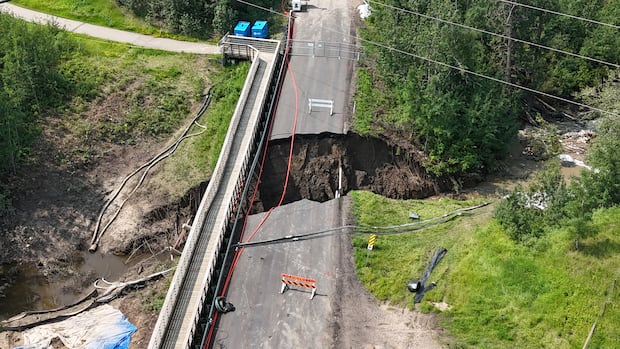
Rain has also caused erosion, embankment failures, multiple landslides and trail failures throughout the city.
“The broader concern for our industry is that what was once considered exceptional is becoming increasingly common,” Ryan Christensen, chair of the board of the ECA, told the committee.
Christensen said he wants the city to ensure extreme weather risks are understood and fairly addressed in contracts going forward.
Coun. Erin Rutherford asked if the city is anticipating insurance premium increases as a result of filing so many insurance claims. She was told increases are expected but the city has plans to minimize them.