
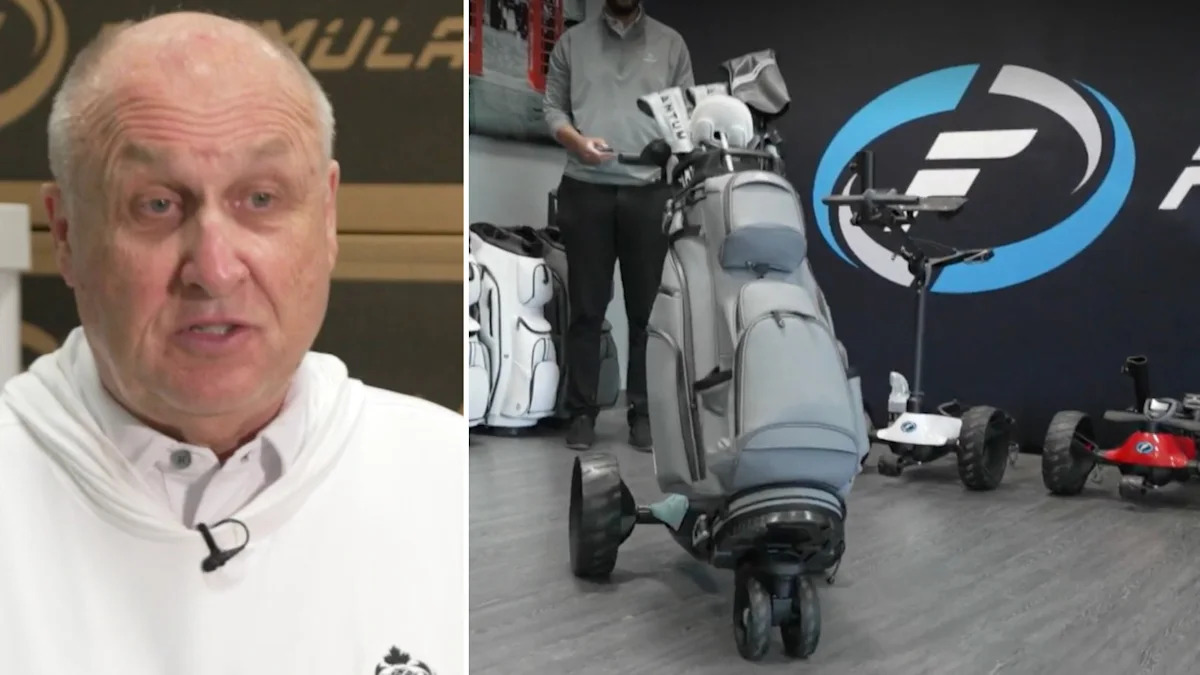
 Golf trolley tariff
Joseph McLuckie sells remote-controlled golf trolleys, which are small, motorized carts that follow golfers around the course carrying their bags. However, he didn’t expect the Canada Border Services Agency (CBSA) to tax them like an electric vehicle upon entering the country.
In April 2025, McLuckie’s Pickering, Ontario company, JPSM Golf, imported 330 electric trolleys from China and paid the standard 6.1% import tariff, which amounted to just over $19,000 according to CBC. However, this past May, CBSA reclassified the shipment under the China Surtax Order — a 100% tariff introduced in October 2024 to target Chinese-made electric vehicles. The new bill: $182,883.95, which includes both interest and GST.
The surtax McLuckie is fighting doesn’t even exist anymore — Ottawa repealed it earlier this year after reaching a trade deal with China. But his bill remains, and it’s a reminder that small businesses that import goods carry a financial risk many Canadians don’t think about until it lands on their desk.
Here’s what happened, and what any Canadian importer can do to avoid a similar surprise.
Don’t Miss How a golf caddy became ‘an EV’
Even though the vehicles were designed to travel alongside a golfer and not actually transport a human being, CBSA’s letter to McLuckie concluded the trolleys can “undoubtedly” be classified as a motor vehicle because they use an electric motor to move and carry goods. The reclassification landed nearly a year after the shipment cleared customs — well within the four-year window CBSA is allotted to review and re-determine tariff classifications on past imports.
For a six-employee company, the gap between a $19,000 tariff bill and a $183,000 one isn’t an accounting footnote — it’s an existential threat.
Read more: 3 essential money moves to make once you’ve saved $50,000
Why this matters beyond golf trolleys
The China Surtax Order was designed to protect Canada’s auto industry, but its wording covered broad vehicle and parts categories. That’s a pattern worth watching: trade actions aimed at one industry can extend to products that only loosely resemble the intended target, especially any commodity with a battery, a motor or wheels.
Any Canadian business that imports goods — electronics, appliances, tools, even toys — can be reassessed years after the fact if CBSA concludes a shipment was misclassified. The surtax climate around Chinese-made goods also keeps shifting: Chinese EVs have since moved to Canada’s import control list, requiring a federal permit instead of a surtax.
What to do if your shipment is reassessed
Importers who disagree with a CBSA reclassification have 90 days to file a dispute using Form B2, the Canada Customs Adjustment Request. Crucially, the disputed amount generally has to be paid in full before interest stops accruing and before a formal review proceeds, so cash flow — not just the legal argument — becomes part of the fight. If CBSA’s internal review doesn’t resolve the dispute, importers can appeal to the Canadian International Trade Tribunal within 90 days of that decision.
A customs broker or trade lawyer can help build the case, but for a small operation, that’s another cost layered on top of an already-volatile cash position.
How to protect your business before the next shipment
For Canadians running — or starting — an import-dependent business, a few habits can reduce the odds of a shock reassessment:
Request an advance ruling from CBSA on tariff classification before importing a new product line, not after
Set aside a contingency reserve — even 5% to 10% of the import value — for potential reassessments that’s kept separate from operating cash
Track surtax and trade-remedy orders relevant to your product category, since these can change with little warning
Work with a licensed customs broker who checks HS codes against current surtax schedules, not just standard duty rates
Keep detailed product documentation — specs, intended use, marketing materials — that supports your classification if it’s ever challenged
McLuckie’s case is still working its way through the appeals process, and there’s no guarantee he’ll get the bill reversed. For other Canadian business owners, the lesson is import classification risk doesn’t disappear just because a shipment already cleared customs — be prepared, be diligent and be vigilant of bureaucratic minutiae.
What To Read Next
The most expensive financial mistakes are often the ones you don’t see coming. Join 19,000+ Canadians who get the money moves, risks and opportunities shaping their finances — delivered free each week. Subscribe now.
This article originally appeared on Money.ca under the title: An Ontario business owner owes a whopping $183K in EV tariffs after importing 330 golf trolleys — here’s why
This article provides information only and should not be construed as advice. It is provided without warranty of any kind.