

By Brook Wagner on August 28, 2026.
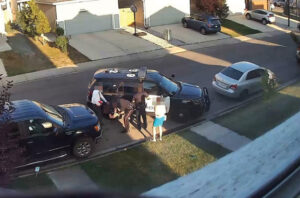 Video surveillance from a neighbouring home captures a Calgary police officer taking a child to the ground in an Aug. 21, 2018 incident that left the autistic boy with a fractured skull. ASIRT found reasonable grounds to believe an offence occurred, but Crown prosecutors declined to lay charges against the officer.–HANDOUT IMAGEbwagner@medicinehatnews.com
A Calgary police officer who took a 12-year-old autistic boy to the ground in 2018, fracturing the child’s skull, will not face criminal charges, Alberta’s police watchdog announced in a decision released Wednesday.
While the Alberta Serious Incident Response Team (ASIRT) found reasonable grounds to believe the officer had committed an offence, the Alberta Crown Prosecution Service, which applies higher criteria for whether a conviction is likely, declined to recommend charges.
The confrontation began as a call for help. On Aug. 21, 2018, the boy’s mother phoned 911 because her son had become deeply upset and could not be calmed. She told the officers he had autism, that he had not taken his medication in five days and that she wanted help getting him to the Alberta Children’s Hospital.
Two officers responded to the family’s home in Cougar Ridge, a neighbourhood in southwest Calgary. Paramedics examined the boy and left. But when his parents tried to walk him to the police vehicle, the boy slipped away into a bathroom. At that point his father told officers to do whatever was needed to get him out.
The officers took the boy by the arms and brought him outside, where he pulled away and braced his legs as the officers guided him toward the cruiser. At the vehicle, one officer pinned the boy against the side of the car while holding both his arms behind his back. The boy shouted, “Bastard!”, whereupon the officer immediately turned and took him to the ground. The child’s head struck the pavement with force during the takedown.
At hospital, doctors diagnosed a basal skull fracture. The boy did not require surgery and was treated with Tylenol and Advil for pain, according to ASIRT.
A neighbour’s home security camera captured the takedown. When the father demanded to know what had happened, the officer replied, “He fell.” He later told his partner, “He spun up over my leg.”
The subject officer exercised his right to silence and did not speak with ASIRT.
ASIRT expressed concerns during their analysis. Bringing a child down onto pavement with force made injury predictable, the report said, and the head was an especially likely place for it. The report also noted that the second officer stood roughly a metre away and could have assisted.
ASIRT referred the case to Crown prosecutors on Sept. 16, 2025, and on May 14 this year the Crown recommended against charges. The two agencies, ASIRT explained, measure cases differently. ASIRT weighs whether there are reasonable grounds to believe an offence occurred, while the the Crown considers whether a conviction is realistically likely and whether prosecution serves the public interest. Each body reaches its own conclusion.
The case drew national attention in 2018. The boy’s parents alleged that police had thrown their son to the ground. They said he was left with a fractured skull, partial hearing loss and other injuries, and they later criticized how officers handled a child who, they said, had behavioural concerns and disliked being touched.
ASIRT reviews serious police incidents across Alberta, including the Medicine Hat region, and became part of the newly created Police Review Commission on Dec. 1, 2025.
14
-13