
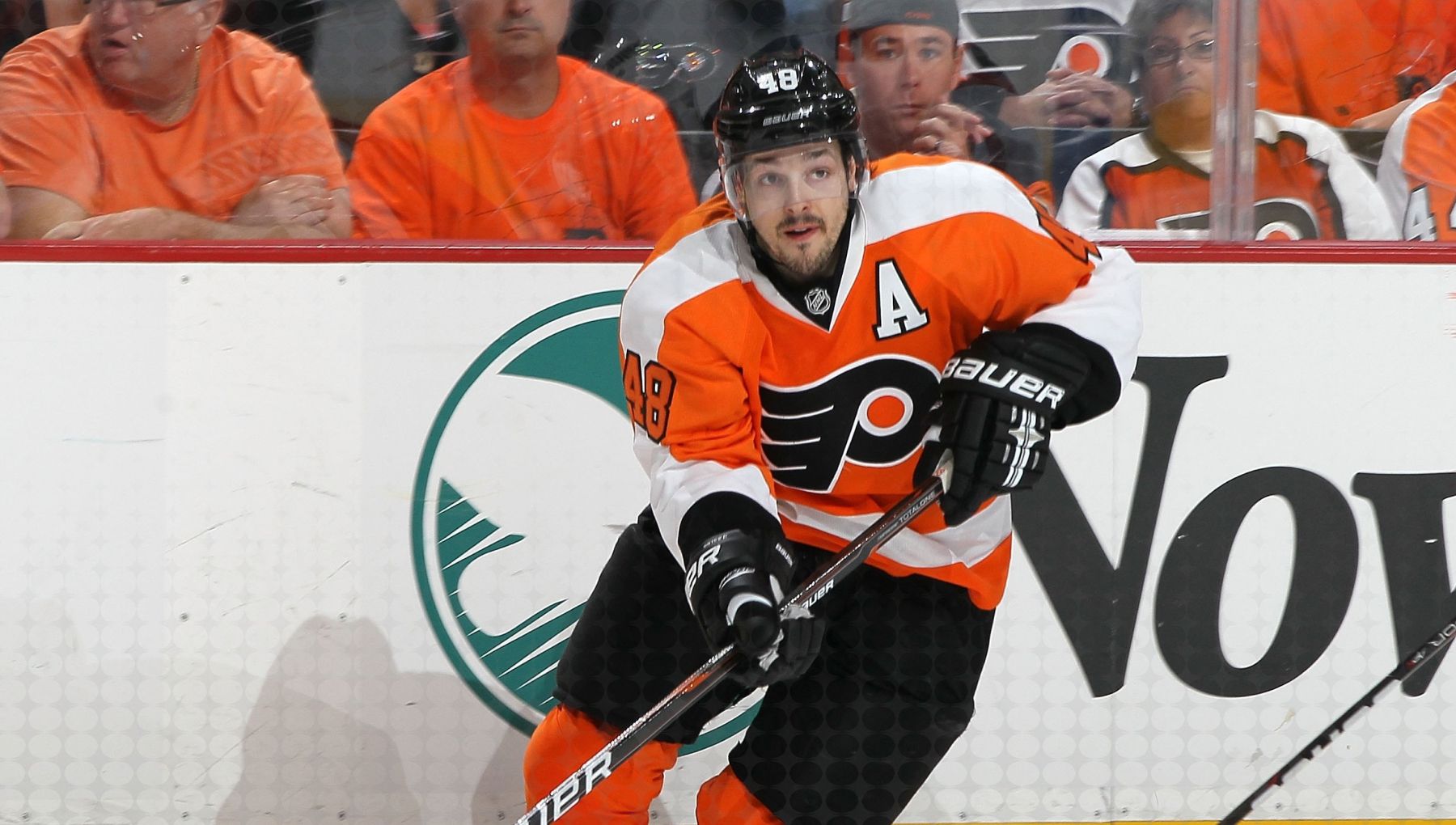
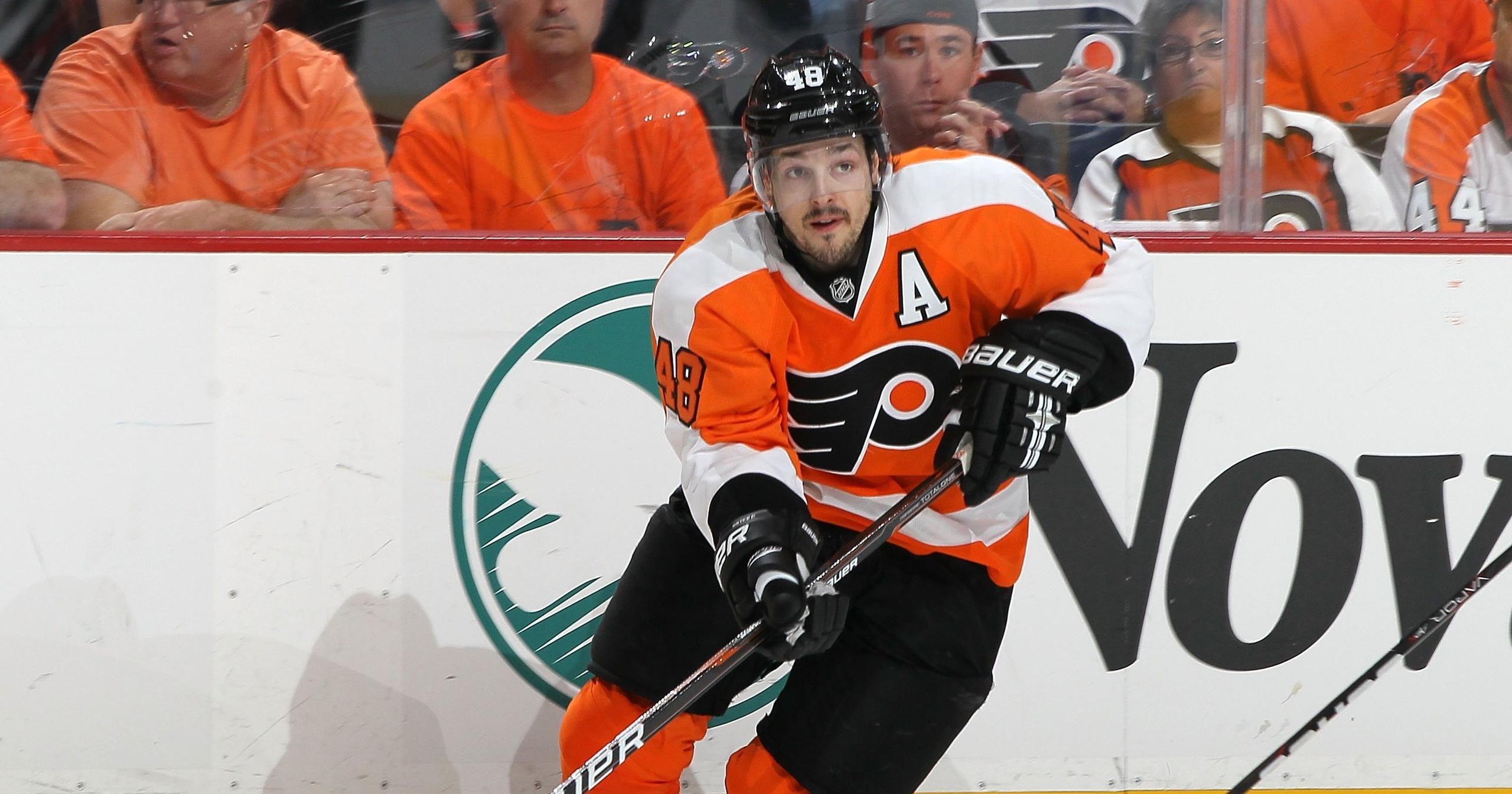
Daniel Briere during his playing days (Photo by Jim McIsaac/Getty Images)
For an NHL general manager, being at the center of the offseason and having one of the most intriguing teams in the league for the upcoming campaign usually means you made some huge moves over the summer.
But Philadelphia Flyers GM Daniel Brière managed to accomplish both despite only acquiring a backup goalie, a bottom-six center and a bit of depth on defense.
Brière, 48, tendered what was then the most lucrative contract per annum in NHL history to Anaheim Ducks center Leo Carlsson in the form of an offer sheet, one that the Ducks matched six days later despite its high value and onerous, frontloaded structure.
Although he ultimately made modest additions, the Flyers’ late surge last season saw them not only qualify for the playoffs but win a round. It was a run that also featured numerous other positive developments that might have created a runway into the future as well.
Dan Vladar transformed into a starting-caliber goalie. Former Anaheim Ducks lottery picks Jamie Drysdale and Trevor Zegras had the best showings of their careers. Tyson Foerster battled to get back from a potentially season-ending injury. All four of those players will now look toward the sky and see a statue of William Penn for the foreseeable future after inking extensions this summer.
This upcoming year will be the first full NHL season for scintillating talent Porter Martone and an opportunity for Matvei Michkov to firmly establish himself as a core player, with his next contract hanging in the balance.
Brière spoke exclusively with RG regarding the season ahead, one that could see the Flyers take a step back or a leap forward as their pieces fall into place.
Interview With Daniel Brière
– Often teams that take a measured approach to their rebuild –– I guess Los Angeles and St. Louis spring to mind –– end up with a lot of strong players in the middle of their lineup but not necessarily the premium pieces like the top center, top defenseman and power-play quarterback. How have you balanced competitiveness with building, and maintained the salary-cap flexibility to pursue the big components while locking down some key players?
Brière: When we started this, it was a rebuild, but it wasn’t a complete teardown. We never believed in a complete teardown, where you try to lose on purpose. We just feel that that’s very dangerous for the identity of your team, and we feel it’s really hard to get out of that once you’re going into games, and you know there’s no hope, you know management just wants you to lose to have a better draft pick. So, that’s always the line we were playing with, we didn’t want to get below that. We wanted to remain [ambitious] and put out a team that’s competitive and develops players that want to win every single night, and have the expectation to win. It’s just a dangerous way to go when you have to rebuild the identity of your team as well.
As far as finding the right players that you want for the future, we were also fortunate that we had some really good veterans to kind of lead the way and buy into what we were doing, you know –– (Travis) Sanheim, (Travis) Konecny and (Sean) Couturier ––to lead our group through a couple tough years.
We were also fortunate in the draft to pick up a guy like Michkov and a guy like Martone, where they fell down a little bit from probably where they should have gone, and that gave us the chance to have two really good young players. Yeah, they’re not centers or No. 1 defensemen, but you look at the teams that win, and see there’s different ways to win. Carolina didn’t have a super high-end No. 1 center and still won the Stanley Cup this year.
So, If we have the chance, we’re certainly looking and we’re trying, and I think the offer sheet this summer showed that. But at the same time, we feel we have a really good group of players that are growing and moving in the right direction to remain competitive and to try to make the playoffs again this season.
– You’ve still got the fifth most cap space of any NHL franchise, with the other five teams in the top six all being non-playoff clubs last season. How does that inform your approach as opportunities may arise over the course of the campaign?
Brière: Yeah, well we look at the players and where they might help us. There’s three long contracts, or four with Sanheim, that you look at them –– Sanheim, Foerster, (Owen) Tippett and Konecny –– that were all signed long-term to very, what we hope to be, team-friendly (salaries) to help us, give us a chance to have more cap space and be more aggressive.
You’d mentioned Drysdale and Zegras, but guys like (Christian) Dvorak as well as (Noah) Cates, those guys are on very good numbers at the moment. They’re also part of the reason we had the cap space that we had to not only explore Vladar [long-term] after the season he had last year, but also have a chance to be more aggressive in the future at some point to acquire a difference-maker.
– You signed in Philly as a free agent back in 2007, and at that point it was a popular destination. In recent years, that hasn’t been the case as much. What signals –– whether it’s direct feedback, being on fewer no-trade lists or whatever else –– are you getting from players, agents and other people inside the game that that’s changing?
Brière: Most players and most agents are aware that the Flyers treat their players as well as any team in the league. Players know that they’ll be treated well. The facilities, the amenities, and anything else they need will be there for them.
The biggest thing is that you have to win. Winning is still the No. 1 criterion; guys care, and they want to be in an environment where they can win. Then comes the coaches. We’re in a really good situation there, with the coaching staff. When players are evaluating our team, they’re seeing a group of young guys that are getting better every year. Along with the coaching staff along with the facilities, along how they’re treated in Philadelphia, that all makes it a place that is becoming more and more exciting to come and play for.
– Once the Ducks matched, you were left with a pretty modest haul this offseason, yet there are plenty of young players with upside on the roster. In a year that, on paper, seems like it could go in just about any direction, how do you balance the results with the process, especially with external expectations elevated after winning a playoff round?
Brière: First of all, the offer sheet did not work, that was obviously a big play. But aside from that, we feel we’re a little better. The addition of (Joseph) Woll in net will really help us and probably help Dan Vladar, where hopefully we can have a tandem that can stay fresh with both guys having a chance to play a lot of games.
The additions of (Simon) Benoit and (David) Jiricek make us a little bigger on defense. We were a little small last season, so this will help with a little bit of not necessarily physicality, but just size on defense. Up front, the addition of Noel Acciari, who gave us a real tough time in the playoffs last year when we faced Pittsburgh, will bring some depth.
What we’re hoping for is that our young guys take a step. We think Martone, (Alex) Bump and (Denver) Barkey are probably gonna be able to play a bigger role than they did last season, and also we think that Matvei Michkov will have a bounce-back season. And don’t forget that we played most of last season without Tyson Foerster. So those are reasons why we feel that this season could be an exciting one for the Flyers.
– Coming back to the offer sheet, it’s obvious you wanted an elite center, but there were multiple high-profile restricted free agents and at least three at center, with Connor Bedard and Adam Fantilli both remaining unsigned on July 1. What about Leo as a player or the circumstances he had with the Ducks made him the guy to zero in on?
Brière: I don’t know that I’m very comfortable talking about that just because he’s not our player anymore, so I’d rather not go there. But don’t forget that he wanted to come to Philly as well. He was excited, he believed in our team, and he’s a pretty exciting young player.
– A lot has been made of the offer sheet to Leo and its impact on the market overall, especially after Bedard and Macklin Celebrini signed their deals. Do you think that’s overblown or do you see such a big overture having reset the market to some extent?
Brière: The way I see it is, to me, it didn’t change anything. That’s where it was going all along.
Obviously, there are people that like to take the easy approach and just blame the Flyers for that. That’s a very simplistic approach. I don’t have a problem with it; we’re totally fine with that if that’s what they want to believe. But we all know, with the cap going up, what the agents work with now is the percentage of the cap.
You can go back, and the percentages are very similar to what they were for years. It’s just that now, the cap has increased tremendously, and quickly, the last couple years. Someone’s going to get that money somewhere. It was just a matter of time. Honestly, I don’t think some of the players that signed the big tickets would have signed for less even without the offer sheet. So, no, I don’t believe it played much of a factor [in the market].
– With Michkov and Martone, what is the sense of the summer they’ve been having and how much does your team’s ceiling getting higher hinge on them having breakout efforts this coming season?
Brière: It’s pretty funny, when we talk about Matvei having a bounce-back season, he still had 20 goals and 50-plus points [in 2025-26]. But that’s how much he’s seen as a guy that can be a difference-maker, which is really exciting.
He’s learned some lessons along the way. The second season is never easy. I went through it myself; a lot of players have gone through it before. As long as you learn along the way, that’s how you’re going to keep climbing, that’s how you’re going to get better.
My worry becomes that after the success that a guy like Porter had last year late in the season and into the playoffs –– and I could say the same about Barkey or Bump, those guys really gave us a jolt when they came up late in the year –– you worry that they think that they’ve made it or they think it’s going to be easy, but realistically, the hardest part of the work is is still ahead of them.
I understand that the expectations are going upwards, but you worry about them kind of going through a similar transition that Matvei had to go through in his second season. You hope that it doesn’t happen, but you never know.
– You locked down a bunch of players, but for next season, Michkov and Rasmus Ristolainen remained without contracts. Has there been any progress on either front?
Brière: There’s nothing going on at the moment. I’m sure along the way, at some point, there will be discussions, but not at the moment.
– Could you speak to how Drysdale and Zegras have integrated themselves into the room and, along with some other key scorers, how they might improve your fortunes on the power play after posting the NHL’s lowest conversion rate last season?
Brière: To start with the power play, the power play didn’t produce more. The results, at the end of the day, were not better. But the [underlying] numbers did look better. Our zone entries were better. The way we moved the puck, there was more consistency on that. I’m hoping that we will also maybe get a little bit more puck in this season, but there’s a lot of work to be done. There’s still a lot of improvement that needs to be made. We’re aware of that, and our coaches are working extremely hard at trying to pinpoint why we weren’t scoring, why we finished last in the league. It’s just not good enough.
Jamie took a big step forward last year as a defenseman. He was a big part of the reason why our team made the playoffs, it was good to see. It just shows you how patient you need to be with young defensemen. It’s a very tough position to learn. It takes time. It would have been much easier to just give up on him, but we got rewarded last year with his play for being patient with him.
He fits perfectly into our locker room along with Trevor Zegras. Kind of the same thing there, it was good to see him bounce back. I know he had a couple tough seasons there with injuries in Anaheim, but his skill level really stood out last season. As much as maybe a team like Anaheim didn’t need him quite as much because they were overloaded with high-end skill players, I think Trevor fit in and was able to help us. It’s an area that we had talked about two or three years ago that we wanted to improve. Guys like Martone and Michkov and Barkey and Trevor Zegras, they came in and they really elevated our skill level in the lineup, and I think that really stood out with Trevor.
– When did you start considering a long-term pact for Vladar? When you think back to the information you got from your pro scouts when you were considering acquiring him, what do you think changed year-over-year, and what makes that improvement sustainable?
Brière: You never know for sure. Let’s be honest. Going into last season, we thought Ersson was going to take the reins and be the No. 1, and the reason why we got Vladar was for him to solidify the tandem and really give Ersson some breathing space so we could keep him fresh. We believed Vladar could be the guy, but he’d never played more than 30 games in a season, so it was tough to really anticipate that he could take on a big workload the way he did last year.
But it’s more than just his play. It’s also his approach as a teammate. He’s a natural leader, and even though goalies don’t usually wear a letter, he definitely became a part of our leadership group. He was just inspirational last year for all of our guys, and he showed that he deserved to be considered as a No. 1. As the season hit the midway point, he kept playing well, and the more work we gave him, the better he kept playing. That’s when we realized that we might have found our new No. 1, and at that point you’ve got to start thinking long-term, especially when he mentioned that he loved Philly and wanted to stay here long-term. It was really exciting and kind of a no-brainer to start exploring, on our end, how to keep him here for the long haul.
– You’ve mentioned Bump, Barkey, Jiricek and others already, but who are you most looking forward to seeing and evaluating in camp come September?
Brière: Tyson Foerster is definitely one of them. We’re really excited about him. The way he fought back to get ready, we all thought his season was over when he got injured last year, and he was adamant that he would come back in time to play. A lot of credit goes to him for coming back earlier and helping us get into the playoffs.
I know his [playoff] stats maybe don’t reflect the real impact that he had on our team. But you have a guy like that that guys respect and know how good of a hockey player he is. He does a lot of little things that sometimes aren’t noticed by the average fan. A good, all-around, 200-foot player like that, he’s definitely a guy that I’m excited to see where he can take it. I think I could see him taking a big step forward.
I’m also looking forward to seeing what David Jiricek can bring us. We don’t have a defenseman quite like him back there. Yes, things didn’t work out the way he probably expected in Columbus and Minnesota, but we’re going to give him a good look. We hope things pan out for him. He’s only 22 years old. Where do you find 6-foot-4, right-shot defensemen with the big shot he has at only 22 years old? It’s exciting, and we hope he can take the next step now.
Flyers’ Playoff Outlook
The Flyers remain a long shot to make a deep run in 2026-27. Stake lists Philadelphia at 51.00 to win the Stanley Cup and 26.00 to capture the Eastern Conference. Those numbers reflect a team still viewed as being outside the NHL’s top tier, despite last season’s playoff breakthrough and an improving young core for bettors following hockey betting sites.