
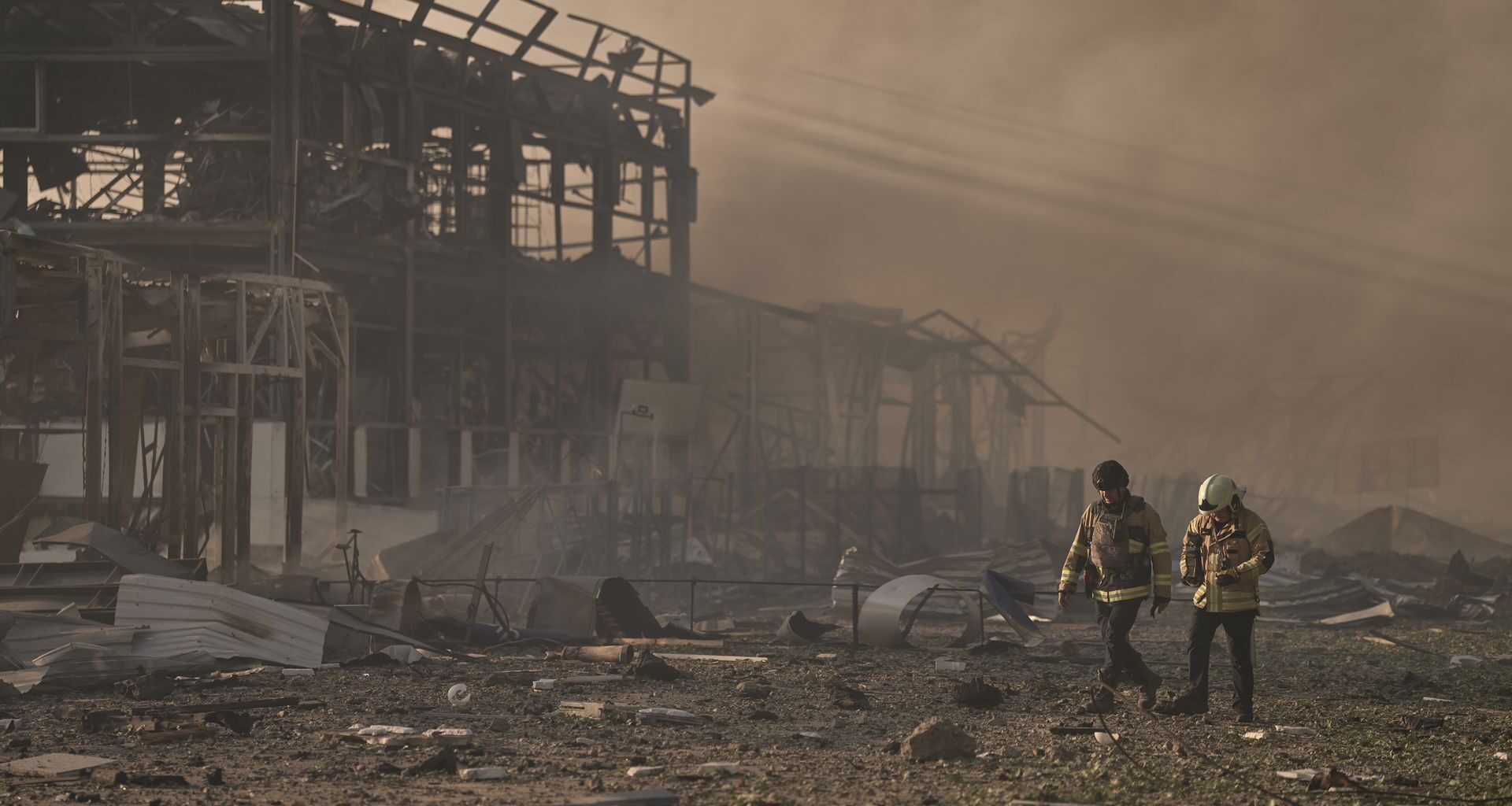
Emergency service workers and local authorities respond to a Russian strike in Bucha district, Kyiv Oblast, Ukraine, on Aug. 29, 2026. (Kostiantyn Liberov / Libkos / Getty Images)
Editor’s note: This is a developing story and is being updated.
At least 37 people were killed and 42 injured, including four children, in a Russian attack on Kyiv Oblast that triggered detonations and a large fire at a storage facility on Aug. 28, local authorities said.
Four people remained missing as of 5 p.m. local time on Aug. 29, Interior Minister Ivan Vyhivskyi said.
At around 8:10 p.m. local time on Aug. 28, a Russian drone hit a facility in the village of Myla, about 5 kilometers (3 miles) west of Kyiv along the Kyiv-Chop highway. The attack sparked a large fire, followed by ammunition detonations, the Prosecutor General’s Office reported.
The first strike in the Russian attack hit a Ukrainian military ammunition depot, President Volodymyr Zelensky said in an Aug. 29 statement, adding that it triggered a chain of explosions involving shells, mines, other ammunition, and drones.
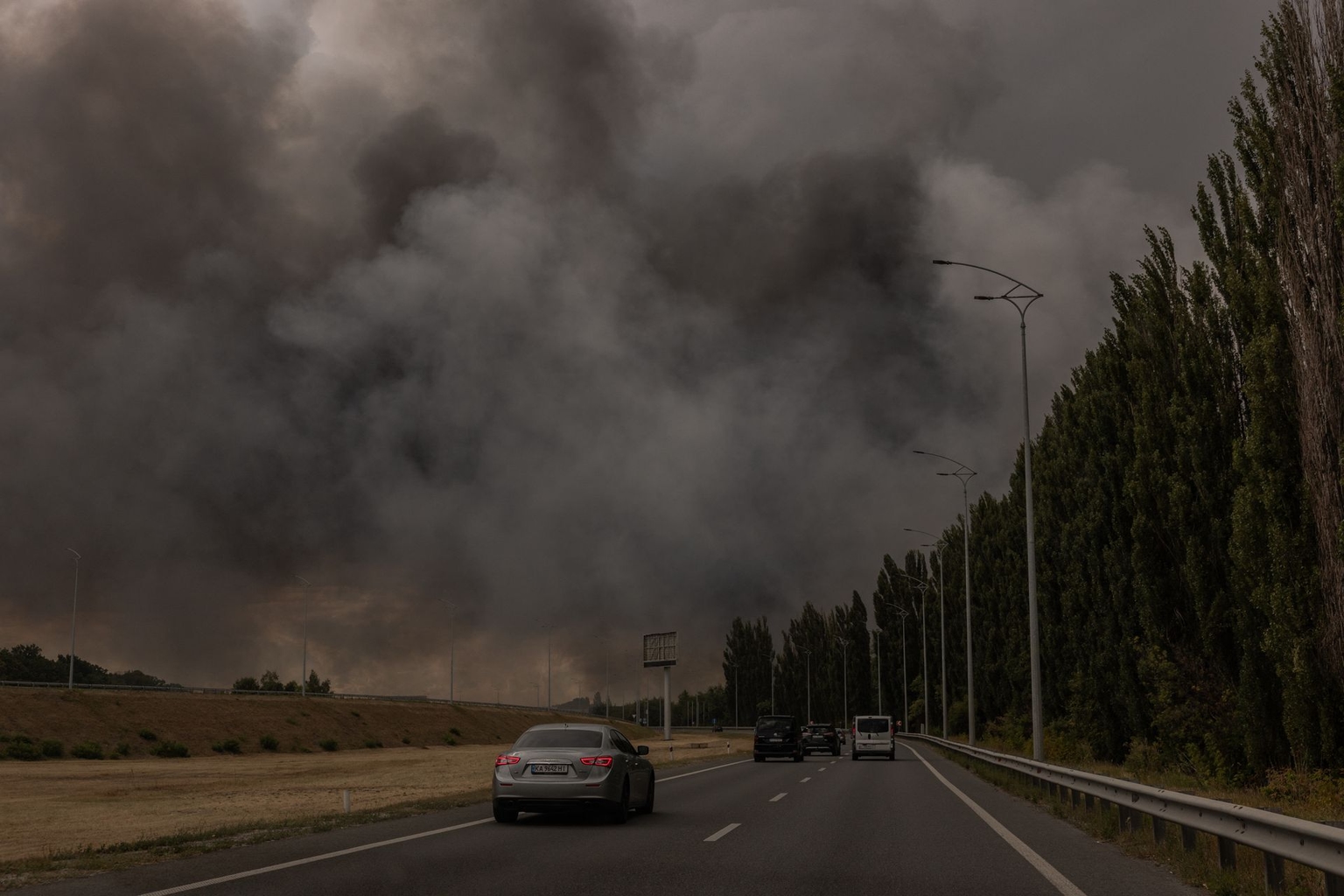 Cars drive on a road as smoke rises in the distance from a warehouse following a Russian air attack near Boryspil, Kyiv Oblast, Ukraine, on Aug. 27, 2026. (Roman Pilipey / AFP / Getty Images)
“I was at home, speaking to my children over a video call, when I heard a powerful explosion,” local resident Stefania Torska told the Kyiv Independent. “I thought someone might need help because I used to work in that area. I changed my clothes, locked the house, and ran. I had gone about 100 meters when there was another extremely powerful explosion.”
“As my grandson later described it, it looked like lava — just fire, an enormous mass of flames rising high into the air,” she said. “I realized that if I stayed where I was, it would fall on me and I would burn alive. I started running. I do not know how I managed to run so quickly, but the fire only caught up with me when I had almost reached my own gate.”
Taras Didych, head of the Dmytrivka community, which includes the village of Myla, was killed in the attack, Kyiv Oblast Governor Tymur Tkachenko said, adding that he was among the first responders to reach the scene.
Nataliia Kuznietsova, a veterinarian at a clinic in Myla, said she was at work when the attack began. Her team was preparing for an emergency surgery when the first explosions erupted, sending them to a shelter on the hospital grounds.
“The walls began shaking and tiles started falling. As the explosions grew stronger, the windows began to blow out,” Kuznietsova told the Kyiv Independent.
“Even after the air raid alert was lifted, we continued to hear explosions every few minutes and feel the building shake. That’s when we realized there was likely a detonation happening somewhere nearby. As it turned out, there was an ammunition depot across the road from us.”
Kuznietsova said neither the veterinary clinic’s staff nor any of its patients were injured, but the building was heavily damaged inside.
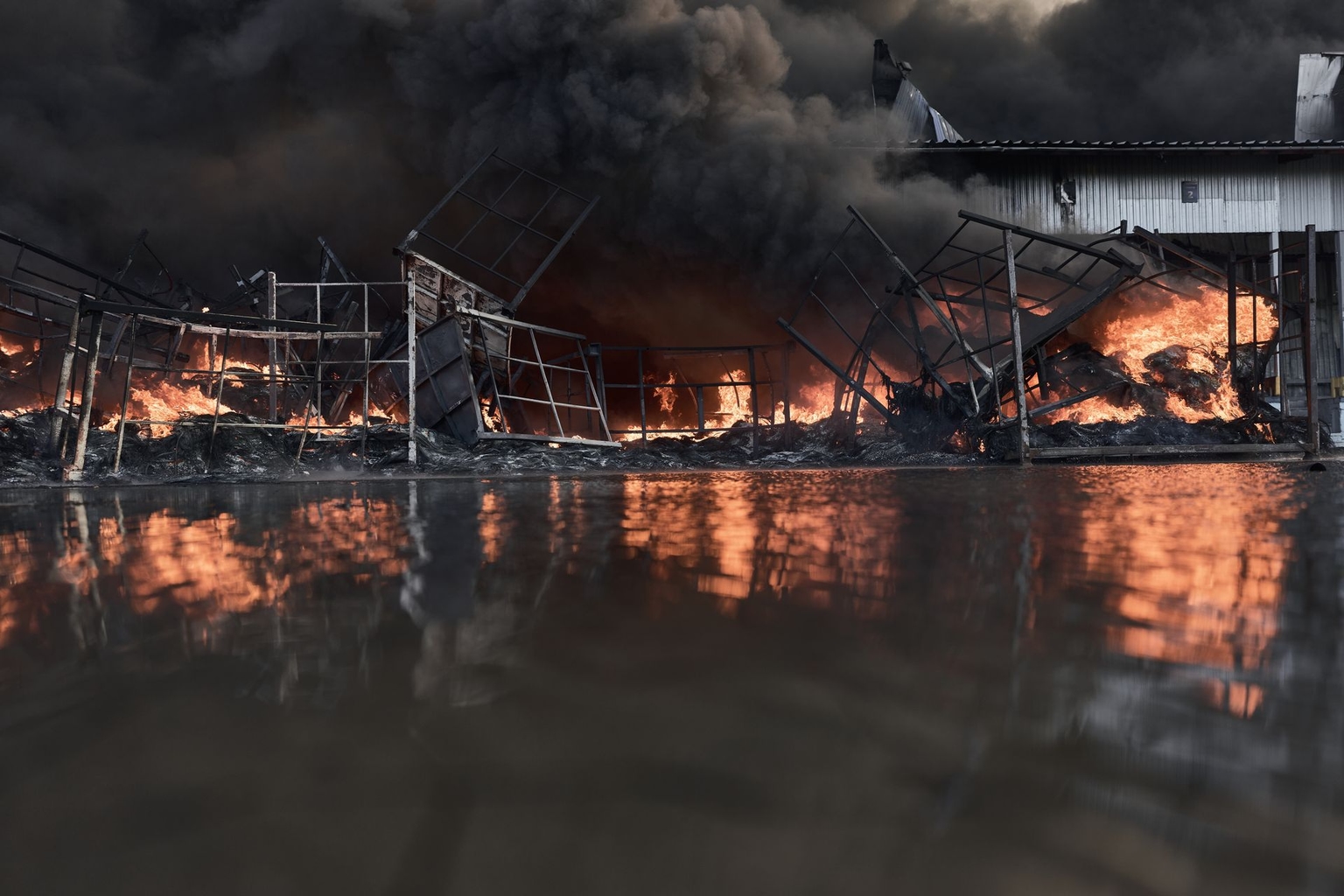 Smoke rises from a fire at a large warehouse storing car tires and wheels following a Russian strike in Bucha district, Kyiv Oblast, Ukraine, on Aug. 29, 2026. (Kostiantyn Liberov / Libkos / Getty Images)
“Everything inside was literally turned upside down,” she said.
Tetiana Biletska, a local business owner, was outside when the Russian attack began in the neighboring village of Dmytrivka, about 2 kilometers (1 mile) from the site of the explosion. Biletska said she saw a drone heading toward the warehouse, where the blast occurred.
“We immediately ran home, and when we got there, the first massive explosion happened, and a mushroom cloud rose into the sky,” she told the Kyiv Independent. Later, Biletska took shelter in the basement of a neighbor’s house, where she remained for about an hour and a half.
“We were afraid to go outside because at first the explosions came every 20 to 30 seconds, and then literally every second. Some were quieter, others louder. At times, my ears were even ringing,” she said.
Biletska said she passed the warehouses where the explosion occurred almost every day but had no idea that ammunition was stored there.
She added that she was still in shock over what happened and over the news of the death of Didych, head of the Dmytrivka community.
“He stayed (in Dmytrivka) during the occupation and helped everyone. He was highly regarded and respected, and the news was deeply painful for the residents. We still can’t believe it,” she said.
Rescuers and firefighters clear the aftermath of ammunition detonations in Kyiv Oblast following a Russian attack on Aug. 28, 2026. (Ukraine’s Emergency Service)
Kyiv Oblast Governor Tkachenko said at 11:30 a.m. local time on Aug. 29 that the casualty toll could still increase.
As of the morning of Aug. 29, emergency services continued to extinguish fires, clear debris and conduct search-and-rescue operations. More than 300 Ukrainian emergency service workers were involved in the response to the aftermath of the Russian strike, Zelensky said.
At least 130 residential buildings were damaged in the attack and subsequent detonations. Along with residential buildings, a care facility for elderly people and people with disabilities was also damaged, according to local authorities.
Three hundred and eighty-one people, including 59 children, were evacuated from the site following the attack, Tkachenko said.
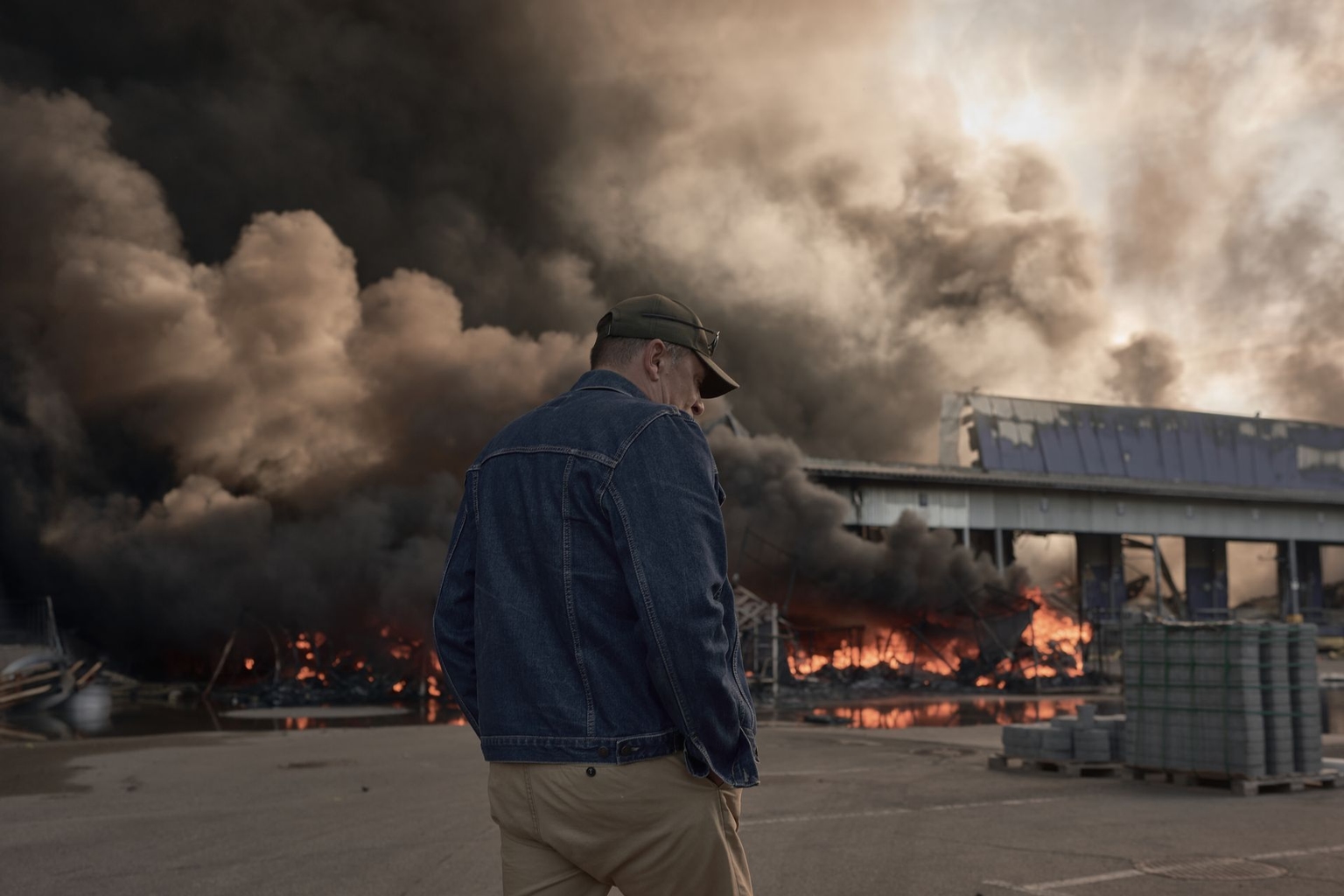 A man looks on as smoke rises from a fire at a large warehouse storing car tires and wheels following a Russian strike in Bucha district, Kyiv Oblast, Ukraine, on Aug. 29, 2026. (Kostiantyn Liberov / Libkos / Getty Images)
Zelensky said he had received a briefing from Prime Minister Serhii Koretskyi and Interior Minister Vyhivskyi on the incident and stressed that those “who allowed this to happen must be held accountable for their decisions.”
“There are regulations: ammunition cannot be stored near houses or other residential buildings. There will certainly be appropriate conclusions,” Zelensky said.
Ukraine’s Security Service (SBU) opened criminal proceedings over the Russian attack and launched a pretrial investigation under criminal code provisions covering Russia’s crime of aggression and negligent treatment of military service.
According to the SBU, the facility was struck by a Russian Geran-4 jet-powered drone.
Prime Minister Koretskyi also called for those responsible for the incident to be held accountable, urging a swift investigation and “severe punishment” for those at fault.
“On the fifth year of the full-scale invasion, making the same mistakes is criminal negligence,” Koretskyi said in a statement posted on Telegram. “And all those responsible, without exception, must face severe punishment so that such situations do not happen again.”
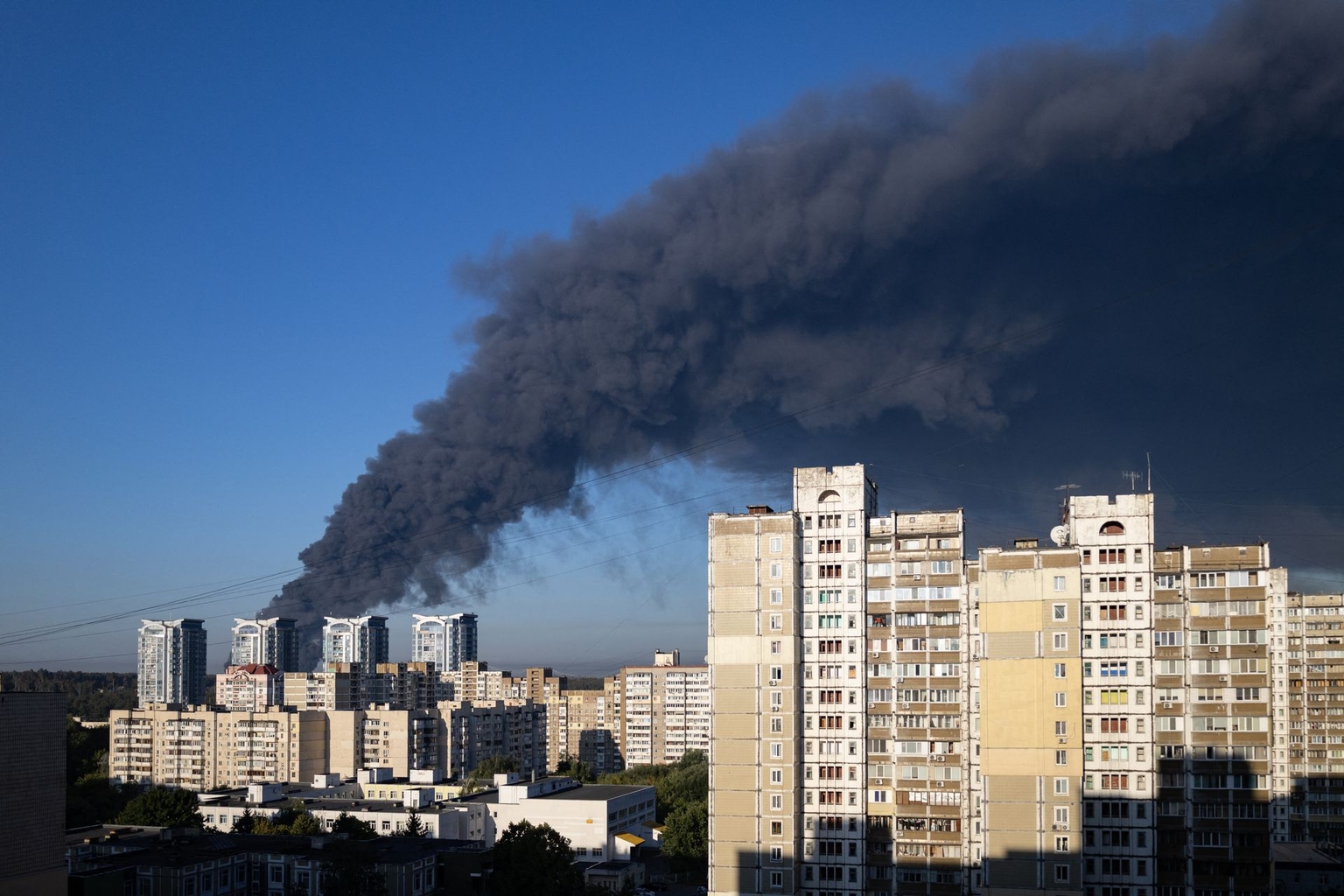 Smoke rises following a Russian air attack in Kyiv, Ukraine, on Aug. 29, 2026. (Serhii Okunev / AFP / Getty Images)
Koretskyi said on Aug. 29 that the government would allocate funds from its reserve budget to support and compensate those affected by the tragedy in Bucha district.
He also said the government is working on measures to adapt the state, Kyiv, the economy, and critical infrastructure to Russia’s “new tactics” of attacks.
“Prolonged air raid alerts affect not only people’s safety, but also the work of businesses, logistics, transportation, schools, kindergartens, and other areas of life,” Koretskyi said. “The enemy is trying to paralyze economic activity in the capital and large cities, so our approaches and response algorithms must also change.”
Tkachenko said Aug. 30 has been declared a day of mourning in Kyiv Oblast for the victims of the Aug. 28 Russian attack.
Ukrainian law strictly prohibits military or industrial ammunition storage facilities from being located within cities or near civilian residential areas. A Russian attack on the village of Vyshneve in Kyiv Oblast on July 6 highlighted apparent violations of these rules.
The Vyshneve attack triggered detonations at an ammunition storage facility belonging to a company within the state-owned defense conglomerate Ukroboronprom, killing eight people and injuring 29 others.
Zelensky said on July 11 that two Ukroboronprom officials had approved the storage facility’s location in violation of the law and would be held accountable.
On July 12, the state-owned company announced that it had dismissed two managers, along with several other officials whose actions or inaction may have contributed to the deadly incident. The statement did not name the officials.