
New Brunswick’s decision to launch a five-month review into whether to lift its moratorium on shale gas development has sparked concern among some First Nations leaders and grassroots organizations.
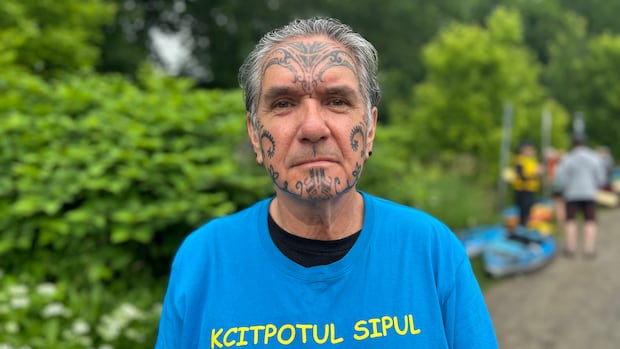
Ron Tremblay (Spasaqsit Possesom), grand chief of the Wolastoq Grand Council, said the timeline is insufficient for a decision that could have far-reaching effects.
“Five months is too short, it’s just like a blink,” said Tremblay.
For leaders like Tremblay, concerns about shale gas go beyond its potential environmental impacts, and extend to First Nations’ rights in decisions affecting their territories.
Premier Susan Holt said in the province’s announcement Wednesday this review does not mean an immediate green light to shale gas development but the beginning of a five-month dialogue with partners and New Brunswickers to determine the path forward.
The province said five pillars will guide the review: evaluating N.B.’s natural gas resources; science, technology and environmental impacts; economic benefits; public support; and a commitment to First Nations rights, interests and priorities.
“We’ve been in preliminary discussions with First Nations leaders in the province and we know that this can only happen in collaboration with their leadership and communities,” said Holt.
Tremblay said Wednesday’s announcement was the first time he heard directly from the province about its plans.
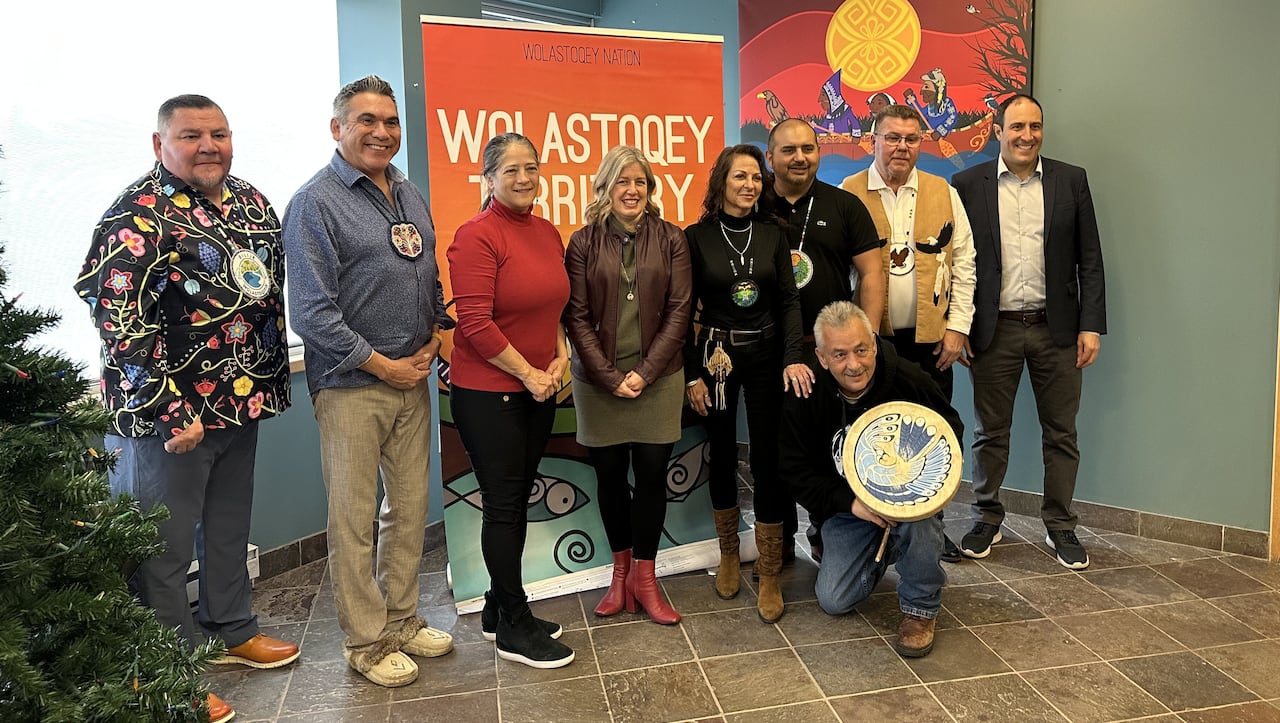 The six band-elected Wolastoqey chiefs with New Brunswick Premier Susan Holt and Indigenous Affairs Minister Keith Chiasson in 2024. (Submitted by the Wolastoqey Nation in New Brunswick)
Tremblay said the Wolastoq Grand Council sent a letter to the province last year asking to be involved in Indigenous consultation processes related to natural gas, pipelines and mining. He the province responded that consultation would take place only with chiefs elected under the Indian Act.
“If Wolastoq Grand Council requires any information, we would have to go through the six Wolastoqey band-elected chiefs to get an update on what’s going on,” said Tremblay.
The Wolastoq Grand Council represents a broader First Nations governance structure that exists outside and alongside band governments.
N.B. looks for economic independence
The announcement comes as the province looks to strengthen its economic independence amid uncertainty over trade with the United States.
Holt said new U.S. tariffs would impact $112 million worth of New Brunswick’s exports.
“As trade with our closest neighbour is thrown into question yet again, now is the time to secure our autonomy and protect our sovereignty,” said Holt.
“New Brunswick has what the world wants.”
For the provincial government, the review is part of a broader conversation about how N.B. can develop its natural resources.
In a statement to CBC Indigenous, Indigenous Affairs Minister Keith Chiasson said working in partnership with First Nations over the course of the review will form an important part of the province’s decision-making.
“The role of government is to consider the balance of interests; a responsibility First Nations leadership has within their individual communities,” said Chiasson in the statement.
Mi’gmawe’l T’plutaqann Inc., which represents nine Mi’kmaw First Nations in New Brunswick, said Wednesday it had been asked to participate in the review but it said the chiefs’ participation does not mean consent to natural gas development.
It said the review is an opportunity for Mi’kmaq to have a seat at the table and participate as partners in the decision-making process.
Holt said the province will provide monthly updates, with a decision on whether to lift the moratorium expected in January.
‘An emotional roller-coaster’
Premier Brian Gallant’s Liberal government imposed a moratorium on shale gas development in New Brunswick in 2014.
This came after members of Elsipogtog First Nation led blockades against SWN Resources Canada’s shale gas exploration between 2011 and 2013.
The conflict came to a head in October 2013 when RCMP enforced an injunction against protesters, leading to dozens of arrests and clashes. RCMP used tear gas and “sock rounds” or bean bag rounds, against the demonstrators and police vehicles were set ablaze.
Jason Augustine, a Mi’kmaw war chief with the Mi’kmaq Warriors Society, said Wednesday’s announcement brought back memories of that period.
He said members of his community are feeling hurt and angry with the review.
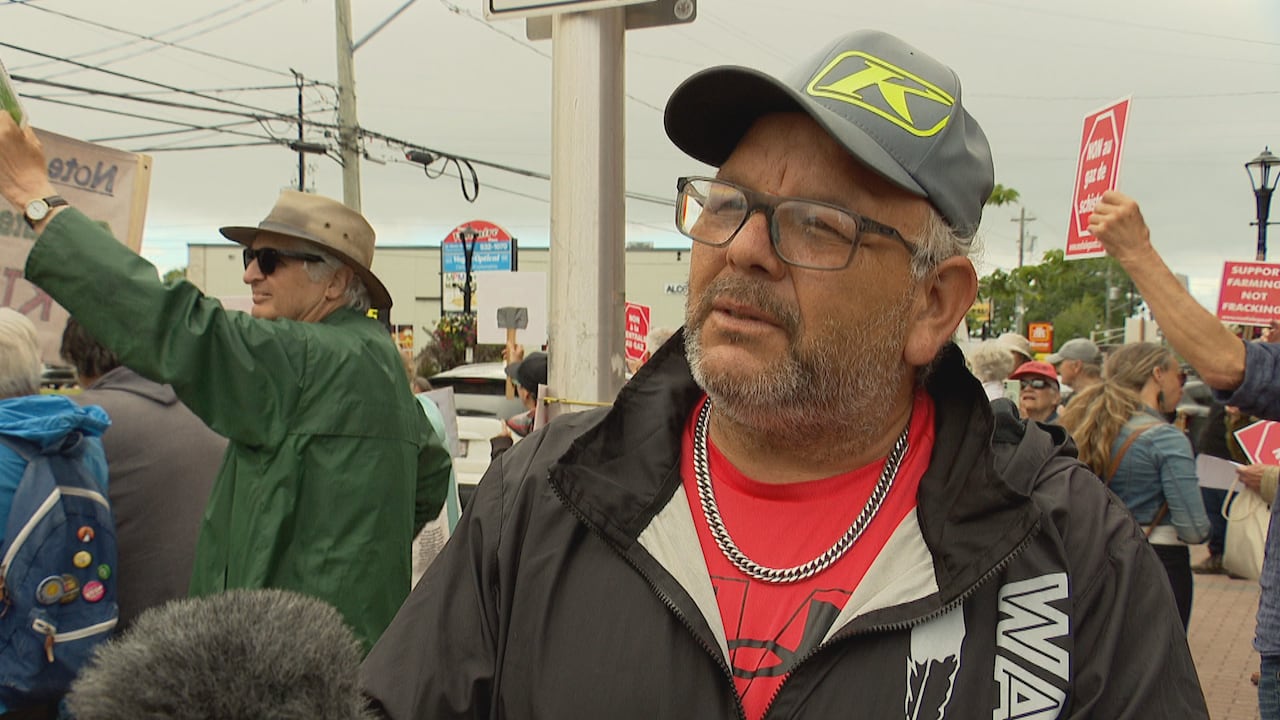 Jason Augustine, a Mi’kmaw war chief with the Mi’kmaq Warriors Society, was part of the blockades in Rexton, N.B., in 2013. (Pierre Fournier/CBC)
“Our people suffered a lot of impact when the RCMP moved in on us and started assaulting our elders, our women, and shooting [sock rounds] at our protesters and warriors,” said Augustine.
“A lot of people really got hurt and right now, I know a lot of people are on an emotional roller-coaster.”
During her 2024 election campaign, Holt criticized former premier Blaine Higgs’ push for fossil fuel development.
“Back in 2024, Susan Holt said natural gas and pipelines are a thing of the past,” said Augustine.
“She was saying to bring back more renewable energy, and move forward with that.”
Since taking office, Holt’s government has supported a proposed 300-kilometre natural gas pipeline from Quebec City to Northern New Brunswick as a nation building project.
Now, with her government considering whether to reopen the door to shale gas development, Tremblay wonders about what kind of future Holt wants to leave behind.
“What’s going to be your legacy?” said Tremblay.
“Be it fracking, be it Sisson [mine], what kind of earth, water and air are you going to leave for your children and your grandchildren?”