


Listen to this article
Estimated 4 minutes
The audio version of this article is generated by AI-based technology. Mispronunciations can occur. We are working with our partners to continually review and improve the results.
A new Alberta partnership is stepping up to tackle obesity care and stigma within the health care system.
On Monday, Primary Care Alberta (PCA) and Obesity Canada announced a collaboration to work to prevent obesity and improve care for patients within Alberta’s primary health care system.
The partnership comes one-year after Alberta became the first province in Canada to recognize obesity as a chronic disease with Alberta’s Minister of Health, Adriana LaGrange declaring March 4 World Obesity Day in the province.
Lisa Schaffer is the executive director of Obesity Canada. She described the partnership as “an amazing opportunity.”
“For us, it’s our opportunity to bring all of the education and science that we know to be true and that we’ve synthesized through our clinical practice guidelines into an actual practical primary care setting,” said Schaffer in an interview on Edmonton AM.
Schaffer told CBC News more than one million people are struggling with obesity in the province. She said not treating obesity is costing the province $3.4 billion including $2.8 billion in indirect costs and $664 million in health care costs.
Schaffer defined obesity as a chronic disease where “abnormal or excess body fat impairs health.”
She said measuring obesity needs to go beyond the number on a scale.
“When we keep it as simple as just looking at BMI (body mass index), we’re really not capturing the whole health of a person,” said Schaffer.
“We also know that there is no one number that actually defines health. We need to come up with better measures so that we can understand where someone is in their obesity care journey and how we are actually helping them.”
Genetics, environmental impacts, and an individual’s mental health are factors that must be considered when treating obesity, said Schaffer.
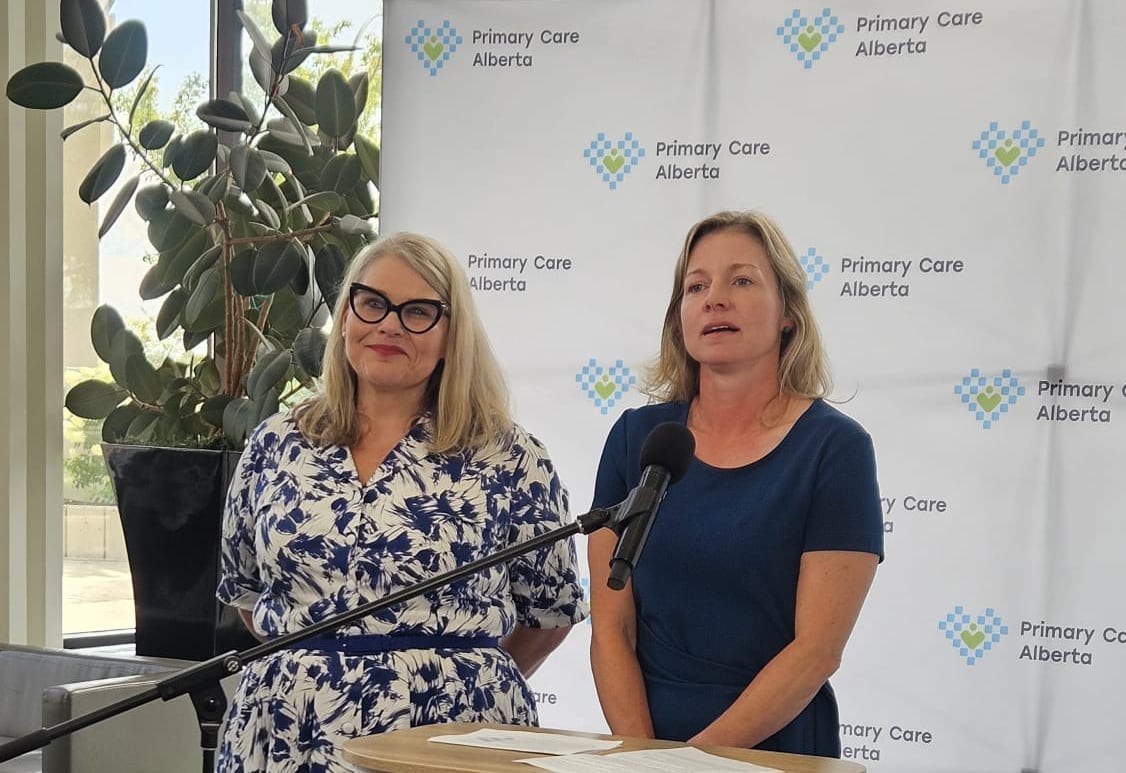 Obesity Canada Executive Director Lisa Schaffer (left) and Primary Care Alberta CEO Kim Simmonds announce a new partnership at a press conference in Edmonton (Submitted by Lisa Schaffer)
Both organizations said the collaboration will support the implementation of PCA’s chronic disease prevention and management priorities, while also strengthening support within the health care system for obesity care.
“Today we don’t teach obesity in medical schools,” said Schaffer. “Today, we don’t have billing codes for doctors. So we have a lot of great people who want to do the work, but are often doing it off the side of their desks.”
Schaffer said she feels this collaboration provides an opportunity to set up the health care system to treat obesity as a chronic disease and to better support health care professionals.
The collaboration will focus on six areas including a provincial obesity care pathway, workforce education, clinical practice guidelines and knowledge resources and supports, healthy weight gain in pregnancy and stigma reduction.
“When we think about obesity as a chronic disease, a lot of people still like to frame that within willpower, personal choice, and that it’s as simple as diet and exercise,” said Schaffer.
“Now we know through science and evidence that it is so much more complex than that.”
LISTEN | New plan to tackle obesity:
Edmonton AM8:05Obesity Canada on their new plan to improve obesity care in Alberta
In 2025, Alberta became the first province to officially recognize obesity as a chronic disease and declared March 4 World Obesity Day. Primary Care Alberta and Obesity Canada just announced they’ll work together to find better ways to prevent and manage obesity in the health care system. The Obesity Care partnership steering committee holds its first meeting today. Lisa Schaffer is the executive director of Obesity Canada.
Geoff Ball, the Alberta Health Services chair in obesity research and a professor with the department of pediatrics at the University of Alberta, said the collaboration between the PCA and Obesity Canada was a “wonderful initiative,” and the implementation of evidence-based interventions, from help services to medications is “crucial” when helping individuals living with obesity.
“To have the knowledge and the skills and the resources available to help them help their patients, that’s ultimately what health care providers are charged with,” said Ball.
He said managing obesity effectively leads to improvements in other clinical areas such as diabetes, cardiovascular health, cancer, orthopedic and breathing problems.
The PCA and Obesity Canada collaboration will last three years. During that time, Schaffer said she would like to see the health care system become better equipped to meet the needs of obesity patients and provide “evidence informed and compassionate care.”