
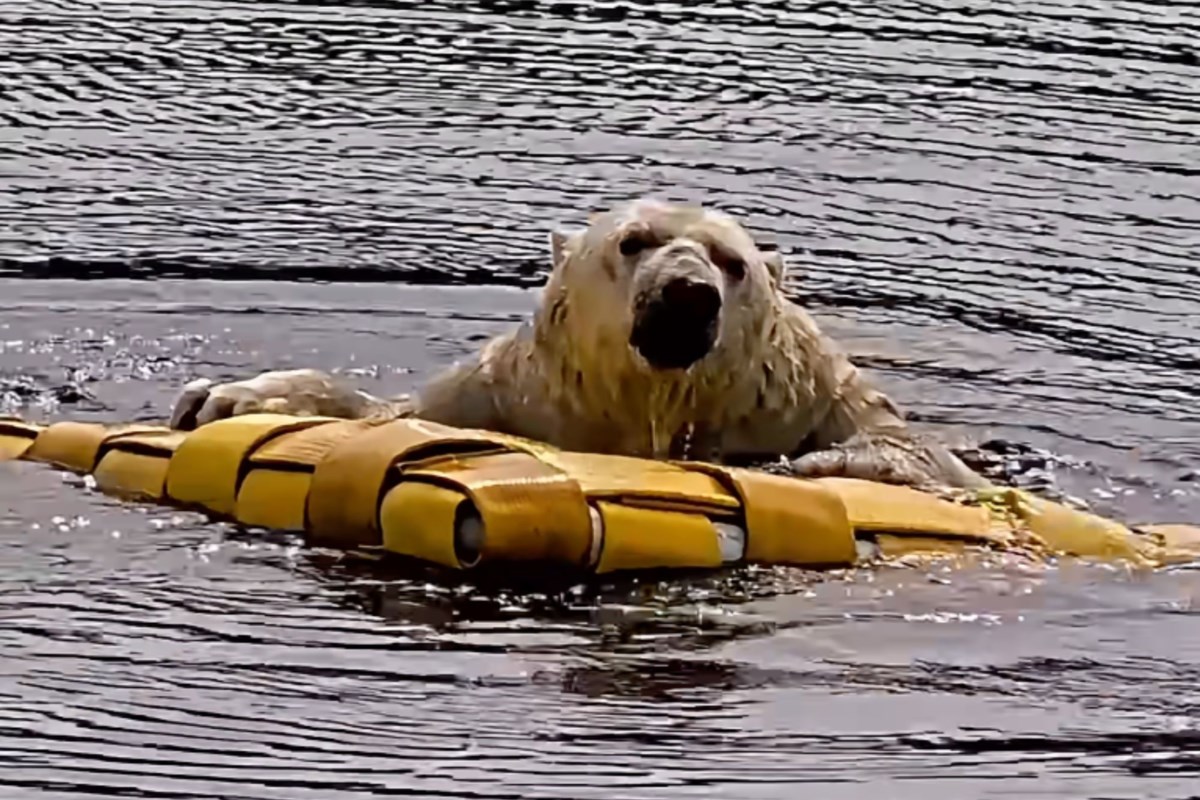
Thanks to a donation from an Ottawa fire hall, the local animals had fun with a new ‘enrichment’ toy
COCHRANE — It took weeks to build a new raft for Cochrane polar bears.
The bears took about 30 minutes to take it apart.
Using about two pallets of donated fire hose from Ottawa Fire Station 47, the raft is a new form of enrichment for the Cochrane Polar Bear Habitat’s Ganuk and Henry.
The project is one of several happening behind the scenes at the habitat, which is also working with a Canadian artist to create new artwork featuring its bears and hosting university students for research.
Inspired by a United Kingdom zoo that built a similar structure, the Cochrane team had been working to find the materials for the project for a while.
“We’d been reaching out to a few fire halls in the north, and they unfortunately didn’t have any leftover fire hoses, so we just reached out to firehouses in the Ottawa area,” said Amy Baxendell-Young, the habitat’s manager.
Ottawa Fire Station 47 offered the habitat about two pallets of hose.
“It was amazing,” she said.
Fire hose is useful as an enrichment material because it’s strong and durable, with a fabric exterior and plastic interior.
A hole was deliberately left in the raft so the bears could poke their heads through it, similar to how they might interact with openings in ice.
Ganuk tried climbing onto the raft, which was exactly the kind of behaviour the team had hoped to encourage, Baxendell-Young said.
Introducing new objects like the raft is an important part of caring for the bears and provides both mental and physical stimulation, she said.
“It’s essential for us to keep introducing new things to the bears’ environment,” Baxendell-Young said. “They’re very intelligent. They’re very curious.”
The habitat has also recently started a new collaboration with a Canadian artist.
Nova Scotia-based artist Guy Hobbs approached the habitat about creating artwork featuring its bears.
The team was impressed with his work and sent him several photos to choose from.
He selected a photo of Ganuk swimming as the inspiration for Into the Blue.
Baxendell-Young said the habitat decided to work with Hobbs because it loved his work.
“It’s just really important to support, even if they’re not local, to support small Canadian artists and creators,” she said.
The habitat is working out the final details, but plans to sell high-quality prints of the artwork in its gift shop.
“Often, you know, our phones don’t always take the best photos,” she said. “When we can capture artwork, especially such incredibly well-done artwork, it’s just something that people can take with them.”
The habitat is also currently hosting two undergraduate students from McGill University who are researching polar bear hair.
The students have set up an experiment outside the bear holding building, looking at DNA in polar bear hair follicles and how it is affected by exposure to the elements.
Their project builds on previous research conducted in northern Quebec, where researchers encountered questions about how quickly DNA in hair samples can degrade while sitting on hair traps.
The students are recreating the experiment in a more controlled environment at the habitat to better understand how long hair can remain exposed before the DNA is significantly affected.
Visitors can see the research setup and speak with the students about their work.
The students are spending about a week at the habitat and gaining hands-on experience with animal care.
“When they’re not working on their projects, they’re helping the bear team. They’re doing some food preparation, creating enrichments, shadowing vet visits, enrichment sessions, feedings, and things like that,” Baxendell-Young said.
“So, they’re learning about how the bears are cared for, as well as doing their own projects too.”