
For Indian families who externalised wealth a decade or two ago, the conversation has moved on. The capital is already offshore, often in the UAE, and in many cases it has grown considerably. The question now is not where to hold that wealth, but how to wrap a robust succession framework around it, one that accounts for family members spread across multiple jurisdictions and accommodates divergent legal systems, governance expectations and tax obligations.
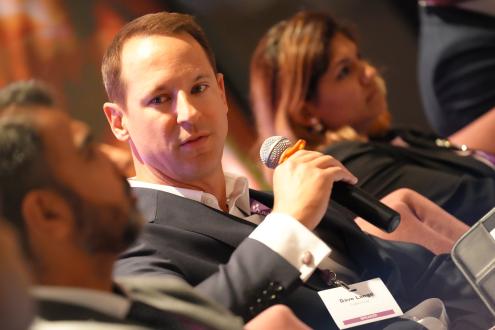
At the Hubbis India Wealth Management Forum 2026, held in Mumbai, the second panel discussion of the day, chaired by Rohit Bhardwaj, Country Head – India, Director Private Clients, Henley & Partners, brought together international practitioners to examine the evolving dynamics of cross-border wealth structuring for Indian families. Among them, Dave Lange, Managing Director and Senior Executive Officer at Trident Trust in Dubai, offered a grounded and practice-led perspective on the challenges facing families with established offshore wealth, and why the industry needs to rethink the way it frames succession planning altogether.
Key Takeaways
Clients Are Not Leaving the UAE, but They Are Diversifying: While there is no significant trend of families relocating from Dubai, there is growing demand for offshore structures that sit alongside existing UAE arrangements.
Externalised Wealth Has Matured and Now Needs Governance: Wealth that was moved offshore years ago through legitimate channels has grown substantially, and families are increasingly recognising the need for formal succession structures around it.
Split Residency Creates Real Structuring Challenges: When one part of a family is based in the UAE and another remains in India, creating a single governance and control framework that works for both jurisdictions is far from straightforward.
Succession Planning Must Be Reframed as a Continuum: Treating succession as a single event triggered by death is a fundamental misunderstanding; effective planning requires a gradual, managed transfer of control that begins well before any such event.
The Obvious Solution Is Rarely the Complete One: A DIFC foundation may seem like the natural vehicle for UAE-based wealth, but it does not automatically resolve the governance and tax questions that arise when beneficiaries or family members sit in other jurisdictions.
Plan B and the Diversification Imperative
Lange opened by acknowledging that the UAE has been close to the centre of recent geopolitical tensions, and that this proximity has reshaped the conversations he is having with clients. He was clear, however, that the response has been one of diversification rather than departure.
“I am certainly not seeing clients relocating or leaving the UAE,” he observed, “but they are certainly looking at Plan Bs. And that is about diversification.”
Where conversations with clients might previously have centred on local structures and DIFC foundations for real estate, the discussion has evolved. Families are now asking how they can complement their UAE arrangements with something offshore, ensuring that their wealth is not concentrated in a single jurisdiction or structure.
He also pointed to the foreign currency FCNR programme, introduced as a direct consequence of recent geopolitical events, which has created opportunities for UAE-based clients to invest elsewhere and generate returns. In Lange’s view, this is a concrete example of how disruption can produce opportunity, provided families and their advisers are willing to act.
Other panellists reinforced the broader trend. One participant noted that Singapore and Switzerland were attracting renewed attention, while another observed a reversal of flows between Hong Kong and Singapore, with some families now exploring Hong Kong as a base having moved away from it several years ago. The consensus was that families are no longer content with single-jurisdiction solutions, even in centres they otherwise regard as stable and favourable.
The Succession Gap in Externalised Wealth
Perhaps Lange’s most pointed contribution concerned what might be described as a succession gap: the distance between wealth that has been successfully moved offshore and the governance frameworks needed to manage it across generations.
Many Indian families, he noted, externalised capital through legitimate channels such as the liberalised remittance scheme some years ago. Family members subsequently established presence abroad, often in the UAE. A decade or two later, that capital has compounded into a significant pool of wealth, yet in many cases it still sits without a formal succession structure.
“The next question is how do you put a succession structure and plan around that pot of money and pot of wealth,” Lange said. “And that still remains a very big challenge.”
The challenge is compounded by the split nature of many Indian families. A patriarch may be based in Dubai, but siblings, children or parents may remain in India. The seemingly obvious solution, establishing a foundation in the UAE, does not resolve the governance question of how family members in India can participate in oversight and control when they remain resident in a different legal jurisdiction with its own regulatory expectations.
One panellist illustrated this tension with a practical example, describing a jewellery family whose three sons were sent to Hong Kong, Dubai and India respectively. Over time, property values, investment returns and business contributions diverged significantly across the three locations, creating an equalisation challenge that no single vehicle could address. The panellist described how insurance was ultimately used as a wealth equaliser, providing identical cover for each son at differing costs to balance the overall outcome.
Another participant underscored the importance of flexibility, comparing the structuring process to assembling building blocks. Trusts, foundations, holding companies and insurance each serve a function, but the skill lies in combining them in a way that reflects the family’s actual circumstances rather than defaulting to a standard template. The same participant stressed that advisers too often lead with the tools rather than the objectives, which risks overwhelming clients before the conversation has properly begun.
Reframing Succession: From Event to Continuum
Lange’s closing remarks crystallised what was arguably the panel’s most important theme. He challenged the prevailing tendency among clients, and at times advisers, to treat succession as a point-in-time event, something triggered by death or incapacity.
“A lot of clients think of it that way,” he observed. “It’s: what is going to happen with my wealth and my assets when I die? And that is the trigger event. Really what they need to start thinking about is succession planning as a journey, and that starts long before the trigger event.”
He described the process as a continuum of control. Families begin at one end, with the patriarch or matriarch exercising ultimate authority over wealth and decisions. The task of succession planning is to move the family gradually along that continuum, through a managed and deliberate process, to a point where control has been meaningfully handed over to the next generation.
“That does not happen overnight,” he cautioned.
This observation resonated with other panellists. One participant noted that the greatest threat to wealth transfer is not taxation or regulation but family conflict, and urged advisers to plan for relationship risk in the same way they plan for tax risk. Another was blunt about the stakes, observing that in jurisdictions such as the United Kingdom and the United States, inheritance tax can reach as high as 40 percent of the estate, and that without proper planning, a significant share of a family’s wealth could end up with the government rather than the next generation.
A further panellist encouraged advisers to listen before prescribing. “Understand the objectives,” they said. “Look at any regulatory issues. Understand where the beneficiaries are or are going to be located.” The point was that structuring without a clear understanding of the family’s circumstances, aspirations and jurisdictional exposure is likely to produce something that looks elegant on paper but fails to function in practice.
An Industry at an Inflection Point
Lange’s contributions reflected a broader truth that emerged throughout the panel: the wealth structuring industry, particularly as it serves Indian families with cross-border lives, is at an inflection point. The tools are more sophisticated than ever, the regulatory environment is evolving in encouraging directions, and the demand for structured solutions is unmistakable. Yet too many families still approach succession as a formality rather than a discipline, and too many advisers default to familiar vehicles without fully interrogating whether they suit the family in front of them.
For Lange, the answer lies in reframing the conversation entirely. Succession is not a document to be drafted or a structure to be established. It is a process of transition, one that requires time, trust, and a willingness on the part of both families and their advisers to engage with the uncomfortable questions that arise when control must eventually be relinquished.
The structures may be familiar. The challenge is making them work across jurisdictions, across generations, and across the full span of a family’s evolving needs.