
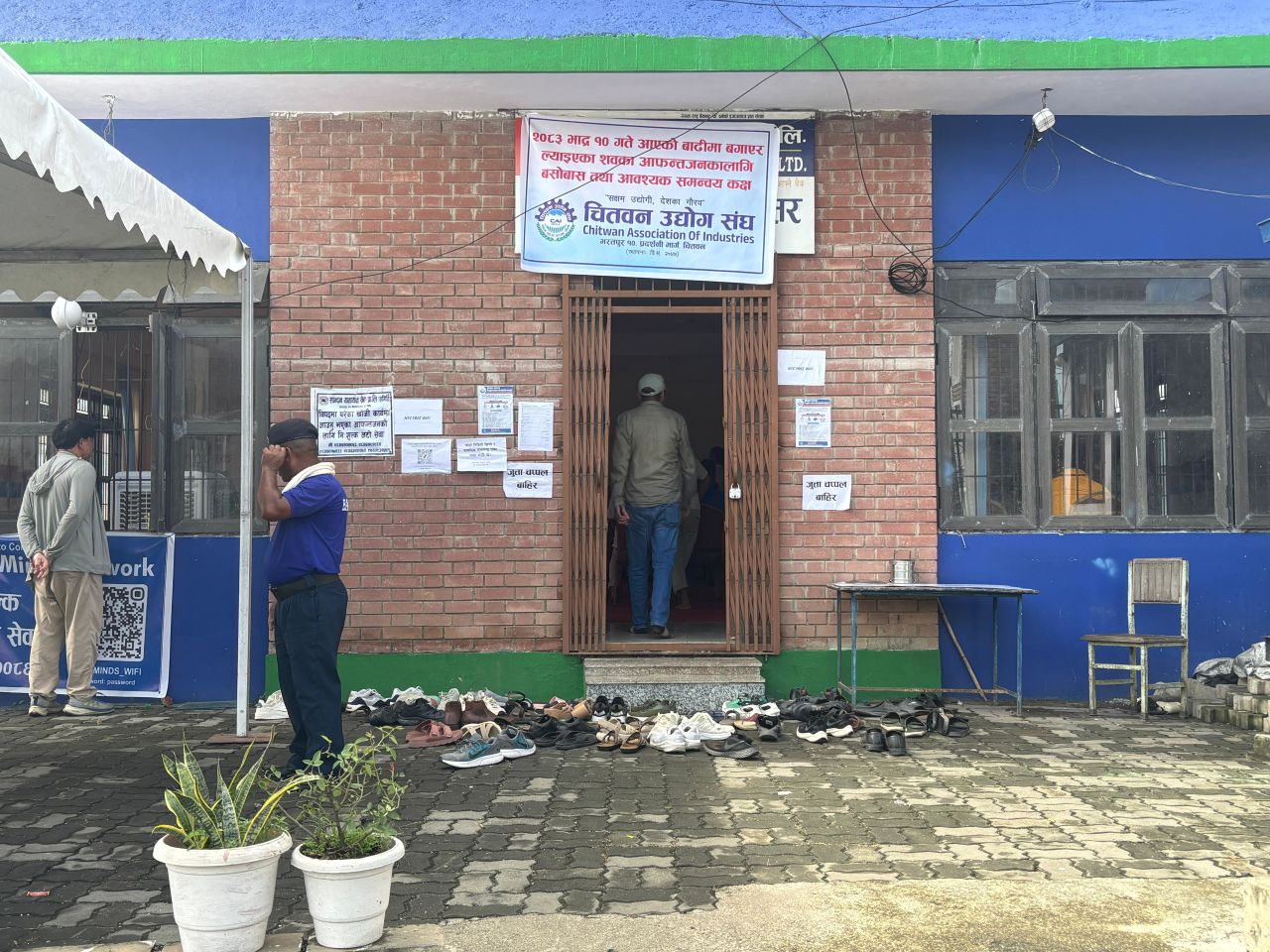
At the Nepal Poultry Entrepreneurs Forum office in Bharatpur, Sub Inspector Hari Sharan Dhakal sits behind a desk, facing the Herculean task of reuniting families with the bodies of their missing loved ones.
Around 20 people are sat on chairs waiting for new information to come in. Other arrivals file in to add details to the growing list. Fans whirl as the day gets hotter.
At a desk, in between laptops and a printer, is a sheaf of papers that contain the names of the missing.
There are 837 names on the list, along with addresses and family contact details. Appended are smiling photos provided by relatives that show happier times before the disaster struck.
But after days in the river, many are in a condition that means identification is difficult.
Sometimes, the photos are “totally different” from the photos authorities have taken, Dhakal says.
Many have lost their clothes, making other identifiers like tattoos even more important to their efforts. The school ties found on the bodies of some children have provided a first clue to tracking down their families, he said.
Yesterday evening, the center reunited 12 bodies with their loved ones, he said.
But it is a difficult task, says Dhakal.
As well as searching along 70 kilometers of riverbank in their district, the recovery team must coordinate with hospitals and other such centers around the country and take DNA samples. The bodies can also only be retrieved by trained personnel, he says.
“It’s too much challenging,” he said.
“People come to us crying. We feel their pain.”