

Listen to this article
Estimated 4 minutes
The audio version of this article is generated by AI-based technology. Mispronunciations can occur. We are working with our partners to continually review and improve the results.
A wildlife rescue in Golden, B.C., says it can no longer take in injured or orphaned deer fawns in the Kootenay region.
On June 24, Little Mittens Animal Rescue received an email from the Ministry of Water, Land and Resource Stewardship saying new restrictions were being added to its provincial wildlife rehabilitation permit to prevent the spread of chronic wasting disease.
The change means all licensed wildlife rehabilitation facilities operating under Region 4 (Kootenay) permit conditions are now restricted from accepting, transporting or rehabilitating white tailed and mule deer fawns.
“There’s nothing we can do,” said Alannah Knapp, the rescue’s executive director. “We’re not allowed to touch them. Our hands are tied.”
Calls keep coming in
Before the new restriction, the rescue could still help fawns from areas not affected by chronic wasting disease. But the new permit conditions expanded the restriction across the Kootenay wildlife region.
Knapp said the rescue usually takes in between one and five fawns in a year, but likely would have had close to 10 this year if it were still allowed to admit them.
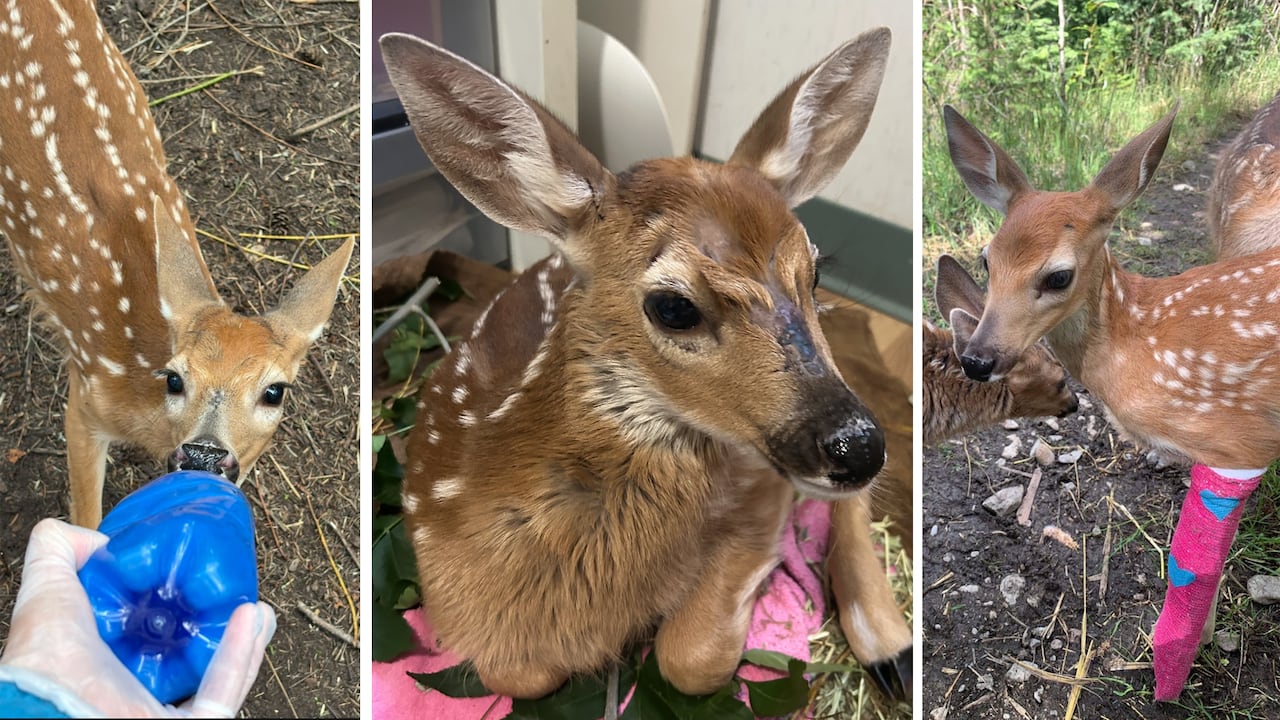 Three fawns cared for by Little Mittens Animal Rescue in recent years. (Submitted by Little Mittens Animal Rescue)
She said Little Mittens has continued to receive calls from people concerned about young deer, and the rescue is still hoping for clearer guidance from the province on what they should tell people to do.
Those calls can be emotional, Knapp said. Some people have suggested they may stop calling and try to care for deer themselves.
That worries her, she said, because members of public do not have the facilities, the quarantine procedures or the disease awareness that licensed rehabilitators rely on when caring for wild animals.
“It’s not that we don’t agree [with the restriction], we’re just trying to find our solution to all of it,” Knapp said. “Because this is going to turn into kind of madness.”
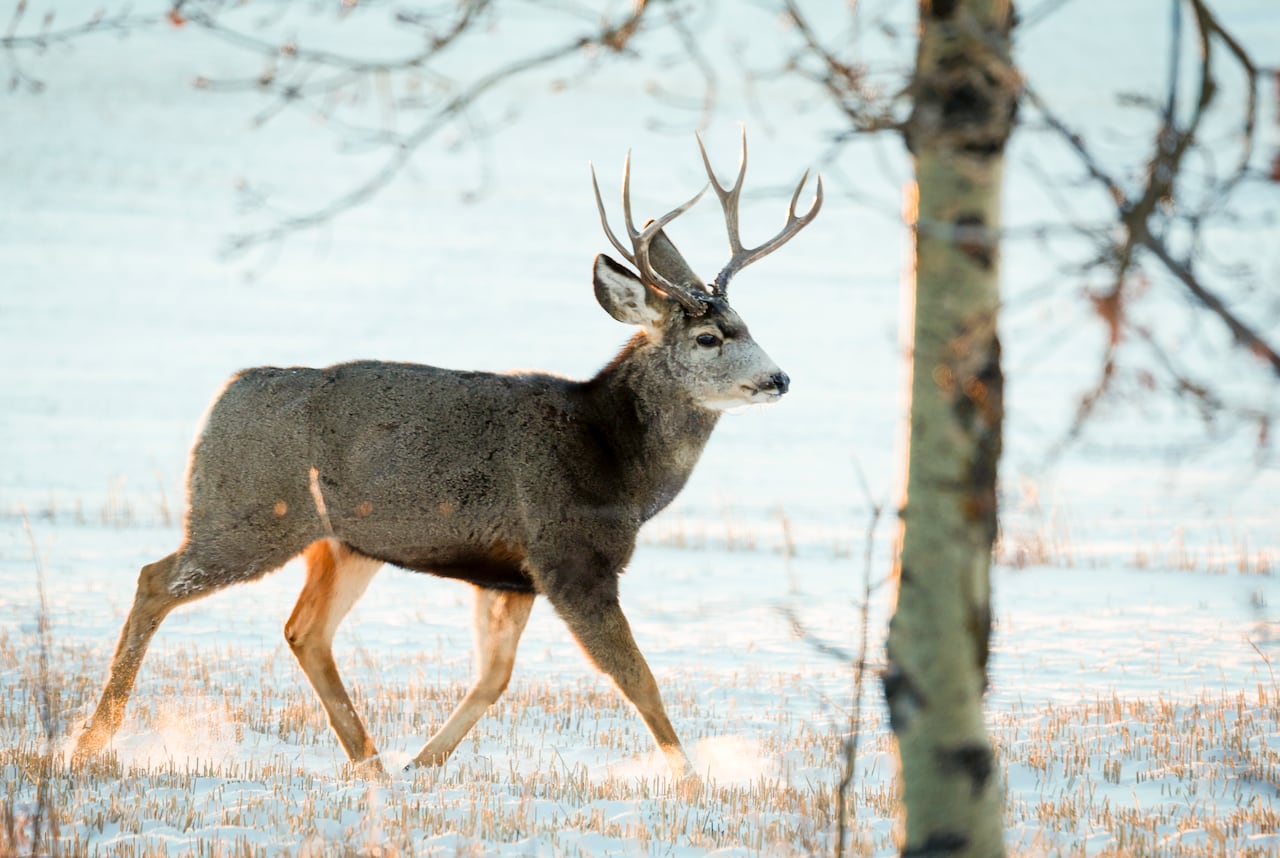 A mule deer forages for food near Dog Pound, north of Calgary, on Jan. 13, 2024. B.C. has confirmed nine cases of chronic wasting disease in deer since it was first detected. (Jeff McIntosh/The Canadian Press)
Cindy Peacock, who has volunteered with Little Mittens for seven years, said the change has left volunteers in a difficult place.
“We love animals and we’re not comfortable turning any animals away that need help,” Peacock said. “But at the same time, we have the responsibility for the health of the entire wild population. So those responsibilities are colliding here.”
What is chronic wasting disease?
Chronic wasting disease, also known as CWD, is a fatal disease that affects the nervous system of cervids, including deer, elk, moose and caribou.
The disease was first detected in B.C.’s Kootenays in January 2024.
A total of nine cases have been confirmed in B.C. since then, the province said in January, all within the Kootenay management zone.
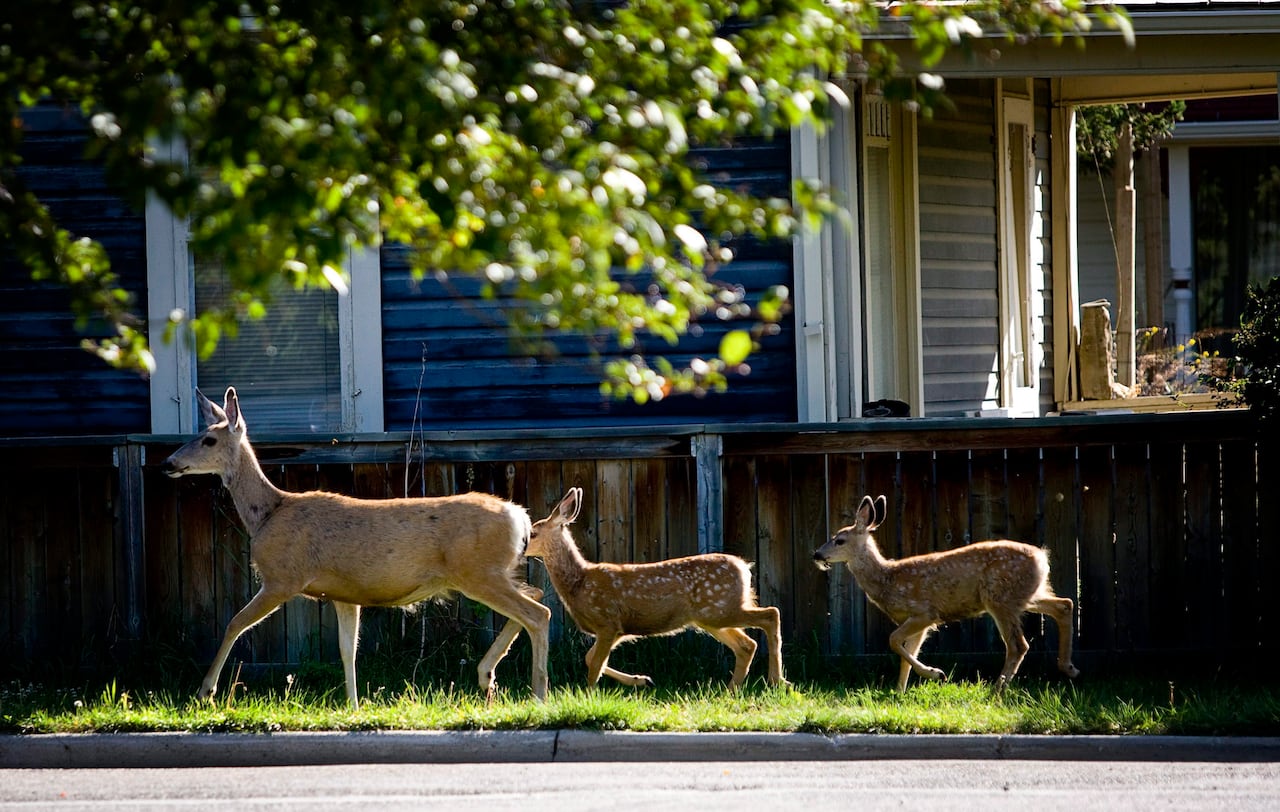 A mother deer and her fawns move down a sidewalk in Okotoks, Alta., on Aug. 23, 2011. Chronic wasting disease is spread through direct contact between animals. (Jeff McIntosh/The Canadian Press)
CWD spreads through direct contact between animals or from a contaminated environment, such as where an infected animal has died or left urine or feces.
Some animals show signs of the disease, according to the Canadian Food Inspection Agency, but others will appear healthy until their death. There is no treatment or vaccine for it.
The Ministry of Water, Land and Resource Stewardship says the new restriction is part of updated permit rules for wildlife rehabilitation centres in the Kootenay region.
What to do if a fawn needs help
The ministry says people should generally leave fawns alone unless they are clearly sick, injured or orphaned. It says anyone concerned about a fawn should call the RAPP line for advice.
The ministry says wildlife professionals will assess each case.
If an animal is suffering and has little chance of survival, euthanasia may be considered. In other cases, experts may determine the animal is best left in the wild.
Peacock said Little Mittens understands the broader goal of protecting the wild population, but that it’s still difficult when an animal is in distress.
“We give so much of our lives to try to help them,” she said. “And to not be able to, because of the greater good, is really heartbreaking for us.”
The ministry says the restriction has no set end date, but officials will keep assessing the CWD risk.