
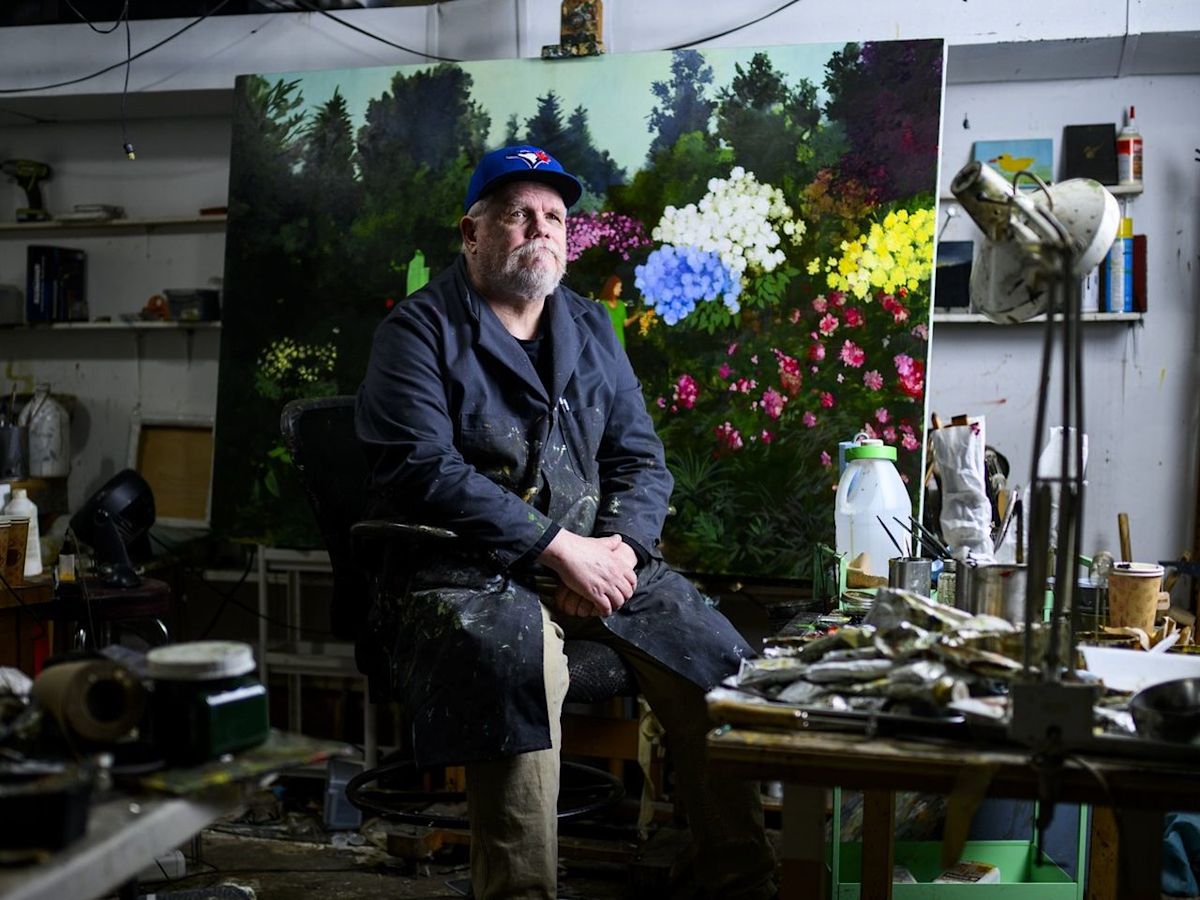
An Ottawa artist was forced to cancel an upcoming exhibit in the United States after the latest escalation of the trade war expanded to include tariffs on Canadian artwork.
Michael Harrington, an Ottawa-based visual artist, recently announced he had to cancel an upcoming exhibition in Boston after learning the American government implemented a 50 per cent tariff on Canadian art.
Harrington, who has been a full-time artist for nearly 30 years, said the tariffs have effectively eliminated the ability for Canadian artists to exhibit or sell to American clients.
“It’s disastrous to lose that market the way it’s being lost. It’s not good,” he said Sept. 1.
On Aug. 22, the United States imposed additional tariffs of 50 per cent on almost $30 billion worth of Canadian products, about five per cent of Canada’s annual exports to that country.
Included in the extensive list was original Canadian art, such as paintings, drawings, pastels and collages, original prints and lithographs, sculptures and jewelry.
Historically, works of art could move across the border without being taxed, and selling to American clients was a relatively smooth process, Harrington said.
He added it was hard to quantify exactly how the tariffs will impact his livelihood, because his art is sold through art dealers, international art fairs, and exhibitions and he doesn’t always know where his pieces land. But Americans are among his customer base, and losing access to one of the world’s biggest markets will only hurt him and other Canadian artists at a time when the industry is already struggling.
Artists have been hard-hit in recent months as the U.S.-Iran conflict has caused a fear of inflation, he said, and many people have cut back on discretionary spending – with art being one of the first things to go.
“The art market is very vulnerable,” he said.
“This year has been one of my worst already, which was why I was hoping to expand in the United States just to have more customer opportunities.”
The Canadian Artists’ Representation/Le Front des artistes canadiens (CARFAC), the national voice of Canada’s professional visual artists, said it was “deeply concerned” about the impact these new tariffs will have on Canadian art and artists.
“Canadian artists are independent workers and entrepreneurs,” Jenna Faye Powell, Interim National Executive Director of CARFAC National, said in a statement.
“Unlike large businesses and corporations, individual artists don’t have the financial resources to absorb new costs associated with these tariffs. There are tangible, immediate steps we are asking the federal government to take to ensure that artists are supported through this trade dispute. Artists cannot be an afterthought in Canada’s response.”
Some of those steps include pursuing an immediate exemption for original Canadian artworks from tariffs, providing targeted financial relief to artists, galleries, Indigenous-owned businesses and cultural organizations, and establishing an emergency support and stabilization program for visual arts organizations and businesses affected.
The federal government has introduced several financial-relief packages and counter-tariff strategies for certain sectors facing the impact of tariffs, but not yet for artists.
Harrington suggested one way the government could help would be to eliminate HST on sales of original art, not just during the trade dispute but permanently.
“If we took tax off of art, that could be a huge bonus for artists as well. I would love to see that.”
CARFAC said the tariffs and the resulting instability and financial burden will “no doubt fall disproportionately on artists, arts not-for-profits, and small businesses including commercial galleries,” and called on Canadians to support local artists not only in times of uncertainty or crisis.
“We need to see buying Canadian art and supporting Canadian artists as an investment in Canada, always.”
Take control of your search results. Make the Ottawa Citizen a preferred source on Google and see verified local reporting first.
Related