
Hoops Rumors is checking in on the 2026 offseason for all 30 NBA teams, recapping the summer’s free agent signings, trades, draft picks, departures, and more. We’ll take a look at each team’s offseason moves and consider what might still be coming before the regular season begins. Today, we’re focusing on the Chicago Bulls.
Free agent signings
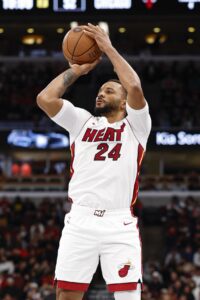 Norman Powell: Two years, $44,075,000. Second-year team option. Signed using cap room.
Trades
Acquired Kam Jones, the right to swap 2028 second-round picks, the right to swap 2030 second-round picks, and cash ($2,075,459) from the Pacers in exchange for the draft rights to Braden Smith (No. 38 pick).
Acquired cash ($1,714,000) from the Lakers in exchange for the draft rights to Vsevolod Ishchenko (No. 56 pick).
Acquired Nic Claxton from the Nets in a four-team trade in exchange for Mouhamadou Gueye (to Hornets).
Draft picks
1-4: Caleb Wilson
Signed to rookie scale contract (four years, $48,520,685). First two years guaranteed. Third- and fourth-year team options.
1-15: Dailyn Swain
Signed to rookie scale contract (four years, $24,014,283). First two years guaranteed. Third- and fourth-year team options.
Two-way signings
Departed/unsigned free agents
Other roster moves
Signed Zach Collins to a two-year, $17,000,000 veteran contract extension that begins in 2026/27. Second-year team option.
Exercised team option on Leonard Miller ($2,406,205).
Waived Kam Jones ($1,075,459 partial guarantee).
Salary cap situation
Note: Figures are rounded to one decimal place.
Operating below the cap ($165MM).
Hard-capped at first apron.
Team salary: $163MM (tax); $165.3MM (apron).
Below salary cap by $2MM; below luxury tax line by $37.4MM; below hard cap by $43.7MM.
Full room exception ($9.4MM) available.
The offseason so far
Chicago overhauled its roster at the 2026 trade deadline, completing a league-high seven deals from February 1-5, including moves that sent out longtime Bulls Coby White, Ayo Dosunmu, and Nikola Vucevic before they reached free agency. By comparison, the roster didn’t undergo quite as many changes this offseason.
However, the roster additions the Bulls did make were relatively significant, and the organization underwent a shake-up in other areas, with Bryson Graham replacing Arturas Karnisovas as the head of basketball operations while Tiago Splitter was hired as Chicago’s new head coach following the departure of Billy Donovan.
Karnisovas and his top lieutenant Marc Eversley were criticized during their last several years with the Bulls for being slow to react when roster changes seemed necessary, and the return at the 2026 trade deadline hammered that point home. White and Dosunmu had developed into quality starters in recent years, while Vucevic was an All-Star when he first arrived in Chicago, but the team wasn’t able to acquire more than second-round picks for any of them, having waited too long to cash in on the trade market.
It’s too early to pass judgment on how Graham will handle the top job in the Bulls’ front office, but his first offseason in the position provided some clues.
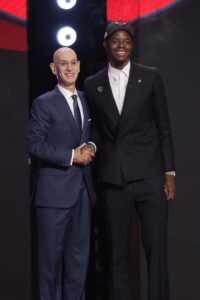 The Bulls entered June’s draft with the fourth and 15th overall picks, and while No. 4 pick Caleb Wilson figures to play a far more meaningful role in the franchise’s long-term future, that choice might have been the easiest one Graham made all summer. In a draft with a consensus top four prospects, Chicago just had to wait to see which player from a group consisting of AJ Dybantsa, Darryn Peterson, Cameron Boozer, and Wilson fell to No. 4. The former UNC forward has All-Star upside and showed off that potential in Las Vegas in July, averaging 23.5 points, 7.2 rebounds, and 2.5 blocks per game on 50.0% shooting for the Bulls’ Summer League squad.
The team’s second first-round choice was less obvious. At No. 15, the Bulls opted for former Texas swingman Dailyn Swain over alternatives such as Ebuka Okorie, Christian Anderson Jr., Allen Graves, Karim Lopez, Labaron Philon Jr., and Cameron Carr. Swain’s outside shot is very much a work in progress, but he has excellent physical tools and can put pressure on opposing defenses with his driving ability.
We’ll see how Swain develops in Chicago, but Graham deserves the benefit of the doubt for now, given his track record in the draft. Trey Murphy III (No. 17 overall), Herbert Jones (No. 35), Dyson Daniels (No. 8) and Nickeil Alexander-Walker (No. 17) are among the players the veteran executive was credited with selecting during his time in New Orleans’ front office.
The Bulls had over $55MM in cap space available as they entered the summer. In recent years, a new general manager tasked with rebuilding a roster may have used that room primarily to take on unwanted salaries in salary-dump trades in order to accumulate draft assets. But with the NBA’s new anti-tanking rules in place for the 2026/27 season, Chicago has little incentive to bottom out, and the moves Graham made reflect the fact that he wants to ensure the team is competitive in the short term even as the front office builds for the long term.
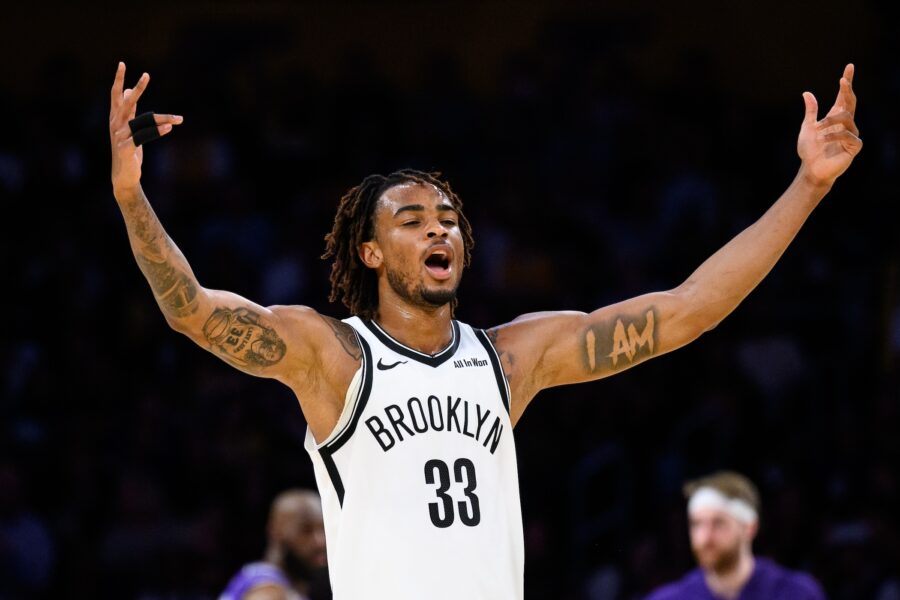
The Bulls ended up using a significant chunk of their cap room to take on center Nic Claxton from the Nets in a multi-team deal. On the heels of a down year in Brooklyn, Claxton no longer had positive trade value, as shown by the fact that Chicago essentially had to give up nothing for him. The Bulls’ only outgoing piece in the deal was two-way player Mouhamadou Gueye, who was quickly waived by Charlotte. But if the 27-year-old is healthy and reinvigorated by the change of scenery, a bounce-back season is a real possibility. It wasn’t that long ago that Claxton was viewed as one of the NBA’s most promising up-and-coming rim protectors.
Chicago also used its cap space to sign guard Norman Powell in free agency, working out a two-year, $44MM deal that’s only guaranteed for a single season. Powell is 33 years old, but he’s coming off back-to-back All-Star caliber seasons in which he averaged at least 21.7 points per game. He’ll bring some necessary scoring punch to the Bulls’ lineup and could emerge as a valuable trade candidate at the 2027 deadline or next offseason.
Most of the rest of the Bulls’ cap room was eaten up by a two-year, $17MM extension that Zach Collins signed at the end of June. Collins will have a guaranteed salary in 2026/27 and a team option for ’27/28.
While Chicago needed a backup center behind Claxton, Collins was limited to just 10 outings last season due to toe and wrist injuries, so it was a little surprising to see him get an $8.5MM guarantee for the coming season. It was also interesting that the Bulls completed his deal as an extension before free agency opened rather than re-signing him as a free agent using the room exception, which his contract would have fit into. Taking that route would’ve put Chicago in a better position to maximize its leftover cap room, but the difference would’ve been minimal, and extending Collins ensured he’d remain trade-eligible throughout the offseason and preseason.
Up next
The Bulls still have that $9.4MM room exception available and were linked to players like Jonathan Kuminga and Bennedict Mathurin before they agreed to terms with Minnesota and New Orleans, respectively. But with those players off the board, Chicago doesn’t appear to have its eye on any notable free agent targets. While I think the Bulls will probably fill its open roster spot and carry a 15-man squad into the regular season, they may simply carry the room exception into the season — it could come in handy for taking on a smaller contract or two at the trade deadline.
Unfortunately, because the Bulls operated below the cap, the room exception is the only one they still have at their disposal. The club doesn’t control any trade exceptions and lost access to the bi-annual or mid-level exceptions by using cap room. Chicago has over $37MM in breathing room below the luxury tax line, so the team is well positioned to add salary in trades before or during the season, but the front office will likely have to send out players of its own in those deals in order to take advantage of that space. For instance, if the Bulls were to trade Isaac Okoro and his $11.8MM expiring contract, they could take back up to roughly $20.9MM in incoming salary.
Okoro, Powell, Collins, Jalen Smith, and Tre Jones are among the players without guaranteed money on their deals beyond 2026/27 who could emerge as trade candidates in the coming months. Of course, the club surely wouldn’t mind finding a taker for Patrick Williams either, but that won’t be easy with three years and $54MM remaining on his contract.
Smith, Leonard Miller, Okoro (as of Sept. 17), and Claxton are among the Bulls who are eligible for contract extensions ahead of the season, but I’d be a little surprised if any agreements are reached by opening night, as Graham seems to be valuing financial flexibility for the time being.