
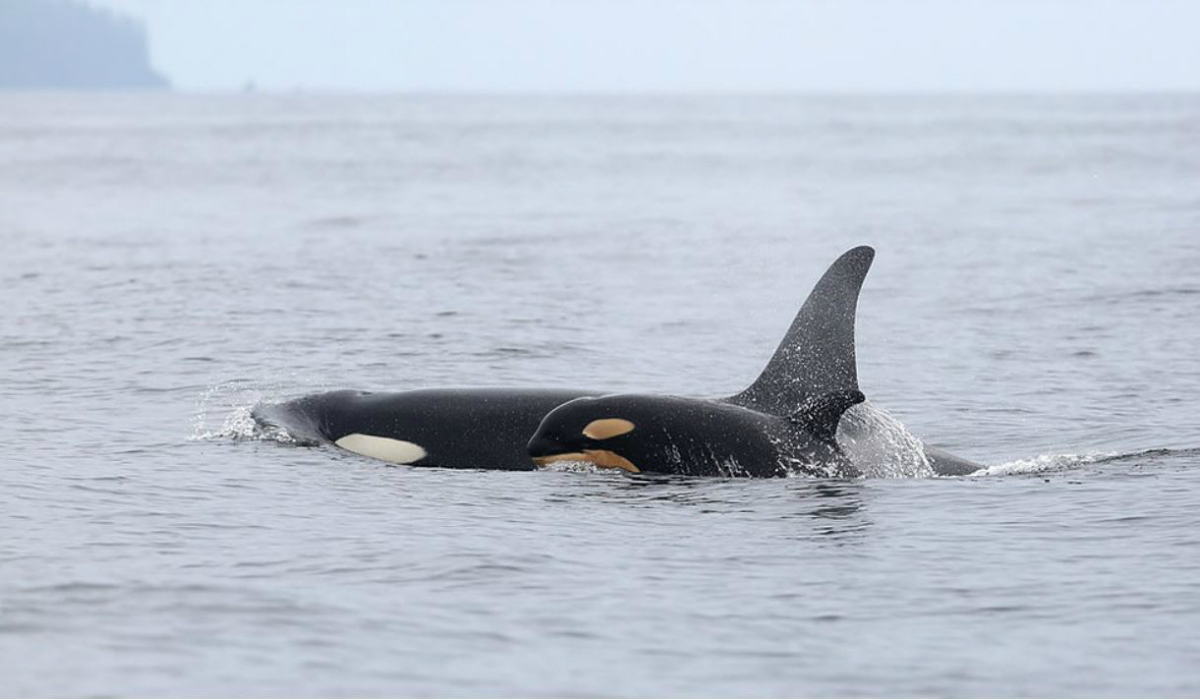
Spotting a killer whale in the wild is partly about being in the right place at the right time.
And, apparently, having better luck than I do.
For Will Guarasci, of the Shore to Sea Society, land-based whale watching is all about letting the whales decide when, and whether they want to be seen.
“The beauty of land-based whale watching is that you let the whale decide whether you’re going to be able to see them,” Guarasci says. “That could be up close, or I’ve seen whales from as far as 10 kilometres away.”
It’s a different approach to whale watching on Vancouver Island, where companies take visitors out on the water in search of orcas and other marine life.
Those operators are world-renowned and follow federal regulations around approach distances and noise levels, while many also support Salish Sea conservation initiatives.
But Guarasci says there’s something special about watching from land.
Watch more in the video below:
“You’re not putting another boat in the water,” he says. “You look out the window at any time and you’ll see all sorts of vessels.” Guarasci, a marine biology student at UBC Okanagan says even boats adhering to standards set out by Fisheries and Oceans Canada could pose potential harm to food sourcing to both southern resident and transient killer whales alike. “Killer whales, specifically the southern residents use a lot of echo location for communication purposes, so vessel noise can really disturb them.”
From a Facebook chat to thousands of followers
Shore to Sea started as a Facebook Messenger group, with members keeping an eye on the location of whale watching boats before heading down to the shoreline to watch for themselves. “If you have a lot of vessels in one location, there’s a good chance you’ll spot whales.”
What began as a small group has grown to about 7,000 followers.
The group is now part of the Southern Gulf Island Whale Sighting Network, and sightings are spread mostly by word of mouth instead of the digital tracking of ships.
When a whale is spotted, people can find themselves heading to the water at a moment’s notice, cameras and binoculars in hand.
Guarasci says he’s had dozens of sightings in the past few months. “This summer I’ve been fortunate enough to have about 35 encounters from shore. Many of those have been up close.”
For people who live on Vancouver Island, the appeal is obvious. These are moments many residents have experienced themselves: a dorsal fin breaking the surface, a pod travelling past the shoreline, or an orca appearing unexpectedly in the distance.
For some of us, though, the whales seem to be playing hard to get.
I’ve lived on Vancouver Island for almost my entire life. I’ve seen a fin pop out of the water a few hundred metres away, but nothing quite like the sightings shared by the Shore to Sea group.
At this point, I’m beginning to suspect there’s a conspiracy in the Salish Sea specifically designed to keep whales away from me.
Patience is key
There are no guarantees, of course. Whales have their own schedules, and unlike a whale-watching tour, the shore doesn’t come with a captain who knows where to look.
Binoculars help, especially when whales are several kilometres offshore, as can knowing what you’re looking for.
For those willing to wait, land-based whale watching offers something a little different: no boat, no itinerary and no guarantee of what will appear.
You simply head down to the water and see what happens.
And if you’re lucky, there’s a whale waiting for you.
I’m still waiting.