
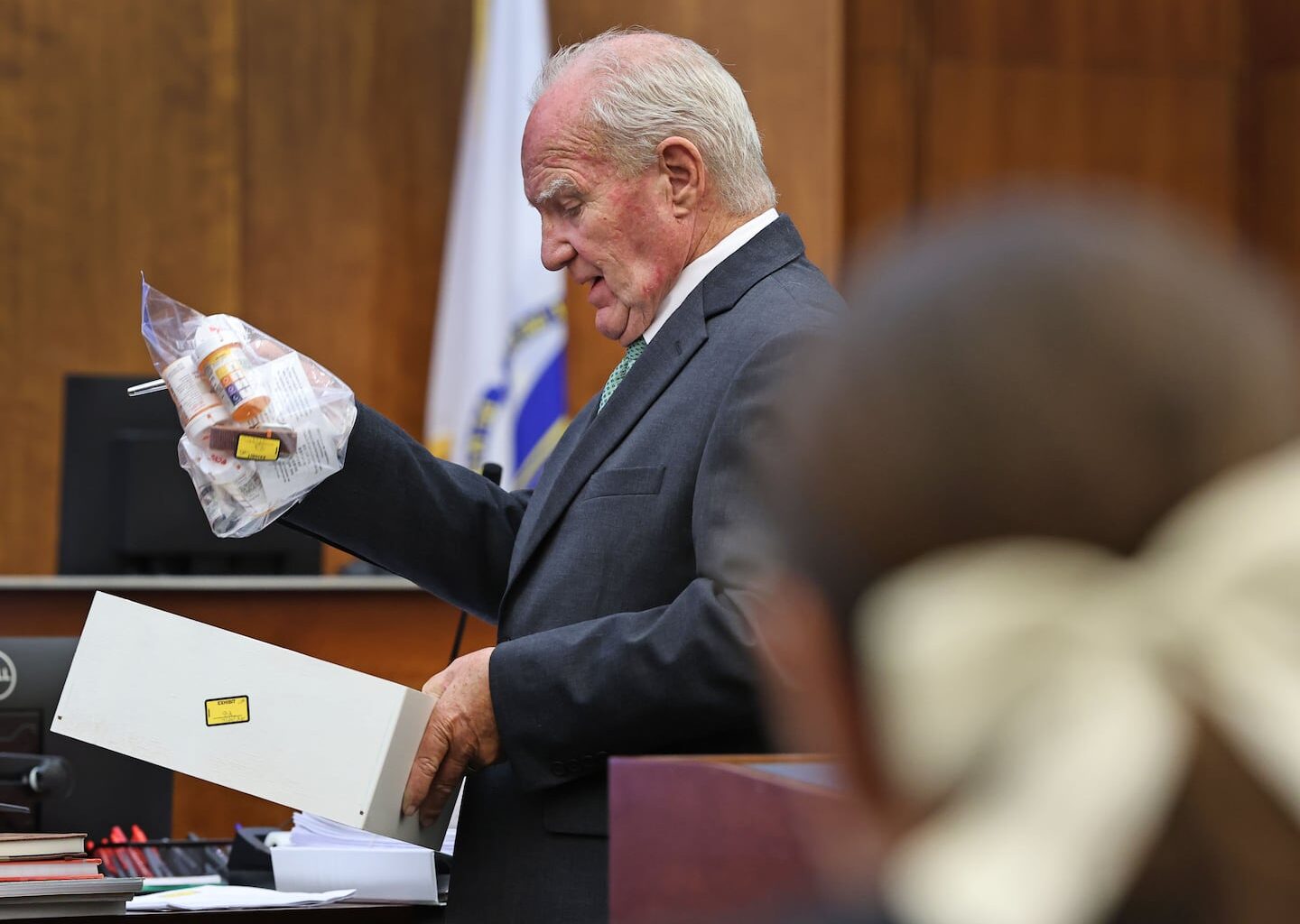
Clancy, a former labor and delivery nurse at Mass General Hospital, sought help repeatedly as her mental health deteriorated after the birth of her third child.
The case was both an opportunity and a curse for those seeking to raise awareness of postpartum mental illness, said Wendy Davis, chief executive of Postpartum Support International, a perinatal health organization based in Pennsylvania.
“We’re seeing awareness is raised and that is a step forward,” Davis said. “We’re also seeing much more, especially on social media, misinformation, more fear, more fearmongering.”
Here are main takeaways from the trial about the state of maternal mental health care:
1. Massachusetts has made strides, but gaps remain.
Clancy’s trial offered a rare window into a system that can be difficult for patients, families, and even clinicians to navigate.
To be sure, Massachusetts is a leader in addressing perinatal mental health. State law requires pediatricians, OB/GYNs, and primary care doctors to screen for postpartum depression and, if necessary, prescribe medication and/or refer the patient to a mental health provider.
But screening is only the beginning. The Clancy trial highlighted shortages of specialized providers and programs and gaps in follow-up care.
Experts say Massachusetts, like other states, needs more psychiatrists specializing in reproductive mental health, more options for specialized outpatient treatment, more support groups specifically for postpartum mood and psychiatric disorders, and better training for providers to recognize postpartum psychiatric illness. The state also lacks a dedicated mother-baby psychiatric unit, common in some other countries, where a mother who needs inpatient care can remain with her infant.
Lindsay Clancy case shows gaps mothers face in postpartum mental health care
Lindsay Clancy’s trial has raised question about how Massachusetts healthcare system declines to care for women postpartum. (Video edited by Nikhil Mehta for The Boston Globe, Video by Jenna Perlman/Globe Staff)
2. Postpartum psychosis is distinct from postpartum depression and far more rare.
The case brought awareness to postpartum psychosis, a rare but dangerous psychiatric emergency that is different from postpartum depression.
While most mothers will experience the “postpartum blues,” about 1 in 8 will experience postpartum depression, which involves persistent sadness, anxiety, and other depressive symptoms. Even rarer, one or two in 1,000 women will experience postpartum psychosis, which can involve mania (periods of unusually high mood and energy), severe confusion, paranoia, delusions, or hallucinations, and a loss of touch with reality. It can also worsen rapidly, appearing within weeks after giving birth.
Yet postpartum psychosis does not have its own entry in the Diagnostic and Statistical Manual of Mental Disorders, the handbook widely used by clinicians to diagnose psychiatric illnesses.
Specialists have been pushing to change that, arguing that formally recognizing the condition as a part of bipolar disorder could make it easier for clinicians to identify it.
Experts also stress postpartum psychosis is treatable, and most women who develop it do not harm their children. The most effective treatment has been lithium and electroconvulsive therapy (or ECT), which Clancy wasn’t given because none of her providers diagnosed her with psychosis or bipolar disorder before she killed her children.
3. Patients or their families should be prepared to coordinate their own mental health care.
When a patient is seeing several doctors, who is responsible for making sure they are all talking to one another?
Clancy received psychiatric treatment from multiple clinicians and institutions as her symptoms changed. Testimony showed that providers did not always have records from the other clinicians treating her.
Behavioral health records can be especially difficult to obtain and share. Psychotherapy notes receive additional federal privacy protections, and independent mental health practices may not use the same electronic medical record systems as hospitals.
Experts said patients and families should ask explicitly who is coordinating care, who is tracking medication changes, and whether each provider has the records they need. Without a clinician taking that role, the burden can fall to the patient or a family member.
4. A steep decline in mental health may not fit the system’s definition of an emergency
One of the starkest lessons from Clancy’s treatment was how difficult it can be to get urgent help for someone who is deteriorating but does not meet the threshold for an immediate psychiatric emergency.
Clancy was screened for postpartum depression using the Edinburgh Postnatal Depression Scale, a widely used questionnaire that asks about symptoms including anxiety, depression and thoughts of self harm. Her scores worsened as her condition deteriorated, testimony showed.
She also called a suicide hotline twice in the month before the killings. Defense experts testified that she was redirected to her providers rather than hospitalized because she did not report a specific plan to kill herself.
5. Finding the right medication can involve trial and error.
In the four months before the killings, Clancy received some 30 prescriptions for 13 different psychiatric medications. Providers repeatedly started medications, stopped them, and changed their dosages; Clancy also did not always take the medications as prescribed.
Some experts say Clancy was misdiagnosed and overprescribed, while others emphasize that finding an effective medication regimen can be a complex process that often requires trying multiple medications, dosages, or approaches.
Several providers considered whether Clancy had bipolar disorder but did not diagnose it at the time. During the trial, experts testified about whether her strong reactions to antidepressants should have been a warning sign.
The diagnosis would have mattered because antidepressants such as SSRIs, while commonly used to treat depression and anxiety, can sometimes trigger or worsen manic symptoms in people with bipolar disorder.
6. A history of mental health challenges can elevate the risk of postpartum mental distress
A person with a family history of mental illness, including depression, bipolar disorder, psychosis, or prior postpartum illness, has an increased risk of experiencing postpartum mental health challenges, experts said. One 2018 study found women with a history of depression were 20 times more likely to experience postpartum depression than women without that history.
Mothers who “toughed it out” through postpartum mood disorder symptoms after a prior birth may be those who need the most help, advocates said.
“If you were previously pregnant and had a new baby and your primary response to it was to hide your distress and put on a brave face, that’s actually for me a warning sign,” said Davis, of PSI.
Women treated for mental health conditions in the past or currently receiving treatment should consult health care professionals about treatment options during and after pregnancy, build a support system, and strategize about ways to reduce stress and maximize healthy sleep after childbirth.
Many common medications for depression, anxiety, or bipolar disorder are safe for pregnant and new mothers.
7. The legal system outside the United States treats crimes influenced by postpartum mental illness very differently
In the United States, most states do not have criminal laws that grant special consideration to mothers who kill their children while suffering from postpartum mental illness. That’s not the case elsewhere. Unique infanticide laws, which acknowledge postpartum mental illness as a mitigating factor when a mother kills a child, exist in two dozen countries.
These laws trace their origin to English laws established in the 1920s and 1930s that grant leniency if a mother can demonstrate she was unable to distinguish right from wrong due to childbirth or severe postpartum mental illness. Convictions or pleas under this law almost never result in incarceration. Commitment to a mental institution is more common.
Illinois became the only state with a criminal law that mirrors the statutes in other countries in 2018, but even there it only applies to sentencing after a guilty finding. Massachusetts is among the states that have considered such laws.
Sarah Rahal can be reached at sarah.rahal@globe.com. Follow her on X @SarahRahal_ or Instagram @sarah.rahal. Jason Laughlin can be reached at jason.laughlin@globe.com. Follow him @jasmlaughlin.