
NASCAR’s 10-race “Chase” for a championship begins Saturday night, and with it, the latest attempt at perfecting a formula to award a sport’s biggest prize.
Last offseason, NASCAR dumped its previous playoff format, which culminated in a single race to crown a winner among four finalist drivers. Introduced in 2013 to amp up the drama at the end of the season, drivers and fans found the elimination-style postseason a bit too unpredictable, with the year’s top car on a season-long basis not winning the trophy since 2021.
Last year, a late caution ultimately cost Denny Hamlin a chance at his first championship in 20 full seasons on the circuit. “In this moment, I never want to race a car again,” Hamlin said afterwards.
But he came back, and now the 45-year-old is the favorite to win this year, with 10 events to rack up more points than the 15 other competitors still alive in the title race. As the “No. 1 seed,” Hamlin starts with more points in a format designed to reward both consistency and victories down the stretch.
“I think all of the drivers would tell you it’s a more fair way to do it,” Hamlin said on Wednesday.
NASCAR isn’t alone in tweaking its end-of-year schedule. The PGA Tour recently announced a bracket-style match play title event, beginning in 2028. MLS is reportedly considering moving to a 20-team structure with double-elimination for top seeds. Meanwhile, tournaments from the College Football Playoff to MLB’s postseason keep expanding, adding valuable, high-stakes inventory at the cost of increased variance and potentially making the regular season feel extra regular.
So far, NASCAR seems to be seeing positive results.
“Our fans, our partners, and arguably most important, our competitors are all very much bought into this idea,” NASCAR EVP and chief brand officer Tim Clark said Friday, adding that the hope is this new system will survive into future years with only minimal tweaks. “What we are going to try to get out of the habit of is just tinkering over things constantly in favor of some stability.”
Drivers appear to largely be on board, and fans have responded as well, even though many advocated for eliminating the end-of-season spotlight entirely in favor of a Premier League-style yearlong title race. Debates continue about how exactly to define the sport’s regular and postseason, considering all drivers keep racing until the final weekend—and whether it means anything to “win” the regular season. NASCAR eliminated the trophy for that accomplishment in its latest shakeup.
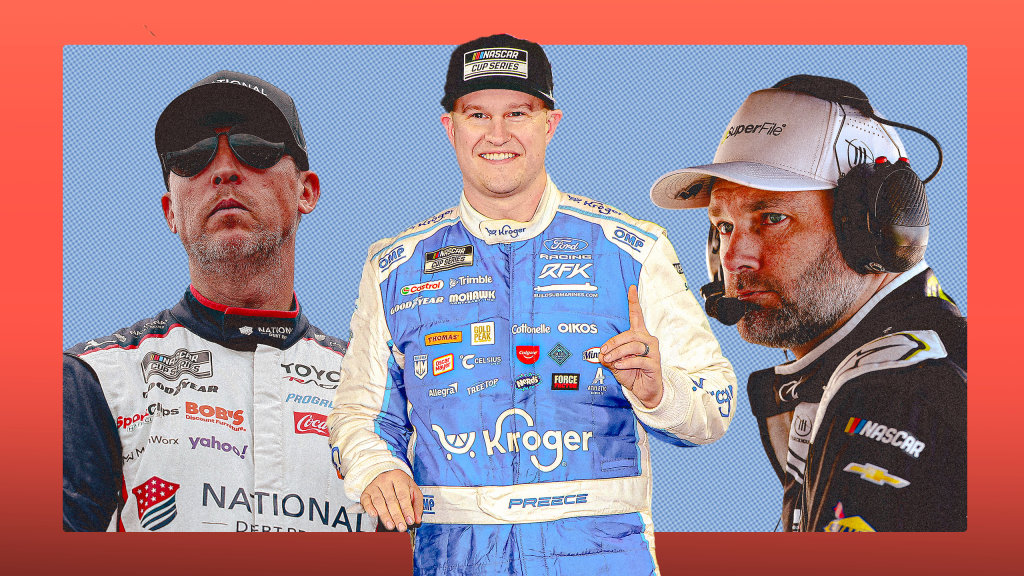
NASCAR said admissions at races this year were up 9%. While TV ratings have fluctuated throughout the year, NASCAR saw a 6% viewership bump on NBC for its regular season finale in Daytona last weekend, as Ryan Preece leapt over the Chase cutline with a final-lap pass of Zane Smith for the Coke Zero Sugar 400 win.
NASCAR now hopes the Chase can help the sport hold fan attention into football season.
Of course, Preece’s move into the field meant bumping out another driver. In the old format, Shane van Gisbergen’s road-course dominance would’ve automatically qualified him for the playoff field thanks to two wins at extra curvy tracks this summer. Instead, he’s on the outside looking in, 17th in points and unable to move up the rest of the way due to the how points are adjusted heading into the season’s home stretch.
“That’s bullshit,” Hamlin said on his own podcast this week, when he learned how the standings now work. “Locking these guys out of being able to advance their position, that’s unfair.” The chase for a perfect playoffs structure continues.